


Review: JACOB COLLIER – ADELAIDE CABARET FESTIVAL 2025 at Her Majesty's Theatre, Adelaide Festival Centre
A remarkable evening of immersive music.

Reviewed by Ray Smith, Saturday 7th June 2025.
I was a little late arriving at Her Majesty's Theatre to see Jacob Collier's solo performance, to find my guest shivering on the footpath on a cold, wet, and blustery Adelaide evening but, fortunately, early enough to have time for a quick drink before the doors opened.
“There are a lot of musicians in here”, she remarked, scanning the packed foyer as she ordered cocktails rather than our usual G and T. She herself is a fine player, and I knew better than to question her drinks choice because, as I have learned over many years of performance myself, arguing the choices of a jazz musician is utterly pointless.
We made our way into the theatre, drinks in hand, to find our designated seats at this sold out show.
Word on the street is that Collier's two shows were sold out within minutes of their announcement, and how my editor swung two reviewer's tickets smack bang in front of the centre of the stage will remain a mystery to me for the rest of my life. [I have some lovely contacts. Thanks Stephanie. Ed.]
The atmosphere was electric with anticipation as we viewed the stage dressed in large pot plants, a couple of trees to the rear bracketing a grand piano, three guitars on stands, and a lone electronic keyboard, stage right.
The traditional acknowledgement of country was delivered and we all knew an unforgettable event was about to start.
Enter Jacob Collier, and the packed house erupted in delighted applause as this extraordinary young man bounded onto the stage in white shirt and bright “harem pants” with all the energy and enthusiasm of a child having a sugar rush. Collier is famous for his unbridled enthusiasm and utterly palpable delight in what he does, but the real drawcard, particularly for this audience heavily populated with professional musicians, is his unparalleled talent and extraordinary approach to music making.
Collier has perfect pitch. That is to say, he can think of a C# for example and just sing it, no reference point is needed, the note is simply as available to his mind as it is to a pianist sitting at a keyboard. On top of that, he can postulate harmonies and resultant chords in his mind, again without any external reference point, and build, and build complex harmonic structures that he can play with internally before applying them to an instrument, virtually any instrument within reach.
One might describe “a musician” as someone who plays music, and Collier is certainly that to a very high degree, but what separates him from most from us mere mortals is that he doesn't just play music he plays with music and there are no rules, no boundaries and, in Collier's case, no limitations based on skill or theory are imposed on his ambitions. He improvises musically as might a maestro of language with an immeasurable lexicon to improvise verbally, he gives speeches, delivers jokes, tells sad and moving tales, and relates musical history from every imaginable viewpoint, all while sitting at a piano and not saying a word.
Listing the awards that this man has already won would take up the rest of this review, so let's just say that there are a lot of them.
Collier's opening gambit, after the perfunctory “Hi Adelaide, it's so good to be here”, was a little test of the audience in a question and answer move. He would make a sound or simple musical phrase, and invite the audience to repeat it back to him. Since the audience of roughly 1,400 people was probably 80% thoroughbred professional musicians, the responses were instant and confident. Collier could relax, because the fates had delivered him a very large and very eager instrument for him to play with and improvise upon, and his grin widened as he leapt toward the piano.
Collier's piano playing is fluid and multi-lingual, and it is clear to see that they are very old and very intimate friends as he spills note upon note from the deep body of the instrument into the stage floor and his never still feet, like sparks from an angle grinder, rising and falling like crashing waves improvising across every conceivable genre from Van Morrison to Mozart, Freddy Mercury to Gershin, his self diagnosed “Creative Infinity Syndrome” on full and delighted display. Would that it were contagious.
Then it was our turn. Collier first split the audience into two, asking one half to hold one drone note and the other half another, which we eagerly did, while he went back to the piano to improvise over his new multi-voice harmony. Simple arm gestures and wiggling fingers would invite us to maintain our notes, rise or fall in volume, or swell up and down, right-hand conducting, left flying over the keyboard as he observed our responses.
Having proven our usefulness, he divided us into three and applied the same processes. He eventually broke us into five discrete groups and started to play with gusto and obvious delight on his new 1000+ voice instrument.
He would point to a section of audience, already holding the note that he had given them, and raise his hand. Intuitively, that section of the audience knew exactly which higher note Collier wanted to subtly shift the harmony. They didn't just raise the pitch chromatically like “do re me ….” but instead moved harmonically, maintaining the integrity of the chord in Collier's mind without a hint of dissonance, and then he added lyrics. It was unbelievable.
While we sang, or droned, or clicked our fingers, or clapped our hands as directed, Collier would leap between instruments, conducting all the while, adding melodies to our shifting chords, or rhythms to our lyrics, and at one stage the rhythm became distinctly African and I felt as if I was in some vastly expanded version of Ladysmith Black Mambazo as Collier added a lead vocal to the audience anthem, and my eyes began to stream. The feeling of inclusion and kinship was wonderful. It was utterly beautiful.
This was one of the best performances I have ever attended, and one of the most joyous experiences of my life, although it wasn't so much a performance as it was a religious event, without a God in sight, other than Mozart of course.
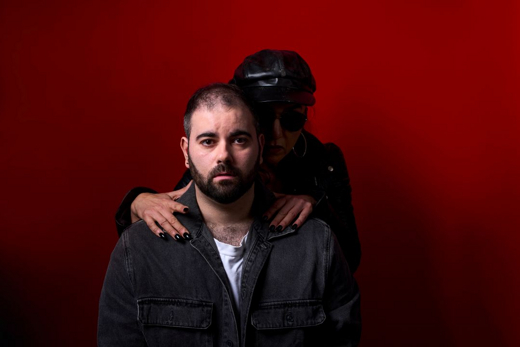
|
Log Boy State Theatre Company South Australia (10/01-10/10) |
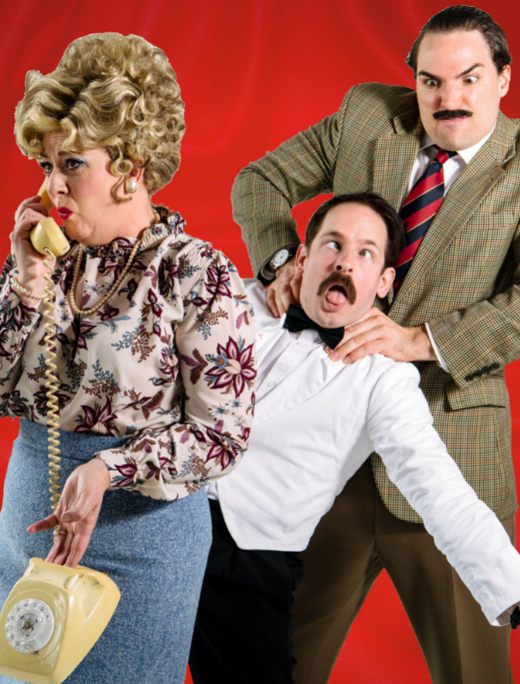
|
Faulty Towers The Dining Experience - Darwin Oaks Elan Darwin (8/20-8/22) |
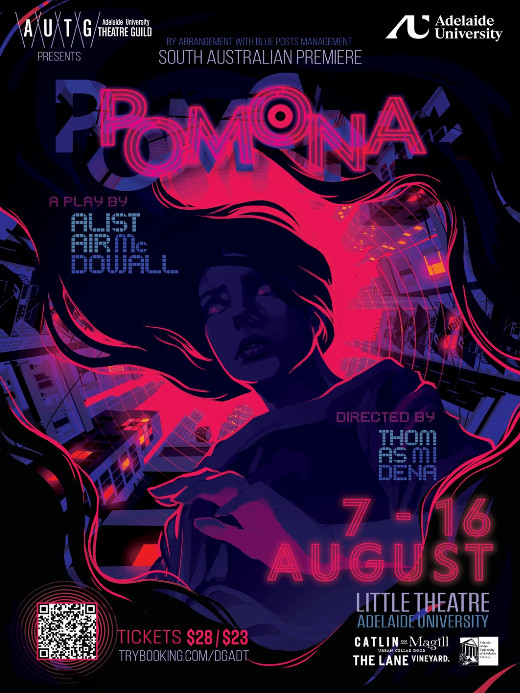
|
POMONA Adelaide University Theatre Guild (8/07-8/16) |
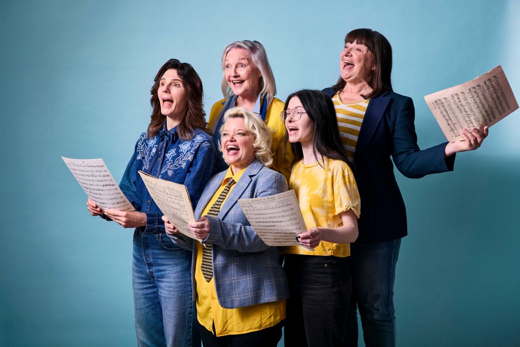
|
The Heartbreak Choir State Theatre Company South Australia (11/20-12/05) |
|
Commentary State Theatre Company South Australia (8/21-9/05) |
Reader Reviews
To post a comment, you must register and login.