


Review: BLUEBEARD'S CASTLE/ERWARTUNG at Four Seasons Centre For The Performing Arts
COC's double feature of Bartók and Schoenberg's One-Act psychological thrillers
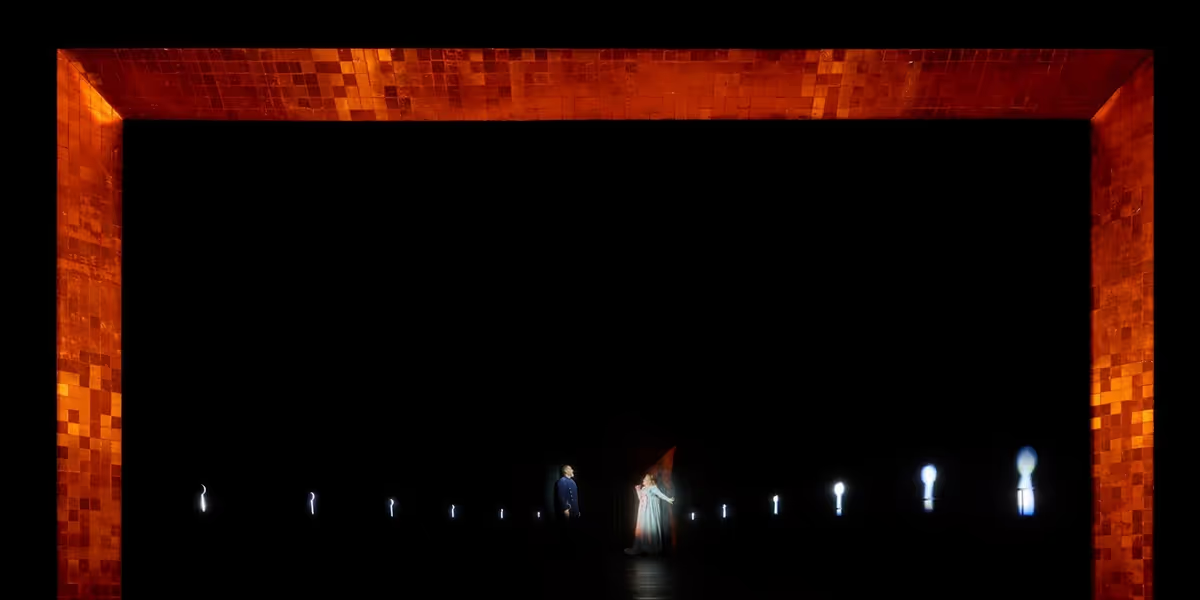
A striking gold tile frame surrounds the stage for the duration of the Canadian Opera Company’s 2025-2026 double bill production of Béla Bartók’s Bluebeard’s Castle and Arnold Schoenberg’s Erwartung. The framing of the stage is a fitting symbol for the two portraits of a dark and disturbed psyche that are about to be revealed.
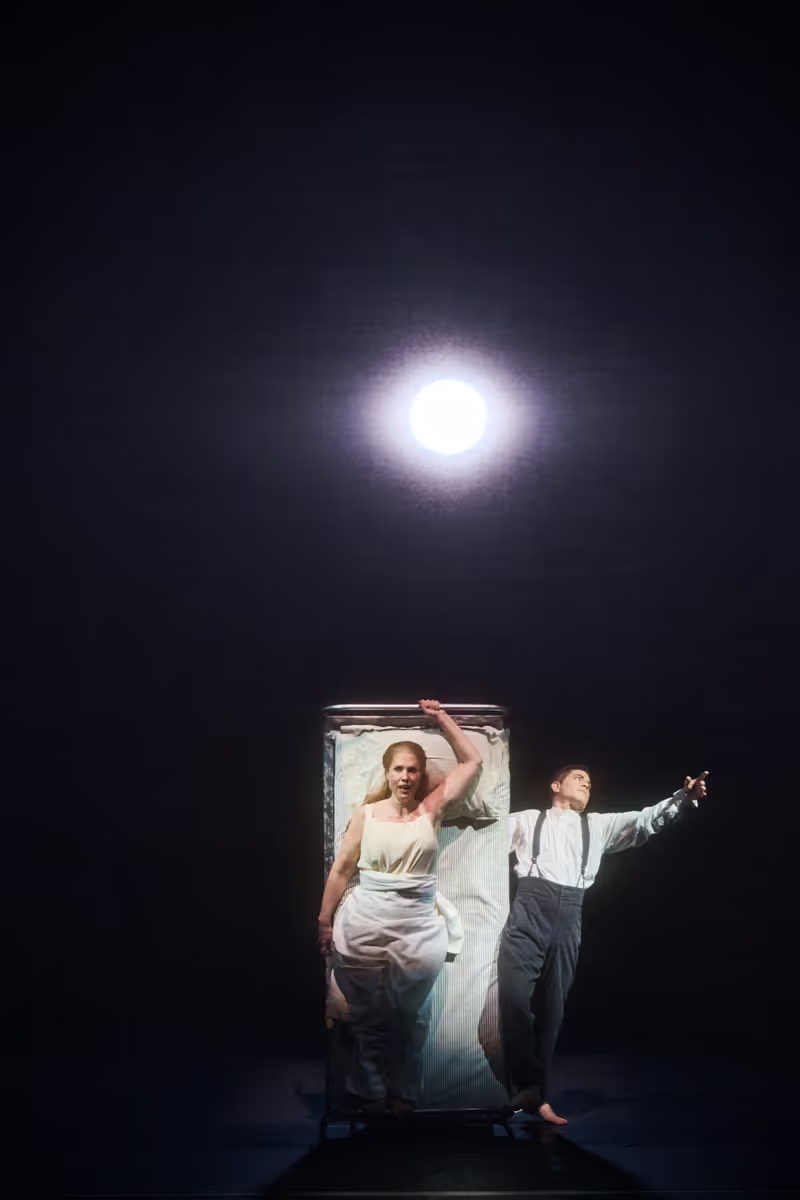
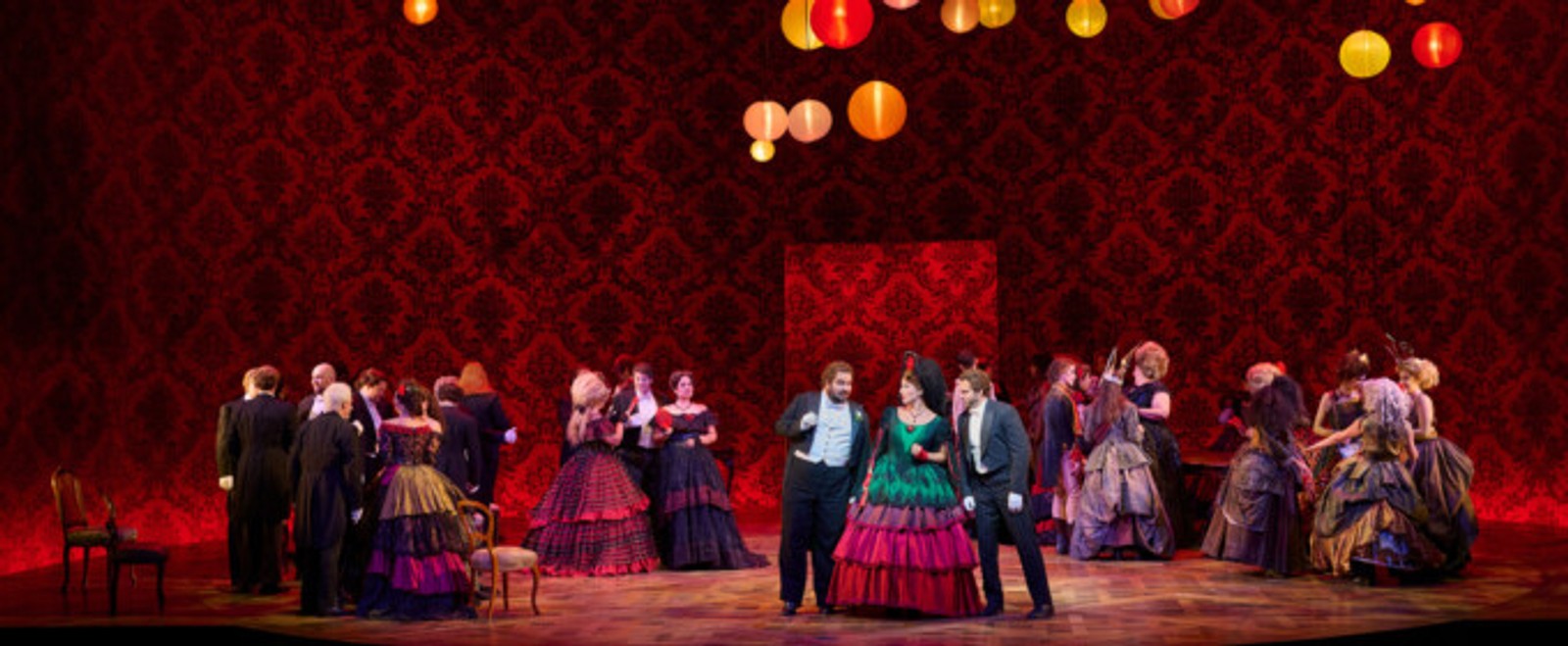
Original director Robert Le Page’s peerless mastery of stagecraft is in full display throughout this thought-provoking revival production directed by Francois Racine that will leave a lasting impression. The creative yet intuitive use of symbolism, including playing with both pieces' themes of light and shadow through jaw-dropping lighting design (Robert Thomson), is a defining element of the rendering of these early 20th-century avant-garde works. Every aspect of this production worked well together, including captivating and impressive set and prop design (Michael Levine), deft musical interpretation, and strong dramatic and vocal performances.
The external facade of Bluebeard’s castle was rendered through a mesmerizing, revolving, detailed model of a turreted castle seen upstage through a screen. Don’t overthink how this is happening and allow yourself to get drawn into the magic.
I am fairly naive to Bartok’s music, and his only opera was a great way to get acquainted. Under the baton of Johannes Debus, the orchestra operated as a unified voice to tease out the composition’s foreboding yet sensual forest of emotions and illustrate the delights and horrors that are behind each of Bluebeard’s seven locked doors. Bartok ingeniously weaves between tonality and dissonance, juxtaposing smooth melodic lines with densely textured homophonic passages that cunningly illustrate the story’s psychological themes.
The central narrative is about whether or not we truly want to see what is behind that locked door and invites us to question whether it is truly possible to “know” another person, and if so, do we truly want to know what lies deep inside? We may all be carrying more hidden, horrific baggage than we care to admit.
Karen Cargill and Christian Van Horn effortlessly brought us into Bluebeard and Judit’s passionate hellscape. Van Horn's commanding and weighty bass-baritone voice clearly embodied Bluebeard’s brooding and dangerous psyche, overlayed by a thin veneer of mysterious charm.
Cargill’s full lyric soprano is warm and roundly sunny with a vibrant core that has a hearty chestiness even at the highest pitches. Alongside this majestic instrument, she gave a sophisticated, dramatic performance that innovatively personified the diverse moods established by the score. Her vulnerability, obsession, horror and quiet desperation were all palpably conveyed to the audience.
This was all certainly a tough act to follow for Erwartung, but it managed to deliver. I have never developed a taste for Schoenberg’s music, but my eyes and ears were riveted by this production nonetheless. The skill of the creative team has a lot to do with this ostensible paradox. The thematic unity of the pieces was clear. The metaphors of light coexisting with shadow and being unable to escape from the bondage of our own making were clear throughlines in the staging. This time, instead of a portrait of lovers’ psychological delusion and dysfunction, we are getting a portrait of the madness of the woman scorned. Both our women protagonists’ minds crumble under the weight of the need for external validation and patriarchal approval.
The orchestra maintained its strong sense of ensemble, creating a textured aural backdrop for this gripping psychological thriller. Unexpected, unbalanced use of set pieces enhanced the subconscious mind-walk energy of the storytelling. Anna Gabler's performance as “The Woman” was entrancing and impossible to look away from. Her supple, feisty soprano voice is almost surpassed by her dramatic chops - but not quite. I believed every beat of her confusion, vulnerability, grief and shame.
No discussion of this production would be complete without commending the thespian luminescence of the silent performers who brought to life Bluebeard’s three blood-soaked former wives and Erwartung’s present-day therapist, as well as her former lover and the other woman who live rent-free in her tortured mind. Using lithe, graceful, and expressive movement, their performances conveyed impactful characters in these psycho-dramas.
My companion noted that men writing about the mental unravelling of a woman is a hackneyed trope. Erwartung’s librettist is a woman, Marie Pappenheim, and it shows. I had more difficulty relating to our heroine in Bluebeard’s Castle from a 21st-century feminist lens, but I thoroughly enjoyed both productions. My companion and I had a lot to discuss. Even if you are lukewarm to early 20th-century avant-garde music and don’t care for Schoenberg’s serial composition music-baby, you are sure to be won over by the brilliance of these performers and the creative team.
Sign up for all the news on the Fall season, discounts & more...
|
SYMPHONY UNDER THE STARS Collingwood Music Festival (7/11-7/11) |
|
All's Well Theatre Aquarius (1/27-2/13) |
|
Smileys: A New Play Reading Wychwood Theatre (9/25-9/25) |

|
Experience HYPROV: The Ultimate Live Comedy & Hypnosis Show Roy Thomson Hall (11/06-11/06) |

|
Jordan Young People's Theatre (10/16-10/23) |

|
Not Dead Yet! - John Cleese and the Holy Grail at 50 The Elgin & Winter Garden Theatres (10/02-10/02) |

|
HYPROV Is Back in Fredericton! A Night of Hypnosis, Improv & Comedy HYPROV Is Back in Fredericton! A Night of Hypnosis, Improv & Comedy (11/17-11/17) |
|
Jonathan Van Ness: Hot & Healed Comedy Tour 2026 The Elgin & Winter Garden Theatres (10/23-10/23) |
|
A Midsummer Night's Dream Stratford Festival (5/01-9/26) PHOTOS |

|
The Tempest Stratford Festival (4/28-10/24) PHOTOS |

Reader Reviews
To post a comment, you must register and login.