


Review: PELLÉAS AND MÉLISANDE at Koerner Hall
Debussy's only opera produced by Opera Atelier
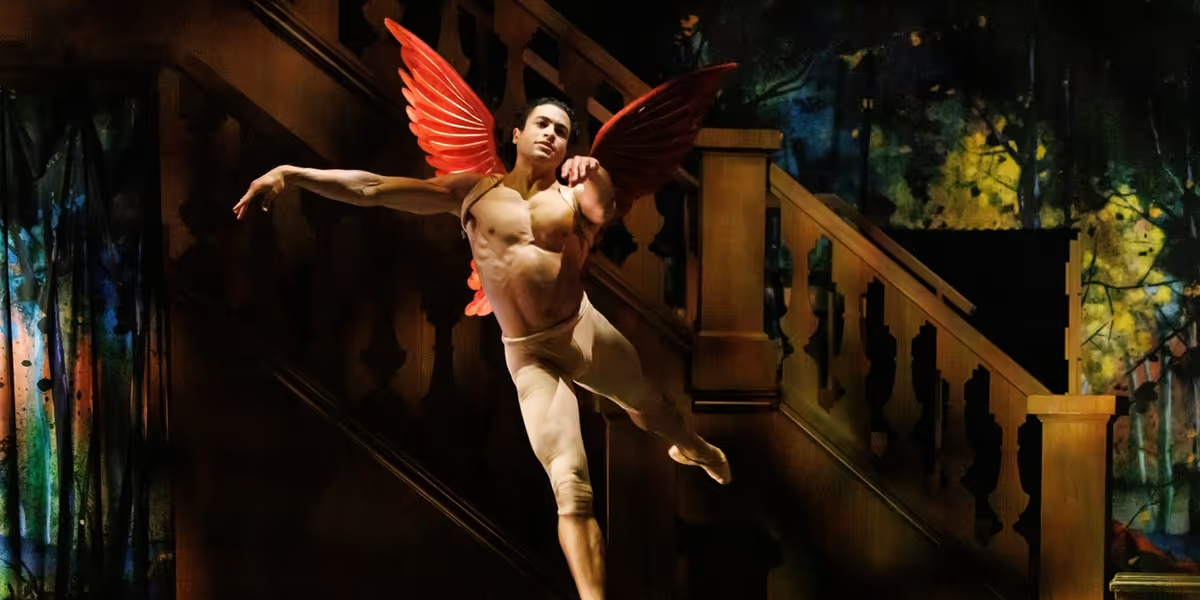
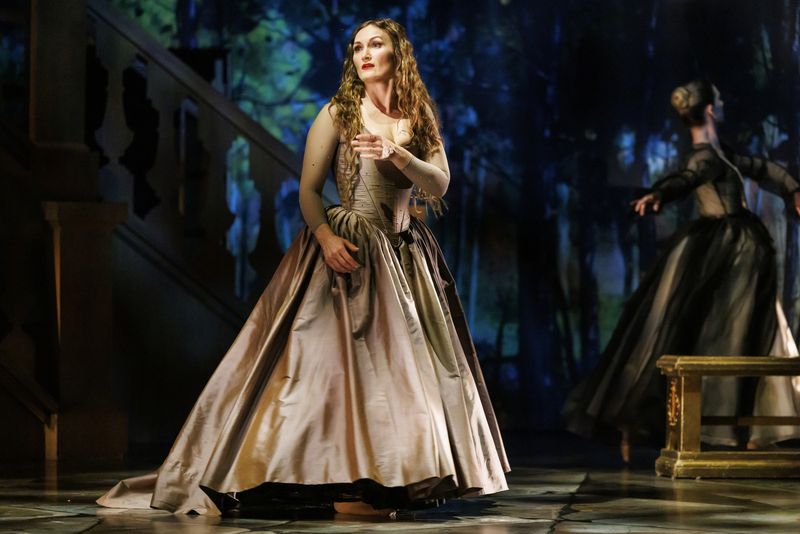
Opera Atelier’s 2025-2026 production of Claude Debussy’s Pelléas and Mélisande is a departure from the company’s production modus operandi. Debussy’s only opera premiered in 1902 - practically contemporary compared to the majority of what Opera Atelier has mounted in their 30+ year history. The company is best known for producing early work. This early 20th-century composition leaps forward by almost a century compared to their other performances I have seen.
Opera Atelier usually commits to a historically informed performance, adhering closely to the conventions of the era in which the work was written. In this romantic period production, there were notable modern-day insertions, including the use of projection to add depth and variety to the set. The swooping visuals evoked the dream-like, almost trippy vibe of this work.
This production is also a time-bending musical mash-up that weaves the music of baroque composer Jean-Philippe Rameau and Debussy’s contemporary Marc-Antoine Charpentier into Debussy’s score. This is rendered quite seamlessly, and I’m not sure every listener picked up on the mash-up. For me, the initial effect was intriguingly aurally disorienting.
The opera opens with a ballet accompanied by what is unmistakably a Baroque overture. This would have been exactly what I expected at an Opera Atelier production if I didn’t know I was at a Debussy performance. Upon conclusion of the first overture, a whole second overture began in the impressionist style of Debussy - curiouser and curiouser!
The key to enjoying this production is embracing that feeling of curiosity and confusion. The libretto is adapted directly from a symbolist play by Maurice Maeterlinck. The symbolists repudiated the concept of linear narrative storytelling, embracing instead an approach where metaphorical events arise and fall away, with the audience intended to interpret each scene for its symbolic rather than narrative value.
In Pelléas and Mélisande, the basic familiar narrative of a love triangle unfolds in the non-linear, disjointed and fluid manner of a dream. The ephemeral nature of each scene allows significant latitude for the creative team, and it was clear to the audience that everyone had a lot of fun bringing this together. Since disjointedness is inherent to the work, they can get away with the daring choice to insert other composers' music without disrupting the narrative flow - because there isn’t one.
Their new venue, Koerner Hall, does not have a pit. Instead of being accompanied by the full orchestra, they were accompanied by a 16-person ensemble comprised of Tafelmusik musicians playing period instruments as usual. The small ensemble on light action instruments led to an overall effect that is much more delicate than we expect from the operas of Debussy’s time, which served the dream-like, abstract, symbolic nature of the drama.
The vocal performances were outstanding. I have been following Canadian soprano Meghan Lindsay performing for Opera Atelier for some time, and the evolution of her singing and dramatic talents was very evident in this performance. Each scene is about visceral emotions rather than the “events”. With a clear connection to Melisande’s motivations throughout, Lindsay made the role her own using her supple, colourful, honeyed yet not saccharine timbre. Musically and dramatically, she painted a vivid impression of a woman who is scarred by trauma, desperate for belonging, and unable to find external stability due to her internal chaos.
It’s been a minute since I heard Measha Brueggergosman-Lee, and what a treat for audiences it is to have her as Opera Atelier’s artist in residence! Her always commanding stage presence lent itself exceptionally well to the role of matriarch Geneviève, with her rich, warm, hearty full lyric instrument able to communicate nurturance and power all at once.
I was thoroughly impressed by Philippe Sly in his debut performance for Opera Atelier in the role of royal patriarch Arkel. His bass-baritone voice is lusty and juicy with a self-assured, rounded edge. I hope he will be a regular for Opera Atelier.
Dance was not a routine feature of the operas of Debussy’s time, but an Opera Atelier production without ballet is unthinkable. Ballet was used throughout to enhance and highlight the symbolism on which the story relies. Dances were often set to the music of Rameau and Charpentier, as Debussy did not write music for dances in this work. Along with the dazzling costumes and deft stagecraft for which Opera Atelier is known, the dancing truly brought this work to life.
My companion is a writer who needs a plot to fully engage. She’s still trying to understand what happened. If you can abandon logic and embrace Debussy’s musical fluidity and imagination, you will surely have a phenomenal time at this production.
Prefer BroadwayWorld in Google Search?
Add us as a preferred source so our stories show up more often in Top Stories and Google’s AI answers — for you.

Sign up for all the news on the Fall season, discounts & more...
|
MOZART REQUIEM Meridian Arts Centre (6/19-6/19) |

|
Jordan Young People's Theatre (10/16-10/23) |
|
Tuesdays With Morrie Marsh Street Centre (9/22-9/26) |
|
SHADOWS AND LIGHT Flato Markham Theatre (2/06-2/06) |

|
DANCER (A MUSICAL IN TEN FURLONGS) Terminal Theatre (10/06-11/01) VIDEOS |
|
Measure for Measure Crow's Theatre (9/15-10/04) |

|
Battles Young People's Theatre (4/26-5/06) |

|
Bee Gees Celebration - Soirée du jour de l''an Théâtre Capitole (12/31-12/31) |

|
Disney and Pixar's Finding Nemo Young People's Theatre (11/26-12/27) |

|
Spring Awakening Soulpepper Theatre (9/10-10/04) |

Reader Reviews
To post a comment, you must register and login.