


Interview: Carey Perloff of BETRAYAL at Marin Theatre
The woman who literally wrote the book on directing Pinter finally gets to helm a production of a play that got away from her
They say never meet your heroes because they’re bound to disappoint. Well, it’s a good thing Carey Perloff ignored that adage. When Harold Pinter invited her to lunch in London some 40 years ago, she showed up incredibly nervous because she was a very young female director and he was one of the greatest playwrights of our time. Within minutes, though, he’d put her at ease and the two got along famously. By the end of that lunch, he’d even offered her a new play of his to direct in New York. And the rest is theater history. Perloff has gone on to direct almost the entire Pinter canon, including numerous productions at A.C.T. when she was its artistic director, often in direct consultation with Pinter.
And yet there remained two of his plays that she’d never done. No Man’s Land had been set for 2020 and then COVID happened. Happily, the other one, Betrayal, Perloff is finally getting a chance to direct at Marin Theatre, thanks to a suggestion from its artistic director, Lance Gardner. At this stage in her career when she can pick and choose the projects she wants to work on, she couldn’t be more excited to be directing “the one that got away.” I spoke to her by phone last week right after she’d finished rehearsal for the day. She was still giddy from working with the actors on the intriguing puzzles Pinter presents in his intimate play about marital infidelity that is actually about so much more.
Talking to Perloff is like consulting with the Oracle of Pinter, as close as you can get to speaking with the man himself, who died in 2008. She knows his work inside and out, and has a deep understanding of the impulses behind his creative choices. We talked about why she’d never before done Betrayal, how she managed to click so immediately with Pinter at that lunch in London, and how she approaches his work as a director. Lest our conversation sound forbiddingly dry or academic, let me assure you it was not. Our chat was delicious fun (I had not expected the Lauren Bacall reference!) and I got the impression Perloff feels like the luckiest person alive as she relishes the opportunity to dive into another Pinter play. She even retained her good humor when relating her recent disaster-laden experience directing a long-awaited production of Oedipus, which entailed physical injury, a heat wave that crashed the theater’s HVAC system and a delayed opening night she was unable to attend. As Perloff put it, “Look, it’s the Greeks! What can you say?” The following has been edited for length and clarity.
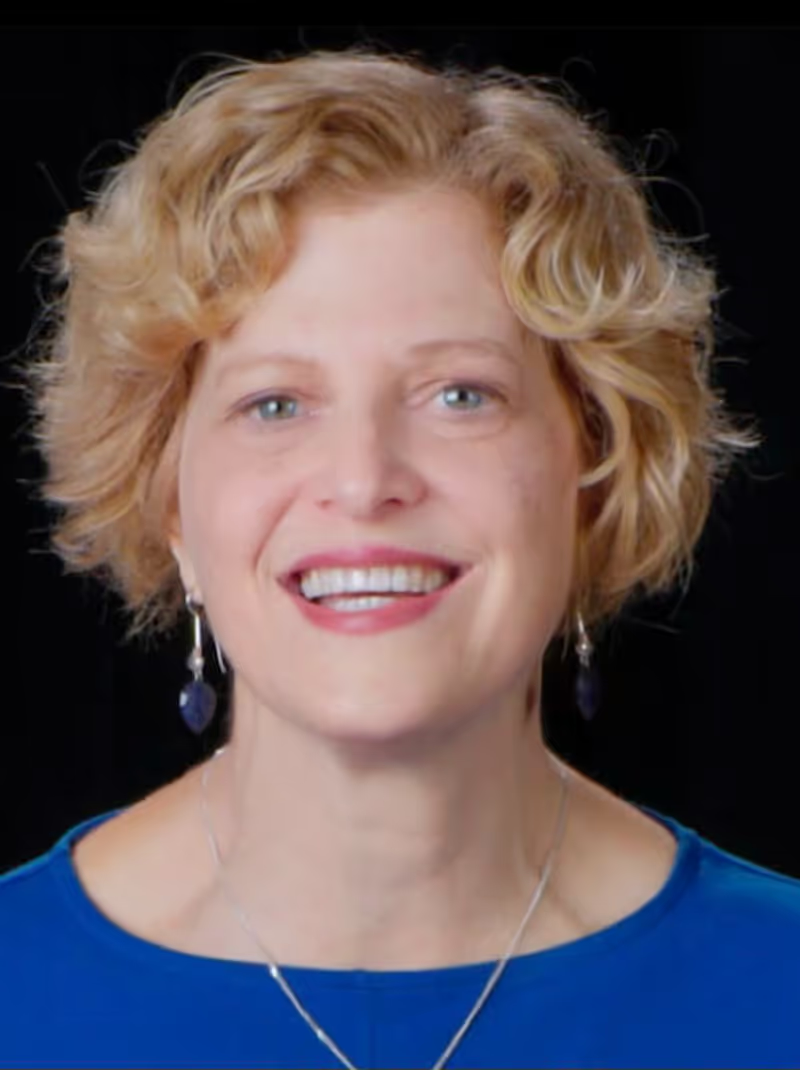
You are fortunate to be in the period of your career where you can pretty much choose the projects you work on. Why did you choose to direct Betrayal and why now?
Post-A.C.T I wanted to work on the projects I really loved, but I have to say Betrayal was Lance’s idea. He knows how much I adore Pinter, and I’ve directed many, many Pinter plays but this one got away from me. The whole time I was at A.C.T. I wanted to do Betrayal and we didn’t quite have the right company for it, and so I never did it. After Cherry Orchard [at Marin Theatre last winter], Lance and I had been talking about a variety of titles, but not Pinter. And suddenly he called me and said, “I have a great idea. Why don’t we do Betrayal?” And I was so thrilled. I didn’t think it was in the cards, for some reason.
Betrayal seems like such a natural fit for you that I’d assumed you’d already directed it.
No. The two I haven’t done are Betrayal and No Man’s Land. I was supposed to do No Man’s Land at the Stratford Festival and then COVID happened so that got away. This is my first time with Betrayal, which is so delicious. It’s such an incredible play, and what feels particularly right about it is that it really is incredibly intimate. Now that I’m doing it here, I’m glad that it wasn’t at the Geary. Not that it couldn’t have worked – we did Old Times and Homecoming at the Geary - but it’s so sexy and specific and intimate that the privilege to do this play in a smaller theater is really wonderful.
I also loved the idea cause right away I knew that Liz Sklar should play Emma. That’s the first move I made. It’s an amazing company, and Tasso Feldman as Jerry and Charlie Semine as Robert are new to the Bay, so that’s exciting. They’re really wonderful, and it’s so moving to me they’re the age they’re meant to be in the play. I say this because Betrayal is often done with actors who are much older. But at the center of this story, it’s a crisis that she’s pregnant and we don’t know whose baby it is. So it’s important that that feels plausible.
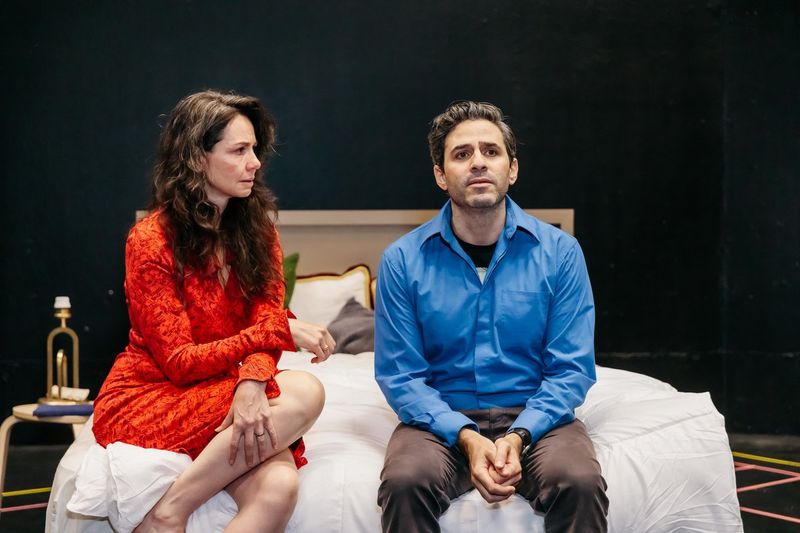
I don’t think it’s giving any spoilers away at this point to note that Betrayal is largely told backwards.
Yeah - backwards and forwards.
Why do you think Pinter chose to tell this particular story in that fashion?
Pinter said that he always started a play from a really specific visual image. He never had an intellectual idea; it was always a visceral something that came into his mind. And what came into his mind [for this play] was two people, a man and a woman sitting in a pub, looking at each other, completely quiet, very sad, and not saying anything. He said to himself, “Who are they? And what happened?” So of course then he had to go backwards, to find out that they were Emma and Jerry, and they’d had an affair. And then he had to figure out who were they married to and how did the affair start and what happened. What was the grief about that they were looking at?
And what he realized is the transgression is only a piece of it. It’s like people always say the coverup is worse than the crime. What’s really painful for these three is the lying, the betraying the friendship and not revealing that it had happened. It’s as much a play about self-betrayal and the betrayal of a friendship as it is the betrayal of a marriage. So I think that’s why he went backwards.
Today, as an exercise, we did the play in the order that it happens chronologically, and that was an incredible, incredible experiment. Because what it made us realize is the duplicity is so much part of the scenes that happen at the top of the play, because it’s already happened but the audience doesn’t know. So the last part of Betrayal, in a way, is the betrayal of the audience. When you do it out of order, we then know things that the characters don’t know, which would have been different if he’d done it in sequence. So we, as audience members, in some visceral way feel that we’re betraying the characters when it goes backwards. Does that make any sense? I don’t know. [laughs]
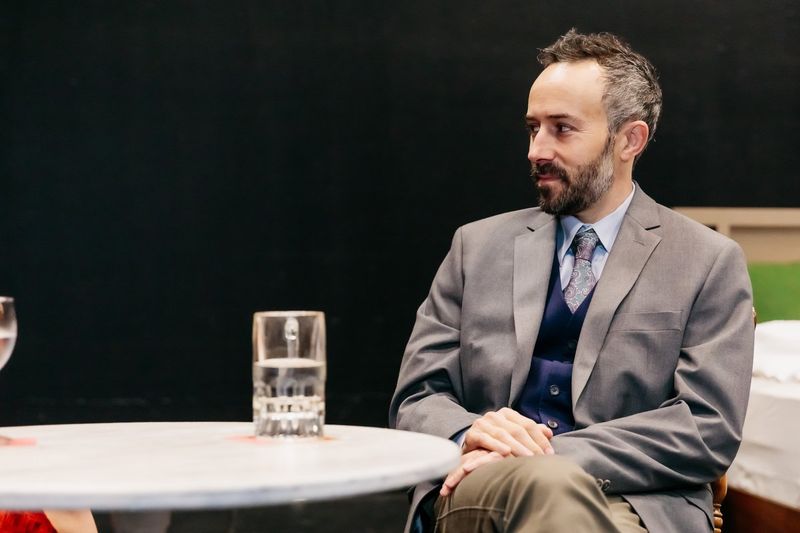
You literally wrote the book on directing Pinter [Pinter and Stoppard: A Director’s View]. Now that you’ve been working intensely on Betrayal, have you had any additional revelations about his writing that you made think “Ooh, I wish I could go back and put that in my book?”
I didn’t really write on Betrayal because I hadn’t directed it. I have a few things in there about it, but omigod I had no idea what a great play it was until I started directing it. What I tried to do in the book was articulate what I learned from Pinter about kind of the rules of play, of how he approached his own work, the language of his plays, how to lift the language, how the repetition works, how the men play games with each other because of the vulnerability of actually telling the truth. So they play word games, and underneath it all there’s a lot of grief.
I could really help the actors very quickly by saying, “This is the landscape, this is how the landscape works, this is how the language works. These are the references he loves.” That ultimately he was a real romantic. When he talks about reading Yeats on Torcello, this is who he was as a young man. We all realized that, if you read his biography, this relationship of these two men who were best friends from when they were really young is a relationship of two people who fell in love with literature.
And that’s Pinter as a very young man, really as a teenager. It’s also his Jewish history. I don’t know that this will show up in the performance, but we’ve talked a lot about are they Jewish and what Pinter’s Jewish history was – which is something I dug into a lot in the book. Yeah, now that I’ve really worked on Betrayal, if I did it again, I would put more in about this particular play, because the puzzle of it, the revelations, are so moving, and it’s just so masterful how they detonate. He was completely in command of his craft by the time he got to this play.
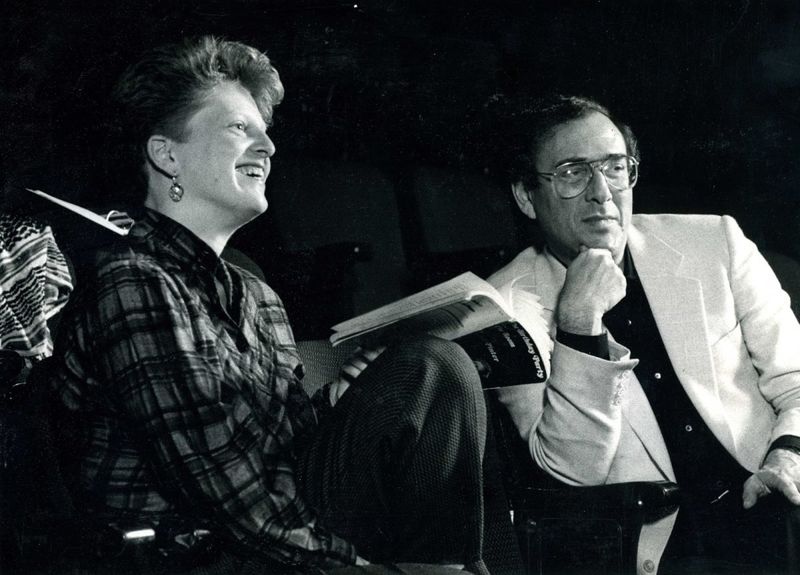
You worked directly with Pinter very early on in your career. How did that come about?
I’m married to a British guy, and my husband and I always loved Pinter. I wanted to do The Birthday Party when I was running the Classic Stage Company in New York when I was very young. I kept trying to get the rights and couldn’t get them because his agent was difficult, and I had this British playwright Tony Harrison, whose play Phaedre Botanica I’d directed, beg for me. So I got the rights and we did it and it was really successful, and crazily enough Pinter sent his friend Betty Bacall to see it.
She wrote him and said it was really good, you should have come. Because it hadn’t been done in New York since its original production. So he wrote to me and said, “If you’re ever in London, I’d like to take you to lunch.” Well, I’m in London a lot so I go have lunch with him and I’m unbelievably nervous, cause it’s Harold Pinter, and he’s unbelievably charming, and he could drink two bottles of wine at lunch and not show it. As I’ve said about meeting Stoppard - both of them were Central European Jews and my mother was a Viennese refugee – I just felt familiar with them right away.
He said to me, “I’ve written this one-act, this tiny play called Mountain Language.” Which was a very moving play about the Kurdish situation. “Would you like to do it at your theater? You could do it in rep with The Birthday Party.” Cause it was only 20 minutes. And I said, “Oh, how fantastic. I’d be so thrilled and honored.” And he said, “I’ll come to New York.”
So the second time I rehearsed The Birthday Party, he came to do both it and Mountain Language. We spent five weeks in the room together, and it was so remarkable because by then he was a famous playwright at the height of his game and I was a female director in my 20s. But he was so respectful and so lovely, and he never patronized me or the cast. He pursued The Birthday Party, which after all was a 25-year-old play by then, with such appetite and rigor and delight. And he loved the cast. It was this wonderful company - Peter Riegert and David Strathairn and Jean Stapleton.
Omigod!
It was amazing, and he really helped us. He was an actor himself, a great actor, and so he would always give a note that was really actable. Like Jean Stapleton said to him, “Harold, I don’t understand at the beginning of The Birthday Party, why does she keep asking her husband to read her the newspaper? Is that a commentary on their marriage? Is she lonely? Why does she ask all the time?” He always would pause and think about the question, and he said to her, “I believe –“ cause he never said, “I know the answer.” Like he never talked about his characters as though he’d created them. So he said, “I believe that she’s forgotten how to read.” Which I thought was such a brilliant note. Because that’s such a great thing to play for Meg.
And always it was like that, so as we worked, I really learned how the plays worked. There was no point bringing biography into the room. The way the plays work is it’s like a cricket match and everything starts when you get on the pitch. It’s a sports event, and it’s always about predator and prey. Somebody’s at the bat, somebody’s defending their pitch, that’s it. It’s always relational, it’s always a kind of dynamic between two people, and it’s always what’s happening actively in the present moment. All the time.
So he really taught us how to activate it. In his plays, props are sort of magical. In Betrayal, in order to keep the love affair going, she brings him a tablecloth from Torcello, and it’s so humiliating later on that that tablecloth becomes a symbol of the failure of the relationship. It’s not realistic, it’s not naturalism, but the props that you do have are like magical things and they have to detonate.
I think about those things all the time. I took so many notes when I was with him, and then I did many, many of his plays at A.C.T. and I would be in dialog with him, and so those discoveries on how did the plays work evolved over time. It’s like learning the music of a certain kind of composer. It doesn’t mean that he was ever prescriptive, but you could learn to sing the music the way that he scored it, you know?
I loved it, and that went all the way through Celebration and The Room, the one-acts that we were doing on 9/11. That’s when he was supposed to come to A.C.T. and we were going to do a whole Pinter festival, then 9/11 happened and because he’d been so critical of the Bush administration, he rang me and said, “You know, it would be complete hypocrisy for me to come to America right now.”
So we did the festival, and we did do those two plays the day after 9/11 actually, and I’ll always think of that. I had to stand there on the Geary stage and say, “Look, I know this is very odd but I’m so glad you’re all here. We’re gonna do a play about terror and a play that’s really funny, so just look around and be glad that you’re in the room with all these people at this terrible moment.” And then we did the play. It was wild.
I always say that Pinter and Stoppard came to me on these sort of key moments in my life, and that was one of them. Because his plays are partly about terror and the knock at the door, and invasion – and that’s what had just happened.
What is something about Harold Pinter, the man, that might surprise people who only know him through his plays?
I guess I was surprised at his emotional availability, and his generosity of spirit in the room. He’s actually very warm. And very funny. And very kind in rehearsal. I say this because there are American Playwrights, men of his generation who shall go nameless, who treated all of us terribly, me particularly, women particularly. The other thing that I thought was astonishing for somebody who was so educated and erudite is he never went to school past the age of 17. He was a poor Jewish kid from the East End who never had Latin or Greek and so couldn’t go to Oxford or Cambridge. He just taught himself. That was surprising.
And he was really wicked and funny, very sexy. He loved actors and was very protective of them; it was always us and them. When Martha Swope came to photograph things and The New York Times came to interview us, he really pulled up the plank, really defended our process.
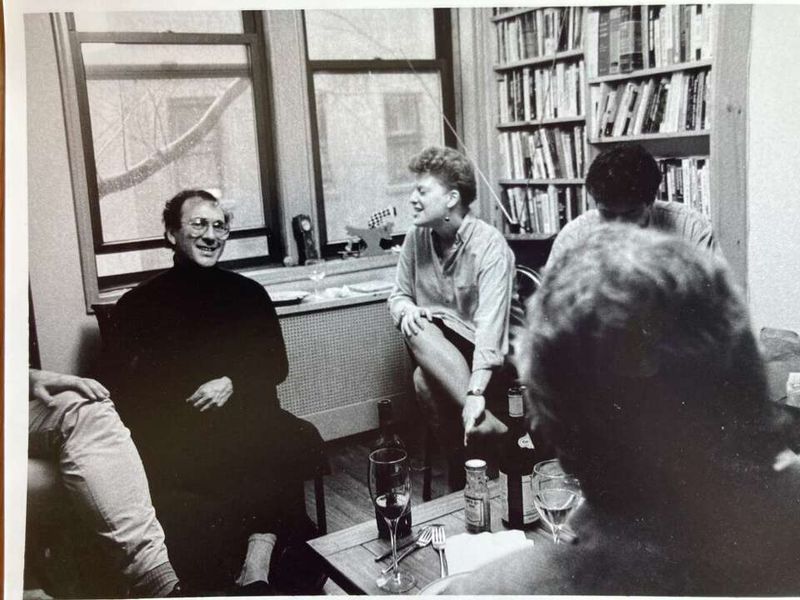
You’re very well known for directing Pinter and Stoppard, two playwrights I think of as quintessentially British, and yet you’re American. What is it about their work that makes you just sort of naturally vibe with them?
I think the Jewish thing is a big part of it. I mean, I’ve never done a David Hare play and I’ve never had any desire to, and I’ve never done Brenton. Even though these are playwrights I admire, it was not the thing I was drawn to. There was something about both Pinter and Stoppard, who were not just Jewish, but Central European. I’m really a European Jew. My mother, my Viennese grandmother, my great grandmother, those were the people who raised me. The love of culture, the worship of language, the sense that because we’re always in diaspora we’ll never leave buildings behind, we’ll never leave monuments behind. What we leave is language and literature, that’s what we take with us. So, words are important – like Stoppard says in The Real Thing, “I don’t think I’m sacred, but words are sacred. And when they’re put in the right order, they can nudge the world a little.” Pinter felt that way, too, I think.
So, in that sense I felt simpatico with them immediately. I first started reading Pinter when I was in Martin Esslin’s class at Stanford, you know a million years ago, when I did Beckett and Pinter. Beckett is another real touchstone playwright for me. I’ve done a lot of Beckett, I adore Beckett, so I came to Pinter and Beckett first, and Stoppard later. And they’re very different writers, Stoppard and Pinter - one is a minimalist, one is a maximalist. But there’s certain ways they were similar.
And I do think because I married a Brit early on, I went to Oxford on a Fulbright and I met my husband, that wicked sense of humor that also covers a kind of vulnerability, that made sense to me, I understood it. You find the people whose voice feels in synch with yours, and when you find it, you’re so grateful and you try and swim in those waters as much as you can. And it just happened with both of them. I could never get enough.
Just last month, you finally got your first crack at Oedipus, at Playmakers in North Carolina. How did that go?
That’s another one that got away from me! I mean, I’d worked on that adaptation for 5 years. I nested Oedipus Tyrannus inside Oedipus at Colonus, so it was Oedipus’ whole life, with a little bit of Antigone at the end, which was wild. So we go to Playmakers, and for me Playmakers is very moving because it has an MFA program, as A.C.T. used to have, and it has a core company, as A.C.T. used to have. And it’s run by this fantastic artistic director, Vivienne Benesch, whom I first met when she acted at A.C.T. in Edward II.
So that was all amazing. But it was a hundred degrees and a hundred percent humidity the whole time, so I’d just gotten used to that when I got knocked down by an E-scooter and ripped my elbow to shreds. I had to get 7 stitches the first week of rehearsal, so that was very dramatic, and now I have like this Oedipus scar. And then, the HVAC system crashed after the second preview and so they cancelled the opening weekend. So I never actually got to see the final product.
No!
Yes. And in the end it was like fate. I felt like “Look, it’s the Greeks! What can you say?” You have to understand that between fate and free will, fate always wins. We think we’re in control of the world, but we’re not, and nature has the last laugh, and there’s no closure. [laughs]
They shut down the whole theater, they had to find the broken part, they had to order the broken part, they had to install the broken part. And then they reopened it, and they did a big opening, but none of the creative team was there. Then they had a great run, and I talk to them all the time and I did a wonderful last-day Zoom with all the kids in the Classics department who had incredible things to say about it.
But it’s really bizarre, it’s still an open thing for me, cause I never quite finished it. So I hope I’ll get to do it again somewhere. But it was really a profound experience. I mean, I’ve done so many Greeks, but I hadn’t done Oedipus. And it’s so iconic and so complex and so rich and so much about the world we’re living in now and the failure of democracy and birthright citizenship, and what happens when we’re a culture and don’t share beliefs anymore. It was done on a thrust stage where we could have a chorus that talked directly to the audience, and that felt really good. The question of who is the public, what’s the public voice – that was an experiment I always wanted to do and never really got to since I did Kitka and Hecuba [at A.C.T.].
So that was really fun and then to go from that huge thing to Betrayal is really interesting. And exhausting. I’ll be ready for a break!
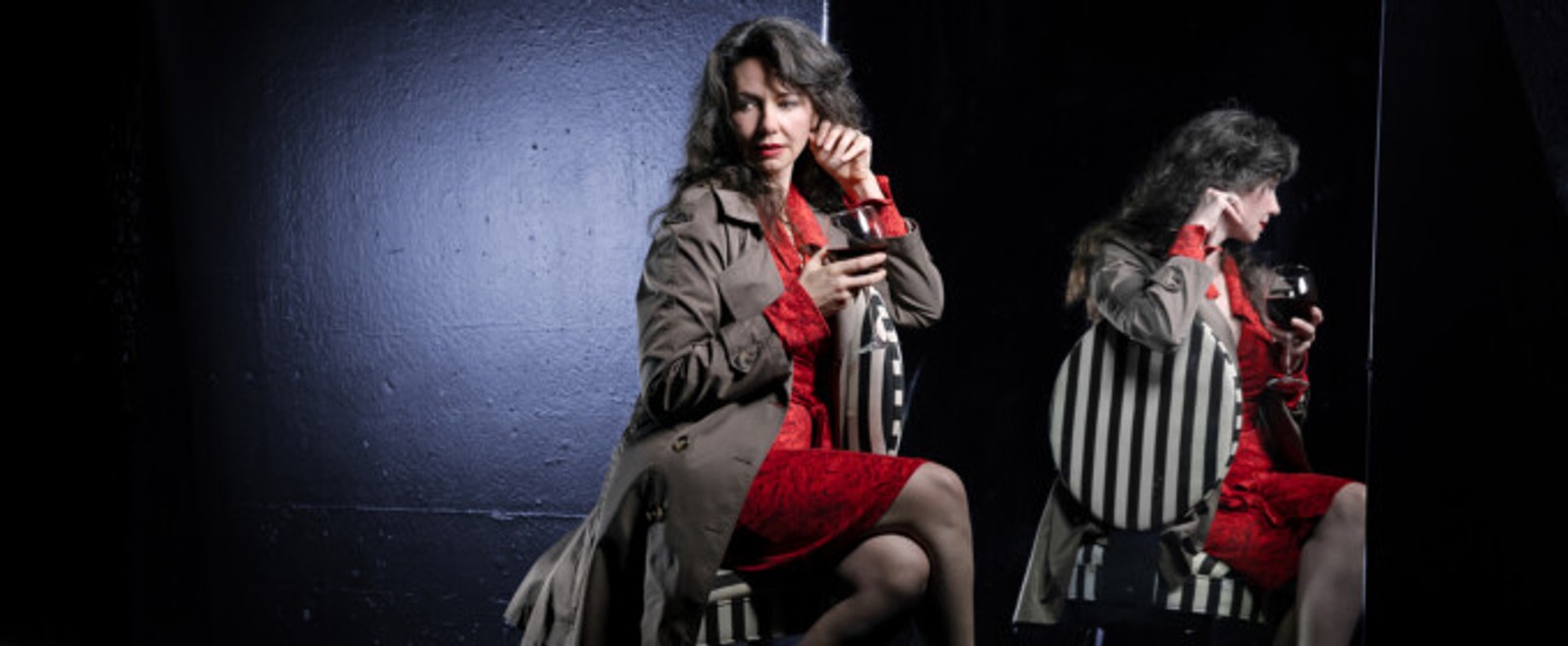
(header photo of Liz Sklar as Emma by Vita Hewitt)
---
Betrayal will perform October 22 – November 15, 2026 (press opening: October 27) at Marin Theatre, 397 Miller Avenue, Mill Valley, CA. For tickets and additional information, visit MarinTheatre.org or call 415-388-5208.
See more BroadwayWorld in Google
Our stories show up more often in Top Stories and Google’s AI answers.
Breaking Broadway alerts by text
Get the biggest stories sent straight to your phone.
Sign up for all the news on the Fall season, discounts & more...

|
The Madness of Lady Bright Venue: iMPACt Center for Art & Dance (10/16-10/25) |

|
Gutenberg! The Musical! Hillbarn Theatre (10/08-11/01) |

|
Bay Area Musical Improv Festival - Sunday 1:30PM Show All Out Comedy (10/25-10/25) |

|
The 1940s Radio Hour City Lights Theater Company (11/19-12/20) |
|
Gamblin' Life or Death Potrero Stage (11/05-11/08) |

|
Hadestown Teen Edition Berkeley Playhouse (7/10-7/18) |

|
Live At the Orinda - 2026/2027 Concert Season Orinda Theatre (9/22-5/23) |

|
“E4TT Call For Scores: Solo Piano, Vol. 3” Community Music Center (10/18-10/18) |

|
The Secret in the Wings Theatre Lunatico (10/10-11/01) |

|
Bay Area Musical Improv Festival - Friday 8:30PM Show All Out Comedy (10/23-10/23) |
