On the occasion of the United States’ semiquincentennial (250th anniversary) and the exhibition "Folk Nation: Crafting Patriotism in the United States," the American Folk Art Museum brings together writer and curator Namita Gupta Wiggers, Americanist and art historian Angela Miller, and artist Sunny A. Smith to explore the complex relationship between craft, folk art, and nation-building. The program takes its title from Wiggers’ 2021 review for Metropolis, which called for greater historical and political depth in museum exhibitions connecting craft to national identity. Together, Wiggers, Miller, and Smith revisit this question, considering which handmade objects are collected and celebrated, whose stories they tell, and how they shape our understanding of American identity. Tracing the emergence of American folk art as both a heritage-collecting movement and an artistic category, the conversation examines how craft can reflect, reinforce, and complicate ideas about the American nation—and asks what role it might play in imagining America today. "Folk Nation" is on view at the American Folk Art Museum through September 13, 2026, and again October 9, 2026–February 28, 2027. To learn more, visit https://folkartmuseum.org. This program was organized by Mathilde Walker-Billaud, AFAM Curator of Programs and Engagement.
American Folk Art Museum
Museum · Upper West Side
Location
2 Lincoln Square, New York, NY 10023 · Get Directions
American Folk Art Museum Videos
Learn about the life, art, and enduring legacy of Diné artist Charlie Willeto in this conversation presented by the American Folk Art Museum. Charlie Willeto spent his life in Diné Bikéyah, the homeland of the Diné people (Navajo Nation). A Hatááłii (medicine man), Willeto exchanged his hand-painted, doll-like wooden carvings for goods at trading posts near his home in New Mexico. Drawing on Diné ceremonial traditions—while adapting forms and symbols for a secular Western audience—his stylized sculptures reflect his experience as a healer, community member, and artist of remarkable vision and wit. The American Folk Art Museum invites you to a conversation celebrating Willeto's legacy with artist Patrick Dean Hubbell, historian Jennifer Nez Denetdale, and curator Ninabah Reid Winton. Together, they explore Willeto's work, currently on view in the collection-based exhibitions "Self-Made: A Century of Inventing Artists" and "Folk Nation: Crafting Patriotism in the United States," through the lens of Diné history, philosophy, and artistic traditions. "Self-Made" and "Folk Nation" are on on view at the American Folk Art Museum through September 13, 2026. To learn more, visit https://folkartmuseum.org. Lead support for "Self-Made" and associated public programs is provided by Elizabeth Hurtt and Douglas Branson. This program was organized by Mathilde Walker-Billaud, AFAM Curator of Programs and Engagement.
“Self-Made: A Century of Inventing Artists” at the American Folk Art Museum takes a critical look at the historical definition of the “self-taught artist” in the United States from the early twentieth century to today. The exhibition examines how artists without academic training have depicted themselves—on their own terms—through self-portraiture, alter egos, and autobiography. Valérie Rousseau, Curatorial Chair and Senior Curator of 20th-Century & Contemporary Art, and Suzie Oppenheimer, Ponsold-Motherwell Curatorial Fellow and Research Associate, lead a walkthrough of the exhibition in dialogue with one another. Together, the co-curators highlight drawings, paintings, sculptures, films, and notebooks on view in the galleries while exploring how artists have conceptualized and represented themselves over the last century. "Self-Made" is on view at the American Folk Art Museum through September 13, 2026. To learn more, visit folkartmuseum.org. Lead support for "Self-Made" and associated public programs is provided by Elizabeth Hurtt and Douglas Branson.
Drawn from the American Folk Art Museum’s collection, "Folk Nation: Crafting Patriotism in the United States" examines how Americans have defined themselves through the creation, collection, and transmission of vernacular objects. In this virtual walkthrough, Emelie Gevalt, AFAM’s Deborah Davenport and Stewart Stender Deputy Director & Chief Curatorial and Program Officer, discusses the variety and artistry of works on view, including oil paintings, drawings, needlework, and sculpture. Focusing on objects and the stories they hold, this tour illuminates how folk art has both reflected and shaped diverse narratives of American identity from the 18th century to the present. "Folk Nation" is on view at the American Folk Art Museum through September 13, 2026. To learn more, visit folkartmuseum.org.
The American Folk Art Museum presents the 2026 Anne Hill Blanchard Uncommon Artists Lecture with talks on Henri Rousseau Gladys Mgudlandlu and Lalitha Lajmi. Approaching modernisms from various times and geographies, this year’s lecture presents three painters who captured the world through dreamlike and symbolic perspectives, Henri Rousseau (1844-1910), Gladys Nomfanekiso Mgudlandlu (1917-1979) and Lalitha Lajmi (1932-2023). Art historian and curator Nancy Ireson unveils new findings on Henri Rousseau’s celebrated paintings; curator and art historian Nontobeko Ntombela reframes the pioneering position of Gladys Nomfanekiso Mgudlandlu as South Africa’s first Black woman artist, revealing a complex interplay between cultural identity, artistic freedom, and social context; and Skye Arundhati Thomas examines Lalitha Lajmi’s self-portraits within the broader political and social context of post-independence India. The Anne Hill Blanchard Uncommon Artists Lecture Series spotlights new and important contributions to the field of folk and self-taught art. This annual series honors the late Anne Hill Blanchard, an inspiring and passionate leader in the field and a devoted supporter of the Museum. To learn more, visit folkartmuseum.org.
📣This is your last chance to visit An Ecology of Quilts 🪡🧵 Catch it before it closes this Sunday, March 1! Open all weekend, 11:30 am to 6 pm & always free. ❤️
More in The Upper West Side
More Museums
American Folk Art Museum News
New London Barn Playhouse Adds Three Board Members
The New London Barn Playhouse announced three new members to its board of directors.
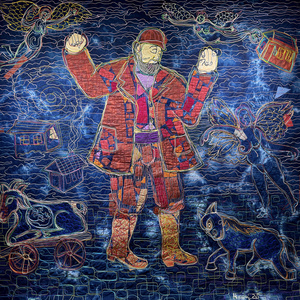
Harvey Fierstein to Be Honored at American Folk Art Museum Gala
The American Folk Art Museum will mark its 65th anniversary-along with the 250th anniversary of the United States-with a gala at the Mandarin Oriental New York.
Martin Toner, Roberta Terkowitz, and Michael Singleton Join Second Stage's Board of Trustees
Currently heading into its 47th Season and its first under the leadership of new Artistic Director Evan Cabnet and Executive Director Adam Siegel, Second Stage Theater has just announced three newly appointed Board Trustees. We have the full list here!

Nadya Tolokonnikova, Creator of Pussy Riot, to Headline Benefit Event for the American Folk Art Museum
Join Pussy Riot founder Nadya Tolokonnikova at the American Folk Art Museum benefit show in New York. A unique opportunity to experience art and activism combined.
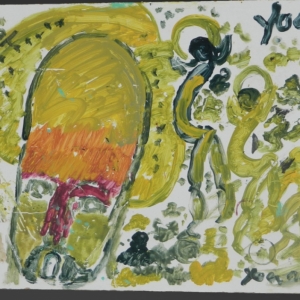
BaCA Host an Exhibition of the Works of Legendary Artist Purvis Young
Pompano Beach Arts, in conjunction with FATVillage Arts District, will present the acclaimed works of the late Florida artist Purvis Young. The exhibition entitled The Onliest Thing I Could Mostly Do celebrates the life and work of the renowned self-taught artist.
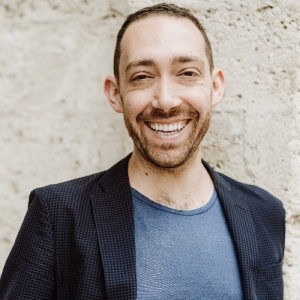
Winchendon Music Festival To Present Seven Concerts in August
Discover the lineup, dates, and venues for the Winchendon Music Festival 2023. From classical to jazz and world music, this festival offers a diverse range of performances by international artists. Don't miss this unforgettable musical experience!
Queens Rising Celebrates Juneteenth Throughout June 2023
A month-long, multi-disciplinary arts celebration created to highlight the borough's culture and creative diversity, Queens Rising brings together the many arts organizations, multi-purpose venues and galleries in Queens to promote and highlight performances, exhibitions, and cultural events, showcasing the borough's artistic and cultural communities.
Queens Rising: A Celebration Of Arts And Culture Officially Launches Second Year
A month-long, multi-disciplinary arts celebration created to highlight the borough's culture and creative diversity, Queens Rising brings together the many arts organizations, multi-purpose venues and galleries in Queens to promote and highlight performances, exhibitions, and cultural events.
QUEENS RISING: A Celebration Of Arts And Culture Returns This June
There will be dancing in Rockaway. Poetry will pop up in Ridgewood. They'll hit the high notes in Flushing. An art invasion is headed for Astoria!
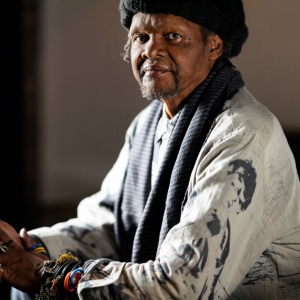
American Folk Art Museum To Present Benefit Concert This Thursday, Hosted By Harvey Fierstein
The American Folk Art Museum has announced that it will host a benefit concert at 7 p.m. on Thursday, May 18, 2023 at Adler Hall at The New York Society for Ethical Culture (2 West 64 Street, New York, New York).
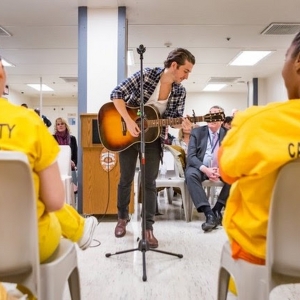
Matt Butler's RECKLESS SON to Play UNDER St. Marks in June
FRIGID New York will present a limited engagement of Matt Butler’s Reckless Son on Thursday, June 1 at 7pm at UNDER St. Marks.
American Folk Art Museum Announces Benefit Concert Featuring Lonnie Holley and Friends
The American Folk Art Museum will host a benefit concert on Thursday, May 18, 2023 at Adler Hall at The New York Society for Ethical Culture (2 West 64 Street, New York, New York).
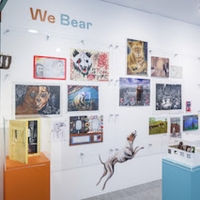
WE BEAR Prisoner Art Exhibit Makes Its US Debut At Ann Arbor Art Fair
'WE BEAR,' an art exhibit featuring works sourced by the University of Michigan's Prison Creative Arts Project, will make its U.S. debut at the Ann Arbor Art Fair July 21-23.
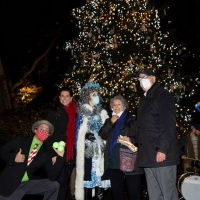
Lincoln Square BID Launches Month-Long Holiday Celebration With Special Pop-up Performances
Shining lights and pop-up delights are heading to the Lincoln Square neighborhood this holiday season as the Lincoln Square Business Improvement District announced its expanded holiday program to celebrate the neighborhood's resiliency and culture comeback.
Weston Art Gallery Reopens Tomorrow With Three New Exhibitions
The Cincinnati Arts Association's Alice F. and Harris K. Weston Art Gallery in the Aronoff Center for the Arts is pleased to announce that it will reopen on Saturday, January 30 with three new exhibitions linked by social, political, and historical investigations.
American Folk Art Museum Frequently Asked Questions
- What are the closest subway stops to American Folk Art Museum?
-
The closest subway stops to the American Folk Art Museum at 2 Lincoln Square in New York City are:
1. 66th Street – Lincoln Center Station: This station is served by the 1 train and is located just a short walk from the museum. Exit the station and head west on West 66th Street towards Broadway. The museum will be on your left.
2. 72nd Street Station: This station is served by the 1, 2, and 3 trains. From the station, you can walk south on Broadway until you reach West 66th Street. Turn right and the museum will be on your left.
I would recommend checking the MTA website for any subway updates or changes in service before your visit. You can find the most up-to-date information on their website: MTA.info.
While you're in the area, you might also want to explore the vibrant Lincoln Square neighborhood. Lincoln Center for the Performing Arts is just a stone's throw away, and it's home to some of the world's most renowned performing arts organizations. If you're interested in catching a show, be sure to check out their schedule and see if anything catches your eye.
Additionally, Central Park is within walking distance, so you could take a leisurely stroll through the park before or after your visit to the museum. It's a beautiful oasis in the heart of the city and offers a variety of activities and attractions.
Enjoy your visit to the American Folk Art Museum and have a wonderful time exploring the surrounding area!
- What's the best way to get to American Folk Art Museum by bus?
-
The closest bus stops to the American Folk Art Museum at 2 Lincoln Square in New York City are:
1. Broadway/W 65 St - served by the M5, M7, M11, and M104 buses. You can check for updates on these bus routes on the MTA Bus Time website.
2. Columbus Circle - served by various bus routes including the M5, M7, M10, M20, M31, M57, and M104. For real-time bus updates, you can visit the MTA Bus Time website.
Please note that bus routes and schedules are subject to change, so it's always a good idea to check for updates before your visit. Safe travels and enjoy your time at the American Folk Art Museum!
- How much time should I plan to spend at American Folk Art Museum?
-
The ideal length of time to plan for a visit to the American Folk Art Museum in New York City can vary depending on your level of interest in folk art and your schedule. However, I would recommend setting aside at least 1 to 2 hours to fully explore the museum and appreciate its unique collection.
The American Folk Art Museum showcases a diverse range of self-taught art, including paintings, sculptures, textiles, and decorative objects. With its thought-provoking exhibitions, it's worth taking the time to immerse yourself in the stories and creativity behind these works.
During your visit, you can also take advantage of the museum's educational programs, guided tours, or special events, which may require additional time. Additionally, don't forget to browse the museum shop, where you can find one-of-a-kind folk art-inspired items to take home as souvenirs.
Remember, this is just a general recommendation, and if you have a particular interest in folk art or want to explore the museum at a leisurely pace, you may want to allocate more time. Ultimately, the choice is yours, and I'm sure you'll have a wonderful time exploring the American Folk Art Museum!
- Can I bring food and drinks into American Folk Art Museum?
-
The American Folk Art Museum in New York City does not have a designated food or drink policy. However, it is always best to be respectful of the artwork and the museum environment. While you may not be able to bring food or drinks into the galleries, there are usually designated areas such as cafes or outdoor spaces where you can enjoy refreshments. Additionally, there are plenty of restaurants and cafes in the surrounding area where you can grab a bite to eat before or after your visit.
- Does American Folk Art Museum offer luggage storage?
-
The American Folk Art Museum in New York City does not have a luggage storage facility on-site. However, there are several options available nearby where you can securely store your belongings while you visit the museum.
One option is to use a luggage storage service such as Vertoe or LuggageHero. These services provide convenient and secure storage locations throughout the city, including near the American Folk Art Museum. You can easily find and book a storage spot through their websites or mobile apps.
Another option is to check if your hotel offers luggage storage for its guests. Many hotels provide this service even if you are not currently staying with them. It's worth contacting your hotel in advance to inquire about their policy.
Lastly, if you are traveling with a larger suitcase or bag, you may want to consider using a luggage storage service at one of the major transportation hubs in the city, such as Penn Station or Grand Central Terminal. These facilities are typically equipped to handle larger items and offer secure storage options.
Remember to plan ahead and check the operating hours and fees of any luggage storage service you choose, as they may vary. This will ensure a smooth and hassle-free visit to the American Folk Art Museum.
- Is American Folk Art Museum a good place to visit for foreign travelers who are not native English speakers?
-
Yes, the American Folk Art Museum in New York City is definitely worth a visit for visitors from other countries, as well as non-English language speakers. While English is the primary language used in the museum, the exhibits primarily focus on visual art, which can be appreciated and understood by people of all languages.
The museum showcases a diverse collection of traditional and contemporary folk art, including paintings, sculptures, textiles, and more. The artwork often tells stories and reflects cultural traditions, making it accessible and engaging for visitors of all backgrounds.
Additionally, the museum provides informative labels and descriptions alongside the artwork, which can be helpful for non-English speakers. Furthermore, the museum offers audio guides in multiple languages, allowing visitors to learn more about the exhibits in their preferred language.
Overall, the American Folk Art Museum offers a unique and enriching experience for all visitors, regardless of their language proficiency. It is a wonderful opportunity to explore the rich cultural heritage of folk art and gain a deeper understanding of American history and traditions.
- What ages are appropriate for American Folk Art Museum?
-
The American Folk Art Museum in New York City is a wonderful destination for visitors of all ages. While there is no specific age range recommended, the museum's exhibits and collections are generally suitable for older children, teenagers, and adults. Younger children may also enjoy the colorful and imaginative artwork on display, but may not fully appreciate the historical and cultural significance of the pieces. Ultimately, it depends on the interests and attention span of your child. The museum offers a variety of programs and activities throughout the year that may cater to different age groups, so be sure to check their website for any upcoming events that might be of interest to your family.