


Martha Graham Dance Company Returns To The Soraya With World Premiere, March 19
With original music commissioned by The Soraya, composed and performed live by Jazz pianist Jason Moran.
By: A.A. Cristi
.jpg?format=auto&width=1400)
A lost 1952 dance creation by Martha Graham herself-a primal artistic force of the 20th century-is reborn with the Martha Graham Dance Company's World Premiere of The New Canticle for Innocent Comedians at The Soraya on Saturday, March 19 at 8pm.
This new Canticle is based on the same themes and format as the original and will be accompanied by Jazz pianist and composer Jason Moran performing his new music commissioned by The Soraya.
"The Soraya has long been a leader in multi-disciplinary work, a matchmaker between artforms and artists, and a proud commissioner of new works," said Thor Steingraber, The Soraya's Executive and Artistic Director. "Over several years and numerous projects, we've forged a rich relationship with The Martha Graham Company and its esteemed Artistic Director, Janet Eilber, and have contributed to the company's historic involvement with contemporary music, one that dates back to Martha Graham's commissions with great composers like Aaron Copland, and now continues with Christopher Rountree and Wild Up, and Jason Moran."In addition to The New Canticle for Innocent Comedians, the March 19 program also includes: Lamentation
Lamentation premiered in New York City on January 8, 1930, at Maxine Elliot's Theater, to music by the Hungarian composer Zoltán Kodály. The dance is performed almost entirely from a seated position, with the dancer encased in a tube of purple jersey. The diagonals and tensions formed by the dancer's body struggling within the material create a moving sculpture, a portrait which presents the very essence of grief. The figure in this dance is neither human nor animal, neither male nor female: it is grief itself. According to Martha Graham, after one performance of the work she was visited by a woman in the audience who had recently seen her child killed in an accident. Viewing Lamentation enabled her to grieve, as she realized that "grief was a dignified and valid emotion and that I could yield to it without shame." Chronicle
Chronicle premiered at the Guild Theater in New York City on December 20, 1936. The dance was a response to the menace of fascism in Europe; earlier that year, Graham had refused an invitation to take part in the 1936 Olympic Games in Germany, stating: "I would find it impossible to dance in Germany at the present time. So many artists whom I respect and admire have been persecuted, have been deprived of the right to work for ridiculous and unsatisfactory reasons, that I should consider it impossible to identify myself, by accepting the invitation, with the regime that has made such things possible." "In addition, some of my concert group would not be welcomed in Germany" (a reference to the fact that many members of her group were Jewish). Chronicle does not attempt to show the actualities of war; rather does it, by evoking war's images, set forth the fateful prelude to war, portray the devastation of spirit which it leaves in its wake, and suggest an answer."
This is one of the very few dances Martha Graham made which can be said to express explicitly political ideas, but, unlike Immediate Tragedy (1937) and Deep Song (1937), dances she made in response to the Spanish Civil War, this dance is not a realistic depiction of events. The intent is to universalize the tragedy of war. The original dance, with a score by Wallingford Riegger, was forty-minutes in length, divided into five sections: "Dances before Catastrophe: Spectre-1914 and Masque," "Dances after Catastrophe: Steps in the Street and Tragic Holiday," and "Prelude to Action." The Company has reconstructed and now performs "Spectre-1914," "Steps in the Street" and "Prelude to Action." Collaborations between The Soraya, Martha Graham Dance Company and Wild Up Previously, The Soraya, Wild Up and Martha Graham Dance Company commemorated the 70th Anniversary of Appalachian Spring; the centenary of Women's suffrage (the 19th Amendment) with The EVE Project, a program choreographed by Pontus Lidberg and Pam Tanowitz -- featuring female protagonists and Chronicle, Graham's unforgettable 1936 anti-war masterpiece. In 2017, the three companies presented Martha Graham and American Music featuring works by Graham with commissioned scores by Carlos Chavez, and Samuel Barber, and Norman Dello Joio. In June 2020, The Soraya, Martha Graham Dance Company and Christopher Rountree, acting as composer, premiered a collaborative digital dance to critical acclaim inspired by archival remnants of Graham's Immediate Tragedy. This program included the newly reimagined stage version of the solo itself. Graham created this dance in 1937 in reaction to the atrocities of the Spanish Civil War. We see the woman in Immediate Tragedy as a universal figure of determination and finally, resilience. The dance was notable and well received, but when Graham stopped performing it in the late 1930s, the solo was forgotten and considered lost. Janet Eilber reimagined the choreography for Immediate Tragedy using recently discovered photos of Graham in a 1937 performance, and many other archival references. A new score was created by Christopher Rountree inspired by pages of music hand-written by composer Henry Cowell, which were found in the Graham archives. Martha described her inspiration for this dance in a letter to Cowell, "... whether the desperation lies in Spain or in a memory in our own hearts, it is the same. I felt in that dance I was dedicating myself anew to space, that in spite of violation I was upright and that I was going to stay upright at all costs ..."

|
Good Night, Oscar North Coast Repertory (9/16-10/11) |
|
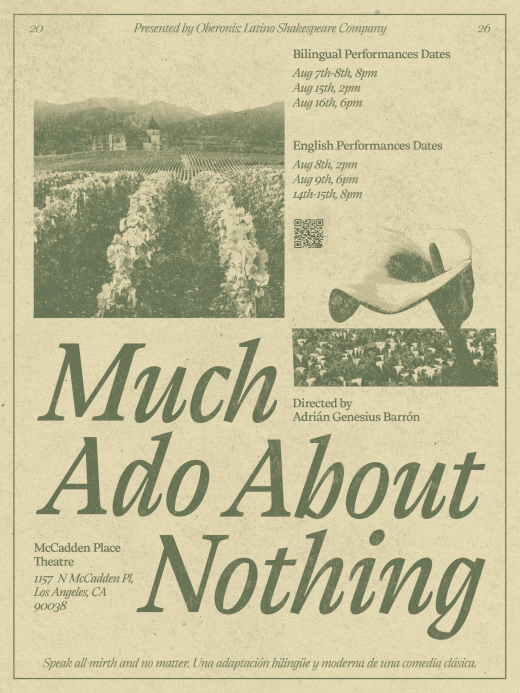
Much Ado About Nothing McCadden Place Theatre (8/07-8/16) |

|
6 Out of 10 Theatre 68 (8/20-8/20) |

|
Catch Me If You Can Colony Theatre (9/17-10/18) |

|
Emily Skinner: In Concert Feinstein's at the Nikko (8/14-8/15) |

|
Gershwin and the Golden Age The Soraya (10/11-10/11) |
|
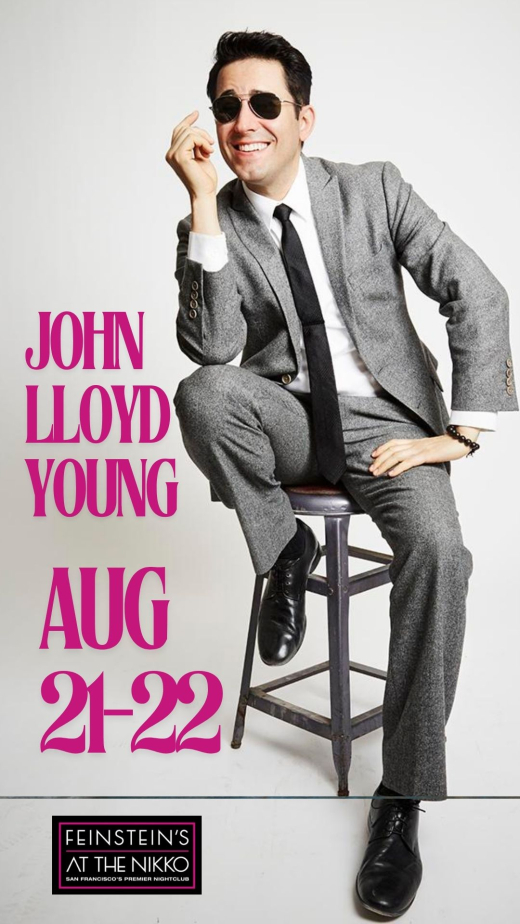
John Lloyd Young Feinstein's at the Nikko (8/21-8/22) |

|
Love, Loss and What I Wore Sawyer's Playhouse (8/08-8/30) |
|
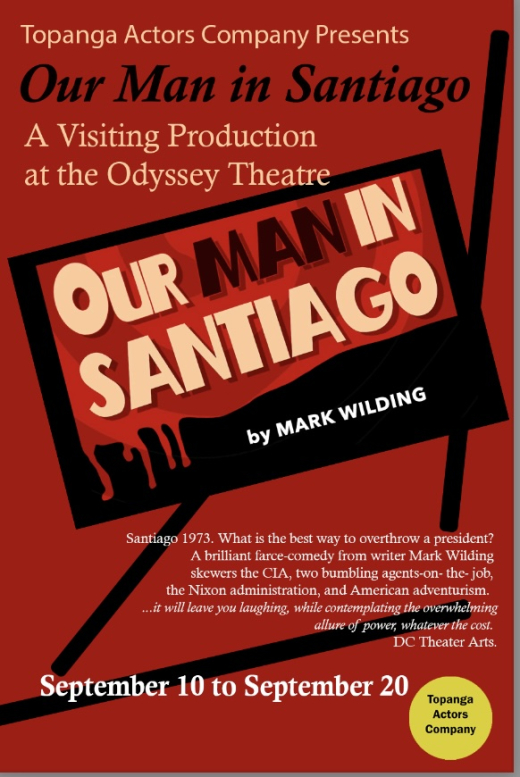
Our Man in Santiago by Mark Wilding Odyssey Theatre Ensemble (9/10-9/20) |

|
Doja Cat at The Kia Forum The Kia Forum (10/22-10/22) |