


Interview: Playwright Shakeil Kanish of MELT's Play Discusses Labels and Love.
The college romance runs at the Lee Strasberg Institute from Sept. 24 to Oct. 2.
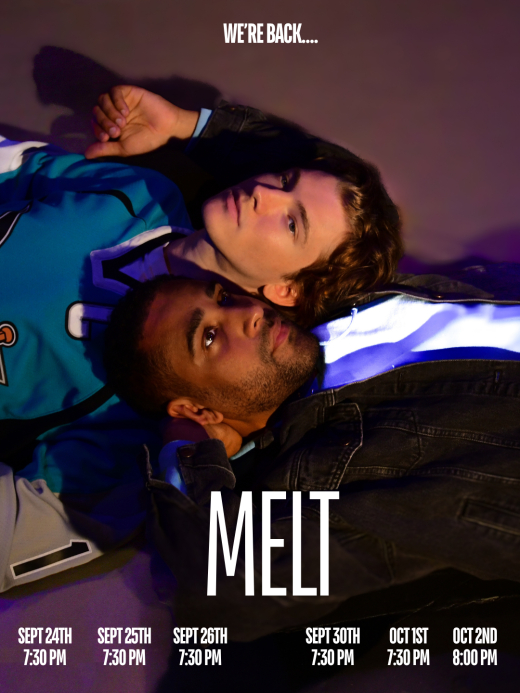
Melt marks Shakeil ‘Shak’ Kanish’s playwriting debut. This college love story between two male students, an artist and a jock, started off as a simple queer romance. Yet, Kanish says, it has blossomed in the collaborative hands of directors Fabiana Medici and Chris Prinzo. “The first draft was emulating what a high school or college romance would look like,” he explains, noting that it was originally intended for a high school setting. “But the core part of the story has always been about ‘what ifs’ – what if you had told someone that you had loved them? What if you had taken the chance…? As we went to the table reads, that was what really struck us, what we wanted the audience to leave with: don’t regret not doing something.”
Melt follows two performers, Eli and Ryan in a college play written and directed by their professor, Finch. Finch’s play, intentionally or otherwise, explores a long-since missed opportunity for a high school romance with another boy. As Eli and Ryan bring Finch’s pain and pondering to life, they find something blooming between them as well.
While Melt is advertised as a queer romance and has been pitched by Kanish as such, he argues that it tackles discussions of love with a broader scope. “It hits more universally that it’s just a story about love and not having to put labels on relationships… They don’t actually explicitly say that it’s a gay relationship. It just happens to be two people who know that they feel something around each other and they don’t really know or feel the need to put a label on it.” To Kanish, society’s insistence upon defining every aspect of love restricts it. “If you have two straight guys who are very close with each other, people are like ‘oh, they have to be gay.’... A more interesting concept to me is, ‘why can they not just be two people who have love for each other? Why does it have to be explicitly [labeled]?” The story changes little in Kanish’s eyes, but for the better: “I do think it hits more universally that it’s just a story about love.”
Society’s fixation on labels, as Kanish says, forces people into boxes and demands conformity. “I went to this men’s camp. A big thing was that men feel scared to share with other men… It’s even worse nowadays where, if I have a friend cry to me and there’s other guys there, they’re like, ‘oh, that’s gay. Why would you cry?’ This is why people are scared to love in different ways – [there are] so many attacks. I think it’s important to be able to show love.”
Despite his opposition to labels, Kanish has no objection to this story being labeled ‘queer.’ He has pitched it as such in the past, and he recognizes that people who refer to themselves with such labels may see themselves in this play. Besides, this interviewer interjects, the purpose of the ‘queer’ label is to signify diversity in love. ‘Queer’ seems as apt a label as there can be for a ‘labelless’ love story.
Considering Melt will speak especially to queer audiences, Kanish discusses its message to them. “The play speaks to standing up for yourself and being yourself, regardless of what you think… It’s a play about love and about male feelings together… It speaks to a lot of different elements of being queer. It’s three different stories of three different men who will have different ventures, like the queer story of having been introverted, never saying what he wanted to, having that crush on someone who may have been straight but they never really got to explore that… You have the people that lost family or loved ones.”
Indeed, Melt has already proven to connect with audiences. After a performance of the show’s world premiere earlier this year, Kanish was approached with thanks from an audience member. “[He] brought [his] friend… He was like, ‘I want to say thank you… Five minutes after seeing the show, me and my friend went in the car, and he confessed his love for me.’ Apparently they had both had feelings for each other, but they never said it.” This testimony showed Kanish that his play had elevated to something larger than that simple love story he’d set out to write.
This play is the first Kanish has written, but he is not new to the theatre. He grew up performing in musical theatre before eventually moving to Los Angeles to pursue film. Melt gave him the opportunity to return to the stage, albeit in a ‘straight’ (-ish) play. As previously stated, Kanish originally meant for the play to take place in high school, until he realized he wanted to bring his character, Eli, to life himself. The characters were aged up to college, and Kanish will grace the stage alongside his co-stars Nicholas Scott (as Ryan Hale), Martin Gelbspan (as Finch), and Jaden Harris Shaw (as Ryan Hale).
Writing is as familiar to Kanish as the theatre, despite the newness of playwriting. Kanish has written two books, The Sigil and The Walking Game. In fact, his initial instinct was to write Melt as a book. Wanting to get this idea into the world as quickly as possible, he opted for the stripped-down script route instead. He quickly learned, though, that writing for the stage is a different beast than writing for the page. “I do a lot of overexposition. I’ll be like, ‘he walked calmly,’ and the director is like, ‘no, no, stop this.’ … I think it’s way harder, which is crazy. In books, dialogue is my best thing and exposition is my worst. It’s ironic that when I write a stage play, all I’m doing is exposition, and then dialogue is hard for me.” No doubt this shift stems from the emphasis theatre places on dialogue; where most forms of writing explain internal thought and description though paragraphs, scripts rely almost strictly on dialogue to tell the story. Kanish learned to sift through the lines to find only the essential, plot-moving ones. Nonetheless, he is not deterred from stage writing, having already begun a new script that will function as a thematic sequel to Melt. He intends to complete a “What if?” trilogy.
Melt runs at the Marilyn Monroe Theatre at the Lee Strasberg Institute in West Hollywood from September 24 through October 2.
Sign up for all the news on the Fall season, discounts & more...

|
CLUB27 Jaxx Theatre (10/01-10/30) |
|
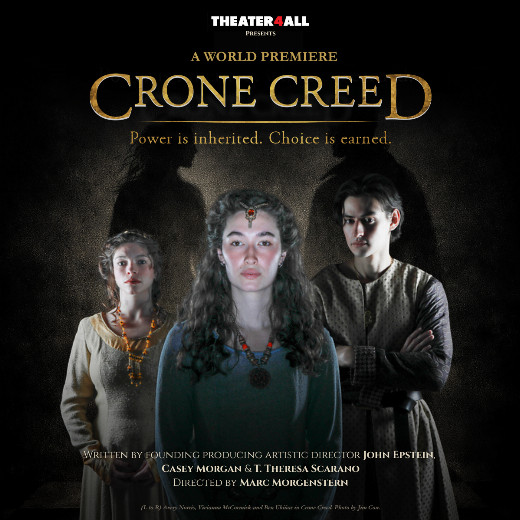
Crone Creed El Portal Theatre (9/30-10/17) |

|
Good Night, Oscar North Coast Repertory (9/16-10/11) |

|
A Killer Night in Studio City Vitello's (9/06-10/31) |
|
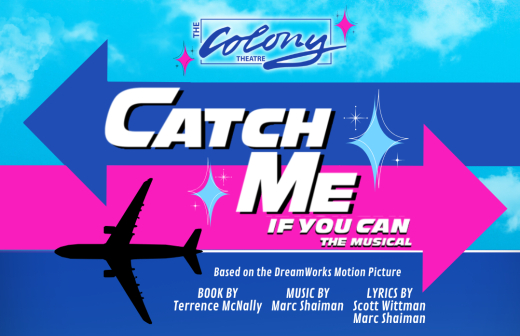
Catch Me If You Can Colony Theatre (9/17-10/18) |

|
Dinner with Friends Santa Monica Playhouse (9/26-9/27) |

|
Gershwin and the Golden Age The Soraya (10/11-10/11) |
|
Melt : The Play The Marilyn Theatre at the Lee Strasberg Institute (9/24-10/02) |

|
New Works Festival Shoebox Theatre (9/11-9/26) |
|
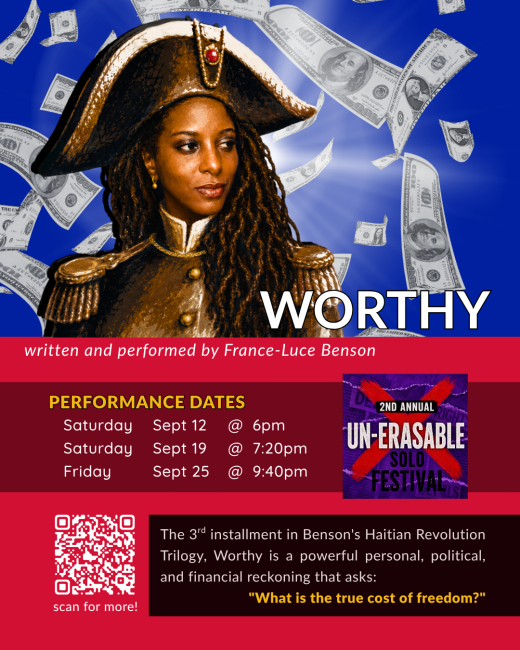
Worthy The Un-Erasable Solo Festival - Willie Agee Playhouse (9/12-9/25) |
