


Interview: Adaptor/Director John Strysik of THE CASE-BOOK OF C. AUGUSTE DUPIN
in its world premiere at Theatre 40 from Sept 17-Oct 18, 2026
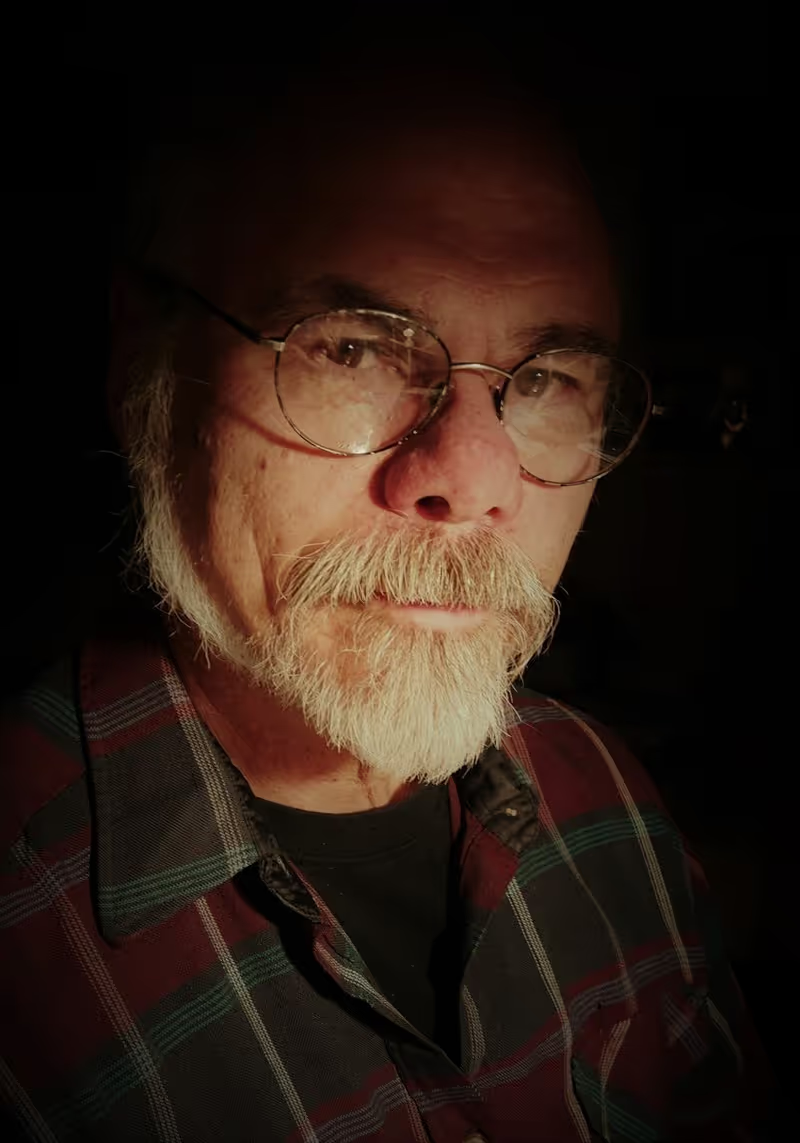
John Strysik (pictured) is the adaptor/director of The Case-Book of C. Auguste Dupin in with its world premiere engagement opening at Theatre 40 in Beverly Hills opening September 17, 2026. It brings three of Edgar Allan Poe’s foundational detective stories - The Murders in the Rue Morgue, The Mystery of Marie Rogêt, and The Purloined Letter - into a single, cohesive evening of theater.
Here’s my conversation with John Strysik about his inspiration for the play, his dual role with the production, and what inspired him to bring its world premiere to Theatre 40.
Poe only wrote three Dupin stories, and they are quite structurally different in that one features an infamous locked-room puzzle and another relies almost entirely on analyzing newspaper clips. What was your narrative 'glue' to weave these three distinct cases into a single, flowing storyline?
Poe and Dupin provide the “glue.” Poe references Rue Morgue in Marie Roget, Marie Roget in The Purloined Letter. Also, in reading the stories they struck me as a kind of classical concerto which had three movements of fast -- slow -- fast. Dupin, his roommate, and the Police Commissaire are the solo instruments and the three stories, or movements, have natural pacings of fast -- slow -- fast.
In Poe's text, Dupin’s roommate and chronicler is completely nameless. How did you approach developing this character for the stage, and how do they function as the audience's eyes and ears?
I went a little meta with him; I call his roommate “Edgar.” As in the stories, he’s never named in the play, but he is in the program, and Patrick Grant who plays him has more than a passing resemblance to the Great One and is wonderful in the role. Also he’s obviously the inspiration for Dr Watson and is a natural foil for Dupin, as is the Police Commissaire who was the model for Lastrade.
Poe’s stories are famous for 'ratiocination' - intense, stationary logical deduction. Theater, however, requires visual movement and stakes. How did you translate internal, psychological deductions into dynamic stage action?
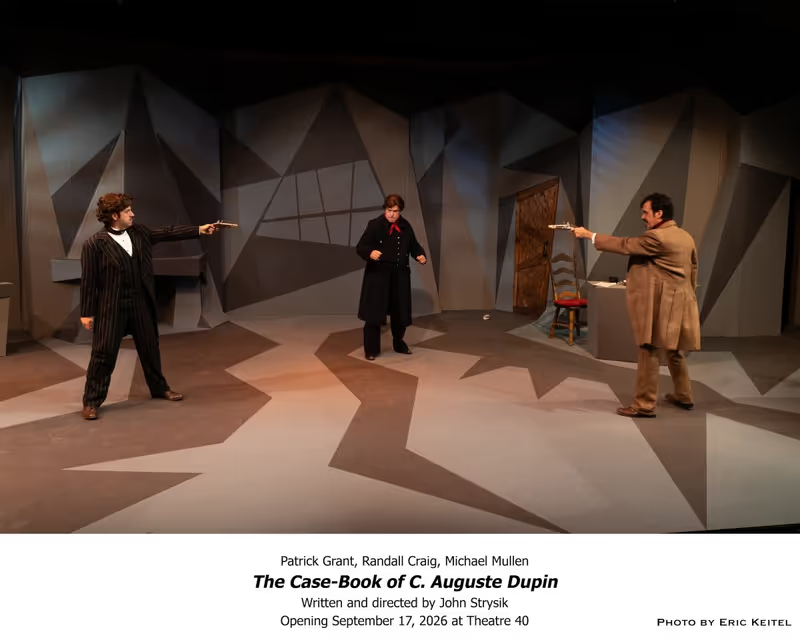
Pretty much like Sir Arthur did with Sherlock. Dupin is a very dynamic and eccentric character who gets a kind of erotic thrill at solving puzzles, much like Poe who had the ability to solve any puzzles or codes readers sent him in his work as a journalist and reviewer. And Dupin is constantly questioning or berating his roommate and the Police Commissaire about their observations, or lack of them, making what I hope is some dynamic stage action.
Dupin became the blueprint for Sherlock Holmes and Hercule Poirot, yet he is far less known to modern casual audiences. How do you strike a balance between leaning into the classic detective tropes people expect and honoring the specific, eccentric nuances that make Dupin unique?
I don’t think you need to strike a balance, you just present Dupin as Poe wrote him. The tropes weren’t tropes when Poe was writing these stories in the 1840s. I’m sure people will see Sherlock Holmes in Dupin, but Dupin is the original.
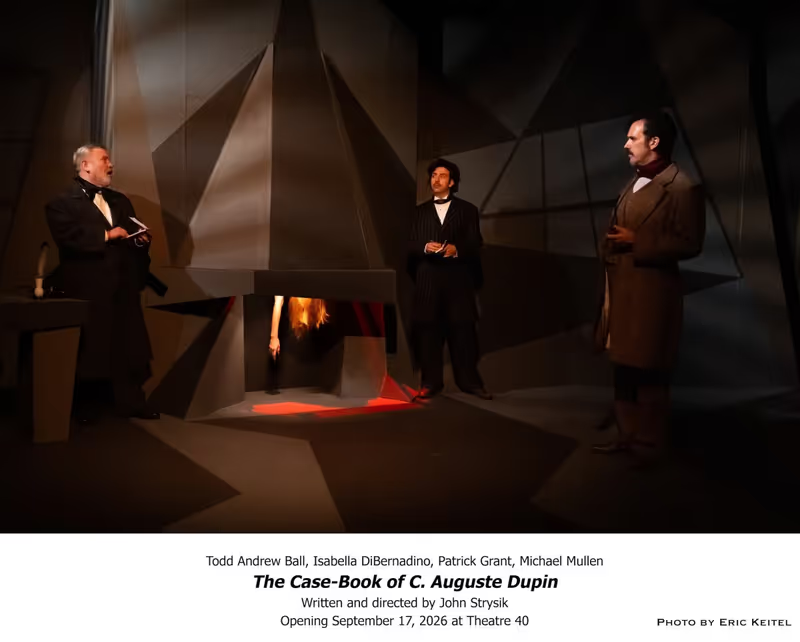
You’re bringing 'murder, mayhem, and meerschaum pipes' to Theatre 40. How does the atmospheric, gothic DNA of Edgar Allan Poe manifest in the visual language, lighting, and pacing of this specific production?
This is definitely a unique looking show for Theatre 40. We’ve gone totally Expressionistic with the set. If you look hard enough you might see Dr Caligari lurking in the shadows. But I think the German expressionism we’re tapping helps to amplify the strangeness and theatricality of these stories. Think of the killer in Rue Morgue or how the letter is found and not found in The Purloined Letter. Poe had a very theatrical bent; both his parents were actors and he wrote poems that were meant to be acted, which he did with great dramatic flair.
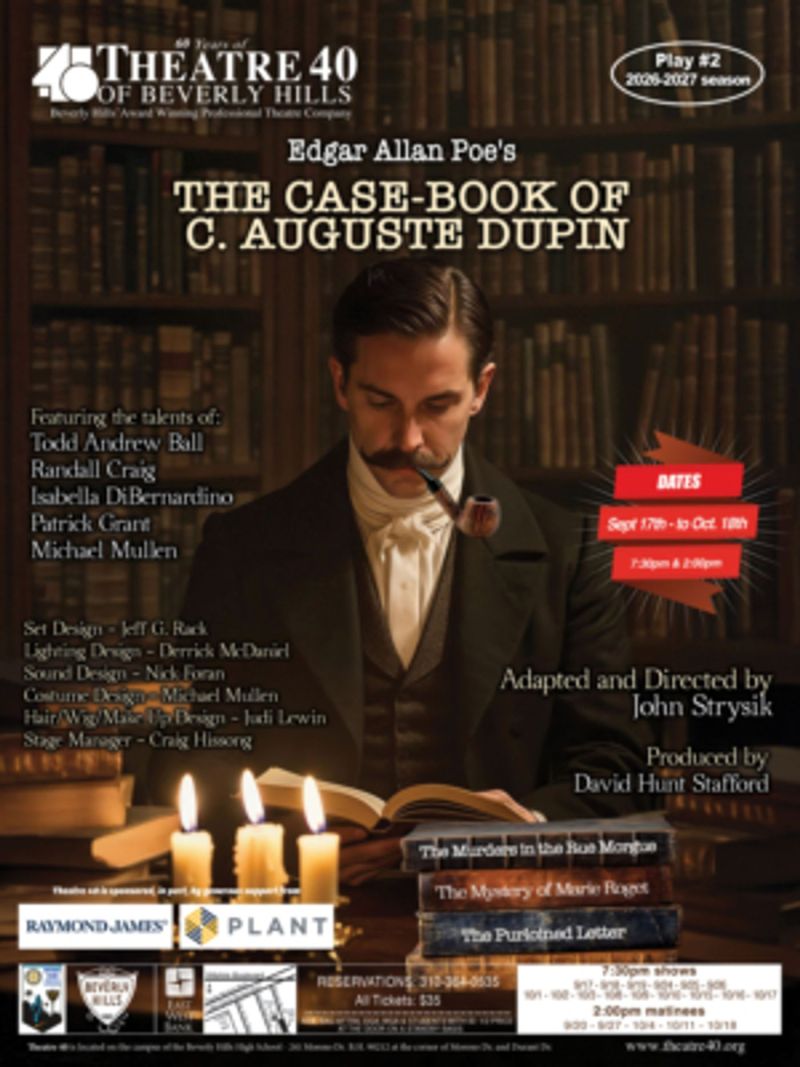
Tell me about working with your creative team to bring your vision of the play and characters to the stage. (set design by Jeff G. Rack. lighting design by Derrick McDaniel, sound design by Nick Foran, costume design by Michael Mullen who is also in the cast, hair/wigs/makeup design by Judi Lewin, and stage manager Craig Hissong) along with the rest of the cast including Todd Andrew Ball, Randall Craig, Isabella DiBerdardino and Patrick Grant.
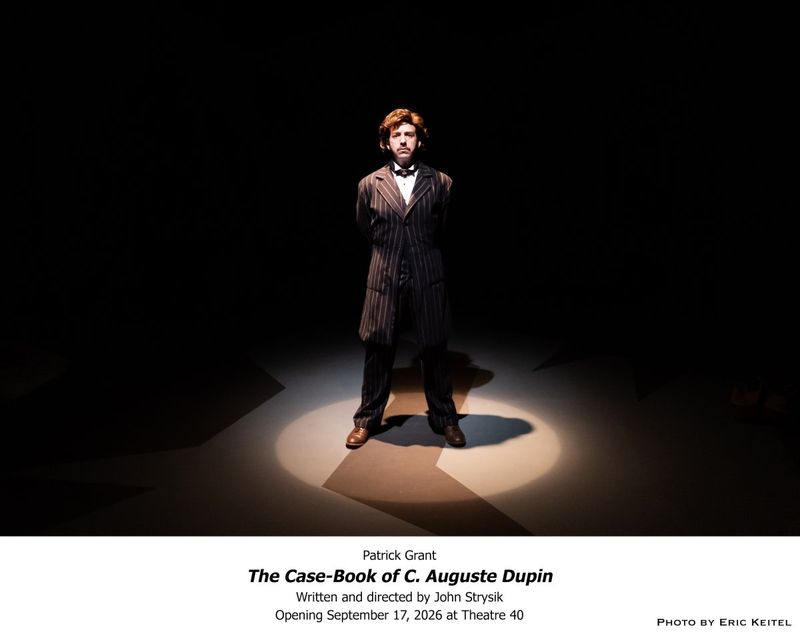
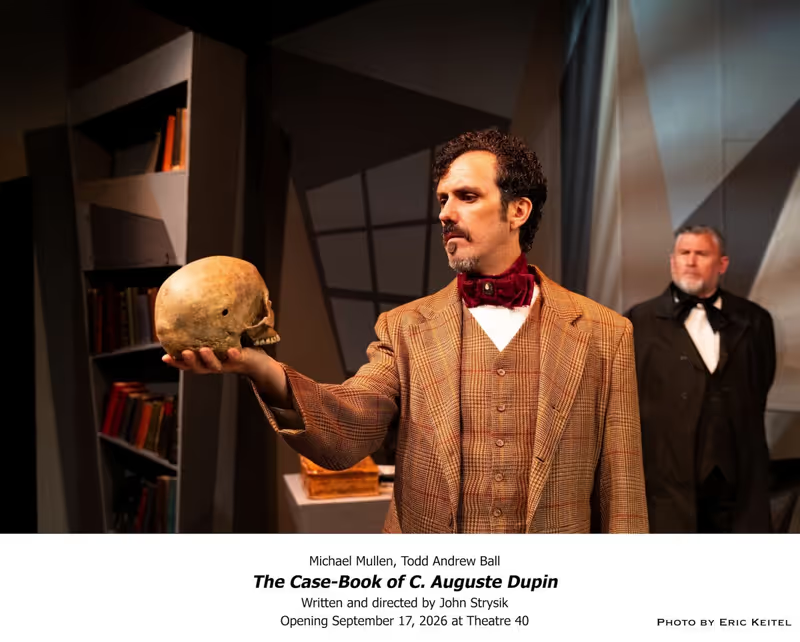
I am so lucky to blessed with this team. Jeff is an old friend who directed three of my plays. He is a genius set designer and really channeled his crazy, expressionistic self for Dupin. Derrick is a kind of Apollo bringing light and making it a character in it’s own right. Nick brings not only fantastic soundscapes but also music. Judi captures the essence of the various characters with her great wiggery. Craig gets to play the ringmaster keeping everything moving along and there are some fairly complicated cues. Michael Mullen is doing double duty: not only is he taking us back to the 1840s with his costumes, but he’s also playing Dupin! How does he do it? No man knows, but he does it amazingly well.
.jpeg?format=auto&width=800)
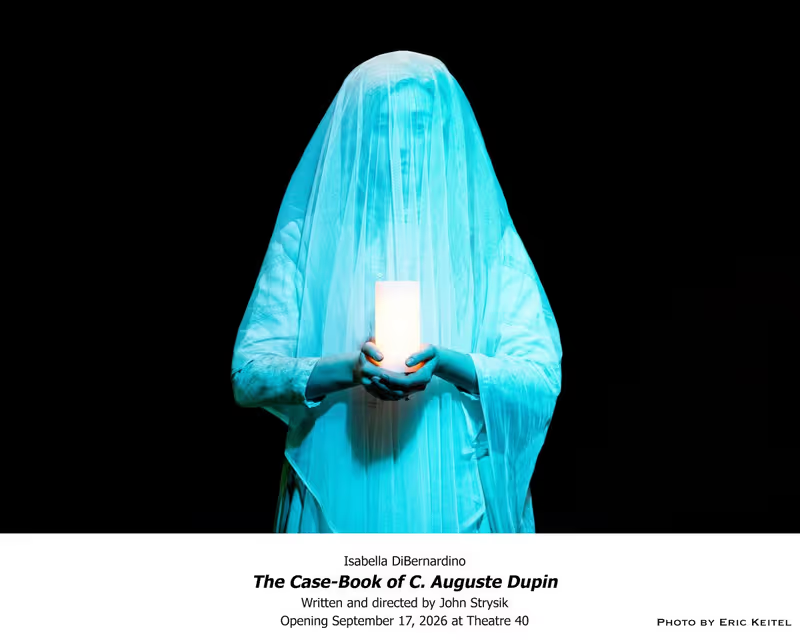
I’d also like to mention Todd Andrew Ball who plays the Police Commissaire and brings incredible energy and humor to the part, Randall Craig playing various roles like the Sailor in Rue Morgue and the Minister of the Interior in Purloined Letter, and Isabella DiBernardino who really saved us when things looked darkest and plays an array of characters including a Laundress, a Ghost, the Queen of France and something in the chimney. I’d also like to thank Kyra Schwartz and of course the legendary Artistic Director of T40 David Stafford who is letting us dive deep into this marry mayhem.
As both the adaptor and the director, do you find yourself rewriting lines on the fly when you see how the actors inhabit the space, and how do you try to keep the director-brain separate from the writer-brain?
There’s an old saw that goes, “Writing is rewriting,” so yes, absolutely words are cut, changed and added. As to the director - writing brain… part of my background is indie filmmaking, so I’m very used to doing both.
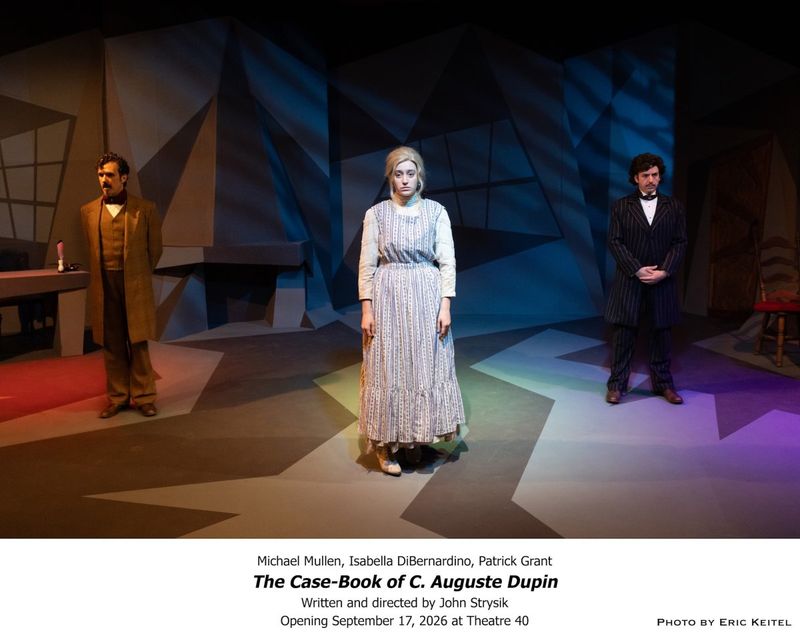
What’s the most important piece of direction or tonal note you gave your actors to ensure they didn't just play a 19th-century caricature, but found the raw human element behind Poe's dense language?
I actually love the 19th century aspect of Poe’s language. As noted before, Poe was a man of the theater, so we lean into his language of “non-human horror!”
How did its world premiere production arrive at Theatre 40? And why is now the perfect time to bring it there?
Through the good graces of David Stafford and the board at Theatre 40. Plus I’ve done two other plays there - Death, With Benefits and Power & Light so they know me and we all must love a Theatre that does original work. To me, any time is the right time to do something by Edgar A. Poe, and since September starts the Season of Hallowe’en it seems an even more perfect fit.
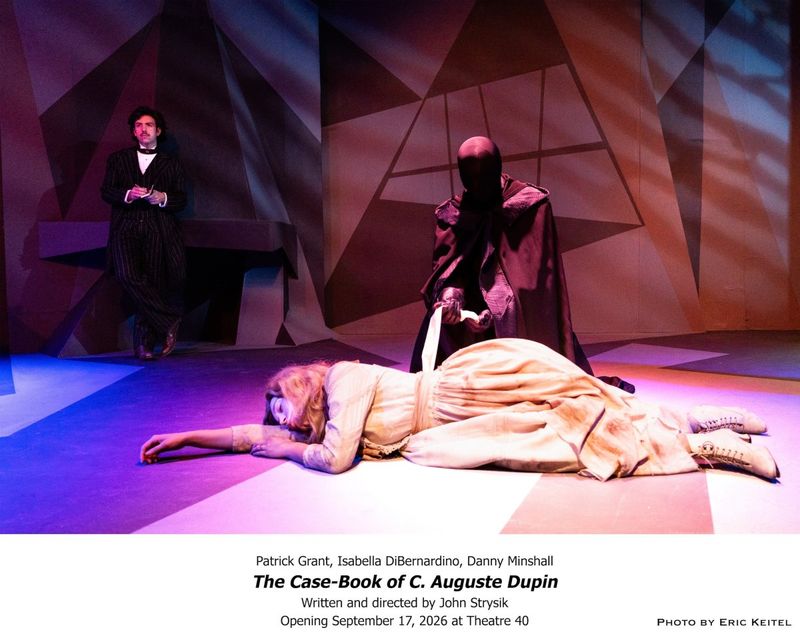
Anything else you would like to add about yourself or the production?
I hope after seeing The Case-Book of C. Auguste Dupin people will see the genius of Edgar Allan Poe in a different light. Yes, he is most definitely the Master of the Macabre, but his horror tales represent maybe about a third of his fictional output. Besides inventing the modern detective story he wrote big sea adventures, satires and comedies, even science fiction. I also hope the audience will experience the same horror, poetry, and sometimes downright Marx Brothers comedy that I saw in the Dupin stories.
Thanks so much!
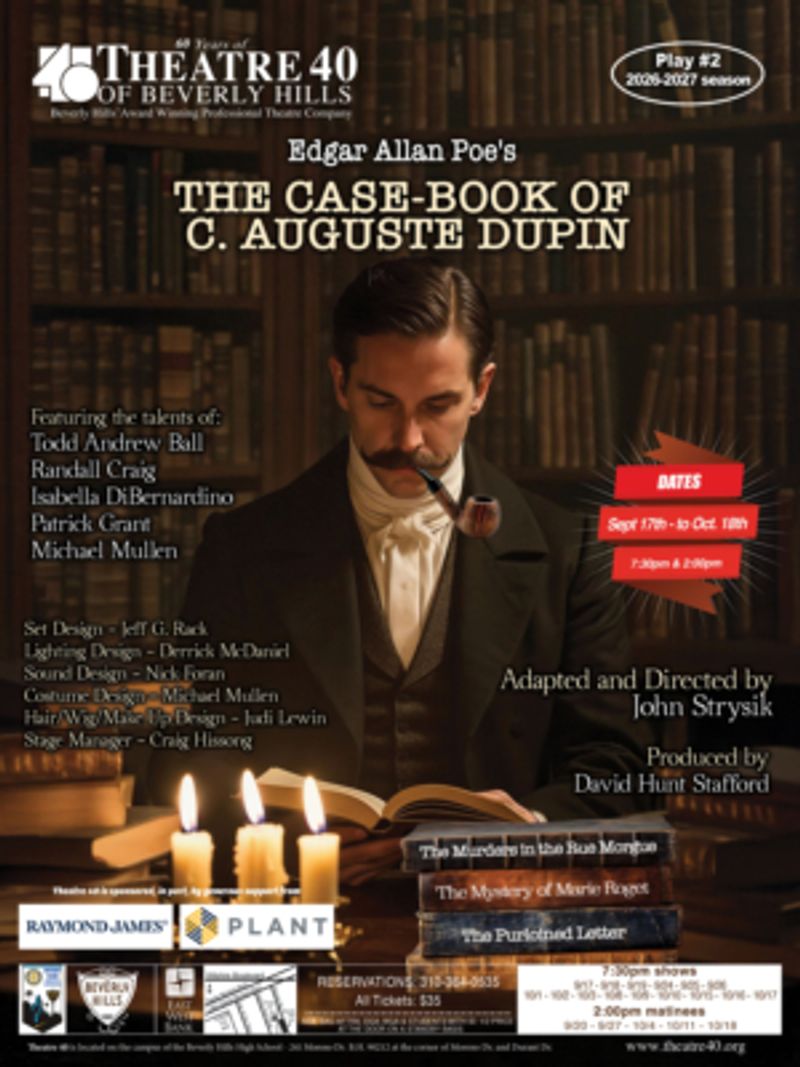
The world premiere engagement of The Case-Book of C. Auguste Dupin, adapted from Edgar Allan Poe’s Dupin dectective stories and directed by John Strysik, is being produced by David Hunt Stafford for Theatre 40 in the Mary Levin Cutler Theatre, 241 S. Moreno Dr., Beverly Hills, CA 90212. This is on the campus of Beverly Hills High School, with ample free underground parking available via a driveway at the intersection of Durant and Moreno Drives.
Performances run September 17–October 18, 2026, Thursday through Saturday at 7:30 p.m. and Sunday at 2:00 p.m. Tickets are $35. Reservations are available by calling (310) 364-0535 or online at http://theatre40.org. Subject to availability, tickets will also be sold at the box office before each performance.
Prefer BroadwayWorld in Google Search?
Add us as a preferred source so our stories show up more often in Top Stories and Google’s AI answers — for you.


Sign up for all the news on the Fall season, discounts & more...
|
CLUB27 Jaxx Theatre (10/01-10/30) |
|
Crone Creed El Portal Theatre (9/30-10/17) |
|
Good Night, Oscar North Coast Repertory (9/16-10/11) |
|
A Killer Night in Studio City Vitello's (9/06-10/31) |
|
Catch Me If You Can Colony Theatre (9/17-10/18) |

|
Dinner with Friends Santa Monica Playhouse (9/26-9/27) |

|
Gershwin and the Golden Age The Soraya (10/11-10/11) |
|
Melt : The Play The Marilyn Theatre at the Lee Strasberg Institute (9/24-10/02) |

|
New Works Festival Shoebox Theatre (9/11-9/26) |

|
Worthy The Un-Erasable Solo Festival - Willie Agee Playhouse (9/12-9/25) |
