


ECM New Series to Release András Schiff's Brahms KLAVIERSTÜCKE Recording
The two-disc set features pianist András Schiff performing on a Blüthner piano.
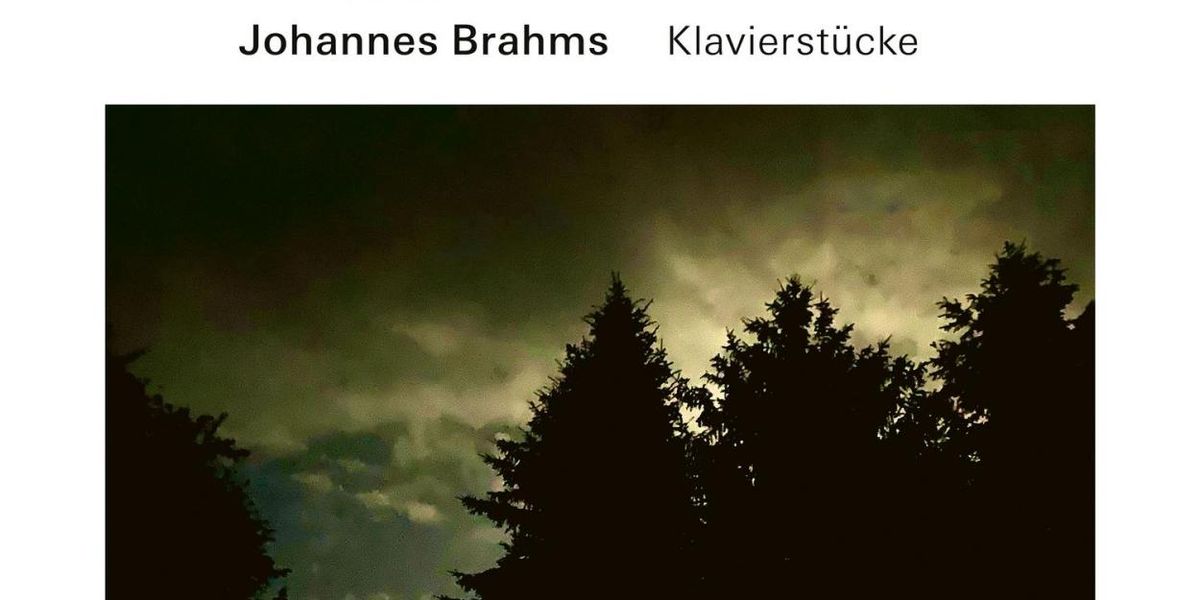
ECM New Series will release András Schiff's recording of Johannes Brahms's Klavierstücke on September 18, 2026. The two-disc set, catalogued as ECM New Series 2730/31, features Schiff performing on a Blüthner piano and includes the Albumblatt, Klavierstücke op. 76, Fantasien op. 116, Intermezzi op. 117, Klavierstücke op. 118 and Klavierstücke op. 119.
Early works and late works, the young Brahms and the mature Brahms: how could the music not sound different? Yet for his new recording of Brahms's piano pieces, András Schiff does not begin with any of the composer's better-known youthful works—from the Scherzo, op. 4, to the Ballades, op. 10, of 1854. Instead, he opens with a musical miniature that remained unknown for many years: little more than a sounding vignette from that period.
Brahms wrote the Albumblatt during a concert tour, inscribing it as a musical dedication in the Album Amicorum of Arnold Wehner, director of the University of Göttingen. Other artists, including Schumann, Mendelssohn and Liszt, had also left their mark there. Brahms later revised the fleeting little piece and incorporated it into his Horn Trio, op. 40. In the context of this recording, this wistful work by the twenty-year-old Johannes Brahms serves as an atmospheric and finely judged introduction to everything that follows. For András Schiff, it is something like 'A Portrait of the Artist as a Young Man'.
The 'mature' Brahms emerges in the Eight Piano Pieces, op. 76, composed largely in 1878—a collection of Capriccios and Intermezzi. These works reflect Beethoven, Schumann and Chopin far less directly than Brahms's earlier music, and they certainly make no demands for an orchestral style of piano playing. Instead, they are intimate, profound miniatures. The critic Eduard Hanslick aptly described them, with their restrained manner, as 'soliloquies,' while the French Brahms biographer Claude Rostand called them 'a cycle of pianistic reveries tinged with a Nordic world-weariness.'
Between 1866 and 1878, Brahms had largely neglected solo piano music. He returned to the genre only with op. 76 and the Two Rhapsodies, op. 79, before devoting himself once again, in 1892 and 1893, almost exclusively to piano pieces. The Fantasies, op. 116, and the Intermezzi, op. 117, could just as easily have borne that general title. Brahms's friend Theodor Billroth was no admirer of these small-scale works. He considered them 'not varied enough, mostly too ponderous,' and advised the composer to 'remain with the grand style.' Posterity, however, reached a very different verdict. These intimate works have come to be regarded as among the finest achievements of late Romantic piano music.
The term Klavierstück ('piano piece') was, incidentally, a catch-all designation in the nineteenth century, encompassing a wide range of lyrical forms: impromptus, ballades, romances, rhapsodies, capriccios, intermezzi and Songs Without Words, with fluid boundaries between the various genres. Brahms himself favoured the designations Capriccio and Intermezzo, using them almost as complementary opposites in terms of tempo, dynamics and musical character. On the one hand are the animated, more passionate Capriccios, full of rhythmic ingenuity and finely shaded dynamics. On the other are the introspective Intermezzi, restrained in expression and avoiding sharp contrasts.
In the recording booklet, András Schiff contributes highly personal notes on the individual works, touching on both their expressive content and aspects of their formal construction. He also observes that 'the colours of these autumnal Brahms pieces' remind him, through a kind of elective affinity, of the sequence of colours in Paul Klee's painting Ancient Sound—especially when played on a historical instrument such as 'the beautifully maintained 1859 Blüthner, lovingly cared for by Christoph Kern.'
With the release of these piano pieces, András Schiff continues his sequence of Brahms recordings for ECM's New Series. It began with the Clarinet Sonatas, recorded with Jörg Widmann, and has since expanded to include the Piano Concertos with the Orchestra of the Age of Enlightenment and the Violin Sonatas with Yuuko Shiokawa.
Sign up for all the news on the Fall season, discounts & more...
.jpg?format=auto&width=300)
.png?format=auto&width=365)




