


ECM New Series Releases CON SLANCIO From Heinz Holliger And Marie-Lise Schüpbach
The Holliger compositions, written between 2018 and 2020, are con slancio for oboe solo, Ständchen für Rosemarie for English horn, and more.
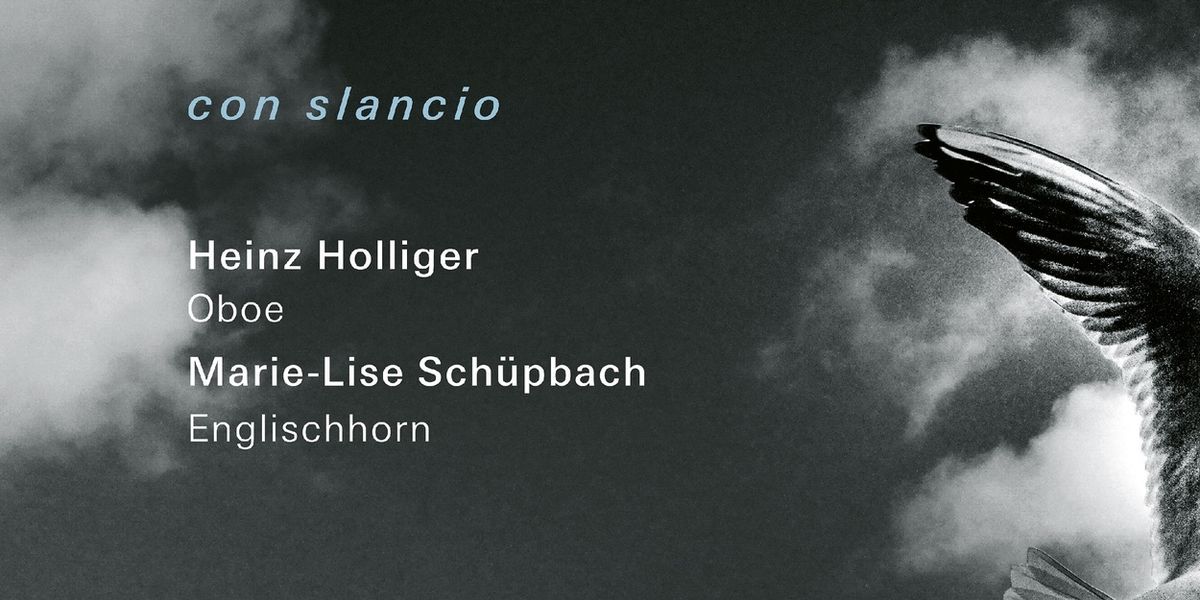
The release of con slancio, with premier recordings of music written by Swiss composer and nonpareil oboist Heinz Holliger, marks 40 years of collaboration with ECM New Series. Threaded throughout the album are strongly contrasting pieces dedicated to Holliger over the years by fellow composers. A spirit of vigor and enthusiasm animates both new pieces and tributes.
The Holliger compositions, written between 2018 and 2020, are con slancio for oboe solo, Ständchen für Rosemarie for English horn, and several duets for oboe and English horn: Spiegel – LIED, Lied mit Gegenüber (contr'air), Gangis (fang mich), and à deux – Adieu.
“Since I began playing in duo with Marie-Lise Schüpbach, I've been fascinated by the way our two instruments expand each other's range and palette of tone colours,” says Heinz Holliger. “New sound paths have opened up for me.” He adds that the newest compositions almost completely forego the use of idiosyncratic “extended techniques” of which he has been a pioneer. The freshness of the Holliger/Schüpbach duo sound has been noted in reviews of their earlier release Zwiegesprespäche (2019) where Holliger's music was interspersed with pieces by his friend and contemporary György Kurtág. “These performances, by Heinz Holliger and Marie-Lise Schüpbach, are simply astonishing in their fluency,” declared UK magazine Gramophone.
In an interview in the CD booklet Holliger suggests that while the oboe cannot ‘vocalize' in ways that the flute can, the sound of the instrument can – as in Bach's arias - be a substitute for the male voice that breaks in adolescence. “In my own case, too, since I had sung as a solo soprano before my voice changed.” In these late works, the oboe is singing more purely than ever.
Of the pieces written for Holliger here, the earliest are Jürg Wyttenbach's Sonate (1961) and Jacques Wildberger's Rondeau (1962), and the most recent are György Kurtág's aphoristic con slancio, largamente and Toshio Hosokawa's evocative Musubi (Knots), both written to celebrate Holliger's 80th birthday in 2019.
Hosokawa says that the title of his piece, “was inspired by the Yin and Yang principle, the central concept of the creation of the universe in the East. Polar opposite elements such as man and woman, high and low, light and shadow coexist and complement each other, becoming intertwined without eradicating each other, whilst gradually shaping the harmony of the universe. In this music, the oboe and the English horn, both of which have a distinctive characteristic tone, become entwined and gradually knotted together through arabesque-like appoggiaturas.”
Rudolf Kelterborn's Duett für Oboe and Englishhorn (2017) was one of the last pieces written by the Basel-born composer, who died in 2021. Holliger: “What impressed about Kelterborn is how much more daring he became in old age.” The piece poses some challenges: “At the opening, the English horn intones a deeply pathos-laden recitative, while the oboe responds with a plaintive lament in its most extreme register.”
The album closes with Robert Suter's Oh Boe (1999) which calls for Sprechstimme as well as oboe, juxtaposing vocal and instrumental utterances. “The text is really sharply phrased. It captures me quite well. The oboe attempts to declaim the same words…”
|
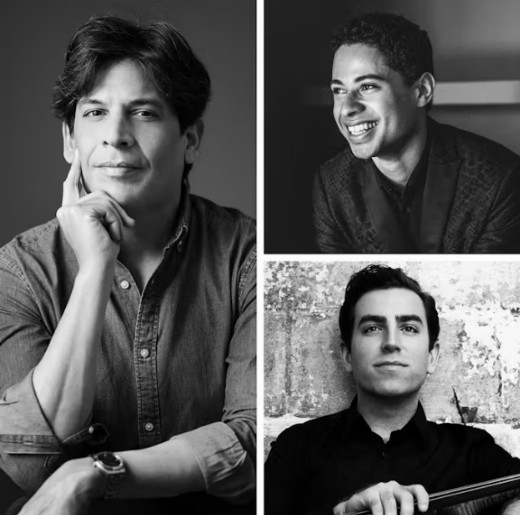
American Composers Orchestra: New Virtuoso: Low End Theory at Carnegie Hall Carnegie Hall (3/18-3/18) |
|
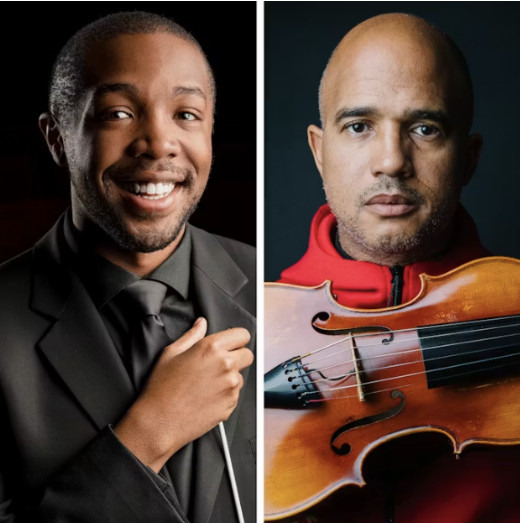
American Composers Orchestra: Hello, America: We Gather Here at Carnegie Hall Carnegie Hall (10/27-10/27) |