Shop Merch Add a Show Listing
My Shows
News on your favorite shows, specials & more!

Broadway Bookshelf — For Actors — Page 9

Biographies, show books, musical scores, history, and must-read theatre books.

Browse by Category


For Actors Books

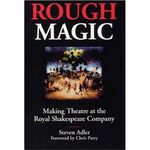
Rough Magic: Making Theatre at the Royal Shakespeare Company

(2001)

Steven Adler examines the dynamic life and workings of the theatre company responsible for some of the world’s most compelling performances and influential productions of the last forty years, including Marat/Sade, A Midsummer Night’s Dream, Les Misérables, Les Liaisons Dangereuses, and Nicholas Nickleby. Rough Magic provides a thorough analysis of the many strands of theatrical activity on both sides of the footlights that coalesce in the artistic vigor of the Royal Shakespeare Company...

Rough Magic: Making Theatre at the Royal Shakespeare Company

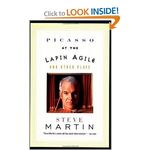
Picasso at the Lapin Agile and Other Plays

(1997)

Ever wonder what it would have been like if wild and crazy Steve Martin had written an episode of "The Twilight Zone"? Well, wonder no more. The zany actor/comedian made playwright rookie of the year with this, the script of his first comedy, set in a bar in 1904 Paris. Two of the regulars, twentysomethings Pablo Picasso and Albert Einstein, argue about the art of physics and the physics of art as they try to impress and bed a pretty girl. And then the space/time/culture continuum ruptures, and...

Picasso at the Lapin Agile and Other Plays

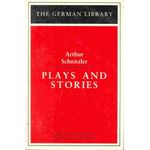
Plays and Stories: Arthur Schnitzler

(1982)

Arthur Schnitzler, Viennese playwright, novelist, short story writer, and physician, was a sophisticated writer much in vogue in his time. He chose themes of an erotic, romantic, or social nature, expressed with clarity, irony, and subtle wit. Reigen, a series of ten dialogues linking people of various social classes through their physical desire for one another, has been filmed many times as La Ronde. As a Jew, Schnitzler was sensitive to the problems of anti-Semitism, which he explored in the...

Plays and Stories: Arthur Schnitzler

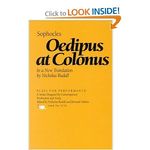
Oedipus at Colonus

(2002)

This play forms a bridge between the events in Oedipus the King and Antigone. It begins with the arrival of Oedipus in Colonus after years of wandering; it ends with Antigone setting off toward her own fate in Thebes.

Oedipus at Colonus

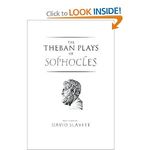
The Theban Plays of Sophocles

(2009)

In this needed and highly anticipated new translation of the Theban plays of Sophocles, David R. Slavitt presents a fluid, accessible, and modern version for both longtime admirers of the plays and those encountering them for the first time. Unpretentious and direct, Slavitt’s translation preserves the innate verve and energy of the dramas, engaging the reader—or audience member—directly with Sophocles’ great texts. Slavitt chooses to present the plays not in narrative sequence but in th...

The Theban Plays of Sophocles

Oedipus, King Of Thebes

(2009)

As Sophocles' Oedipus the King begins, the people of Thebes are begging the king for help, begging him to discover the cause of the plague. Oedipus stands before them and swears to find the root of their suffering and to end it. Just then, Creon returns to Thebes from a visit to the oracle. Apollo has made it known that Thebes is harboring a terrible abomination and that the plague will only be lifted when the true murderer of old King Laius is discovered and punished for his crime. Oedipus swe...

Oedipus, King Of Thebes

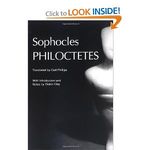
Philoctetes

(2003)

Based on the conviction that only translators who write poetry themselves can properly re-create the celebrated and timeless tragedies of Aeschylus, Sophocles, and Euripides, the Greek Tragedy in New Translations series offers new translations that go beyond the literal meaning of the Greek in order to evoke the poetry of the originals. Under the general editorship of Peter Burian and Alan Shapiro, each volume includes a critical introduction, commentary on the text, full stage directions, and a...

Philoctetes

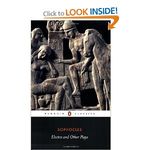
Electra and Other Plays

(2008)

Four seminal tragedies by the master Greek dramatist, in sparkling new translations Of the more than one hundred plays Sophocles wrote over the course of his long life, only seven survive. This volume collects four of them, all newly translated. Electra portrays the grief of a young woman for her father, Agamemnon, who has been killed by her mother’s lover. Ajax depicts the enigma of power and weakness vis-àvis the fall of the great hero. Women of Trachis dramatizes the tragic love and er...
Electra and Other Plays

Babbitt

(1996)

First published in 1922, Babbitt is an authentic modern American classic, a biting satire of middle-American values that retains much of its poignancy today. George F. Babbitt, Lewis's outwardly successful but inwardly unhappy real estate salesman, still seems real. His story makes engrossing reading and is ideal for audio listening. With Babbitt himself at the center of every scene, it is impossible for listeners plagued by frequent interruptions to lose track of the story line. Narrator Wolfr...
Babbitt

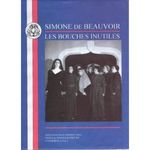
Les Bouches Inutiles

(2002)

Simone de Beauvoir is best known for her autobiographical writings, as well as her study of the subordination of women in Western society, "Le Deuxi me Sexe" (1949). Written five years before, her powerful play "Les Bouches Inutiles" (1945) shows Beauvoir's dramatisation of issues to which the later texts would return, as well as a significant stage in her creative and philosophical dialogue with Jean-Paul Sartre. The play describes the decision by the male rulers of a besieged city to kill its...
Les Bouches Inutiles

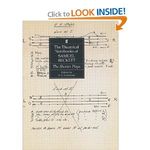
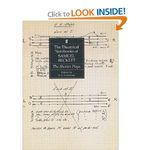
The Theatrical Notebooks of Samuel Beckett: Krapp's Last Tape v. 1
(1993)

Samuel Beckett directed "Krapp's Last Tape" on four separate occasions, and this volume offers a facsimile of his 1969 Schiller-Theater notebook. The notebook contains what is probably some of the most explicit analysis by Beckett of his own work ever revealed. The revised text incorporates many of the changes Beckett made in the 1969 Schiller production, as well as subsequent changes in later productions. Professor Knowlson worked closely with Beckett over these revisions - and deviations from...

The Theatrical Notebooks of Samuel Beckett: Krapp's Last Tape v. 1

The Theatrical Notebooks of Samuel Beckett: Waiting for Godot v. 3

(1994)

Following "Endgame" and "Krapp's Last Tape", this book looks at Beckett's notebook for "Waiting for Godot". The volume is in part a facsimile of the notebook kept by Beckett for Berlin's Schiller-Theater production in 1975. It contains a full set of directional notes and discloses, section-by-section, a total system that works by repitition and analogy, musical rhythm and echo, establishing subtle patterns of sound, movement and gestures.

The Theatrical Notebooks of Samuel Beckett: Waiting for Godot v. 3

Shorter Plays, Volume 4: The Theatrical Notebooks of Samuel Beckett

(1999)

Shorter Plays follows Waiting for Godot, Endgame, and Krapp's Last Tape in this highly praised series of Beckett's notebooks, which show for the first time the extensive revisions made by Beckett during revivals of his plays. From the mid-1960s, Samuel Beckett himself directed all his major plays in Berlin, Paris or London. For most of these productions he meticulously prepared notebooks for his personal use. The Theatrical Notebooks of Beckett that are reproduced in facsimile here offer a rem...

Shorter Plays, Volume 4: The Theatrical Notebooks of Samuel Beckett

No Author Better Served: The Correspondence of Samuel Beckett and Alan Schneider

(2000)

The great playwright exchanges letters with his favorite American stage director. In 1955 Alan Schneider was invited to direct the American production of Beckett's Waiting for Godot. He went to London to meet the playwright beforehand, and a warm, productive relationship soon developed, ending only with Schneider's accidental death in 1984. (He was fatally struck by a car while walking to a mailbox, intending to post a letter to Beckett.) Their correspondence279 letters from Beckett, 209 from Sc...

No Author Better Served: The Correspondence of Samuel Beckett and Alan Schneider

States of Shock

(1998)

The evening begins with a bang. The deceptive calm of a family restaurant, filled with two disgruntled customers and an inept waitress, is disrupted by offstage sounds of war and destruction. The real disruption begins with the entrance of the Colonel, a middle-aged brute of a man wearing the medals and uniform of a commander, who wheels on Stubbs, a mute paraplegic veteran who served with the Colonel's son. According to the Colonel, they have come "to toast the death of my son and have a nice d...

States of Shock

Four Two Act Plays

(2000)

Contains: La Turisha, The Tooth of Crime, Geography of a Horse Dreamer, and Operation Sidewinder.

Four Two Act Plays

Chicago And Other Plays

(1981)

Includes: Chicago, Icarus's Mother, Red Cross, Fourteen Hundred Thousand, Melodrama Play.

Chicago And Other Plays

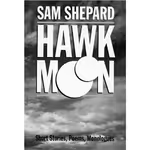
Hawk Moon: Short Stories, Poems, and Monologues

(2001)

In this collection of more than fifty monologues, short stories and poems—Shepard's first—one of America's most acclaimed writers and actors reflects on growing up in America, rock and roll, the sex of fishes, and other topics. Shepard displays his virtuosic sense of the rhythms of the American landscape.

Hawk Moon: Short Stories, Poems, and Monologues

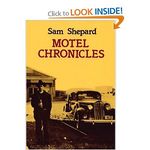
Motel Chronicles

(2001)

Motel Chronicles reveals the fast-moving and sometimes surprising world of the man behind the plays that have made Sam Shepard a live legend in the theater. Shepard chronicles his own life birth in Illinois, childhood memories of Guam, Pasadena and rural Southern California, adventures as ranch hand, waiter, rock musician, dramatist, and film actor. Scenes from this book form the basis of his play Superstitions, and of the film (directed by Wim Wenders) Paris, Texas, winner of the Golden Palm Aw...

Motel Chronicles

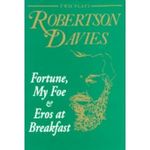
Fortune, My Foe and Eros at Breakfast

(1993)

Robertson Davies has been called the most important Canadian playwright of the postwar period. These two plays from the 1940s prove that great writing and important themes never go out of style.

Fortune, My Foe and Eros at Breakfast

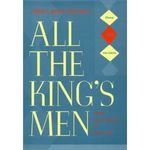
All the King's Men

(2000)

Robert Penn Warren's 1946 Pulitzer Prize-winning novel All the King's Men is one of the undisputed classics of American literature. Fifty years after the novel's publication, Warren's characters still stand as powerful representations of the moral dilemmas faced by individuals in positions of power. All the King's Men had its genesis in Warren's stage play Proud Flesh, unpublished in his lifetime. He also wrote a subsequent unpublished play titled Willie Stark: His Rise and Fall and a later dram...

All the King's Men

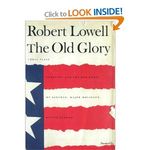
The Old Glory: Endecott and the Red Cross; My Kinsman, Major Molineux; and Benito Cereno

(2000)

Winner of Five Obies, now back in print after fifteen years, a stage adaptation of classic stories by Hawthorne and Melville In the three plays in The Old Glory--Endecott and the Red Cross; My Kinsman, Major Molineux; and Benito Cereno--the most powerful figure in postwar American poetry confronts the most haunting American fiction writers of the nineteenth century. The result is a mythical, nightmare history of three centuries in America. In Endecott and the Red Cross, Hawthorne's Puritan go...

The Old Glory: Endecott and the Red Cross; My Kinsman, Major Molineux; and Benito Cer

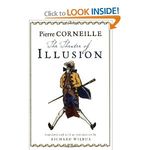
The Theatre of Illusion

(2007)

L'Illusion Comique is a comedic play by Pierre Corneille, written in 1636. In its use of meta-theatricality (plays-within-the-play), it is far ahead of its time. It was first performed at the Hôtel de Bourgogne in 1636 and published in 1639. Corneille wrote this piece at the age of 29 and had already written seven other plays. L'Illusion comique marks a turning point in his career. This piece can be regarded as the end of an apprenticeship during which the author demonstrates his literary pro...

The Theatre of Illusion

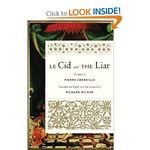
Le Cid and The Liar

(2009)

Richard Wilbur’s translations of the great French dramas have been a boon to acting troupes, students of French literature and history, and theater lovers. He continues this wonderful work with two plays from Pierre Corneille:Le Cidis Corneille’s most famous play, a tragedy set in Seville that illuminates the dangers of being bound by honor and the limits of romantic love;The Liaris a farce, set in France and dealing with love,misperceptions, and downright falsifications, which ends, of cour...

Le Cid and The Liar

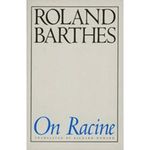
On Racine

(1992)

On Racine is a brilliant, personal view of theatre in which Barthes discusses all the major tragedies of Racine as well as the range of critical views of his work.

On Racine

Persecución

(1986)

Cinco piezas de teatro se unen aqui bajo un mismo tema: la persecucion. Cruel, experimental, desenfadado, ironico y poetico, este libro ademas de ser una obra de arte, es tambien una vision profunda de la eterna dualidad que parece caracterizar al ser humano: su condicion tanto sublime como terrible que lo hace victima o victimario perseguido o perseguidor. Pero la obra ademas de ser una satira del actual regimen cubano, trasciende el mismo a traves de una liberacion que, como en el principio d...

Persecución

The King of the Dark Chamber

(2010)

Rabindranath Tagore was a Bengali polymath who won the Nobel Prize for Literature in 1913. He was a poet, visual artist, playwright, novelist, educationist, social reformer, nationalist, business-manager and composer. Gitanjali (Song Offerings), Gora (Fair-Faced), and Ghare-Baire (The Home and the World) are among his best-known works. The King of the Dark Chamber was written in 1914. The play is an allegory of an individual's spiritual and personal awakening in their quest for beauty and truth....

The King of the Dark Chamber

Theaetetus

(1987)

Set immediately prior to the trial and execution of Socrates in 399 BC, Theaetetus shows the great philosopher considering the nature of knowledge itself, in a debate with the geometrician Theodorus and his young follower Theaetetus. Their dialogue covers many questions, such as: is knowledge purely subjective, composed of the ever-changing flow of impressions we receive from the outside world? Is it better thought of as true belief'? Or is it, as many modern philosophers argue, justified true b...

Theaetetus

The Statesman

(2002)

Plato's "Politicus" ("Statesman") stands, both in date and in political thought, between the Republic and the Laws. It presents his thoughts at the point when he was chastened by disappointment with his attempts to put theory into practice at Syracuse. The dialogue reflects contemporary controversies on the method of definition; but its logical exercises and the impressive myth of the two cosmic eras serve to bring out its essential political teaching. This volume contains the text in translatio...

The Statesman

Phaedo

(2009)

The Phaedo is acknowledged to be one of Plato's masterpieces, showing him both as a philosopher and as a dramatist at the height of his powers. For its moving account of the execution of Socrates, the Phaedo ranks among the supreme literary achievements of antiquity. It is also a document crucial to the understanding of many ideas deeply ingrained in western culture, and provides one of the best introductions to Plato's thought. This new edition is eminently suitable for readers new to Plato, of...

Phaedo

Gorgias

(2009)

Gorgias written by legendary Greek Philosopher Plato is widely considered to be one of his best Socratic dialogues of all time. This great classic will surely attract a whole new generation of readers. For many, Gorgias is required reading for various courses and curriculums. And for others who simply enjoy reading timeless pieces of classic literature, this gem by Plato is highly recommended. Published by Classic Books America and beautifully produced, Gorgias would make an ideal gift and it s...

Gorgias

World Stages, Local Audiences: Essays on Performance, Place and Politics

(2010)

This book argues that the forms of intimacy and identification that come from being part of the public of a local performance, provide a potential model for rethinking our roles as world citizens. Using his own experience of recent theatrical practice in Vancouver as a starting point, Dickinson maps the spaces of connection and contestation, the flows of sentiment and social responsibility, produced by different communities in response to global sports spectacles. He also analyzes how such topic...

World Stages, Local Audiences: Essays on Performance, Place and Politics

The Cenci: A Tragedy in Five Acts

(2009)

Verse tragedy in five acts by Percy Bysshe Shelley, published in London in 1819 and first staged privately by the Shelley Society in 1886. Modeled after Shakespearean tragedy, it is noted for its powerful characters, evocative language, and moral ambiguities. It is based on an incident in Renaissance Rome. The story centers on Count Francesco Cenci, who is notorious for his depravity. He gives a party at which, to the horror of his guests, he gleefully announces the deaths of two of his sons. An...

The Cenci: A Tragedy in Five Acts

Tell It Like It Is: Fifty Monologues for Talented Teens

(2007)

This is a thought-provoking new collection of monologues by best-selling author Peg Kehret! Each monologue creates a moment of recognition that makes both the performer and the audience smile - and think! Most are structured to provide insights of discovery to reveal who we are and why. Every young actor performing one of these monologues will recount a memorable event that opened the way to maturity. But there's more than just provocative thoughts in this collection - many of the monologues ca...

Tell It Like It Is: Fifty Monologues for Talented Teens

Bourbon at the Border

(2006)

When May and Charlie joined hundreds of other Americans who went to Mississippi in the summer of 1964 for a massive voter registration drive, they had no idea their lives were about to change forever. As students at Howard University, their campus activism had been met with calls to their parents and threats of expulsion. The stakes in Mississippi were a lot higher. White supremacists, outraged at the challenge to their segregated way of life, responded with violence that left three civil rights...

Bourbon at the Border

Every Seventeen Minutes the Crowd Goes Crazy!

(2000)

A family of exuberant and startled kids are left to fend for themselves by their mother and father-who have taken off to pursue forever a life of betting at trotter racetracks and playing blackjack in Native American casinos! An expandable chorus punctuates with hilarious and stinging sound bites this highly theatrical and poignant legend of parental abdication.

Every Seventeen Minutes the Crowd Goes Crazy!

The Art of Comedy: Getting Serious About Being Funny

(2007)

Want to know a secret? Sssshhhh. Great comedy actors aren’t born...they’re made. Who makes them? Paul Ryan, that’s who. Now Ryan, the top comedy acting coach in Hollywood, shares his secrets in The Art of Comedy, a step-by-step guide for turning actors into comedy actors. Packed with exercises, The Art of Comedy explains exactly how to build a character, how to incorporate improvisation into a written scene, where to turn for comic inspiration, and how to increase your comedic imagination....

The Art of Comedy: Getting Serious About Being Funny

Backstage Forms

(1995)

Over 100 examples of backstage paperwork ready for photocopying--forms like hanging schedules, costume fitting sheets, lighting circuit schedules, prop preset lists, sound cues, to name only a few.

Backstage Forms

Vera; or, The Nihilists

(2008)

Oscar Fingal O’Flahertie Wills Wilde (1854-1900) was an Irish playwright, novelist, poet, and author of short stories. Known for his barbed wit, he was one of the most successful playwrights of late Victorian London, and one of the greatest celebrities of his day. Wilde made his reputation in the theatre world with a series of highly popular plays. Lady Windermere’s Fan (1893) like many of Wilde’s comedies is a biting satire on the morals of Victorian society, particularly marriage. A Woma...

Vera; or, The Nihilists

The Duchess of Padua

(2009)

This is a pre-1923 historical reproduction that was curated for quality. Quality assurance was conducted on each of these books in an attempt to remove books with imperfections introduced by the digitization process. Though we have made best efforts - the books may have occasional errors that do not impede the reading experience. We believe this work is culturally important and have elected to bring the book back into print as part of our continuing commitment to the preservation of printed work...

The Duchess of Padua

For Love of the King - a Burmese Masque

(2010)

For Love of the King - a Burmese Masque is presented here in a high quality paperback edition. This popular classic work by Oscar Wilde is in the English language. If you enjoy the works of Oscar Wilde then we highly recommend this publication for your book collection.

For Love of the King - a Burmese Masque

An Ideal Husband

(2009)

An Ideal Husband is an 1895 comedic stage play by Oscar Wilde which revolves around blackmail and political corruption, and touches on the themes of public and private honour. The action is set in London, in "the present", and takes place over the course of twenty-four hours. "Sooner or later," Wilde notes, "we shall all have to pay for what we do." But he adds that, "No one should be entirely judged by their past."

An Ideal Husband

Lady Windermere's Fan

(2009)

Comedy of manners in four acts by Oscar Wilde, performed in 1892 and published the following year. Set in London, the play's action is put in motion by Lady Windermere's jealousy over her husband's interest in Mrs. Erlynne, a beautiful older woman with a mysterious past. Unknown to Lady Windermere, Mrs. Erlynne is really her divorced mother who, for the past 20 years, has been presumed dead. Lord Windermere is merely hoping to ease the older woman's reentrance into society, which she attempts u...

Lady Windermere's Fan

Masterpieces: The Noël Coward Review

(2003)

A selection of Noël Coward's most memorable lyrics, quotes, and play-scenes woven seamlessly together into a brillant review by Christopher Luscombe. A unique selection of Coward's most critically acclaimed scenes and lyrics gathered together for the first time.

Masterpieces: The Noël Coward Review

Star Quality

(2003)

Coward's 'forgotten' play, published to tie in with its world premiere In his wickedly funny final play, NöeI Coward takes us behind the scenes of a new West End production. Conjuring up an authentic backstage world of talent and treachery, Coward creates a gallery of unforgettable characters; temperamental leading lady, ruthless director, jaded old troupers and, caught somewhere between them all, innocent young playwright. From tentative first rehearsal to triumphant opening night, ...

Star Quality

Blithe Spirit

(2002)

Written in 1941 this book remians the longest-running comedy in the history of the British theatre for three decades.

Blithe Spirit

Design for Living

(2004)

Three stylish friends who share rivalrous affections attempt to uncoil their twisted love triangle in this sexy and scandalous gem. Written in 1932, the play was deemed extremely daring and even by today's standards is considered controversial in its frank and funny take on sex, love and commitment, proving to be one of Coward's greatest successes. Directed by Michael Hackett.

Design for Living

The Noël Coward Reader

(2010)

From the Roaring Twenties through the Beatles era, Noël Coward virtually embodied sophistication and wit for the entire English-speaking world. His plays, songs, and short stories made him the darling of the literary set, and his screenplays attracted a mass audience. He was also an early advocate of television, although he claimed to prefer appearing on it to watching it. Day has assembled a chronological assortment of extracts from Coward’s immense oeuvre. A master of light verse, Coward p...

The Noël Coward Reader

The Government Inspector

(2007)

The Government Inspector, also known as The Inspector General, is a satirical play by the Russophone Ukrainian playwright and novelist Nikolai Gogol. Originally published in 1836, the play was revised for an 1842 edition. Based upon an anecdote allegedly recounted to Gogol by Pushkin,[1] the play is a comedy of errors, satirizing human greed, stupidity, and the extensive political corruption of Imperial Russia. According to D. S. Mirsky, the play "is not only supreme in character and dialogue ...

The Government Inspector

BroadwayWorld TV


Ticket Central
Hot Show
Tickets From $59
Hot Show
Tickets From $70
Hot Show
Tickets From $106
Hot Show
Tickets From $75