Shop Merch Add a Show Listing
My Shows
News on your favorite shows, specials & more!

Broadway Bookshelf — For Actors — Page 13

Biographies, show books, musical scores, history, and must-read theatre books.

Browse by Category


For Actors Books

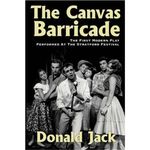
The Canvas Barricade

(2007)

In print for the first time, Donald Jack's comedy The Canvas Barricade was the first modern play performed on the main stage of the Stratford Festival (1961). The original cast included Peter Donat, Kate Reid, Jack Creley, Amelia Hall, Zoe Caldwell, and Bruno Gerussi. Misty Woodenbridge, a painter, has rejected the materialism of modern so ciety for life in a tent by the Ottawa River, where he lives as carefree as the fabled grasshopper, eating stolen apples and painting masterpieces. But as su...

The Canvas Barricade

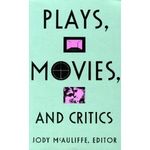
Plays, Movies, and Critics

(1994)

This exceptional collection explores the mutual concerns of dramatic theater, film, and those who comment on them. Plays, Movies, and Critics opens with an original play by Don DeLillo. In the form of an interview, DeLillo's short play works as a kind of paradigm of the theatrical or cinematic event and serves as a keynote for the volume. DeLillo's interview play is accompanied in this collection by interviews with theater director Roberta Levitow, Martin Scorsese, and film/theater critic Stan...

Plays, Movies, and Critics

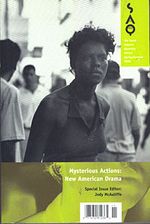
Mysterious Actions: New American Drama

(2000)

With this special issue, South Atlantic Quarterly presents five never-before-published plays by some of the brightest stars in contemporary American theater. Mysterious Actions presents works that go beyond realism and will challenge audiences’ expectations,moving them toward a revolutionary theatrical experience. The plays by Neal Bell, Nilo Cruz, Erin Cressida Wilson, Marlane Meyer, and Don DeLillo employ techniques and situations that are original and unexpected. Each is followed by a schol...

Mysterious Actions: New American Drama

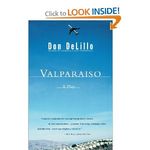
Valparaiso: A Play

(2000)

A man sets out on an ordinary business trip to Valparaiso, Indiana. It turns out to be a mock-heroic journey toward identity and transcendence. This is Don DeLillo's second play, and it is funny, sharp, and deep-reaching. Its characters tend to have needs and desires shaped by the forces of broadcast technology. This is the way we talk to each other today. This is the way we tell each other things, in public, before listening millions, that we don't dare to say privately. Nothing is all...

Valparaiso: A Play

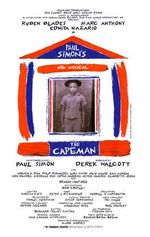
Capeman: A Musical

(1998)

The Capeman is a musical play written by Paul Simon and Derek Walcott based on the life of Salvador Agrón. The play opened at the Marquis Theatre in 1998 to poor reviews and had an initial run of only 68 performances.[1] A blend of doo-wop, gospel, and latin music, it received Tony award nominations for Best Original Score, Best Orchestrations and Best Scenic Design. Renoly Santiago also received a Drama Desk nomination for Outstanding Featured Performer in a Musical. Ednita Nazario won the Th...

Capeman: A Musical

Shoppers: Two Plays by Denis Johnson

(2002)

"Perfection is not the basis of what I'm talking about," says a member of the Cassandra family, which forms the center of Denis Johnson's plays, Hellhound on My Trail and Shoppers Carried by Escalators Into the Flames. The character could be speaking for his creator, because human imperfection is one of Denis Johnson's specialties -- in his critically acclaimed novels, short stories, and nonfiction, and, now, in two brilliant new plays. These two works present a dramatized field guide to some ...

Shoppers: Two Plays by Denis Johnson

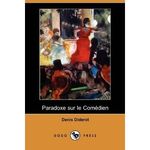
Paradoxe sur le Comedien

(2009)

Denis Diderot (1713-1784), ne a Langres, est un ecrivain, philosophe et encyclopediste francais. Diderot fut un des grands animateurs intellectuels du XVIIIe siecle par sa curiosite, sa vaste culture, sa connaissance des langues, son esprit critique et sa force de travail. L'annee 1743 marque egalement le debut de la carriere litteraire de Diderot, par le biais de la traduction. Il traduit The Grecian History de Temple Stanyan. En 1745 parait sa traduction, largement augmentee de ses reflexions ...
Paradoxe sur le Comedien

The Paradox of Acting

(2010)

Diderot maintained that masterful acting must not include emotional involvement on the part of the actor. This style of acting, reliant on physical technique over emotional truth, was still much in vogue in the late 19th century, particularly in France. The Paradoxe was also the subject of an ongoing debate between Henry Irving, Britain’s most prominent actor, and Benoît-Constant Coquelin, who was the leading actor of the Comedié Française.

The Paradox of Acting

Staging a Play

(2009)

Designed to reinforce literacy skills and arts knowledge with easy to follow activities.

Staging a Play

Collaborative Theatre: Le Theatre du Soleil

(1999)

Over the past thirty years Theatre du Soleil has become one of the most celebrated theater companies in Europe, and Ariadne Mnouchkine one of its best-known directors.Collaborative Theatre is the first in-depth source book on the performance troupe, renowned as widely for its cutting edge theatrical production as its collectivist practices and ideals. Here critical and historical essays by theater critics from around the world are combined with essays by and interviews with members of Theatre d...

Collaborative Theatre: Le Theatre du Soleil

The Black Monk and The Dog Problem: Two Plays

(2009)

The Black Monk has been called a singular "collaboration" between two writers: Anton Chekhov and David Rabe. Based on Chekov's novella of the same name, Rabe's brilliant stage adaptation tells the story of Kovrin, the young philosophy student who returns from Moscow to the estate owned by Pesotsky, where he spent his youth. Kovrin and Pesotsky's daughter, Tanya, soon fall in love and plan to marry. But the appearance of an emissary from the unknown -- the black monk -- threatens to have a devast...

The Black Monk and The Dog Problem: Two Plays

Some Freaks

(1991)

A new collection of prose writings from the author of "Writing in Restaurants". Mamet discusses his parallel experience in cinema as screenwriter ("The Untouchables") and writer-director ("House of Games"). There are also pieces on being a Jew, politics, acting and Disneyland.

Some Freaks

Writing in Restaurants

(1987)

The title of Mamet's first collection of essays and speeches certainly doesn't suggest the themes of commitment and excellence. Nevertheless, if a collection of 28 essays on a variety of topics can be said to have an overarching theme or themes, then surely commitment and excellence sound clearly. These essays, apparently written over a considerable span of years, treat topics ranging from radio drama through middle-class fashion trends to the Academy Awards and the use of amplification in theat...

Writing in Restaurants

Theatre

(2011)

If theatre were a religion, explains David Mamet in his opening chapter, “many of the observations and suggestions in this book might be heretical.” As always, Mamet delivers on his promise: in Theatre, the acclaimed author of Glengarry Glen Ross and Speed the Plow calls for nothing less than the death of the director and the end of acting theory. For Mamet, either actors are good or they are non-actors, and good actors generally work best without the interference of a director, however wel...

Theatre

From Text to Performance in the Elizabethan Theatre: Preparing the Play for the Stage

(2009)

David Bradley sets out to discover how Elizabethan theatre companies prepared plays for performance: how playwrights understood the composition of the actor-companies they wrote for, how actors followed their directions for entrances and exits and what happened when plays were adapted for changes on personnel or for other companies. For his study, Bradley has evaluated documents which survived from the records of Stage Revisers (or Plotters as they were known). Bradley's evidence includes seven ...

From Text to Performance in the Elizabethan Theatre: Preparing the Play for the Stage

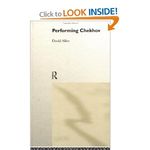
Performing Chekhov

(2001)

Performing Chekhov is a unique and remarkably comprehensive guide to Chekhov's plays in performance. Drawing on extensive interviews with actors, directors and designers, it offers in-depth case studies of a number of significant and often controversial productions of Chekhov's plays. It focuses on the work of key directors in Russia, America and England and reflects a number of significant and on-going debates, not only about Chekhov's work, but about the very nture of acting and performance. ...

Performing Chekhov

Stanislavski for Beginners

(1999)

This guide traces both the subject's life and his "system" - a series of deep acting exercises that focus on relaxation, concentration, and emotional memory. Along the way the authors show how Stanislavski's influence continues today.

Stanislavski for Beginners

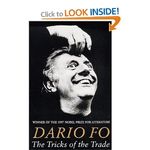
The Tricks of the Trade

(1991)

When Dario Fo won the 1997 Nobel Prize for literature, establishments everywhere erupted in anger. Here was an anticlerical, obscene, communist clown receiving the world's top literary accolade. As this collection of his essays and lectures shows, Fo has such a unique vision that his mission as clown/playwright requires him to be all those other things. What's interesting about The Tricks of the Trade is not his politics, but the incredible amount of research he's done on 2,000 years' worth of ...

The Tricks of the Trade

Germania, Agricola, et de Oratoribus Dialogus

(2010)

The Germania is an ethnographic work on the diverse set of people Tacitus believed to be Germanic tribes outside the Roman Empire. Ethnography already had a long and distinguished heritage in classical literature, and the Germania fits squarely within the tradition established by authors from Herodotus to Julius Caesar. The book begins (chapters 1–27) with a description of the lands, laws, and customs of the tribes. Later chapters focus on descriptions of individual tribes, beginning with tho...

Germania, Agricola, et de Oratoribus Dialogus

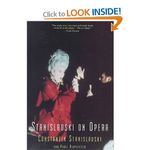
Stanislavski On Opera

(1998)

Best known for his fundamental work on acting, Stanislavski was deeply drawn to the challenges of opera. His brilliant chapters here on Russian classics--Boris Gudonov and The Queen of Spades among them--as well as La Boheme will amaze and delight lovers of opera.

Stanislavski On Opera

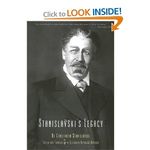
Stanislavski's Legacy: A Collection of Comments on a Variety of Aspects of an Actor's Art and Life

(1999)

Out of the large body of materials -- articles, speeches, notes and memoirs -- left behind by Stanislavski at the time of his death in 1938, Elizabeth Hapgood, his friend and translator, chose items which concentrate on the essence of his work. The result is a volume which supplements the other books he wrote, and re-emphasizes, sometimes in condensed and particulary vivid form, his views about acting, the theatre and life.

Stanislavski's Legacy: A Collection of Comments on a Variety of Aspects of an Actor's

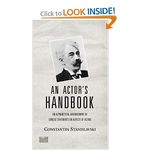
An Actor's Handbook: An Alphabetical Arrangement of Concise Statements on Aspects of Acting

(2004)

This is the classic lexicon of Stanislavski's most important concepts, all in the master's own words. Upon its publication in 1963, An Actor's Handbook quickly established itself as an essential guide for actors and directors. Culling key passages from Stanislavski's vast output, this book covers more than one hundred and fifty key concepts, among them "Improvisation," "External Technique," "Magic If," "Imaginary Objects," "Discipline," "What Is My System?" and "Stage Fright."

An Actor's Handbook: An Alphabetical Arrangement of Concise Statements on Aspects of

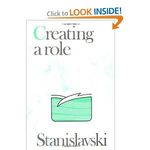
Creating A Role

(1989)

This volume completes, with An Actor Prepares and Building a Character, the trilogy in which Stanislavski set down his life's accomplishment. Creating a Role describes the elaborate preparation that precedes actual performance. Stanislavski here relates the techniques he describes in his preceding books to analyzing specific plays and their roles.

Creating A Role

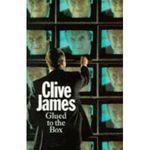
Glued to the Box: Television Criticism from the

(1984)

Collection of the Australian-born writer's TV criticism published in the London 'Observer' during the period 1979-82. It is a paperback edition of a volume first published by Jonathan Cape in 1983. His earlier volumes of TV criticism are 'Visions Before Midnight' (1977 & 1981) and 'The Crystal Bucket' (1983). They were published in a single volume with a new introduction and index as 'Clive James on Television' (1991).

Glued to the Box: Television Criticism from the

New Theatre Quarterly 15 (Part 3)

(1988)

New Theatre Quarterly provides a vital international forum where theatrical scholarship and practice can meet and where prevailing dramatic assumptions can be subjected to vigorous critical questioning. It shows that theatre history has a contemporary relevance, that theatre studies need a methodology and that theatre criticism needs a language. The journal publishes news, analysis and debate within the field of theatre studies.

New Theatre Quarterly 15 (Part 3)

New Theatre Quarterly 14 (Part 2)

(1988)

New Theatre Quarterly provides a vital international forum where theatrical scholarship and practice can meet and where prevailing dramatic assumptions can be subjected to vigorous critical questioning. It shows that theatre history has a contemporary relevance, that theatre studies need a methodology and that theatre criticism needs a language. The journal publishes news, analysis and debate within the field of theatre studies.

New Theatre Quarterly 14 (Part 2)

New Theatre Quarterly 11 (Part 3)

(1987)

New Theatre Quarterly provides a vital international forum where theatrical scholarship and practice can meet and where prevailing dramatic assumptions can be subjected to vigorous critical questioning. It shows that theatre history has a contemporary relevance, that theatre studies need a methodology and that theatre criticism needs a language. The journal publishes news, analysis and debate within the field of theatre studies.

New Theatre Quarterly 11 (Part 3)

New Theatre Quarterly 10: Volume 3, Part 2

(1987)

One of a series discussing topics of interest in theatre studies from theoretical, methodological, philosophical and historical perspectives. The books are aimed at drama and theatre teachers, advanced students in schools and colleges, arts authorities, actors, playwrights, critics and directors.

New Theatre Quarterly 10: Volume 3, Part 2

New Theatre Quarterly 12 (Part 4)

(1987)

One of a series discussing topics of interest in theatre studies from theoretical, methodological, philosophical and historical perspectives. The books are aimed at drama and theatre teachers, advanced students in schools and colleges, arts authorities, actors, playwrights, critics and directors. --This text refers to an out of print or unavailable edition of this title.

New Theatre Quarterly 12 (Part 4)

New Theatre Quarterly 84

(2006)

New Theatre Quarterly provides a vital international forum where theatrical scholarship and practice can meet and where prevailing dramatic assumptions can be subjected to vigorous critical questioning. It shows that theatre history has a contemporary relevance, that theatre studies need a methodology and that theatre criticism needs a language. The journal publishes news, analysis and debate within the field of theatre studies.

New Theatre Quarterly 84

New Theatre Quarterly 83

(2007)

New Theatre Quarterly provides a vital international forum where theatrical scholarship and practice can meet and where prevailing dramatic assumptions can be subjected to vigorous critical questioning. It shows that theatre history has a contemporary relevance, that theatre studies need a methodology and that theatre criticism needs a language. The journal publishes news, analysis and debate within the field of theatre studies.

New Theatre Quarterly 83

New Theatre Quarterly 80: Volume 20, Part 4

(2005)

New Theatre Quarterly provides a lively international forum where theatrical scholarship and practice can meet, and where prevailing dramatic assumptions can be subjected to vigorous critical questioning. Articles in volume 80 include: Peter Barnes: the Playwright who Laughed at Death; A Tear in the Fabric: the James Bulger Murder and New Theatre Writing in the 'Nineties; Jacques Copeau, Etienne Decroux, and the 'Flower of Noh'; Their Exits and Their Entrances: Getting a Handle on Doors; Lev Dod...

New Theatre Quarterly 80: Volume 20, Part 4

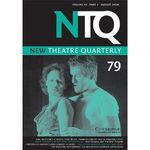
New Theatre Quarterly 79: Volume 20, Part 3

(2005)

New Theatre Quarterly provides an international forum where theatrical scholarship and practice can meet, and where prevailing dramatic assumptions can be subjected to vigorous critical questioning. Volume 79 includes: Karl Valentin's Illogical Subversion: Stand-up Comedy and Alienation Effect; The Shamen and the Epic Theatre: the Nature of Han in the Korean Theatre; Dialogism and the Theatre Event: Deborah Warner and Fiona Shaw's Medea, 2001; The Irony of Passionate Chaos: Modernity and Perfor...

New Theatre Quarterly 79: Volume 20, Part 3

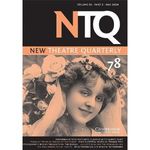
New Theatre Quarterly 78: Volume 20, Part 2

(2005)

New Theatre Quarterly provides an international forum where theatrical scholarship and practice can meet, and where prevailing dramatic assumptions can be subjected to vigorous critical questioning. Volume 78 includes: Beauty and the Market: Actress Postcards and their Senders in Early Twentieth-Century Australia; Ancestral and Authorial Voices in Lloyd Newson and DV8's 'Strange Fish'; Stanislavsky's Second Thoughts on 'The Seagull'; Augusto Boal and the Woman in Lima: a Poetic Encounter; Tumbli...

New Theatre Quarterly 78: Volume 20, Part 2

New Theatre Quarterly 59: Volume 15, Part 3

(1999)

New Theatre Quarterly provides a vital international forum where theatrical scholarship and practice can meet and where prevailing dramatic assumptions can be subjected to vigorous critical questioning. It shows that theatre history has a contemporary relevance, that theatre studies need a methodology and that theatre criticism needs a language. The journal publishes news, analysis and debate within the field of theatre studies.

New Theatre Quarterly 59: Volume 15, Part 3

New Theatre Quarterly 56: Volume 14, Part 4

(1999)

New Theatre Quarterly provides a lively international forum where theatrical scholarship and practice can meet, and where prevailing dramatic assumptions can be subjected to critical questioning.

New Theatre Quarterly 56: Volume 14, Part 4

New Theatre Quarterly 42: Volume 11, Part 2

(1995)

New Theatre Quarterly provides a valuable international forum where theatrical scholarship and practice can meet, and where prevailing dramatic assumptions can be subjected to vigorous critical questioning. It shows that theatre history has a contemporary relevance.

New Theatre Quarterly 42: Volume 11, Part 2

New Theatre Quarterly 40: Volume 10, Part 4

(1994)

New Theatre Quarterly provides an international forum where theatrical scholarship and practice can meet, and where prevailing dramatic assumptions can be subjected to vigorous critical questioning.

New Theatre Quarterly 40: Volume 10, Part 4

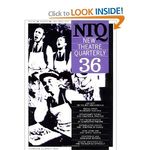
New Theatre Quarterly 36: Volume 9, Part 4

(1993)

Providing an international forum for the discussion of topics of current interest in theatre studies, this edition of New Theatre Quarterly presents articles including the Gershwins in Britain; a discussion by Kott and Marowitz on 'Measure for Measure'; and Gramsci on Ibsen and Pirandello.

New Theatre Quarterly 36: Volume 9, Part 4

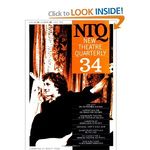
New Theatre Quarterly 34: Volume 9, Part 2

(1993)

This is edition number 34 of the New Theatre Quarterly, which provides a lively international forum for discussion of topics of current interest in theatre studies, whether from the perspective of theory, methodology, philosophy or history.

New Theatre Quarterly 34: Volume 9, Part 2

New Theatre Quarterly 32: Volume 8, Part 4

(1993)

Part 32 of the New Theatre Quarterly, which provides a lively international forum for discussion of topics of current interest in theatre studies. This edition includes articles on and theatre versus reality, the economics of apathy, feminist theatre in Britain and more.

New Theatre Quarterly 32: Volume 8, Part 4

New Theatre Quarterly 28: Volume 7, Part 4

(1992)

One of a series which discusses topics of interest in theatre studies from various perspectives. Part 28 includes discussions of 'Mother Courage' at the Citizens, 1990, by Margaret Eddershaw, and Wole Soyinka's 'Death and the King's Horseman', at the Royal Exchange, 1990, by Martin Banham.

New Theatre Quarterly 28: Volume 7, Part 4

New Theatre Quarterly 26 (Part 2)

(1991)

One of a series which discusses topics of interest in theatre studies from various perspectives. Part 26 includes reconstructions of John Barrymore's interpretation of 'Hamlet' and of Edward Booth's 'Jackets', and a discussion of sexuality and structure in expressionist drama.

New Theatre Quarterly 26 (Part 2)

New Theatre Quarterly 25 (Part 1)

(1991)

One of a series which discusses topics of interest in theatre studies from various perspectives. Part 25 includes an interview with Kaethe Ruelicke-Weiler on the artistic direction and management of the Berliner Ensemble, Bertolt Brecht and Helena Weigel.

New Theatre Quarterly 25 (Part 1)

New Theatre Quarterly 23 (Part 3)

(1991)

One of a series discussing topics of interest in theatre studies from theoretical, methodological, philosophical and historical perspectives. The books are aimed at drama and theatre teachers, advanced students in schools and colleges, arts authorities, actors, playwrights, critics and directors.

New Theatre Quarterly 23 (Part 3)

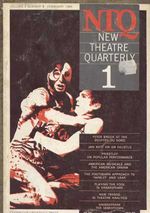
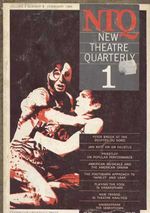
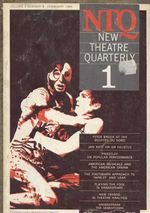
New Theatre Quarterly 1 (Part 1)

(1985)

New Theatre Quarterly provides a vital international forum where theatrical scholarship and practice can meet and where prevailing dramatic assumptions can be subjected to vigorous critical questioning. It shows that theatre history has a contemporary relevance, that theatre studies need a methodology and that theatre criticism needs a language. The journal publishes news, analysis and debate within the field of theatre studies.

New Theatre Quarterly 1 (Part 1)

BroadwayWorld TV


Ticket Central
Hot Show
Tickets From $59
Hot Show
Tickets From $70
Hot Show
Tickets From $106
Hot Show
Tickets From $75