


Who Are Broadway Theaters Named After?
Do you know which Broadway theatres are named after famous actors?
Do you have a burning Broadway question? Dying to know more about an obscure Broadway fact? Broadway historian and self-proclaimed theatre nerd Jennifer Ashley Tepper is here to help with Broadway Deep Dive. BroadwayWorld is accepting questions from theatre fans like you. If you're lucky, your question might be selected as the topic of her next column!
Submit your Broadway question here!
This time, the reader question was: who are Broadway theatres named after?
Our 41 Broadway theaters provide a home for every production that hits the Great White Way. From our oldest continually operating Broadway house, the Lyceum, to our newest reopened and functioning Broadway house, the Hudson, the Broadway theaters are all located in midtown Manhattan. They range from a capacity of just under 600 seats (the Hayes) to a capacity of just over 1,900 seats (the Gershwin). Many of our Broadway theaters have had name changes over the years. Who are all of our current Broadway houses named for?
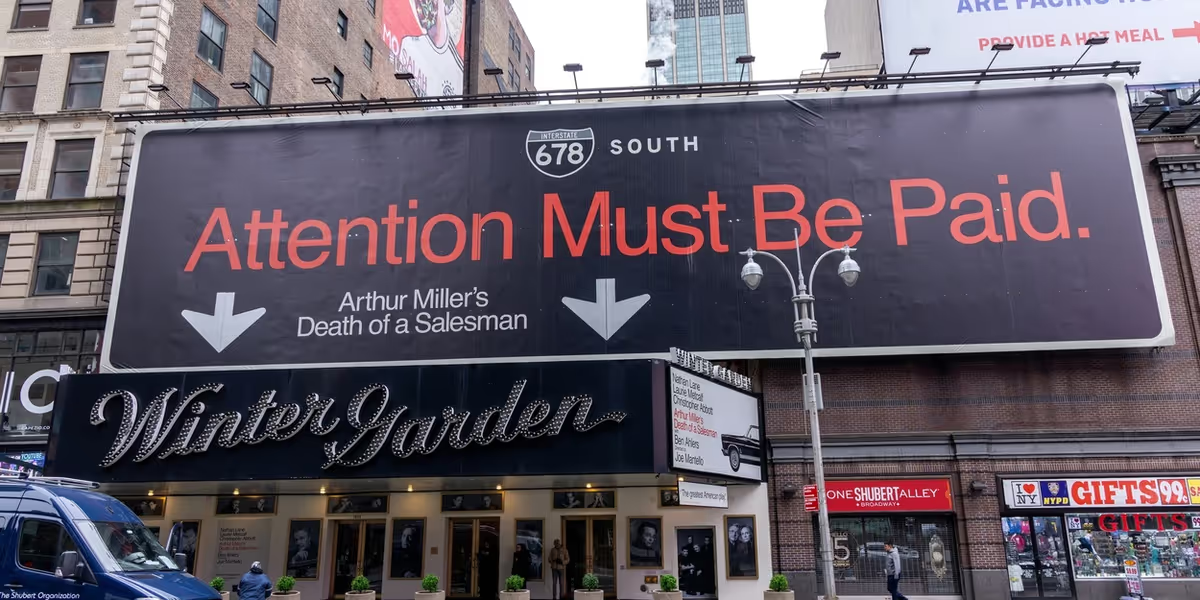
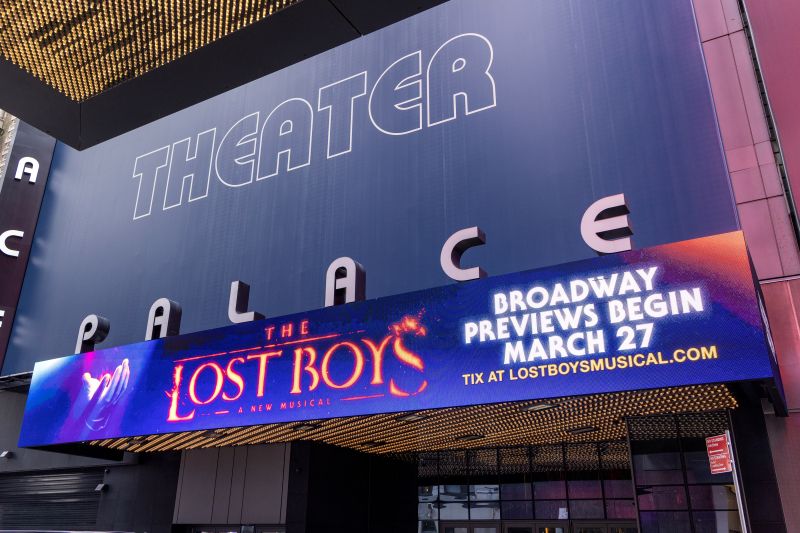
The largest number of Broadway houses have abstract names paying tribute not to an individual but to a theatrical or cosmopolitan element. Sixteen of our 41 Broadway theaters are titled as such, including the Ambassador, Broadway, Circle in the Square, Hudson, Imperial, Longacre, Lyceum, Lyric, Majestic, Marquis, Music Box, New Amsterdam, Palace, St. James, Studio 54, and Winter Garden. Several of these names contain a nod to our British theatrical heritage, and others acknowledge locales important in New York City history.
The Longacre is one of the rare Broadway houses that has kept the same name for its entire history, since 1913. Before Times Square was named as such, because of the newly located New York Times building, the area of midtown Manhattan that currently contains the theatre district was called Longacre Square. The Longacre, current home of Two Strangers (Carry A Cake Across New York) is titled in tribute to the former name of Times Square. The home of Aladdin, the New Amsterdam Theatre, pays similar tribute. New Amsterdam was the old name for New York City, when it was first settled by Dutch immigrants. The Hudson also acknowledges early New York history; its namesake is explorer Henry Hudson.
Both Circle in the Square and Studio 54 pay homage to other entities. The original off-Broadway theatre company Circle in the Square operated out of a downtown theater that gave it its name. When the company moved uptown to Broadway in the 1970s, and opened the theatre currently occupied by Just In Time, its original name moved with it. Studio 54 is known as the name of a famous discotheque of the 1970s. This disco was located inside a former Broadway house on 54th Street. When the venue became a Broadway theater again in 1998, it kept its glamorous name. Studio 54 boasts a revival of The Rocky Horror Show this spring.
The Ambassador, Imperial, Lyric, Majestic, and Winter Garden followed an early 20th century trend of giving theaters elegant and generic names, evoking a dignified evening out. Several of our Broadway theaters have names that were previously used on older London theatrical venues, including the Lyceum, Palace, and St. James. (Both England and America’s Lyceum Theatres in turn pay tribute to our Greek theatre roots; the dramatic critic and philosopher Aristotle taught at a venue called the Lyceum.)
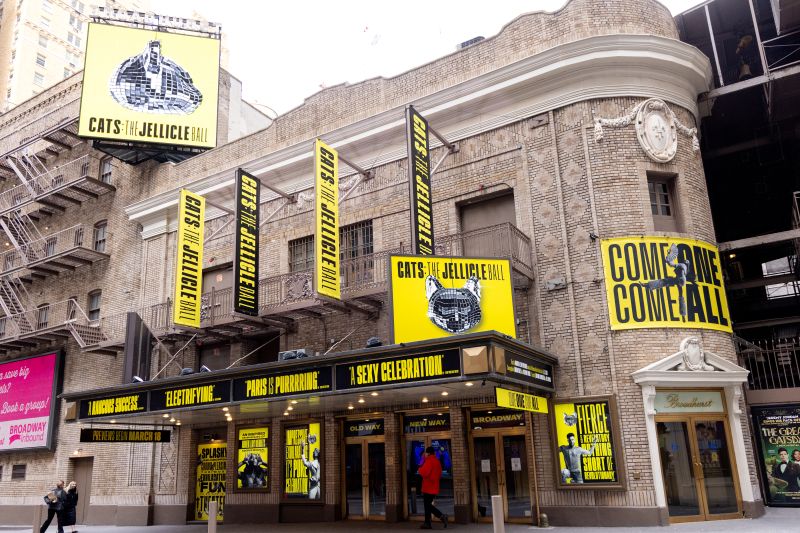
The Music Box was built specifically to house the Music Box Revues in 1921 and its name has never changed. The Marquis was built inside the Marriott Marquis Hotel in 1986. The Broadway has an interesting past as a theatre name. Seemingly the most generic name of them all, the Broadway (current home of The Great Gatsby) originally opened in 1924 as a movie palace and vaudeville house called B.S. Moss’s Colony Theatre. Upon launching its first legit stage production in 1930, it became christened B.S. Moss’s Broadway Theatre. When impresario Earl Carroll took over the house, it became Earl Carroll’s Broadway Theatre, following a tradition whereby new theatre owners inserted their name in the name of the house. These days, it is simply the Broadway.
Six of our Broadway houses are named after theatre writers (comprising composers, lyricists, book writers, and playwrights) and six are named after actors. Of course, the legends who became prominent enough to have Broadway houses named after them often occupied more than one profession in the arts. For example, Richard Rodgers, whose house is the current home of Hamilton, was first and foremost a writer, but he also produced. Alfred Lunt, who with Lynn Fontanne, lights up the marquee of the Lunt-Fontanne, home of Death Becomes Her, was an important actor, but he also directed. The houses named after theatre writers are the August Wilson, Eugene O’Neill, Gershwin, Neil Simon, Richard Rodgers, and Stephen Sondheim. The houses named after actors are the Booth, Ethel Barrymore, Hayes, James Earl Jones, Lena Horne, and Lunt-Fontanne. Interesting to note is that while theatre namings are of course intended to honor each individual, the majority of these Broadway artists did not spend major time at the theaters that managed to be named after them. Stephen Sondheim didn’t work much at the Sondheim and Edwin Booth died two decades before the Booth was opened. That said, Lena Horne did make her Broadway debut at the theater that would be renamed in her honor nearly 90 years later and the Neil Simon was renamed for the playwright while his juggernaut Brighton Beach Memoirs occupied its stage in 1983.
Five Broadway houses are named after theater owners and three after producers, although there is of course significant overlap between the two categories. Many Broadway producers throughout history have owned and operated their own theaters and nearly all theatre owners have produced shows as well. That said, the Bernard B. Jacobs, Gerald Schoenfeld, Nederlander, Shubert, and Todd Haimes Theatres were named after individuals that were primarily known as theatre owners. Jacobs and Schoenfeld ran The Shubert Organization for many decades and are credited with shaping the largest theatre-owning organization on Broadway. This organization was originally founded by the Shubert brothers, and the Shubert itself is named after one of the three: Sam Shubert, who died tragically at the age of 26. The Nederlander Organization owns and operates nine Broadway houses currently, including the Nederlander itself, which was named after family patriarch, David T. Nederlander. The Todd Haimes was recently renamed as such in 2024 to honor Roundabout Theatre Company’s longtime artistic director; the Roundabout currently operates three Broadway houses. Producers are the namesake of three Broadway theaters. The Belasco, Broadhurst, and John Golden were all named after the producers who set up shop within their walls: David Belasco, George Broadhurst, and John Golden.
This brings us to our last five Broadway theaters, which are all uniquely named after folks who occupied positions not held in common with any other Broadway theater namesakes. Did you know that we have one Broadway theater each named after a visual artist, a philanthropist, a publicist, a critic, and developers?
The Broadway theater named after a visual artist is the Al Hirschfeld. Hirschfeld was a caricaturist whose work chronicled theatrical productions as well as other celebrities and pop culture moments. The Broadway theater named after Hirschfeld is currently home to Moulin Rouge! and if ticket buyers arrive early, they can view a museum display of historic Hirschfeld works. Lincoln Center’s Broadway house, the Vivian Beaumont, is named after the major arts philanthropist who funded its creation. Manhattan Theatre Club’s Broadway house, the Samuel J. Friedman, is named after the Broadway publicist whose family were major donors to the company. The Walter Kerr, where Hadestown is playing, is our only current Broadway house named after a theatre critic. (The Lena Horne Theatre was formerly known as the Brooks Atkinson.) And finally, the Minskoff, home of The Lion King, was named after the developers who erected it; Sam Minskoff and Sons was the real estate company that made the Minskoff Theatre, built in 1973, come to life.
Photo Credit: Jennifer Broski
Sign up for all the news on the Fall season, discounts & more...
.jpg?format=auto&width=300)





Comments
To post a comment, you must register and login.