


My guest this week is author Deborah Phillips whose new book is titled: AND THIS IS MY FRIEND SANDY — SANDY WILSON’S THE BOY FRIEND, LONDON THEATRE AND GAY CULTURE. Sandy Wilson's The Boyfriend — for which he wrote the book, music, & lyrics — is one of the most successful British musicals of all time.
Review: MADAMA BUTTERFLY at Washington National Opera
The artistry of Madama Butterfly lives on in this intriguing new interpretation of the beloved classic.
By: David Friscic

Paradigms are broken--thematically, logistically, and vision-wise --in the Washington National Opera’s innovatively reconfigured, and forward-looking production of the beloved opera Madama Butterfly. Paradigms aside, the glorious music of Puccini is always the compelling reason that this opera has fascinated so many over the decades.
Composer Giacomo Puccini’s ravishingly beautiful music contains one of the most romantic love duets in the history of the operatic canon ( Viene la sera: “Night is Falling” ) as well as one of the most idealized anticipatory arias of longing and hope (Un bel di, vedremo :“One fine day, we’ll see.”).
This oft-told tale of the steadfast and loyal “Madama Butterly”, Cio-Cio-San (a reference to her delicacy and possibility of having her wings pinned down ----a refence made as she sings of Americans taking butterflies and pinning them down in cases for display)never fails to compel. The soprano of Karah Son as Cio-Cio- San (Madama Butterfly) is enthralling and Ms. Son’s vocal stamina never falters but, instead, soars amidst several musically daunting arias and duets. Ms. Son thrills throughout with an exquisite soprano that meets every nuance of operatic skill.
Though Ms. Son has sung this role in many opera houses of the world, the inherent inner life that Ms. Son brings to the role --and her developed technique --merges to create an interpretation of heartfelt spontaneity and immediacy.
West most decidedly meet East in this interpretation of the opera by director E. Loren Meeker. Approximately fifty years after Commodore Perry forced the opening of Japan to the West, director Meeker shows that the culture clash between the west and east continues. Ms. Meeker seems to stress the caddish, callow, facile pragmatism in Butterly’s American husband, Lieutenant B. F. Pinkerton(tenor Matthew White) to a more heightened degree than usual (there were very loud “boos” when the talented Mr. White took his curtain call).

Photo by Cory Weaver.
Director Meeker also made the thematic choice of making Cio-Cio-San more empowered by her steadfast and strong will----even though she has had to renounce most all she has held sacred and loved in her life (husband, child , and faith), she still possesses agency over the decision to end her own life with sacred honor and sacrifice. Any past stereotypes regarding the portrayal of Cio-Cio-San’s character have been obliterated and this “Butterfly” shows a steely strength behind the delicate demeanor.
The glorious “Flower Duet” between maid Suzuki (Mezzo-Soprano Michelle Mariposo) and Cio-Cio-San is beautifully sung and conveyed with the Washington National Opera Corps Dancers scattering rose petals and blossoms around the stage space. Blossoms fall from the top of the stage with surprising delicacy. Ms. Mariposa delivers a very precise and solid interpretation of her loyal character.
Tenor Matthew White gamely works at salvaging a semblance of dignity to his caddish role, but it is a daunting task. Luckily, Mr. White possesses a very expressive tenor as well as possessing charismatic stage presence.
Baritone Will Liverman as the American consul, Sharpless, brings authoritative heft to his role and sings with deeply felt resonance.
Tenor Rodell Rosel is appropriately opportunistic in the role of Goro.
Baritone Chandler Benn is superb as the imperious Prince Yamadori.
The reconfiguration of the center-front stage and seating space by the Washington National Opera in agreement with the DAR Constitution Hall is a major logistical achievement. A three -sided thrust stage enables more immersive recreation of ongoing movement in the stage space. The orchestra is visible upstage behind the raised three-quarter thrust stage---this touch adds an appealing visual and aural fascination to the proceedings.
Set designer Walt Spangler has designed a large projection panel at the top tier of the stage. Underneath are approximately fifteen smaller panels that operate as entrances and exits --- to allow ensemble members to enter and depart dramatically to and from the main stage space area.
This challenging and ambitious reconfiguration works on most all of the visual components required for optic satisfaction for the audience --but I sometimes found that letting the audience be allowed to see across to other audience members , --- seemed to create a somewhat distracting intrusion to the intimate immediacy of the proceedings onstage. Madama Butterly is a very intimate opera in its essence, although I will admit the context behind it –such as historical and cultural themes—may embody more epic considerations.
The libretto by Luigi Illica and Giuseppe Giacosa is replete with unabashed romanticism as well as undercurrents of dry, biting, humor. Librettists Illica and Giacosa had their work cut out for them, in my humble opinion, as there are no potent political or religious revolutions concurrently happening onstage to portray overt subplots (as in so many other operas) ---consequently, total focus is given towards Cio-Cio-Son’s romantic pathos and idealism. The librettists certainly deliver the goods in portraying the essence of Cio-Cio-San and her influence or lack of influence on others ---as well as her innate sense of resolve.
The Washington National Opera Orchestra played with sensitivity under the conducting of Erina Yashima ----. The orchestra played with fluent polish and an understanding of the bittersweet irony in this opera. (Snippets of ‘The Star-Spangled Banner” underscore some of the musical passages at times ---perhaps a stab at American imperialism?)
The Washington National Opera Chorus sings the classic “Humming Chorus” and adds immeasurably to the opera.
Choreographer Kanji Segawa up here conveys new ways of showing almost continual movement, especially in his choreography of the Washington National Opera Corps Dancers.
From what I could discern, the Washington National Opera Corps Dancers even physically contort themselves to seemingly form Kanji or logograms (which is a highly structured combination of elements).
The poles/long sticks used by the dancers to fly flags or birds are reminiscent of theatrical devices which are utilized in traditional Japanese Theater.
The dancers move with fluid immersion around the main performers and are dressed in colorful outfits ---eye-catching scenes occur as the dancers carry lanterns in a ritualistic manner and as they enclose “Butterfly” with a heightened sense of physical enclosure.
Lighting by Duane Schuler is evocatively exciting.
Projection design by Alexander V. Nichols is artfully managed --and a pleasant change from projections that overwhelm the narrative and music.
Original period costume design by Broadway legend ( six-time Tony-award winner) Florence Klotz are tantalizing to the eye—and are further enhanced by new costume design by Timm Burrow.
Madama Butterfly continues to entice new generations and has inspired the Broadway success Miss Saigon as well as the David Henry Hwang play M Butterfly.
The Washington National Opera has plunged into new challenges with creativity and craftsmanship. The artistry of Madama Butterfly lives on in this intriguing new interpretation of the beloved classic. The Washington National Opera’s new season is off to an exciting and innovative start ---the WNO continues to deserve our utmost support.
Running Time: Two Hours and 45 including a 25-minute intermission.
Madama Butterfly, produced and presented by the Washington National Opera, continues its run at the DAR Constitution Hall at 1776 D Street, NW, Washington, DC, 20006 -- on Friday, November 13, 2026, at 7:00pm, Sunday, November 15, 2026, at 2:00 pm, Wednesday, November 18,2026 at 7:00 pm, and Friday, November 20, 2026, at 7:00 p.m.
Lead photo credit: Cio-Cio-San at center in Washington National Opera's production of Madama Butterfly.
Photo by Cory Weaver.
See more BroadwayWorld in Google
Make us a preferred source and our stories show up more often in Top Stories and Google’s AI answers.
Breaking Broadway alerts by text
Get the biggest stories sent straight to your phone.
More on Washington National Opera
Recent Articles
Broadway news in your inbox
Weekly top stories - unsubscribe anytime.
Weekly top stories - unsubscribe anytime.
Popular episode


|
Are You Now or Have You Ever Been? Arena Stage at the Mead Center for American Theater (10/17-12/06) |
|
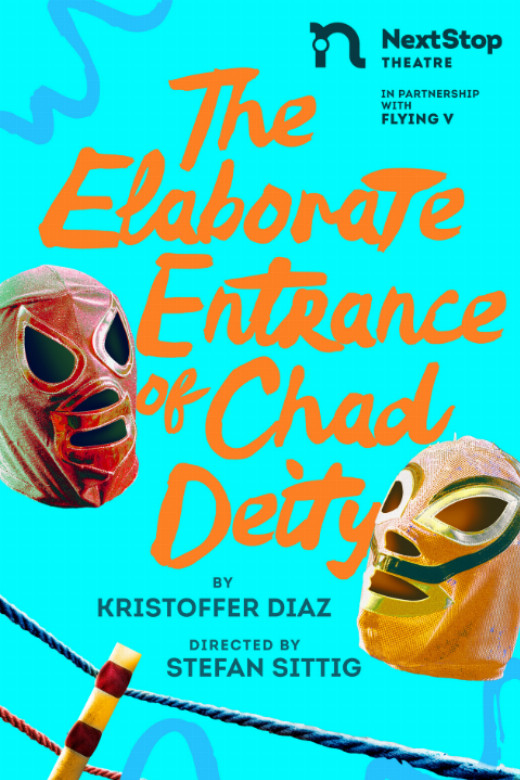
The Elaborate Entrance of Chad Deity NextStop Theatre (11/05-11/29) |
|
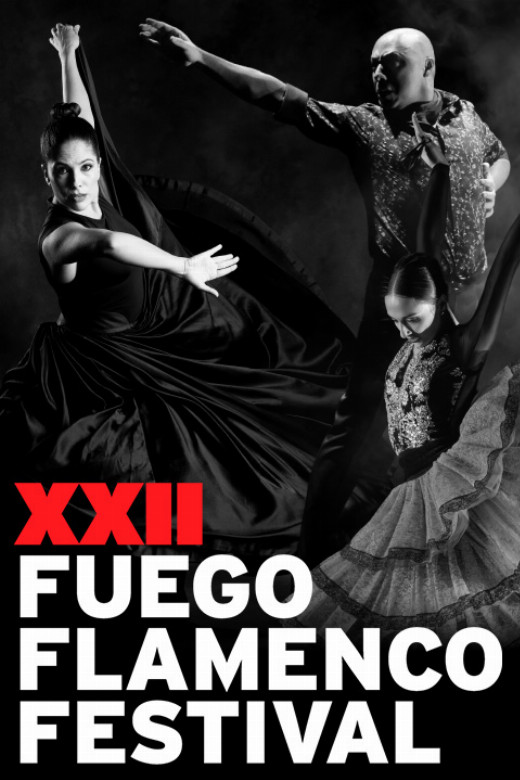
XXII FUEGO FLAMENCO FESTIVAL GALA Hispanic Theatre (11/05-11/22) |
|
Mamma Mia! National Theatre (10/27-11/15) |

|
Kimberly Akimbo Olney Theatre Center (3/18-4/25) |
|
Pink Martini All-Stars Present: A Season of Stars Center for the Arts (12/10-12/10) |

|
The 25th Annual Putnam County Spelling Bee Ford's Theatre (3/12-5/15) |
|
The French Choir of Washington presents "5th Annual Winter Holiday Concert" F. Scott Fitzgerald Theatre (11/18-11/18) |
|
Annual Christmas Concert Basilica of the National Shrine of the Immaculate Conception (12/04-12/04) |

|
Prima Facie Arena Stage (1/08-3/07) |
Reader Reviews
To post a comment, you must register and login.