


Review: LA JOLLA MUSIC SOCIETY'S SUMMERFEST CELEBRATES THE “RULE OF THREE” at The Conrad
SummerFest's 40th Anniversary Scores With Triples
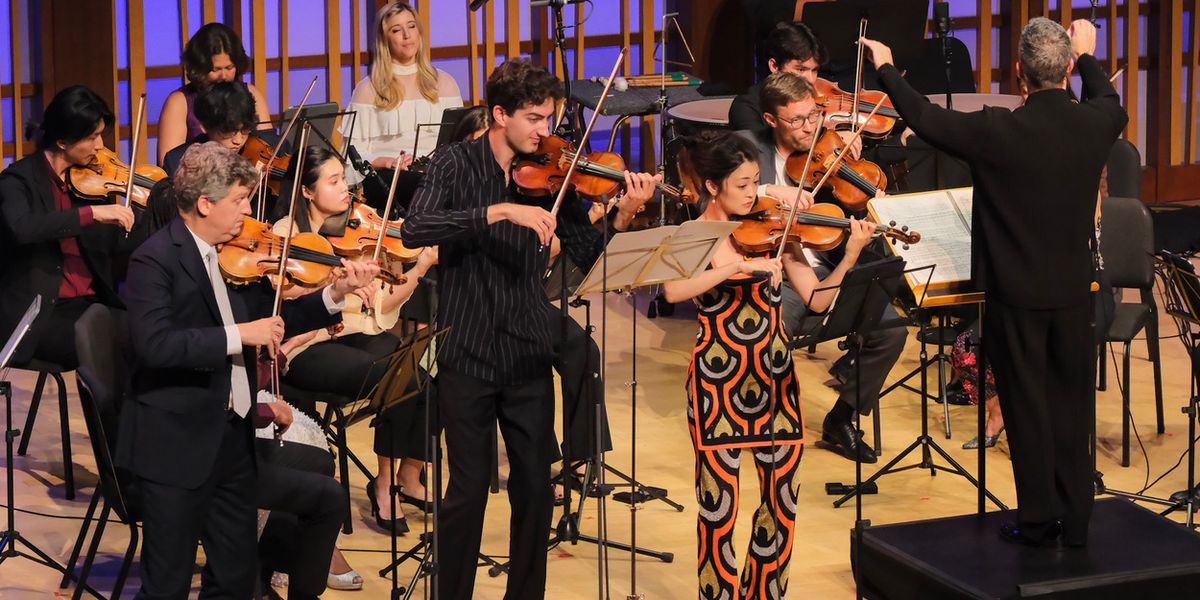
More than 100 artists participated in a month of 21 concerts during La Jolla Music Society’s 40th annual SummerFest. The festival’s theme was “Making History,” and SummerFest Music Director Inon Barnatan designed this year’s concerts to celebrate both the festival’s anniversary and the nation’s 250th birthday.
When I interviewed Barnatan on the first day of the festival, he said he wanted to celebrate by “doing the most American thing possible,” acknowledging the diversity of influences on the development of classical music in America with a variety of voices.
And quite a variety it was, each concert with its own unique theme, and composers born in different countries and historical eras. The theme was the “Rule of Three” on closing night, and Barnatan again repeated his belief in the positive influence of diversity with works by composers born in four different countries and three different centuries.
The concert’s four works included triple concertos by Mozart and Olli Mustonen and two for the combination of two violins and a viola, one by Dvorák and the other by David Ludwig.
Appropriately, David Ludwig’s “Rule of Three” was the concert opener. The composer has pointed out that the rule can be applied to many tasks, including telling jokes and writing a story. “In music I think of it as presenting an idea, establishing it on the second go around, and then making it again–but the third time a little different.”
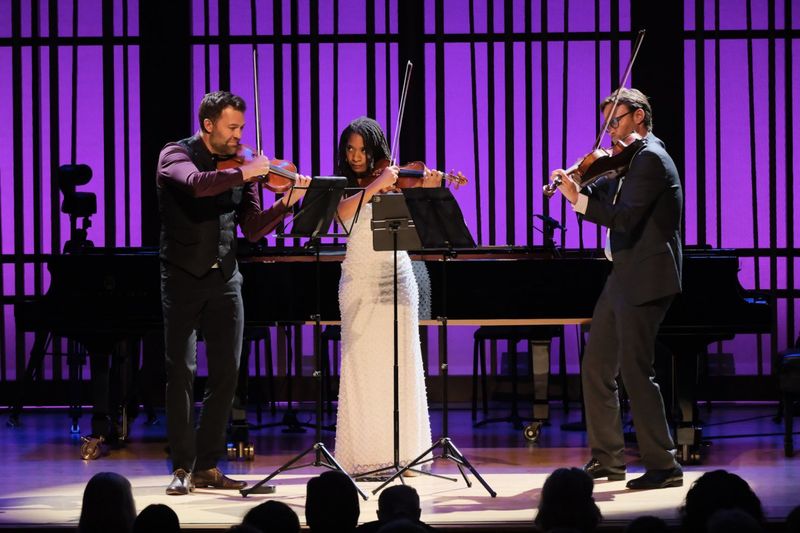
Inspired by Corelli trio sonatas, the piece in five movements engages the listener with brief melodic phrases and harmonies more Romantic sounding than Baroque. They are soon transformed into more contemporary phrasings and harmonies, including light dissonance. The mood varies widely from contemplative to energetic. This is a link to brief excerpts on the composer’s website.
Owen Dalby, Nijoma Chinyere Grevious, violins and Jonathan Vinocour, viola combined for a performance of beauty and a precision that was especially notable in a long, jazzy pizzicato romp.
The program then backed up a few hundred years for Mozart’s 7th piano concerto, written when he was 20. Mozart’s often delightful earlier works would be heard far more often had he not gone on to write several hundred pieces that are even better. The need for three pianos puts the concerto at an even greater disadvantage. Things were a little crowded on The Conrad’s petite stage.
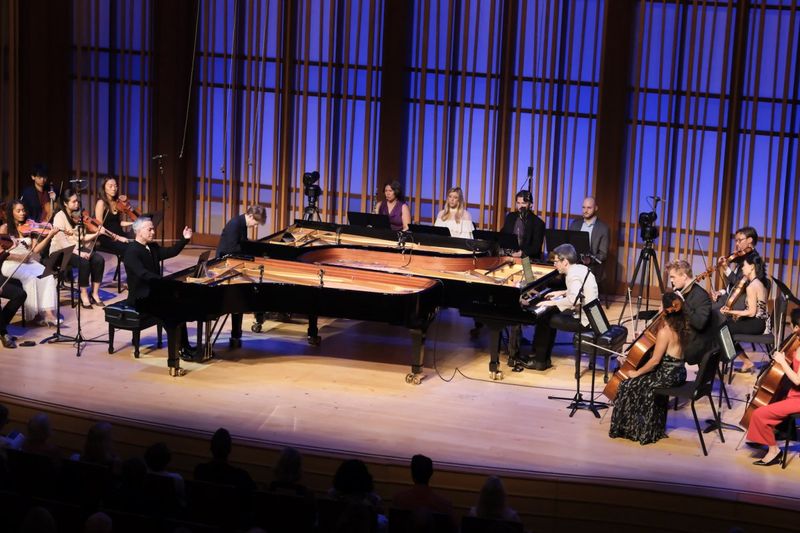
Even Mozart thought three a bit much, and four years later rewrote the concerto for two, the version usually performed today. So it was a special treat to hear the original version, and pianists Inon Barnatan, Jonathan Biss and Anthony Ratinov worked seamlessly together to ensure there was no musical overcrowding.
The outer movements are filled with the cheerful, optimistic enthusiasm of youth – long bubbling runs with clean articulation that brought smiles in the hall’s marvelous acoustics. The pianists brought out the best of the middle movement’s adagio, but it comes off as ordinary for its time, never more than hinting at the sublime beauty of Mozart’s later concertos.
The second half of the concert had the same format, a trio for the unusual combination of two violins and viola followed by a triple concerto.
Dvorák’s “Terzetto,” (trio), continued the evening’s theme. It’s a work mentioned by David Ludwig in his discussion of “Rule of Three.” That probably explains Ludwig’s unusual instrumentation. No guesses needed for Dvorák. He was a professional violist and wrote “Terzetta” to perform with two violinist friends. It never happened, but for once I’ll resist a digression.
I admire Dvorák for his melodic gift and his use of vigorous folk rhythms. Both are on display in the four movements of this piece. The first three are A-B-A form with a mix of the composer’s Romantic lyricism and contrasting faster tempos and wider-range dynamics. The fourth is an enjoyable set of variations.
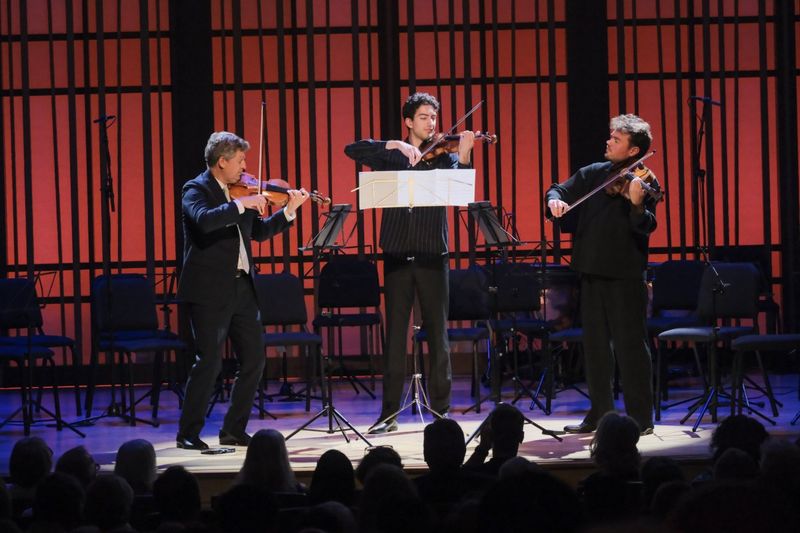
Violinists James Ehnes and Stephen Waarts were joined by violists Timothy Ridout in a performance of luxurious warmth and exciting rhythm. The scherzo was impressive for its audience-pleasing up-tempo bohemian dance patterns, at times evoking thoughts of Dvorák’s symphonies with just three passionate string instrumentalists.
I admire Rossini's melodic gifts, much on display in the four movements of this piece. The first three are A-B-A form with a mix of the composer’s lyricism and contrasting faster tempos and wider-range dynamics. The fourth is an enjoyable set of variations.
Violinists James Ehnes and Stephen Waarts were joined by violists Timothy Ridout in a performance of luxurious warmth and exciting rhythms. The scherzo was impressive for its audience-pleasing energy.
Ehnes and Waart returned, this time with violinist Simone Porter for the program’s final piece, Olli Mustonen’s Triple Concerto for Three Violins.
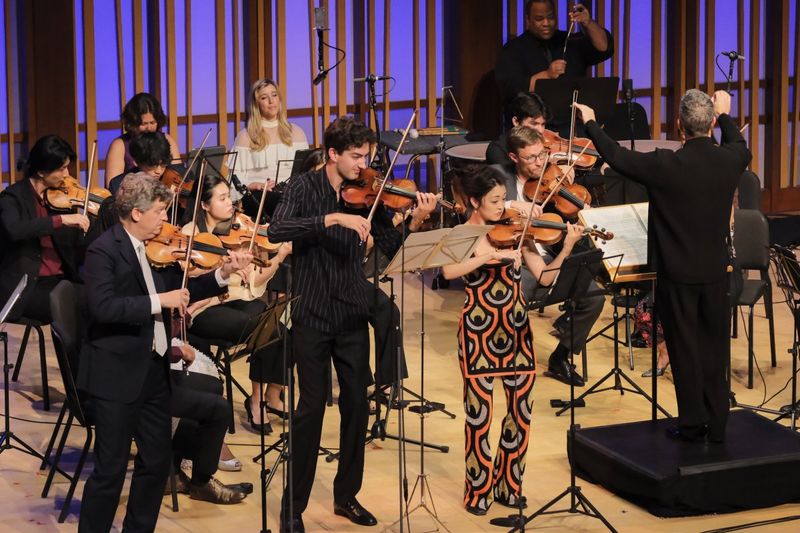
Mustonen began playing baroque music on a harpsichord at the age of five and at eight studied composition with no less a Finnish master than Einojuhani Rautavaara. Though today Mustonen remains better known as a successful concert pianist, he’s composed a variety of chamber music, three symphonies, and the triple concerto, which he calls a mixture of Baroque, Minimalism, and “the voluptuousness of Neo-Romanticism.” The work is in four movements. This brief You Tube Video from the finale demonstrates what he meant.
The first two movements are influenced by the violin concertos of Bach and Vivaldi. The touch of Minimalism reminded me of a criticism a critic made of Vivaldi many years ago. It’s “sewing machine music.” I think that criticism is more applicable to pure Minimalism, but Mustonen is far from that, and the first half of the concerto is a lively pleasure.
The slow third movement is a strange, uneasy contrast, a combination of Romantic lyricism and foreboding timpani tremolos. The finale returns to Baroque energy, and a sold-out audience responded with shouts and applause as Conductor Inon Barnatan and his musicians took a well-earned bow. You wouldn’t have guessed, this was the first time Barnatan had ever conducted from a podium. I doubt it will be his last.
SummerFest is over until next year, but La Jolla Music Society has plans for the remainder of this year and into next. Visit the LJMS website for a concert schedule.
Photos Ken Jacques
Sign up for all the news on the Fall season, discounts & more...
|
BEGIN AGAIN The Old Globe (9/06-10/11) |
|
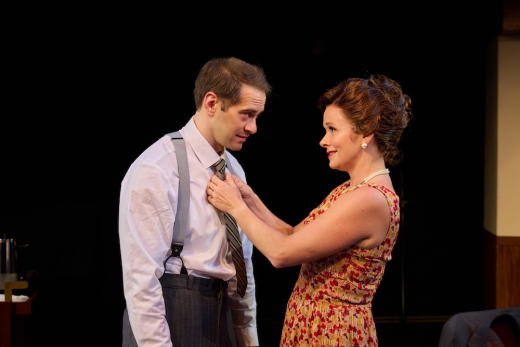
Good Night, Oscar North Coast Repertory (9/16-10/18) |
|
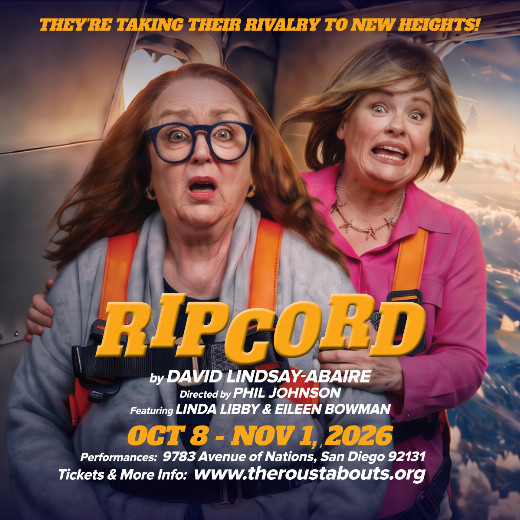
Ripcord The Roustabouts Theatre Co. (10/08-11/01) |
|
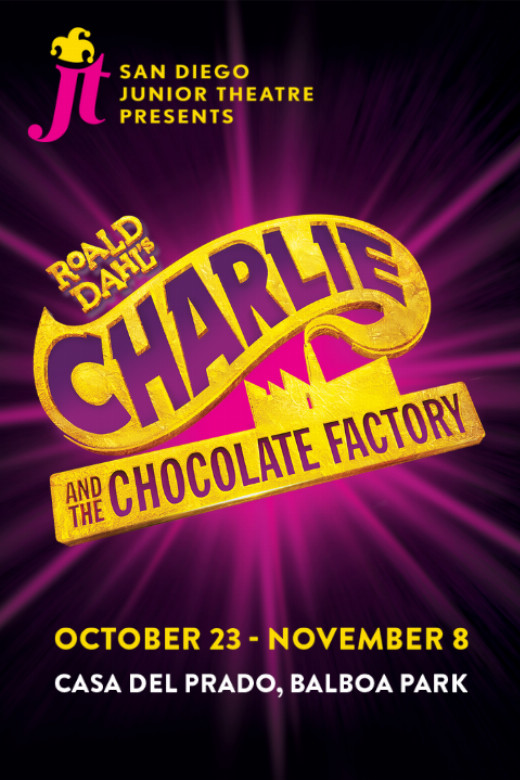
Charlie and the Chocolate Factory Casa del Prado Theatre (10/23-11/08) |

|
Curious George and the Golden Meatball Poway Center for The Performing Arts (1/16-1/16) |
|
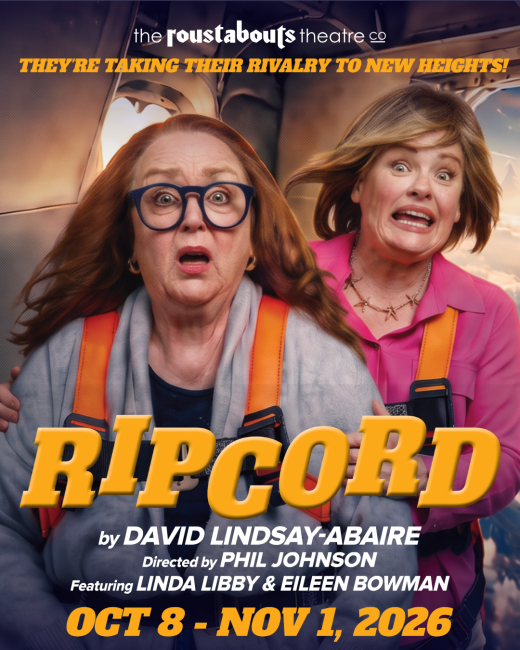
Ripcord Scripps Ranch Theatre (10/08-11/01) |
|
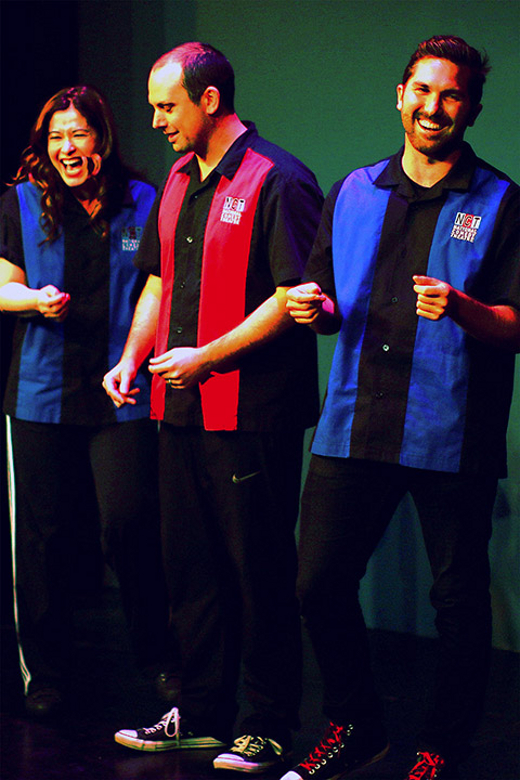
National Comedy Theatre National Comedy Theatre (5/02-12/28) |

|
Odds Are Mosaic Theatricals (10/02-10/18) |

|
MJ Live Michael Jackson Tribute Concert Poway Center for The Performing Arts (4/03-4/03) |
|
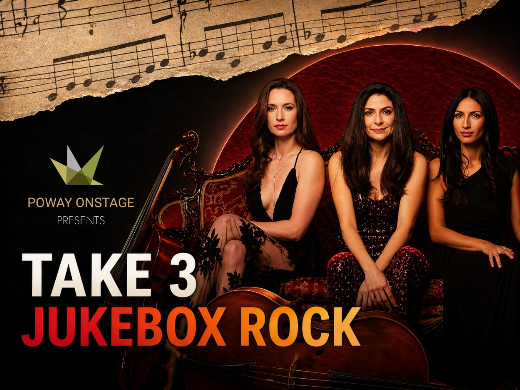
Take3 Jukebox Rock Poway Center for The Performing Arts (4/18-4/18) |

Reader Reviews
To post a comment, you must register and login.