


Interview: Inon Barnatan of LA JOLLA MUSIC SOCIETY'S SUMMERFEST at The Conrad
The Concert Pianist and Music Director Who Programed 21 Adventurous SummerFest 40th Anniversary Concerts
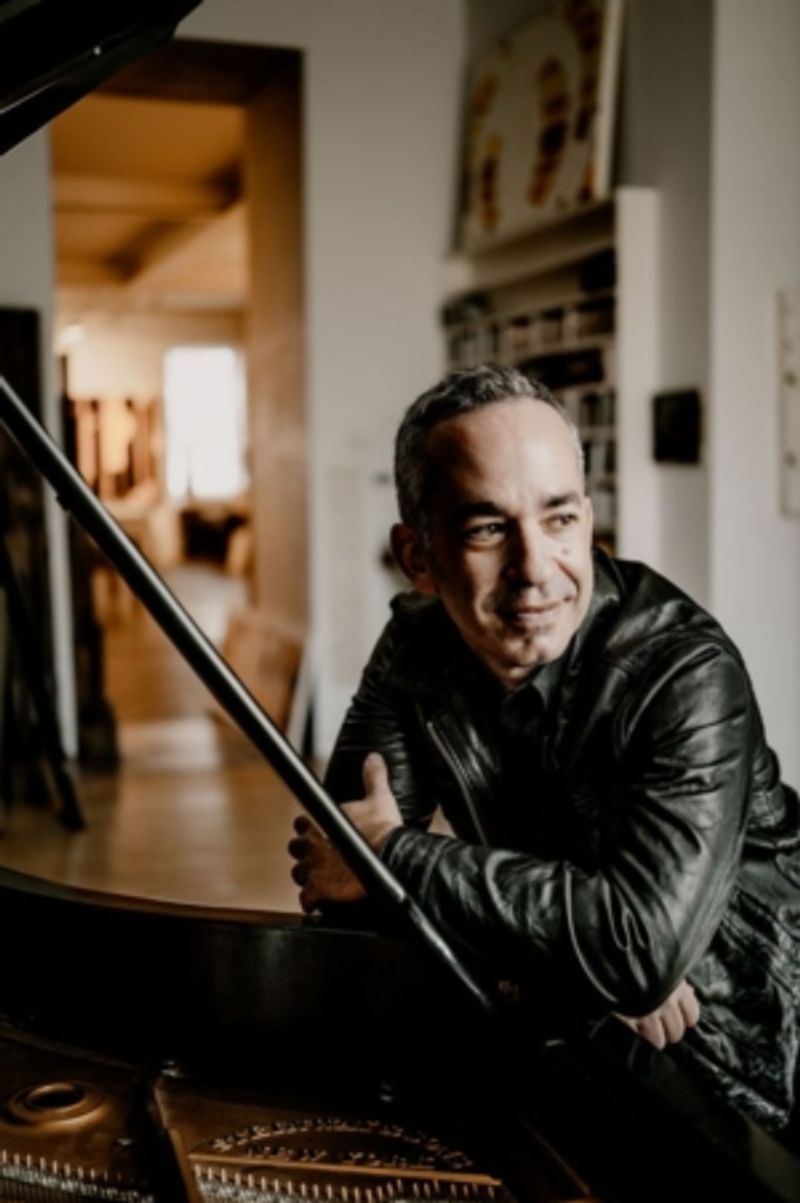
Inon Barnatan became music director of La Jolla Music Society’s annual SummerFest chamber-music festival in 2018. This year, on its 40th anniversary, the celebration’s theme is “Making History.” More than 100 artists are participating in a month of 21 adventurous concerts.
Born in Tel Aviv, the pianist began playing on his own at the age of three. Half a year later his parents realized he had perfect pitch and was likely to respond well to lessons. From his youthful point of view, it probably didn’t hurt that his first teacher rewarded him with chocolates.
As he progressed, he studied at Tel Aviv University before moving to London at the age of 16 to study at the Royal Academy of Music with Maria Curcio, a student of Artur Schnabel. The late Leon Fleisher was also an influential teacher and mentor.
The versatile musician, “One of the most admired pianists of his generation” (The New York Times) performs with the world’s finest orchestras, in solo recitals and with other notable chamber music musicians. His most recent recording is a set of Brahms Cello Sonatas with Alisa Weilerstein.
I met with Barnatan via Zoom to discuss the festival, how he approached its programming, and his career as a soloist.
After a brief chat in which I learned he was staying in a place on the La Jolla coast with a terrific view, we began discussing how he’d decided to combine a celebration of SummerFest’s 40th year with a recognition that the United States had just reached its 250th year.
The following has been condensed and edited for clarity. (Especially my questions)
You’ve been adventurous in SummerFest programming. With the 10 pieces in tonight’s concert you show how composers relate to each other from the 11th century to today, though from different centuries and countries. In another, you show music changing in Vienna in just a few years. Will the connections be explained before each piece?
Yes. Tonight’s concert will be narrated by Fred Child of American Public Media, who has informative historical context about each piece.
In celebrating the nation’s 250th I'm doing the most American thing possible by acknowledging diversity and inclusion's influence on the development of classical music in America.
Music patron Elizabeth Sprague Coolidge was in my thoughts as I designed this year’s programs. She is best known for commissioning Martha Graham’s Appalachian Spring ballet with a score by Aaron Copland. But most of the many she commissioned, including Prokofiev, Poulenc and Stravinsky, were not native to this country.
With that in mind, I wanted the festival’s concerts to feature a variety of voices, and for every concert to be special, unusual and celebratory in different ways.
I'd like to go back and talk more about your musical background. Your love of music, did that come from a musical family?
No, my family wasn’t musical, but my mother had a piano in the house. She played when she was young, and became a choreographer and dancer, but was never a musician. She did have a love of music, and I immediately gravitated towards the piano, and kind of almost demanded to be sent to music lessons.
Perfect pitch was an asset?
It helps only in the way it just establishes music in your mind as a friendly, familiar thing. I mean, I don't really use it for anything, since my notes are given to me by the keyboard. But at a young age, they didn't seem like foreign objects.
Even aside from perfect pitch, you seem to have an exceptional sensitivity to subtle differences in sound, the differences between pianos, in the way you press the keys, and I wonder what you mean when you say a soloist must be able to make the piano sound like a cello. How do you do that?
Well, piano is a great shapeshifter, but if you want 50 different sounds to the piano, you have to play it in 50 different ways, and the cello has a very different way of attack than a piano. It doesn't strike a note. It sneaks into a note.
And how do you sneak into a note on a piano?
You can fake it to a certain extent. Just the way you strike a note, the relation it has to another, the kind of legato sound, or how you connect one note to another, the type of color you give the note. That's the beauty of the instrument. If you ask it nicely, it really can emulate almost anything. You just have to have that sound in your ear and then try and do it physically. And I think the piano usually complies.
In an interview with Craig Byrd you spoke of the importance of teachers, but it struck me your favorite teacher might have been the one who gave you candy when you were three and a half.
Ah, I don't know that she was my favorite teacher because I don't remember anything that she taught me except for the candy and to enjoy music.
You so clearly do that. I can see it on your face when you're soloing.
Yeah, I do and credit that early permissiveness, if you will, for my lack of fear of the stage and the idea that playing is a natural, joyful thing.
I have friends who come from great musical families and are wonderful musicians. It was instilled in them very early on that music is serious business, and I think that is true. But that implies a crushing sense of responsibility, which can be paralyzing. That sense of responsibility came for me later, and at that point I was already kind of a happy performer.
When was your first concert as a pro? I know you appeared in front of an orchestra when you were 11. When was the first time you were paid for performing?
Well, that's a very good question. I really don't remember the transition to professional, because it was just something that I always did, and in my mind, the kind of job aspect of it sneaked up on me. Yeah, so I don't really remember that.
You were having too much fun performing.
Yes, it was something I always did. Just as natural as anything. So for me, being paid for it was not something I marked in my mind somehow.
Do you remember when you first realized, or maybe you always knew, that you could make it as a soloist, that it would be your career.
I think it was in late high school that I really started thinking about it in those terms, but there was never doubt I ever had about whether I was going to be playing classical piano. In high school a lot of my friends were into jazz, and I briefly thought, oh, it would be very cool if I could be like the cool kids. I still love jazz, but I don't play it. I thought classical piano was what I’m going to do. Whether I succeed or not, that's what I'm going to be doing.
MarcoBoreggreve-03.jpeg?format=auto&width=800)
I’ve interviewed quite a few operatic singers, and many of them have had startlingly beautiful comments on when they first knew they’d made it. One realized it when she was performing outdoors with a famous conductor in Athens at the Acropolis.
But you know, singers tend to start later, and don't go through that journey as a kid. As an adult, you remember much more of it. These things are much more significant, whereas a lot of these seminal moments for a young kid. They just seem much more natural, just one of the things that are happening.
That's a good point. Kids are more likely to just accept what happens.
Right. Going on vacation when you're five you roam around and take in a lot of things. You just know what you like, what you want to do, and what makes you happy.
I have lots of moments from my adulthood which were pivotal, watershedesque, you know, the first time you play Carnegie, the first time you play with this person. Those are huge milestones. But whether you're going to be a musician or knowing that this is your profession came more gradually for me.
You're still in your mid 40s and doing an awful lot of different things in terms of a career. You're a soloist, concert programmer, and so on. Do you see yourself concentrating more or adding something like conducting or writing, for example.
Good question. I mean, conducting has been something that I've only done from the keyboard, which has been tremendously satisfying. I loved it. It brought together all the best aspects of being a soloist, a collaborator, a leader, a follower; all these things kind of came together. But this summer for the very first time I'm conducting an ensemble without playing.
Where?
Here. Oh yeah. Oh yeah. Last piece in the last concert of the festival. It's a small chamber orchestra. Three soloists in the triple violin concerto of Olli Mustonen. (a contemporary work for strings, tympani and triangle)
Well, that's a piece I am not familiar with, but I look forward to it. The concert hall you'll be in is an ideal size for a chamber orchestra.
Sure, it's pretty ideal for many things. Maybe not a full-size orchestra, but yes, it's just a tremendous hall.
At its best, chamber music brings with it the best of orchestral, because you get this individual sense of responsibility from each player for the sound, and the players don't tend to transfer that responsibility to the conductor. Below a certain size, I think there's a sense that everybody feels they are a critical part of the performance. If you're, you know, 31st violin, I'm exaggerating, but you know you are part of a collective sound. Mistakes have a somewhat less direct impact than if you’re one of four or six.
With the caliber of musicians you bring in, that's probably even more true. They enjoy and are conscious of the fact that they're playing with the best, so they want to play their own best.
That's the key.
In terms of conducting, who knows what's in the future? But yeah, I enjoy the richness of different experiences and don't want to limit myself to one thing or think that I've somehow exhausted my options.
Getting back to the concert, La Jolla is a good place to be when playing among fine musicians, many of them friends. You need a break from rehearsing.
For sure. It's what I call the play hard, play hard approach. Yeah, yeah. It's great when you put in the good hard work that you come out into sunshine, beautiful views, the seals and water. But the idyllic surroundings shouldn't affect the quality of the work.
Are there times in your career, performances or moments that you feel particularly good about?
Of course. There are those concerts where you feel you've tapped something that you were able to ride. You know, you were able to be prepared enough and on top of the technical aspect enough that you could absolutely forget about it, and there was absolutely no barrier between you and what you were trying to do.
You're in the zone, as athletes say.
Yeah, exactly. In the zone, the flow state some people call it.
Does a particular concert stand out?
Not really, because there's so many,
Or a particular piece of music, perhaps.
Not really. I know it's not very satisfying that I can’t give a specific example.
Okay, so I’ll ask a harder question. Anything you really feel bad about doing in a concert?
Never.
Never?
Well, I mean, yeah, there are things.
I feel bad if I’m not properly prepared and try not to have that happen. But you know, there’re certain times and circumstances.
I still remember going into a rehearsal with a singer once years and years and years ago where I just didn't have enough time to properly prepare, and it’s never left my mind.
Well, your preparation is perhaps more demanding than the average.
Yeah, for pianists, it's yeah, it's more involved because there are more notes, more hands to work with.
Well, beyond that, I was thinking of something you said in a recent video, that in order to give full value to a piece you play, a Beethoven sonata for example, you have to be familiar with, and be able to hear in your mind’s eye Beethoven's quartets and symphonies. Can you hear the four separate instruments in your mind when you listen to a string quartet.
Yeah, yeah, and I can imagine before I play. I kind of have to be able to imagine what I want it to sound like, and what sounds I want to produce. So if I'm playing my arrangement of Rachmaninov’s symphonic dances, I don’t hear the piano in my mind, I hear the orchestra before I play.
While you're performing.
Kind of. I have to imagine that sound in order to try and make it. So I'm imagining the saxophone or the strings because I'm trying to get that color, but I don't really know how my brain works like that.
Neither does anyone else.
Yeah, but I do know that it's very much part of how I try to play because when I teach, the first thing I tend to talk about with students is how to not play the piano like a piano.
You’ve also spoken about how important it is for a musician to be familiar with the personal and societal environment a piece was written in, which reminded me of the judicial theory of originalism.
As my friend Jonathan Biss wrote in a piece for The New York Times, it’s about how musicians approach music. Some believe in originalism, meaning you have to know the context of the time. Yeah, but we can't play Bach like he used to. First of all, we don't really know how he played. Our world has changed. So, you want to understand the spirit of the law, as it were, understand the intention of the composer and adapt what they wanted to current times and conditions. That’s more important than trying to observe the letter of the law. Faithfulness to the score is something we always struggle with, but a musician, who deeply understands why a note is there understands how to play it, just as an actor must fully understand the choice of a word.
Getting back to the concert, you're really used to taking risks with the La Jolla audience.
Yep.
And you like doing that, I think, to challenge them a bit.
Yes. Nobody's going to love everything. Even the people that like only traditional classical music don't like it all.
You can't please everyone, and you shouldn't try. But all I can do is, in good faith, say what I think they would like. When I take risks, I don't try to say you should like this; I know you don't, but you should. I say I think some of you may like it. It's all in good faith. I think this is worth hearing. I hope you do too, but it's not, you know, spinach.
Do you see a lot of differences in audiences?
Yes, I do feel there is a difference in the way an audience in one hall or one city can differ from another, just partly because of the musical diet they've been fed or their upbringing in that particular place. You know, people told me when I came here that this is a fairly traditional audience, and yet they've been very accepting.
And you haven't treated it as a traditionalist audience. The 10 pieces of tonight’s concert (July 31) are a good example of adventurous programming.
I don't try to be adventurous for adventure's sake, do something only because it's new. Being an original programmer doesn't just mean slap on a piece of new music and call it a day and call it adventurous or innovative. One of my favorite programs that I've ever programmed was a series of three concerts, all surrounding the last year of Schubert's life, 1828. Nothing groundbreaking about doing Schubert, but putting the sonatas next to the song cycle, next to the chamber music, all from the same year, all incredibly different, but also feeding into each other, and contextualizing it in that way was new.
We tend to go to piano recitals or to chamber music or to vocal. We don't tend to hear them side by side, and we certainly don't tend to do it with basically a period of 11 months in his composing life. To me, that’s no less interesting or innovative or worthwhile than pairing Schubert with a living composer. There has to be a real reason they're together. It's so common nowadays for people to just say, I'm going to commission something new and put it next to something old to be creative.
Five minutes of something just written followed by a Beethoven symphony. When the new piece is done, they can check a box.
Yeah, but if somebody said you have to do a festival of nothing but war horses, I'd find a way to make it interesting. I'd find a way to put things together that are unexpected together.
The worst kind of programming is the wrong kind of thematic programming, where the theme comes to dominate the program rather than serving the program.
Why is classical music so much less popular today than it was in the middle of the last century. Bernstein had a popular TV show, about a dozen composers made the cover of Time magazine, and classical music had 5% of the recording market.
I don't know. I do remember somebody telling me that, surprisingly, classical music is doing well in the streaming market.
That is true, however, it's mostly along the lines of “it helps me go to sleep” or “helps me study.” Those reactions aren’t going to increase concert going.
The classical music world has to understand that experience matters, and that the experience of going to a concert is something we overlook. We only look at the content, what's being played and how well it's being played. I think an audience looks at it more holistically. What's my evening going to be like? What is this experience going to be like? You go into Carnegie Hall and see a ton of young people because they know the name Carnegie Hall. It's marketed well, but also it's a real experience to go to Carnegie Hall, kind of magical.
But if I were trying to find where to go and not familiar with classic music, I wouldn’t even begin to know what to go to and where. I don't know most of the names being advertised, except maybe Beethoven or Mozart. We're marketing to the people that already know.
Well, that's because they make the largest contributions and funding is a problem.
It’s a shame. I docented for the San Diego Symphony and Classics 4 Kids for 15 years and found that elementary school children love the sounds of a symphony orchestra and the music it plays.
They’d even heard it for years in commercials, sound tracks, and more recently video games. But they had no idea what it was called or who was performing it unless they were one of the few who had parents or a teacher who introduced them to it.
I’ve noticed that even the newspaper listings are gone. It’s difficult to find what’s on in New York City on any given night. I have to go to every website of every single hall to find out where there’s a program, what’s being played and who’s performing. And if I’m new to classical music, how do I know if it's any good? What is it? Who is Murray Perahia.
But I do hold out some hope that AI will be a help. Nowadays I think you can tell ChatGPT I want to go to a concert tonight. What should I do? And it would go and give you some recommendations, and I wonder if we can harness that in some way and help people that genuinely want to do something with their evening but just don't know where to turn.
I think that's why museums have so many people, because most tourists feel they have a free day. I'm in London. What should I do? I go to a museum.
I think if we find a way to harness this and kind of get into the consciousness of people that classic music is an experience to have rather than a pill to swallow. I think young people are much more open to being genreless than older generations.
Yes. When docenting, I played a very modern sounding piece by Ligeti in elementary school classes and they loved it. Musical tastes form when you’re young, so classical music performances are a hard sell to adults who know nothing about the genre.
You know, l accept that there are things you are less likely to do later in life. You don't expect an older person to go clubbing; I wouldn’t expect a 15-year-old to be as much into classical music as somebody who's 40 or 50 because it demands more concentration and less immediate satisfaction. But I don't think the way to solve that is to try and change what you're doing, or have symphony orchestras do nothing but Harry Potter movies, right? Because everybody loves them.
But that is one entry point. Video game composers are another.
No, they aren't. How many of those people that go to video game concerts then go to a regular concert?
Well, there are video game composers who are pretty damn good technically and compose more challenging concert music.
Yes. Anyway, we are covering a wide array of interesting questions. One of the reasons I love having a sort of SummerFest sandbox here is to provide what I think is a good concert experience. What I believe a 21st century concert should look like and sound like.
I do think those who come to opening night, whether they've been to a concert before or not, will get something out of it and be hooked. It's not just bells and whistles. The performances themselves are going to be riveting.
For a while composition was driven by academics. I believe you have to produce emotions in your audience, not just intellectual appreciation. (I was reluctant to abandon the subject of popularity.)
Sure, but you know, we also have many more options these days as consumers. I believe there’s been a huge drop in sports attendance because you can see matches at home.
There are probably 100 times more concerts than there were 100 years ago, and the number of full-time symphony orchestras has grown exponentially. We have to consider audiences are not limitless. There are a lot of choices even within classical music. You just have to press on and do the best product that you can. Word of mouth is everything, and that's how you're going to increase attendance.
Inon, you've been very generous with your time. I appreciate it.
My pleasure. Thank you. It's nice to talk to you. Will we see you at one of the concerts?
For sure. Thanks again.
Visit the La jolla Music Society website for a schedule of SummerFest concerts
Photos Marco Borggreve


Sign up for all the news on the Summer season, discounts & more...
|
BEGIN AGAIN The Old Globe (9/06-10/11) |
|
Good Night, Oscar North Coast Repertory (9/16-10/18) |
|
Bluey's Big Play Balboa Theatre (11/13-11/15) |
|
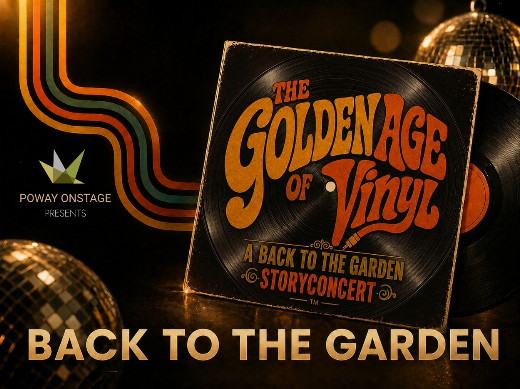
Back To The Garden The Golden Age of Vinyl Poway Center for The Performing Arts (5/15-5/16) |
|
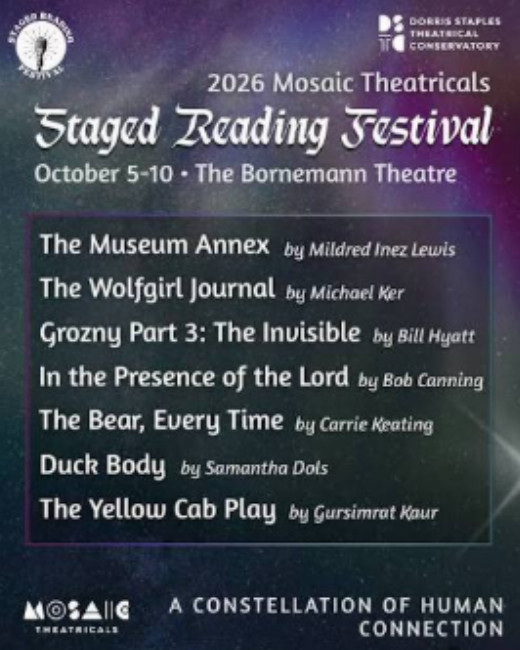
Staged Reading Festival The Borenemann Theater (10/05-10/10) |
|
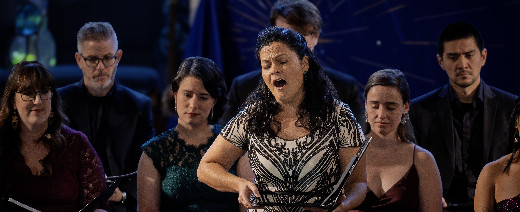
Bach Collegium San Diego Presents “Salzburg Connections: Mozart & Michael Haydn” Conrad Prebys Performing Arts Center (10/17-10/18) |
|
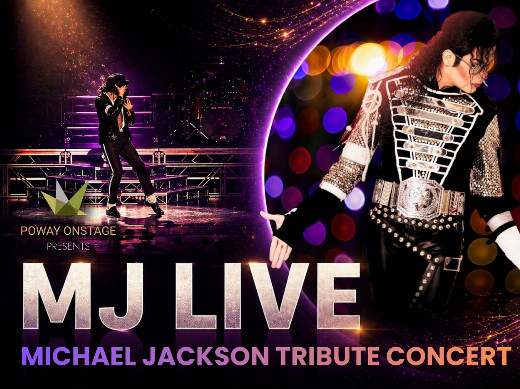
MJ Live Michael Jackson Tribute Concert Poway Center for The Performing Arts (4/03-4/03) |
|
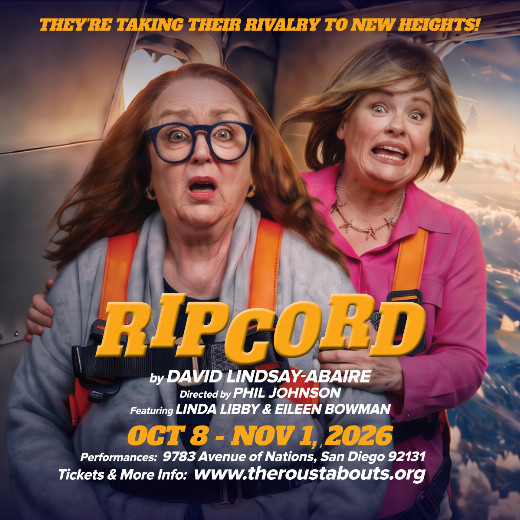
Ripcord The Roustabouts Theatre Co. (10/08-11/01) |
|
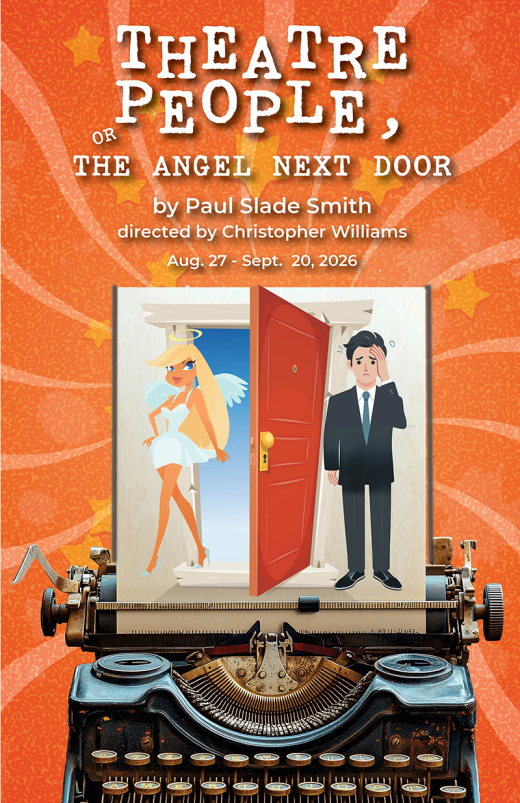
Theatre People, or The Angel Next Door Scripps Ranch Theatre (8/27-9/20) |
|
Oh, Mary! San Diego Civic Theatre (9/29-10/04) |
