


Review: I DO, MALMAISON HOTEL
Set in a real hotel, this wedding drama is a celebration of immersive theatre
By: Franco Milazzo Jan. 21, 2026
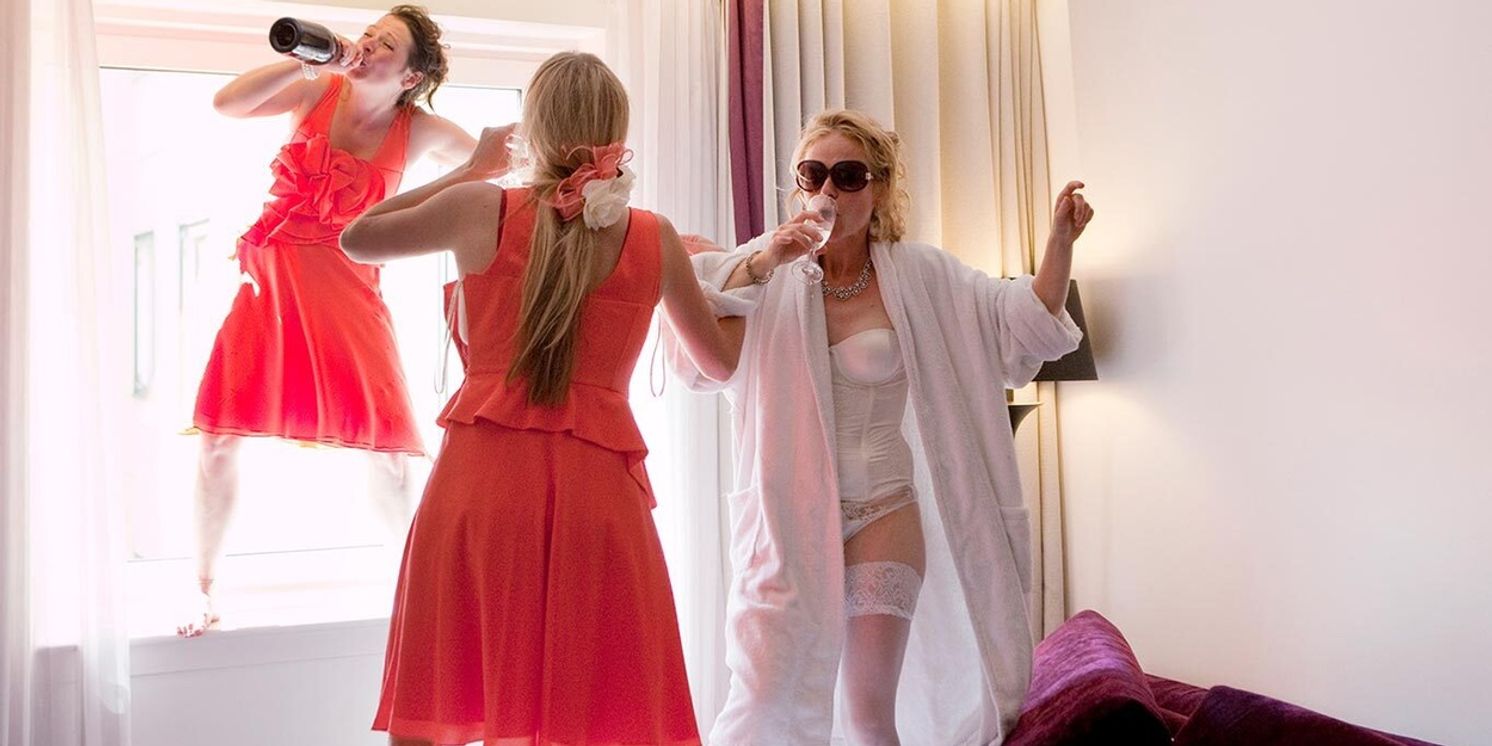
 Theatre has to work extra hard in January to get people away from cosy duvets and into venues. Thankfully, Dante or Die’s I Do (created by Daphna Attias and Terry O’Donovan) has a doozie of a premise. Set across half-a-dozen adjacent rooms in the City of London’s Malmaison Hotel, we dive into a series of simultaneously-set scenes unfold as a wedding party get ready for the imminent betrothal of Georgina and Tunde. In groups of a dozen or less, we are taken from room to room and stand inches away from the actors as regret, rage and lust spill out in every direction.
The mechanics are unusual but worth noting. From the off, the audience are split into six groups with each identified by a particular colour of carnation and led by their own personal usher. Each group begins outside a different room and, when their usher gives the signal, they walk in and find a space wherever they can (some seating is available in each room). The actors expertly navigate the free spaces between us and, when a scene ends, the group is led back out into the hotel corridor awaiting the signal to go into the next room.
This may be a familiar setup to fans of promenade theatre (and events like the eclectic Theatre Souk) but here’s the thing. On the one hand, there’s the “live action video game” Lander 23 which is Punchdrunk in name only (that’s as much as I can say as most critics have been asked to keep shtum for now about an event that has been in "early access" since November). On the other, we have this revitalised work from 2013 that, in its structure and format, is effectively a classic Punchdrunk show in all but name.
If anything, Attias and O’Donovan have improved on the formula. While The Burnt City had too little drama in too much space, I Do comfortably travels in the opposite direction and gently squeezes us right up close to the action. One of Punchdrunk’s strengths is evident here with Jenny Hayton’s individual environments proving rich in detail. Feel free to wander into the bathrooms or check out bedside tables to get insights into each character and their relationships with the other members of the wedding party. There’s no interactions between audience and actors and none of the very occasional one-to-ones seen in Punchdrunk’s mask shows; instead we are here purely as voyeurs.
Written by Chloë Moss, the six episodes cover wide ground. Some are deliberate chucklefests, others are there to add layers to the story and there is at least one shockingly dark encounter. At some point in each one, there’s a twist — some highly playful, some far less so. Tunde (Dauda Ladejobi) is having second thoughts, the mother of the bride Helen (Johanne Murdock) is struggling with her dress and her ex and, between hunting for a missing child and the presence of an entire rugby team in the foyer, both bridesmaids are highly distracted.
Between the various scenarios, we watch a cleaner “rewind” the clock as they wander in reverse down the corridor while listening to Cat Power’s “Sea Of Love” played backwards. This mental palate cleanser helps ease the transition as we traverse the hotel rooms starting again at the same point in time. It’s a neat theatrical device that helps make up for some uneven acting and elevates I Do to more than its basic premise.
At one point, we’re crammed into a shower room watching the best man Joe (the charming Manish Gandhi) rehearsing his planned speech into the mirror, getting more and more stressed as Tunde shoots down his intended anecdotes. Out goes exactly what happened inside Berlin’s Kit Kat Club; stories about Margate and a pair of tights go the same way. With barely anything left to say beyond the usual banal platitudes and on the verge of a nervous breakdown, an unexpected guest soon perks up the poor guy, leaving him with a smile bigger than a breakfast buffet.
In another scene, Georgie’s grandparents reminisce over their own wedding. Well, Eileen (Fiona Watson) reminisces while her wheelchair-bound husband Gordon (Geof Atwell) listens, a pitiable figure unable to really move or make more than barely intelligible sounds. As she tries to dress him, the air is rank with frustration emanating from both parties. Doing nothing to dispel the intensity, Helen arrives and, kneeling at her father’s feet, weeps as she quietly tells him “I miss you.” A powerful moment accumulated from three moving performances that could easily have been the money shot in a West End play, it says volumes that it is treated here as just another denouement among others.
That leads to the only real criticism that can really be made of I Do. Acting as a rushed finale of sorts, we’re presented with a quickfire display of what happened in the corridor while we were inside the rooms. While I Do transcends the sum of its six scenes, the residual feeling is not so much “I’ve found the one” as “exciting one night stand”. Call you later?
I Do is part of the Barbican Centre’s Scene Change season and continues until 8 February.
Photo credit: Greta Zabulyte
Reader Reviews
Videos