Max Richter Announces New Album WHILE THE FLOOD RAGES
The 15-track work stems from McGregor's ballet inspired by Margaret Atwood's MaddAddam trilogy, recorded at Studio Richter Mahr.
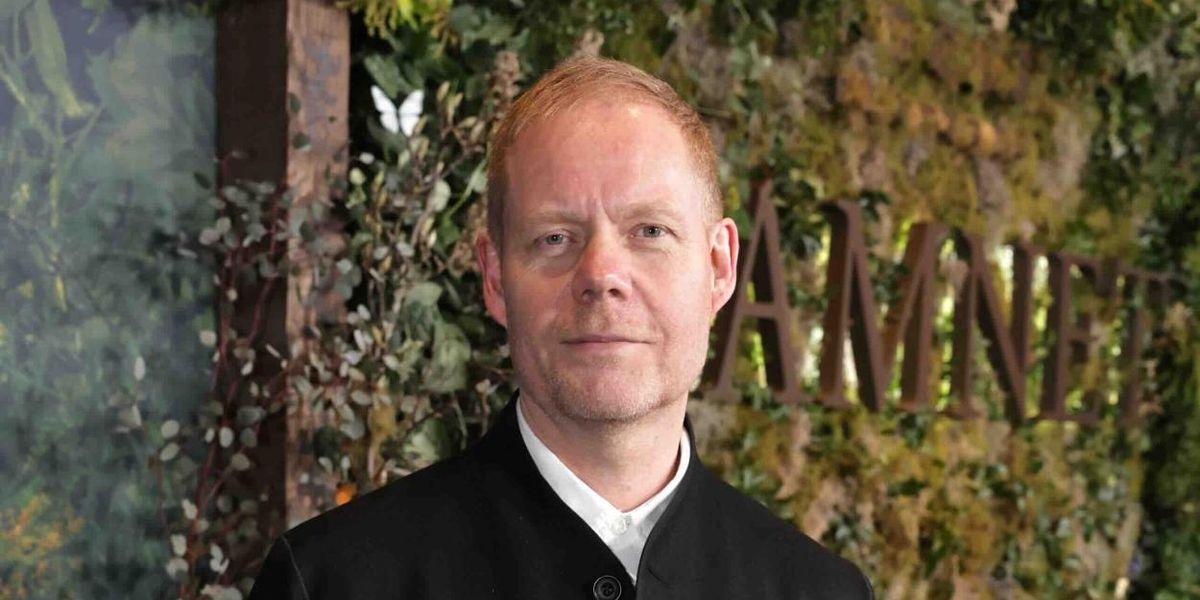
Oscar-nominated composer Max Richter today announces his new album 'While The Flood Rages'.
'While The Flood Rages' is a sweeping body of work drawn from Richter's latest collaboration with Wayne McGregor 'MaddAddam': a co-commission between the National Ballet Of Canada and the Royal Opera House inspired by Margaret Atwood's MaddAddam trilogy.
'While The Flood Rages' is released on Friday 16th October via Decca Records.
Years in the making, the project marks Richter and McGregor's third major collaboration, following Infra and Woolf Works. Originally developed prior to the COVID-19 pandemic and delayed by its onset, the album now arrives with renewed urgency, engaging directly with themes of ecological crisis, technological acceleration, and human connection.
Rather than a direct soundtrack, 'While The Flood Rages' functions as a standalone companion work. 'I took the material apart and created a trajectory that makes sense just through listening,' Richter explains. 'It's a different way to reach the same destination.'
Structured across 15 tracks and three acts, the album unfolds as a continuous, evolving sonic landscape. Recorded at Studio Richter Mahr, it opens with 'Wave After Wave', where a processed recording of the ocean is transformed into a rhythmic, heartbeat-like pulse, setting the tone both physically and emotionally. From there, 'Eerie Music' introduces a fractured electronic language, built using electromagnetic recordings of internal technological systems found around the studio, hinting at a world shaped as much by machinery as by nature.
At its core is the title track, 'While The Flood Rages', a quiet, intimate counterpoint to the surrounding chaos that keeps the focus on moments of human connection even as larger systems begin to break down. That tension builds through 'The City Was A Chaos', where dense, overlapping structures create a sense of overload, before easing into 'Quiet', which introduces a simple falling piano motif. That motif runs throughout the record, returning in different forms and offering brief moments of clarity within the noise.
The second act widens the emotional and sonic palette. 'Tell the Bees' leans into something more pastoral, drawing on a softer, almost folk-like warmth, while 'Data Ballistics' cuts through with percussive intensity, its rhythms constructed from manipulated gunfire. Across these tracks, traditional musical forms sit alongside fractured digital textures, reflecting the push and pull between older systems of belief and a more unstable, technologically driven present.
By the final act, pieces like 'Dawn' and 'Background Radiation' weave all the sonic elements together with choir, orchestra, and electronics folding into each other. The recurring piano motif returns again, more altered each time, suggesting not resolution so much as transformation.
The album's first single, 'Now We Can Sing', also closes the record, unfolding as a luminous final moment inspired directly by Atwood's text. Built from that same recurring piano motif that appears throughout the album, it opens out into a choral-led reflection on voice and connection, leaving the album not with a sense of resolution, but with something closer to quiet, collective endurance.
To celebrate the release of 'While The Flood Rages', Richter will be hosting the WTFR Global Listening Events - a worldwide network of intimate listening experiences. Inspired by the growing culture of listening bars in cities such as Tokyo, London, Seoul, Copenhagen, New York and Melbourne, the events will transform cafés, wine bars and hi-fi venues into temporary listening rooms where guests disconnect from their devices and immerse themselves in the music. More information will be announced in the coming weeks.
Richter is also an Album Champion for National Album Day UK on 17th October 2026, celebrating the 'art of the album'.
Max Richter is known for his ability to blend traditional orchestrations with modern electronic elements. His catalogue has amassed over four billion streams and a dedicated global following, and he is widely regarded as one of the defining voices in contemporary composition. Richter was recognised with a CBE and the Berlinale Camera for his contributions to both music and film earlier this year.
Beyond his solo endeavors, Richter is a prolific collaborator who has worked with esteemed creatives across multiple disciplines. Between Maison Margiela campaigns and scoring Dior shows to composing for ballets choreographed by Wayne McGregor and his contributions to the world of cinema & TV, including his Oscar nominated score for Chloé Zhao's critically acclaimed 'Hamnet', Richter's versatility knows no bounds.
Richter is co-founder of Studio Richter Mahr alongside his partner, visual artist Yulia Mahr. Located within 31 acres of woodland in Oxfordshire, the duo have a huge passion for using the land to farm and provide a sustainable working environment, serving as a space where both emerging and established creatives can come to develop their work.
Photo Credit: Rory Van Millingen
Photo Credit: Rory Van Millingen


Sign up for all the news on the Fall season, discounts & more...
.jpg?format=auto&width=300)