
Interview: Will Allan & Behzad Dabu of AN ENEMY OF THE PEOPLE at TimeLine Theatre Company
The History Boys reunite 17 years later in TimeLine's inaugural production in its new home, AN ENEMY OF THE PEOPLE
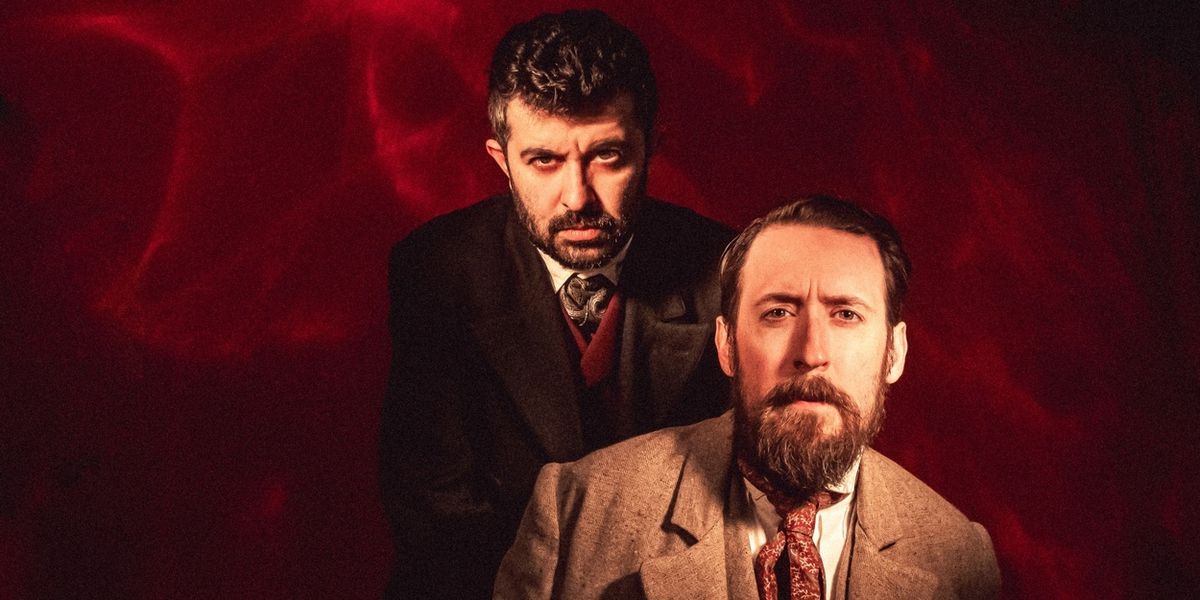
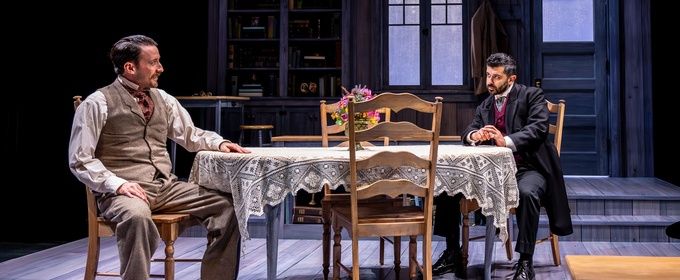
There’s a new theater in town — but one already rich with history! TimeLine Theatre Company has a new home at 5035 N. Broadway in Uptown, and will officially open its doors with the Chicago premier of Amy Herzog’s new version of Henrik Ibsen’s AN ENEMY OF THE PEOPLE, which runs May 6 – June 7, 2026.
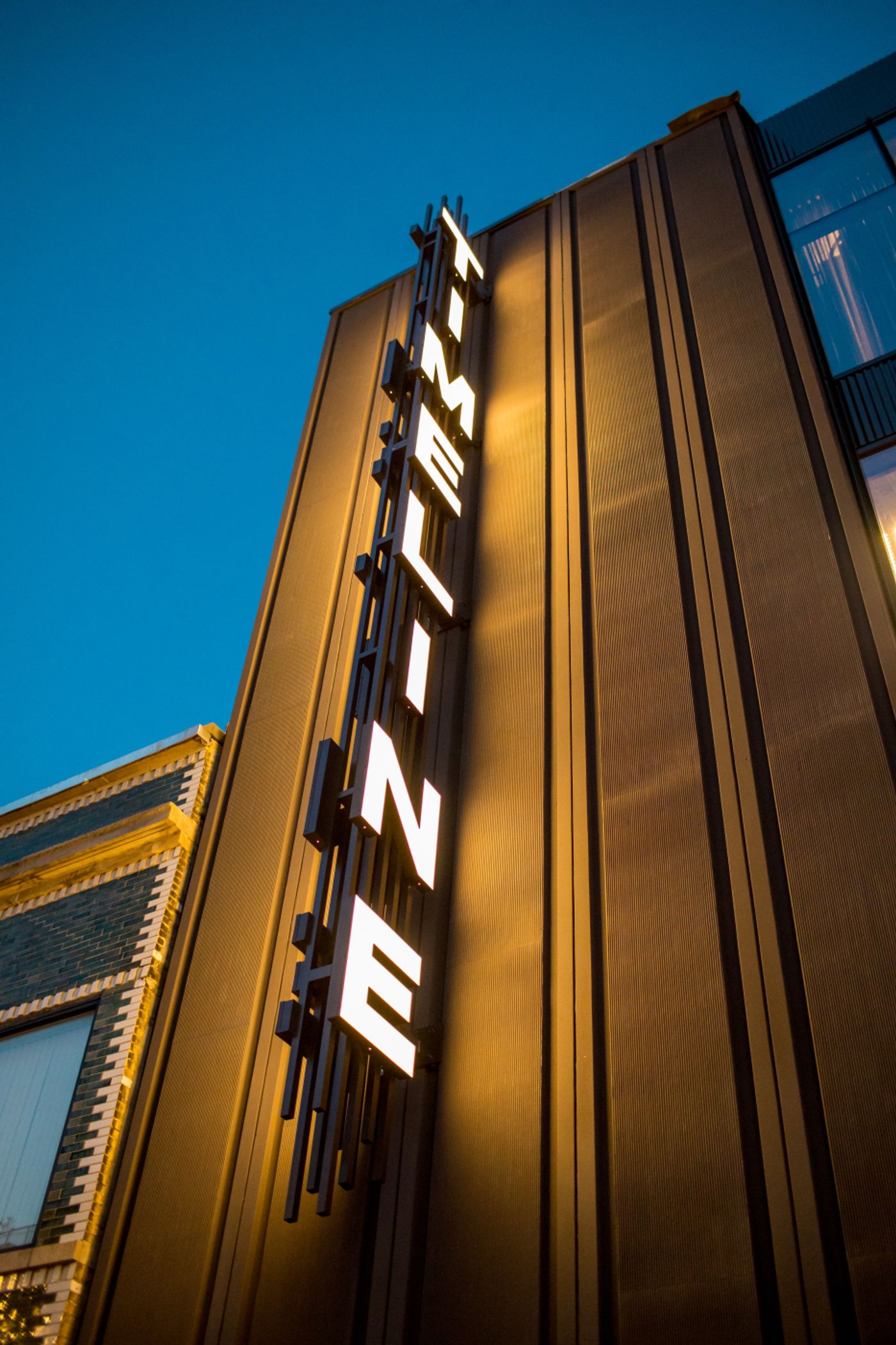
As a physical and visual reflection of TimeLine’s mission of connecting historical storytelling with contemporary political discourse and the arts with the community, the architecture of the building combines vintage and historic elements with modern design to invite both long-time supporters and new audiences to engage with the theater — and the provoking dialogue it brings to the stage and beyond.
Before this long-awaited inaugural production at TimeLine Theatre’s new home, BroadwayWorld sat down with TimeLine Company Members Will Allan and Behzad Dabu, who play brothers Dr. Thomas Stockmann and Peter Stockmann in AN ENEMY OF THE PEOPLE. The interview has been edited and condensed for clarity.
You both have a lot of deep roots at TimeLine Theatre Company that date back to 2009. Could you share more about your history with TimeLine and how you’ve seen TimeLine Theatre grow over the past 17 years?
WA: Our first Chicago show was THE HISTORY BOYS at TimeLine Theatre in 2009, which is where we met. We did this show together when TimeLine was much, much smaller. It was their second equity production, and all eight of the history boys were non-union 21-25 year olds. It kind of changed everything for us and for TimeLine overnight.
BD: The origin story of TimeLine is that the six founders each put 50 bucks in a hat to start it. And from that couple hundred dollars to this multimillion dollar building being built, they’ve had a lot of growth spurts, but one of those growth spurts was THE HISTORY BOYS. It really established them as one of the most preeminent mid-size theaters in Chicago, but it was also a massive growth spurt for all those history boys in our careers. It made sure that all the casting directors and industry people and other actors in town knew who we were, and many of us went on to have long theater careers since then. Now, Will and I live five minutes from each other in Los Angeles. I haven't done a proper sit down play in Chicago in 11 years, and it's the first time that Will and I are doing a play together again since THE HISTORY BOYS.
WA: 17 years. And it's my first time doing a play at TimeLine since THE HISTORY BOYS.
BD: While we’ve worked together a lot in LA in various different capacities — he wrote a short film I was in, I directed a reading he was in, we've done other reads together — it's fun to do this. And then to play brothers, it's something really special. It's hard to get cast in plays. It's hard to get cast in plays with your friends. It's hard to get cast in plays with your friends while cool theaters open fancy buildings. For all of those things to converge is a once-in-a-lifetime experience. It sounds cheesy, but unless we make it happen, we might not get cast in a play together again.
WA: Yeah, so much has to come together for this to happen. When [Director] Ron OJ Parson was talking to me about doing the play, and I was talking to Behzad about doing the play, I thought, 'It's so rare to have a singular event in this job.' Because we go show to show to show, and some are more special than others. Sometimes you do a show and you think, ‘Okay, this is my job right now, I’m doing my job.’ Sometimes you have an incredible connection with the show or the cast, the play itself. But with something like this, it’s like, ‘Okay, great play, with our company, with — for my money — one of the best directors in the country, in a brand new $50 million theater.’ It's a singular event. It will never happen again. We love history at TimeLine, and this is a moment in Chicago theatre history. It's very special to be a part of.
BD: In 20 years, when this building is still going strong and still really great for audiences and still a fun place for actors to work, I might be here as the old guy and tell the young cast members, 'I did the first play in this building. The first audience that came to see a play here, I was in it,' and that’s pretty cool.
WA: People will always ask, 'What was the first thing they did here?' And then they'll say, 'Oh, it was AN ENEMY OF THE PEOPLE.'
BD: There's going to be a cool trivia thing that's going to happen, because this is not the first show of the first season here. So people in the future might think, ‘Well, let's see what the first season was.’ And they're going to say, '[THE BIRTH OF THE PILL] was the first show.' And then someone will go, 'No, no, no, I was there. It was actually the last show of the previous season that was the first show at the new building.'
WA: It had those two annoying history boys in it, I remember.
BD: Exactly.
After 18 months of construction and nearly 8 years of preparation, TimeLine Theatre has successfully repurposed a 1910s Reebie and Brother warehouse in Uptown into a live theater space, featuring a 250-seat black box theater, exhibit galleries, social spaces, a visible rehearsal room, and dedicated space for education programming and community gathering. What are some aspects of TimeLine over the last 30 years that have made it connect so deeply with its community leading to this growth, and how do you see the new facilities helping expand its reach in bringing new audiences to the theater and cementing itself as a cultural destination on the northside?
BD: I'm an artist that does theater in LA. I just directed and produced a show in LA, and when I talk to audiences in LA, I often say, 'What's interesting about Chicago theater is that it's a part of the culture to see theater.' So, in the ways that in New York, people might be talking about a new Broadway show that's opening, or in LA, people talk about a new movie premiere that's happening — in Chicago, non-industry people really say, 'Hey, I saw a show over at Steppenwolf last night. You should check it out.' Theatergoing is a part of the experience. It's a part of the Chicago identity.
My father is an architect who designs theaters, specifically. And he talks about the fact that the building itself can be more than just a place where shows happen, but a place where the culture of theater happens, everything around it — just eating food after, drinking beforehand. studying plays, rehearsals happening. Every aspect of making theater is thought about. The whole front half of the building is designed with audiences in mind, and the whole back half of the building is designed with artists in mind. Everything from the way the dressing rooms are laid out, to the costume shops, to the way that the audiences and the artists share hallways — it's really, really thoughtful. I'm really excited that the Chicago audience now has the chance to experience this.
What's cool about Chicago theaters is that they all have a mission. We say all the time, ‘Oh, that's a Steppenwolf play. That's a Goodman play. That's a Lookingglass play. That's a TimeLine play.’ I can think of ten plays right now that I'm like, ‘Oh, that's a TimeLine play,’ and it's because TimeLine has done such a great job over 30 years of staying true to its mission.
WA: And it's kind of the most clear mission.
BD: We've often read amazing plays in our company meetings, and we've been like, 'This is an amazing play, but this is not in our mission.'
WA: Oh, I wish. This play is incredible, but we can't do it because it's not our thing.
BD: And we're the only one who does it in this town. We don't do old plays. We don't just do classical plays. We do plays that center around historical events that are relevant to today. And sometimes that means we're doing plays that are as recent history as last year.
WA: Another thing is TimeLine, in a lot of ways, has always been grassroots. We are one of the rare places where there's always a company member present at each performance, so our audience can always connect with an artistic member of the company, which no one else does. We're always trying to connect with our audience — we do a lot of discussions, we do our Sunday Scholars Series — so the mission is always there, and we're always trying to see what they think about the history stories we're telling.
When it comes to the new place, there's a Winston Churchill quote where he says, 'We shape our buildings, and afterwards, our buildings shape us.' I think this is a really cool moment in TimeLine history because we just shaped the building, and now, we're going to start finding out how it's going to shape us into the new TimeLine, moving forward.
Speaking more about the actual space, do you guys have a favorite architectural feature of the new theater?
BD: My favorite room is the room we're in right now, the Artist Alcove. Every corner of this building has a place to sit, and I love it. There's audience places to sit, artist places to sit, and there's little mini living rooms everywhere. So it really does create this idea that we're family. There's places to engage, and discuss, and meet. The rehearsal room is bright, the theater is flexible. Actually, I think my favorite feature is that outside of the green room, there's something called a blue room, which is a little seating area between the two dressing rooms that’s a place for artists to hang out pre-show. Because for me, the dressing room is for preparation, it's a focus zone. So to have this other place to not distract the other artists, it’s a really thoughtful little inclusion that I love.
WA: I have a much weirder answer. At the old TimeLine, there were two bathrooms in the basement that were tiny. The accessibility issues were horrible for our patrons. One of the bathrooms had a little kid size toilet, so it wasn't even for grown ups. And now we have 28 bathrooms —
BD: Single ones with a full door, not a stall. Floor to ceiling door!
WA: — with sourced vintage sconces in each one. We just went from the worst audience experience to the best audience experience in Chicago. And the building's accessible. Everybody can come here and get to their seats safely and comfortably and enjoy the experience, which I think is really great.
You spoke a little bit about the mission already, but TimeLine Theatre Company was founded in 1997 with a specific mission to present stories inspired by history and connecting that past to today’s social and political issues. How does AN ENEMY OF THE PEOPLE connect to that mission, and have you learned anything from the play or your character about the world we’re living in and how to navigate these times?
BD: It’s not optimistic.
WA: The most disappointing thing working on this play is: there are times when we are rehearsing, and you feel like this play must have been written in 2026 and just set in an old time. And then you remember this play was written in the 1800s, and we've learned nothing. Nothing. There are arguments in this play that are happening right now in our government, in our media. It's depressing. The play's not necessarily depressing, but when you dig into it, you're sort of like, ‘Wow. I can't believe that this was 150 years ago.’
BD: I think Ibsen would be so disappointed if he lived today. There's a line in the play that shows some sort of optimism, but the timeframe that Ibsen put the optimism for, we’re way beyond that. That's what's depressing for me about this play. You're kind of like, ‘Oh, it sort of ends hopeful.’ It ends hopeful for when he wrote it. But for today's audiences, I don't know how hopeful it is.
WA: Yeah, the last line of the play is pretty brutal. If you're hearing it in 1880, it's like, ‘Oh, okay, maybe.’ But when you're hearing it in 2026, you're like, ‘Oops.’
BD: One of the main conflicts of this play is: what are we going to tell the public versus what is true. In a certain time period, the public only knows what they are told. Now, as we get closer to today, where we have cell phone footage and actual cameras in our pockets that can access any corner of the world, the gap between what we're told by the media and what is true is getting a little smaller, or at least more at odds with each other. So it makes me think: what were we told in 1942 that I believed? What were we told in 1972? What were we told in 1992? And now I look at what we're being told in the Middle East, for example. The only reason why people are starting to disagree with some of the things that we're told is because we have footage that shows the opposite, and it's hard to gaslight us even further.
WA: But even with cameras, you will see it and they will still tell you now what it is. Even though you're seeing this, they will say, ‘You're not seeing that. You're seeing this.’ And then for some reason, millions of people go, ‘Oh, that's what I'm seeing.’ Even though you saw it for yourself.
BD: And it's not just the Middle East, it's also Minnesota.
WA: Yeah, which is exactly what Thomas Stockmann’s dealing with in this play. He's saying, 'This is science, this is real. We do see the bacteria in the water,' and then the government saying, 'No, you don't.' We're like, 'No, we do.'
BD: We have a promotional image that just got released last week. It's my character's face, and there's a quote underneath: 'When words can cause real harm, we must use what power we have to keep these dangerous ideas from spreading.' And it's funny, a lot of my friends have been responding to that quote, like, ‘Yes. Yes, good.’ Because they're interpreting it as, ‘We must stop dangerous hateful ideas from spreading.’ But my character is talking about the truth from spreading. So what's really fascinating to me is: is this line a villainous line, or a righteous line? I guess it depends on the lens of the viewer or the listener. In this play, I think it's pretty clear, but just as an image and a quote, I was shocked at how many people were almost attributing some sort of real righteousness to that quote, when in reality, it's used to shut up.
WA: That's what makes this play so good. On the page, yes, it's probably supposed to be that Thomas Stockmann is your protagonist. But Peter's not necessarily your antagonist. It's just two different mindsets tackling the same issue. I think there will be people who are like, ‘Yes, Thomas. Yes, science, real, save lives.’ And there will be people who are like, ‘But the town's economy will be ruined. And if these things spread, everyone will lose their livelihoods, and more people might die.’ So I think the talkbacks are going to be really good.
BD: If we attribute that quote to 2026, that could be a CEO of a food company saying, ‘Don't tell the people what we're putting in their food.’ But that could also be someone saying, ‘We shouldn't let dangerous ideas of homophobia, misogyny, racism spread.’ The same exact quote, and it just depends on what you think it's stopping from spreading.
WA: And that's up to the audience to decide.
In 5 words or less, how would you describe this whole experience, of coming back from LA to Chicago to see the new home of this company you’ve been a part of for so long, to reunite and perform in this space together, and to be a critical part of commemorating this new chapter for TimeLine?
BD: The right thing to do
WA: Profoundly emotional and surreal. There are times where I almost break down in tears at the idea of everything that's going on here. I can't believe that we're doing this play together in this theater and that our friends built it and that Ron's directing it and that it's this Ibsen play I've loved my whole life. It's all surreal. It’s hard to believe it’s happening even when I’m up there saying the lines.
Thank you to Will Allan, Behzad Dabu, and the TimeLine Theatre team for this interview!
AN ENEMY OF THE PEOPLE, directed by TimeLine Company Member Ron OJ Parson, is the highly anticipated inaugural production at TimeLine Theatre’s new home at 5035 N. Broadway. Previews begin May 6, and performances run through June 7. Tickets can be purchased at the link below.
Photo credit: Joe Mazza/brave lux, inc.

|
Catch as Catch Can Steppenwolf Theatre Company (6/04-7/12) |

|
EWP presents Robbie Fulks & Griffin William Sherry Showcase Raue Center For The Arts (8/07-8/07) |

|
Hedwig and the Angry Inch Catalyst Ranch (7/09-7/26) |

|
Rotary Rocks The Raue: James Garner's Tribute to Johnny Cash Raue Center For The Arts (10/24-10/24) |

|
Good People By David Lindsay-Abaire 4 Chairs Theatre (7/17-8/23) PHOTOS |

|
Bourbon Country Raue Center For The Arts (11/06-11/06) |
|
Deserted Redtwist Theatre Company (6/14-8/02) |
|
Memphis The Musical The Studebaker Theater (10/24-10/25) |

|
Shreya Ghoshal NOW Arena (9/11-9/11) |

|
In the Continuum Fleetwood-Jourdain Theatre in the Noyes Cultural Arts Center (7/25-8/09) |