


Interview: Renee Santos of CROSSROADS at Atwater Village Theater
From One Stage To Many...
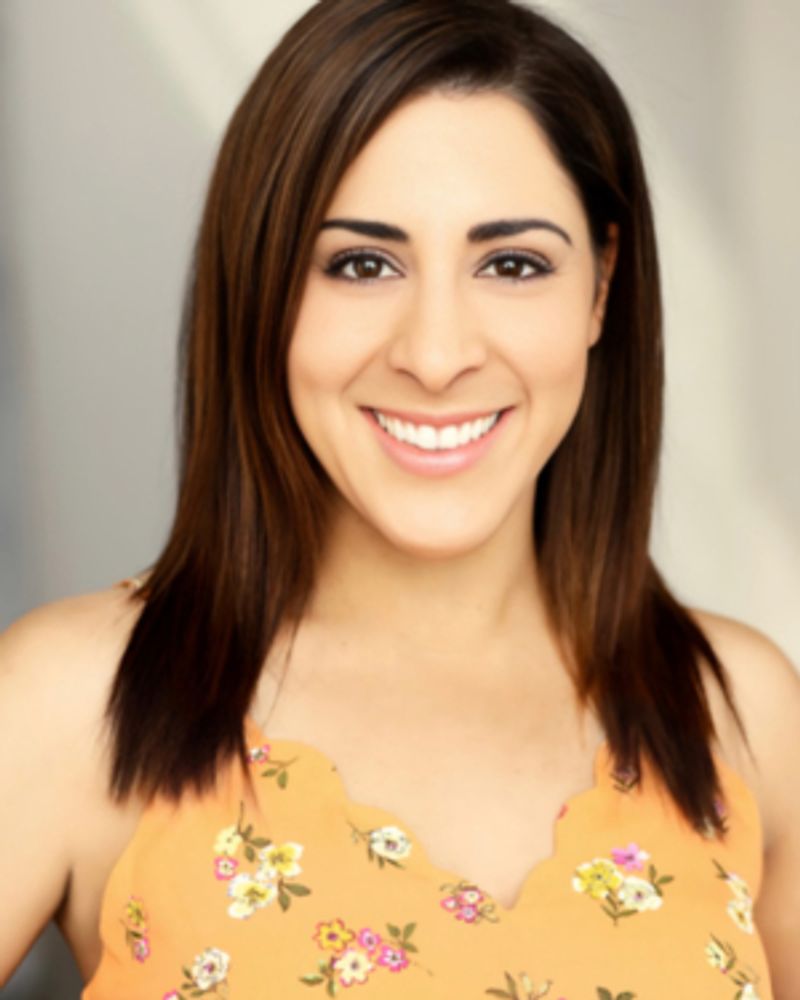
"The most astonishing realization about RENEE SANTOS' “Crossroads,” a solo show about her life, is that she not only survived everything that happened to her but that it became her superhero origin story. Renee's sitting audiences, often slack jawed in utter shock at the details of her journey, it is stunningly clear that she has the super power to still be here with us at all." (Atwater Theater Village)
RENEE SANTOS actor, writer, stand-up reponds to Broadway World's TEN QUESTIONS IN TEN MINUTES to pull the curtain back on growing on her experience of entering the foster care system as a teenager and navigating eight different homes throughout her high school years.
What constellation brought you into this world and over what land?
Gemini: born on U.S. Flag Day, in Falmouth Massachusettes. Which probably explains at least some of my personality. (Fun Fact: birthplace to Ben and Casey Affleck)
What is your earliest memory of a live performance, and who was in it?
My earliest memory of a live performance was seeing Tina Turner in concert when I was just 17. I remember being completely captivated by her command of the stage. There was something about watching a woman own a room that stayed with me.
Who was the first person you trusted who told you that you were funny or could act?
My eighth-grade drama teacher, Armand Marchand. I played the Wicked Witch and he loved my cackle. He told me I was “on something,” which, looking back, was probably the first time an adult made me feel like the weird things about me might actually be useful onstage.
How supportive were your parents or caretakers of your desire to be on stage?
This is probably where the story starts to get interesting. My parents weren’t really involved in my theater life. By the time I became seriously interested in performing as a teenager, I was navigating the foster care system. I lived in eight different homes and attended four different high schools, and theater was one of the few constants that followed me from place to place. My parents dipped in and out of my life during that period, but I wasn’t living with them, so they weren’t really in a position to support my theater ambitions. I honestly don’t know that they even knew what shows I was in or which high school I was attending at any given moment.
This experience is a huge part of why I eventually wrote CROSSROADS. The show is about entering foster care as a teenager, moving through eight different homes, and trying to figure out who you are when almost everything around you keeps changing. In a strange way, theater became one of the places where I could keep finding pieces of myself.
Did you pursue formal education in college, or did you learn by watching and learning from others?
My greatest teacher was probably life. I wasn’t given a lot of formal support or integration when I aged out of the foster care system, so much of what I learned was self-taught. Even when I went to college, I was working full-time while going to school full-time. I learned by doing, failing, adapting, and figuring things out as I went. I think that’s probably why storytelling became so important to me. I’ve always been interested in what we learn when there isn’t necessarily someone standing there telling us what to do.
What was your first paying gig, and what did it pay?
My first real paying television gig was Showtime’s Pride Comedy Jam in 2011, produced by Andrea Meyerson. I had been doing stand-up for about seven or eight years at that point. One night I went to an open mic at a café in Long Beach. I actually wasn’t even supposed to perform. I was covering for someone who didn’t want to come out on a rainy night.
As luck would have it, a producer from Showtime who lived in the Long Beach area happened to be at that café that night. That completely unexpected performance eventually led to Pride Comedy Jam. I still work with Andrea today, so it really was one of those bizarre little crossroads moments in my career.
What was the hardest thing you had to learn for stand-up, and what came most naturally to you?
Joan Rivers famously talked about stand-up as the performance platform where you get an immediate response, and I think that was one of the hardest things for me to learn: how to stay joyful in the middle of that immediate feedback. Early on, I could become very focused on whether the audience was giving me the response I wanted. I had to learn not to let the room determine whether I believed in what I was saying.
I also learned that comedy is a little like dating. You don’t necessarily lead with all your hardest truths. You warm people up. You let them get to know you, and then you can take them somewhere deeper. This lesson actually became incredibly useful when I created CROSSROADS. I’m still using humor to invite an audience in, but instead of delivering a punchline and moving on, I’m asking them to stay with me inside a story.
Which comedian or comic actor served as your muse and inspired you to get on stage?
I don’t think there was one person. It was more of a constellation of comedians and performers. George Carlin was one of the first comics who really inspired me. I loved his East Coast sensibility and, more than anything, his honesty. He could look at what was broken in the world without simply making other people the punchline. He observed human behavior and hypocrisy without always needing to attack the person. This really resonated with me. I’ve never been particularly interested in insulting or roasting people just for the sake of it. I’ve always been drawn to storytelling and finding the humor in human folly. ELOTian WHOOPI GOLDBERG is another comedian I love because of her adroit storytelling skills set, and SUZANNE WESTENHOEFER (OUTSTANDING: A Comedy Revolution on Netflix) was also a huge influence on me.
And ultimately, I think that’s why CROSSROADS made sense for me. It’s storytelling at its core. There are definitely jokes, but I’m not telling a story simply to get to the punchline. I’m telling it because the story itself has something to say.
Do you think the stigma that “women can’t be funny” has been completely eliminated, or does that marginalization still linger in society?
Oh, it absolutely still lingers. When I first started doing comedy, there was a very specific expectation of what a “female comedian” was supposed to look like. Because I didn’t fit that stereotype, there were times people assumed I wouldn’t be funny before I ever opened my mouth.I would get bumped toward the end of the night because there was an assumption that the audience might leave if they had to watch a woman they didn’t expect to be funny.
There’s often an extra hurdle for women because we’re judged aesthetically before we’re given the opportunity to simply be funny. Men often get to walk onstage and be funny first. Women are sometimes expected to prove that they deserve to be there before the audience is even willing to listen. And then there’s the sexual objectification. I once got introduced onstage as “every male’s masturbatory fantasy” before I ever said a word. That wasn’t my introduction, by the way. Someone else thought it would be hilarious.
So yes, I think women have made enormous progress, but I don’t think that particular bias has disappeared. We’re still negotiating it.
You have built a great body of work on television but are now doing live performances on stage and in stand-up. What prompted the switch? Meryl Streep once noted that while drama is difficult, comedy is ten times harder—what is your take on that?
I actually don’t think of it as a switch. It feels more like an evolution. I’ve had some wonderful opportunities as an actor. I’ve worked on shows like Californication, New Amsterdam, Murder in the First and Eleventh Hour, and I’m incredibly grateful for those experiences. But I’ve often been asked to play a small piece of a larger story rather than getting the opportunity to fully inhabit a character.
One of my favorite examples is Eleventh Hour. My entire line was, “Bob, can I get a price check over there?” My partner at the time actually made a banner for a viewing party that said, “Come watch Renée say, ‘Bob, can I get a price check over there!’” We thought it was hysterical.Stand-up gave me something acting hadn’t: the ability to command a stage and tell my own story for an hour.
And eventually that led to CROSSROADS. In CROSSROADS, I play 17 characters by myself. I’m still using the comedic instincts I developed through stand-up, but now I’m inhabiting people and moments in a much deeper way. There’s no microphone to hide behind and no punchline to rescue you. It’s much more vulnerable. The comedy actually gave me the courage to do that. So I don’t think I left stand-up to become an actor, or left acting to become a stand-up. I think all of those experiences eventually gave me the tools to tell the story I’m telling now.
Renee Santos' most astonishing achievement doing “Crossroads,” a solo show about her life, is she not only survived everything which happened to her but it became her superhero origin story. Because to me, after sitting, often slack jawed in utter shock at the details of her journey, it is stunningly clear that she has the super power to still be here with us at all.
But there’s far more to this show than just the story behind it. There is a truly phenomenal artist who cracked open her heart and wrote it, developing a series of beautiful and terrifyingly enchanting techniques to connect every single pivotal unfolding moment to the transformative effect it had on her. She could have taken a simpler approach, a more linear narrative. But instead, she craftily weaves through her life a golden thread of truth and it takes us back and forth in time, through people and events and returns again and again to her present and her profound sense of who she really is…a strength of character as well as a wondrous physical strength and an unmatched grace.
CROSSROADS is directed deftly by the tour de force monologist, KIMLEIGH SMITH, who tours the U.S. with her own high performance pieces. You can witness for yourself the groundbreaking work of both Renee Santos and Kimleigh Smith at The Atwater Vilage Theaters August 21st-23rd.
Tix click: https://www.tickettailor.com/events/embraceyourcapeenterprises/2287702
Media and Press Inquiries: EYC PR: queries@embraceyourcape.com 310-498-5214
Nearbys:
Bus: 217, 92, 93, 94, 8. Subway: B LINE.Train: PACIFIC SURFLINER, VC LINE, AV LINE.
Eats:
Bar Sinizski, Bon Vivant, Spina, Hail Mary Pizza
Parking:
Street and off street parkng
Prefer BroadwayWorld in Google Search?
Add us as a preferred source so our stories show up more often in Top Stories and Google’s AI answers — for you.
Sign up for all the news on the Fall season, discounts & more...
|
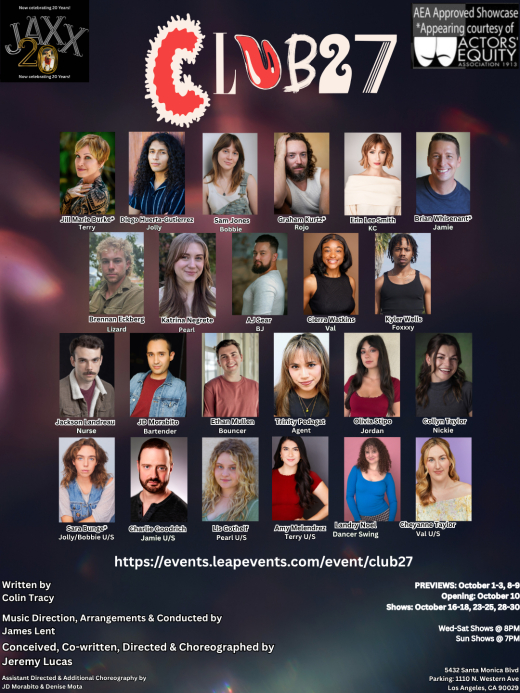
CLUB27 Jaxx Theatre (10/01-10/30) |
|
Crone Creed El Portal Theatre (9/30-10/17) |
|
Good Night, Oscar North Coast Repertory (9/16-10/11) |
|
A Killer Night in Studio City Vitello's (9/06-10/31) |
|
Catch Me If You Can Colony Theatre (9/17-10/18) |
|
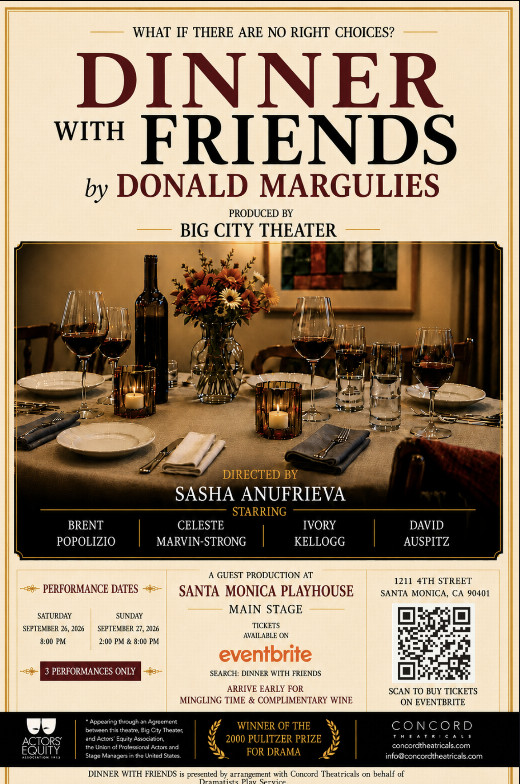
Dinner with Friends Santa Monica Playhouse (9/26-9/27) |
|
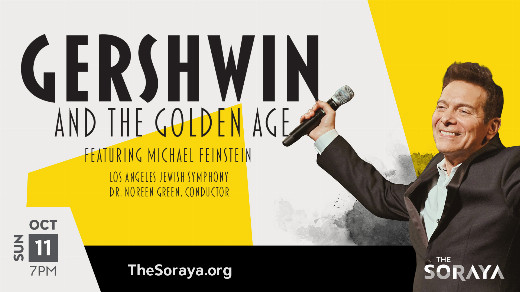
Gershwin and the Golden Age The Soraya (10/11-10/11) |
|
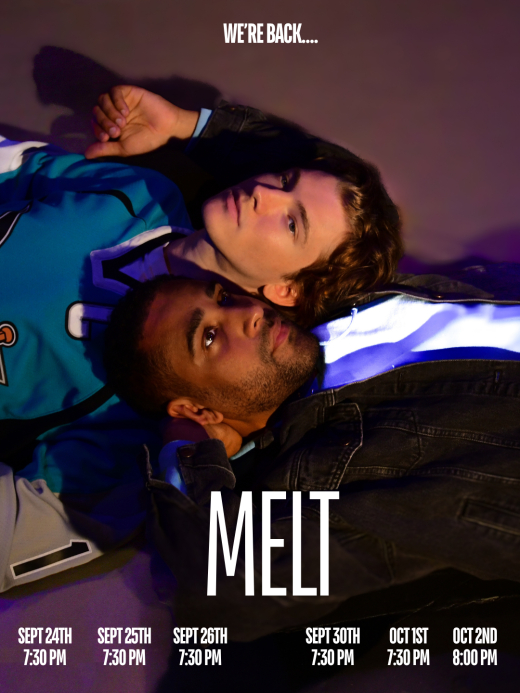
Melt : The Play The Marilyn Theatre at the Lee Strasberg Institute (9/24-10/02) |
|
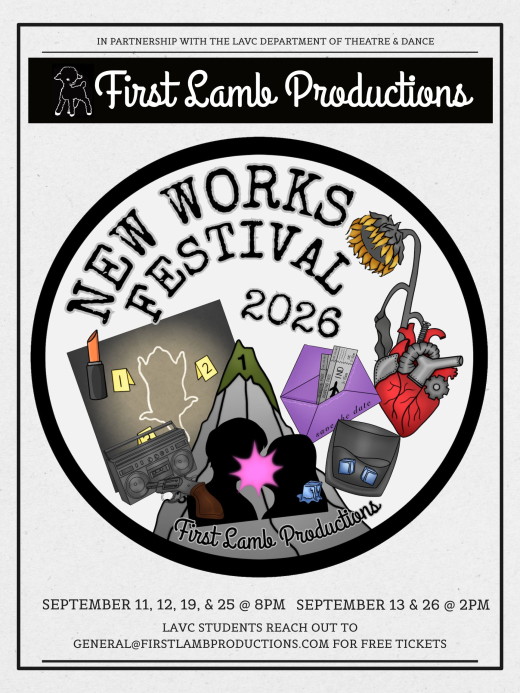
New Works Festival Shoebox Theatre (9/11-9/26) |
|
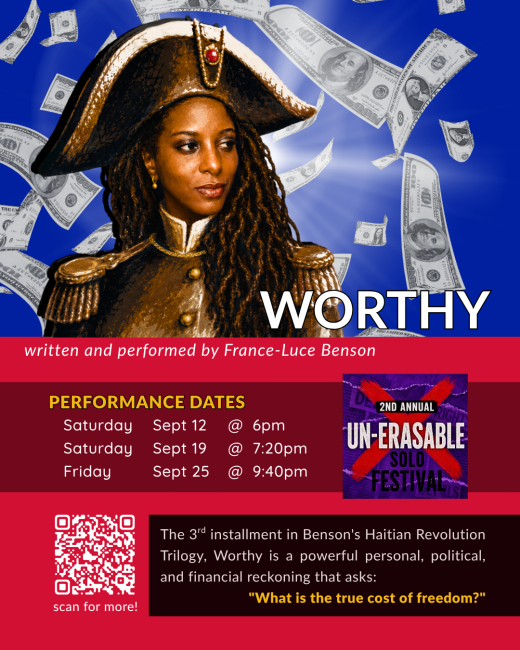
Worthy The Un-Erasable Solo Festival - Willie Agee Playhouse (9/12-9/25) |
