

Season 2, Episode 5: Behind every summer is a community that keeps Fire Island alive. This episode explores the history of the beloved Pines Pantry through the eyes of its iconic Pantry Girls, alongside the volunteer firefighters of The Pines and Cherry Grove who protect the island from fires, hurricanes, beach erosion, and an uncertain future.
Interview: Nasia Thomas of DEATH BECOMES HER at Orpheum Theater
Death Becomes Her has come to Omaha!
By: Analisa Swerczek
I'd love to start at the very beginning. How did you discover your love for the arts?
Sure. I grew up in Virginia, in the Hampton Roads area, also known as the 757. I attended a school called the Governor’s School for the Arts. There are a few Governor’s Schools around the country, but this one is a standalone institution. At the Governor’s School, I trained in musical theater. I attended my regular high school during the first half of the day, and then I went to the Governor’s School for the Arts for the second half. I received a free arts education there for four years. It was during my sophomore year that we auditioned for Into the Woods. I was a bit of a class clown. Honestly, I still am. I wasn’t a bad kid, but I was definitely the loud one who was always cutting up in class. One day, my teacher pulled me into the office and said, “We’re going to give you this role.” The role was the Witch, my first principal role. I actually still have photos and video from that production.
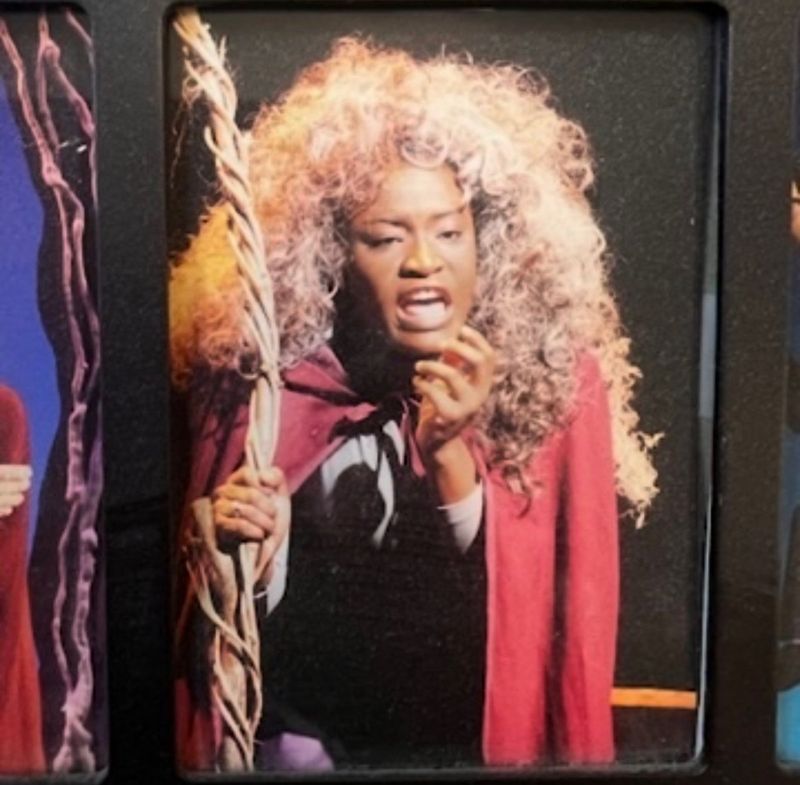
production of Into The Woods
They told me, “We’re giving you this role, but you have to take it seriously. Don’t make us regret this.” And I did. I discovered how much fun it was to really commit to the work, and it stuck with me. I went on to study musical theater at Elon University, where I earned my BFA and graduated in 2015. After graduation, I worked at The Muny, my first major summer stock job. Shortly after that, I joined the first national tour of Beautiful: The Carole King Musical.
Such an incredible show.
Yeah, it's one of my favorites.
As you were growing up, was there an instructor or someone in your life who really helped guide you? Or someone who inspired you?
Absolutely. At the Governor’s School, I had an incredible group of teachers who helped shape me into the artist I am today. Even something as simple as that teacher pulling me into the office and saying, “I believe in you. I see potential in you,” made a huge impact. He didn’t give up on the class clown. Like I said, I wasn’t a bad kid, but at 14 or 15 years old, no one knew whether I would take things seriously. Teachers like Chip Gallagher, Jeff Warner, Mark Hudgens, and so many others in the musical theater department helped shape me. Virginia Musical Theatre also played a significant role in my development. Honestly, I would not be where I am today without those people and that free arts education. At the time, I didn’t even know schools like that existed. So, shout-out to all of them. They’re truly responsible for helping me become who I am.
I think it's important for people to understand that auditions still matter, even if you don't get the role. Is there an audition that stands out as a learning experience? Maybe one where you didn't get the role, but gained something valuable from it?
Absolutely. I've come to believe that rejection is really just redirection. The opportunities that are meant for me won't pass me by, and the ones that do weren't meant for me. That perspective takes time to develop. As a young performer, it's difficult to understand. And I recognize that reaching that conclusion comes partly from having enough experience and enough "yeses" to trust the process. One audition that stands out was The Lion King national tour in 2019. Heather Headley has always been one of my biggest inspirations, if not my biggest inspiration. Vocally, artistically, in terms of stage presence, she's everything. So when I auditioned for The Lion King, I thought, "This is it." I'd studied the material for years. Heather Headley's photo was my Facebook profile picture and cover photo in high school. I knew the role. I could sing it, act it, and dance it. I went into that audition and I know I did a great job. Ultimately, I didn't get the role because I wasn't the right fit opposite the Simba they had in mind. I remember getting the call while leaving a shoe fitting. My first thought was, "Wow. If I didn't get this role, even though I was perfect for it in my mind, then something else must be coming." A few weeks later, I auditioned for the revival of Caroline, or Change and booked the role of Radio One. Had I gotten The Lion King, I wouldn't have been available for that opportunity. It would have taken me out of New York and away from one of the most important experiences of my career. From that point on, I started trusting that if something isn't for me, there's usually something bigger around the corner. And sometimes that "something bigger" isn't even a job. Sometimes it's a life experience, a lesson, or being in the right place at the right time for reasons you don't yet understand. As long as you believe that what's meant for you will find you, it becomes a lot easier to navigate disappointment.
You performed The Last Five Years both in the filmed Out of the Box production and later on Broadway. What was it like approaching Cathy in those two very different circumstances?
When I found out The Last Five Years was coming to Broadway, it was the day of the Tony Awards. I was driving with a friend and saw the announcement. I immediately texted Adrienne Warren because we both attended the Governor's School for the Arts, although not at the same time. In fact, her mother was my principal. I texted her, "Congratulations!” Hearing about another black Cathy felt huge. At the time, I never imagined I'd become part of the production. I was just excited for her. Later, people started asking whether I'd audition to be the standby. Around that time, I was back in Virginia making my directorial and choreography debut on SIX: Teen Edition alongside my best friend, Gaby Gomez. I flew to New York to audition and had one of the most supportive audition experiences of my life with director Whitney White. She created such a safe and welcoming environment. I actually turned down another Broadway opportunity because I wanted to remain available if The Last Five Years worked out. When I got the call the day before Thanksgiving that I had booked it, I felt incredibly grateful. I already knew this character. I had lived with Cathy years earlier, and she felt deeply personal to me. Many of her experiences mirrored my own, so stepping back into the role felt natural. Of course, I had grown as both a person and an artist. At 32, there were nuances I could bring to the character that I couldn't have accessed four years earlier. By the time the standby performance came around, it felt like we'd spent months cooking something special. Our show sold out almost immediately after tickets were released. The producers saw our commitment and gave us this incredible opportunity, and I'll always be grateful for that.
I was going to transition somewhere else, but I think you touched on something I'd like to dive into a little more. You talked about accessibility and not feeling like a role such as Cathy was available to you when you were growing up. That brings me to diversity and accessibility on Broadway. Where do you think we are now, and where do we still need to go? Do you feel progress has been made, and what still needs to happen?
Yeah, I definitely think progress is being made. But there's still a lot more progress to be made, if I'm being honest. That's true of life in general, though. As people, we have so much room to grow, so we can't expect the industry to stop growing either. The more opportunities we have to tell our stories, whether they're stories from people of color or simply different kinds of stories, the better. The more diverse voices we have not only onstage but also on the creative side, sitting at the decision-making table, the more we can move beyond the limitations set by people who believe Broadway is supposed to look or sound a certain way. Going back to your earlier question, I never thought I could play a character like Cathy because the industry didn’t give examples or support the idea of voices that are different being able to sing those iconic roles in the musical theater canon. A Cathy wasn't supposed to sound like me or look like me. I don't have what people would call a "typical" Broadway voice. But all it takes is someone recognizing that human beings sound different. Why shouldn't this character sound this way? The more people we have in leadership positions who think like that, the better. Honestly, I don't even think it should require being "open-minded." Having a mind should be enough. This shouldn't be revolutionary thinking. The horizons don't need to be expanded. They've always been there. People just have to be willing to see them.
Let's talk about Death Becomes Her. What was your journey to joining the tour?
When I finished SIX, I went on my annual trip with my best friend. Before I left, my agent told me that casting wanted me to meet the creative team for Death Becomes Her. I ended up doing the meeting over Zoom from Cartagena. At the time, I read scenes but didn't sing. I didn't book it. Looking back, I probably wasn't the right fit yet, and honestly, I don't think I was ready. Then, in January, while doing the Broadway Star series on the Disney Cruise Line, my agent called about helping promote the national tour at various season announcement events. I agreed and began performing "Perfection" at theaters around the country. Around that same time, I was invited to audition for Viola Van Horn. I went straight to finals, had a work session, and then a final callback. I performed selections from the show, including the opening monologue and portions of "Perfection." I didn't hear anything until March. A few weeks later, while I was teaching, my agent FaceTimed me. Whenever he FaceTimes me, I know something big is happening. I stepped out of the room, answered, and he asked, "Do you want to play Viola Van Horn?" And that's how it happened.
You've talked about watching the movie, and of course Michelle Williams originated the role on Broadway. How do you balance bringing your own interpretation to Viola while honoring what's come before?
First of all, I have to say that Michelle Williams has been incredible. We did that FaceTime video together, and afterward she messaged me and said, "Girl, if you need anything at all, let me know." We started sending voice notes back and forth. Little me could not believe I was exchanging voice memos with Michelle Williams from Destiny's Child. She gave me practical advice, too. She talked about vocal care, hydration, avoiding certain foods before bed, and everything she learned while doing the role. I told her that my voice sits in a different place than hers. Her voice is brighter and more forward, while mine is warmer and darker. Because of that, some of my vocal challenges would be different from hers. She immediately embraced that. She said she was excited to hear what my Viola would sound like. She celebrated my voice instead of encouraging me to imitate hers. The entire creative team including Chris Gattelli, Mark Meyers, Mary Mitchell Campbell, and Matt Doubler were incredibly supportive. Of course, there are moments that need to land and specific story beats that have to happen, but they really encouraged me to make the character my own. My Viola has a lot of humor in her. That class clown energy shows up again. Musically, they were also very collaborative. There are places in songs where I sing different vocal options because they suit my voice better. Instead of pushing back, the music team encouraged it. I'm still learning who Viola is. I'm still finding new things every day. But it's wonderful to work in an environment where creativity is encouraged and where you're trusted to bring yourself to the role. When you're standing in front of the people who actually wrote the music, Julia Mattison and Noel Carey, trying a new idea, and they start applauding, that's one of the greatest compliments you can receive. A lot of writers are understandably protective of their work. They've poured years into it. So when they say, "Yes, try it," that's incredibly empowering.
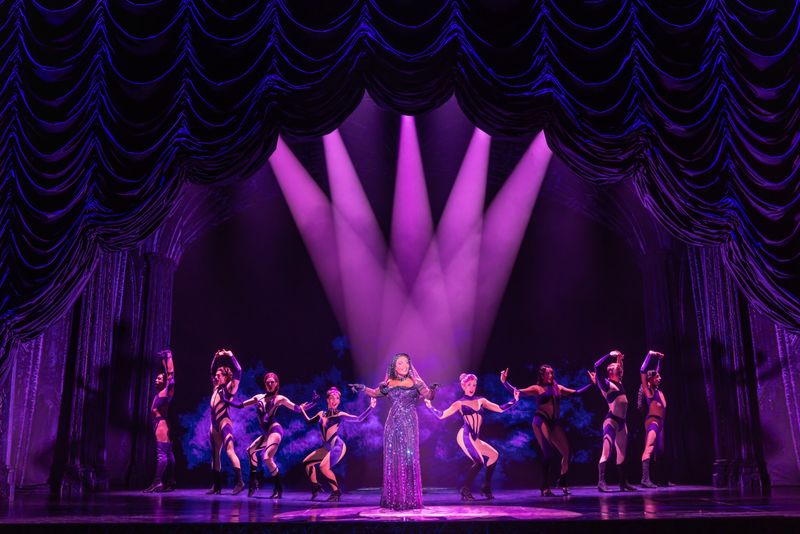
Death Becomes Her
Photo by Matthew Murphy for MurphyMade
What do you think brings people back to this show again and again?
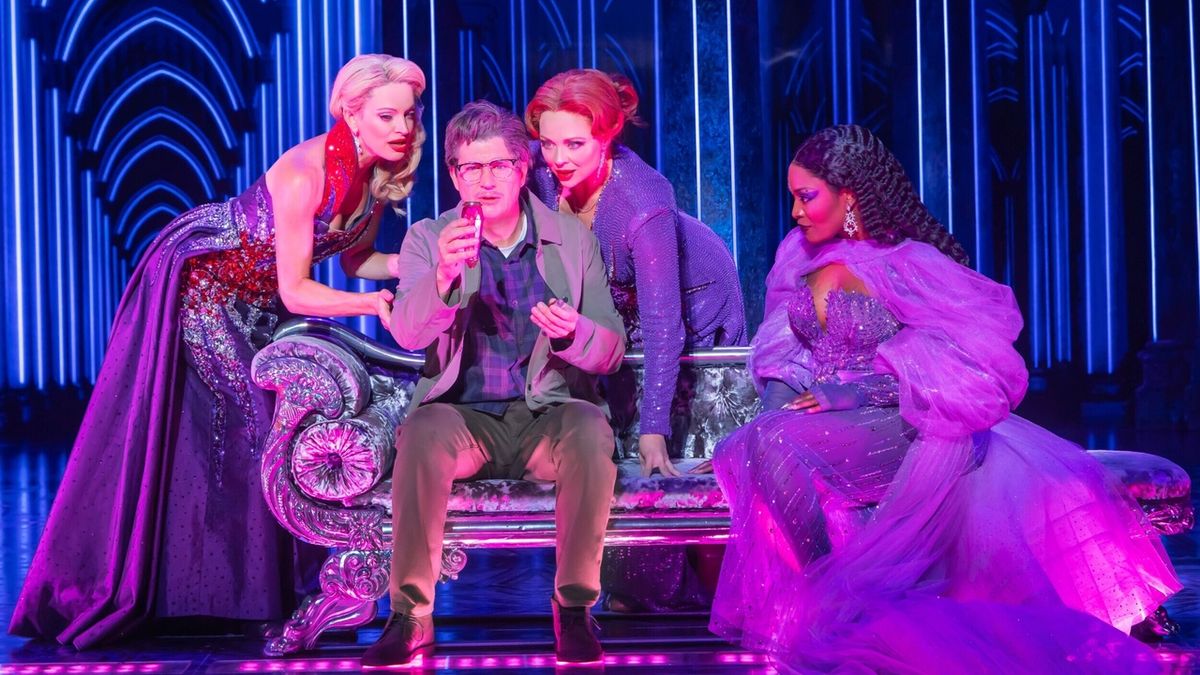
Honestly? It's just really good. The book is good. The music is good. The comedy is good. The special effects are unbelievable. If you love the movie, you'll love the musical because it delivers everything people loved about the film and then expands on it. That iconic stair fall absolutely blows my mind every time. There are still effects backstage that I don't fully understand, and I work there. The cast is phenomenal. Jackie Burns and Kristen Beth Williams are incredible as Madeline and Helen. They bring so much humanity and humor to the material. And the material itself is outstanding. Marco Pennette absolutely knocked it out of the park with the script. When you combine great writing with great casting, people want to come back. I've seen people return multiple times because they catch different jokes, different moments, and different details. Death Becomes Her is honestly one of my favorite musicals, and I'm not just saying that because I'm in it. I thought that before I ever auditioned. I took my grandmother to see it in January, and she's a very gentle, reserved woman. She was absolutely hollering with laughter.
I saw it in New York, and it was fantastic. Ever since the tour cast was announced, I've been excited for it to come to Omaha.
Thank you. That means a lot.
My final question: What would you say to someone who's thinking about seeing the show but hasn't bought a ticket yet?
If you want to come have an incredible time, then come see our show. If you want to laugh, experience a musical filled with heart, enjoy incredible fashion and costumes, hear phenomenal singing, and leave with songs stuck in your head for days, weeks, or even years, then this is the show for you. If you want a break from everything happening in the world and the opportunity to sit in a theater full of strangers and share laughter for two and a half hours, come join us. And maybe you'll leave with something more than that. Maybe you'll leave with a little lesson, a little confidence, or a different perspective. I genuinely think this show is for everyone. It's impossible not to find something that resonates with you. There will be a moment where you think, "I've felt that," or "I've experienced that." At its core, this show is about humanity, and we're all human. So come connect with us. Come connect with each other. And if I had to boil it all down to one sentence: Come laugh with us for two and a half hours.
Photo Credit: Matthew Murphy
More on Orpheum Theater
Upcoming Shows
Broadway news in your inbox
Weekly top stories - unsubscribe anytime.
Weekly top stories - unsubscribe anytime.
Popular episode


|
Christmas at Leon's Lofte Community Theatre (12/05-12/20) |

|
Sister Act Annie L. McDonald Theatre (10/29-11/08) |
|
The Little Prince Community Players, Inc. (11/20-11/22) |
|
The Book of Mormon Orpheum Theater Omaha (5/18-5/23) |

|
The Merry Wives of Windsor (Florida) Outdoors - Old Main Amphitheatre (4/01-4/11) |
|
Disney's Frozen Nebraska Communities Playhouse (12/04-12/13) |

|
Eureka Day Enid Miller Theatre (2/18-2/21) |

|
Cabaret Annie L. McDonald Theatre (4/22-5/02) |

|
The Producers Nebraska Communities Playhouse (2/19-3/07) |
|
Shrek The Musical Community Players, Inc. (2/12-2/21) |