
Interview Dylan Bailey & Wade Newhouse on Pure Life Theatre & Seed Art Share's HAIR IN CONCERT
Celebrate America's 250th Birthday with Peace & Love!
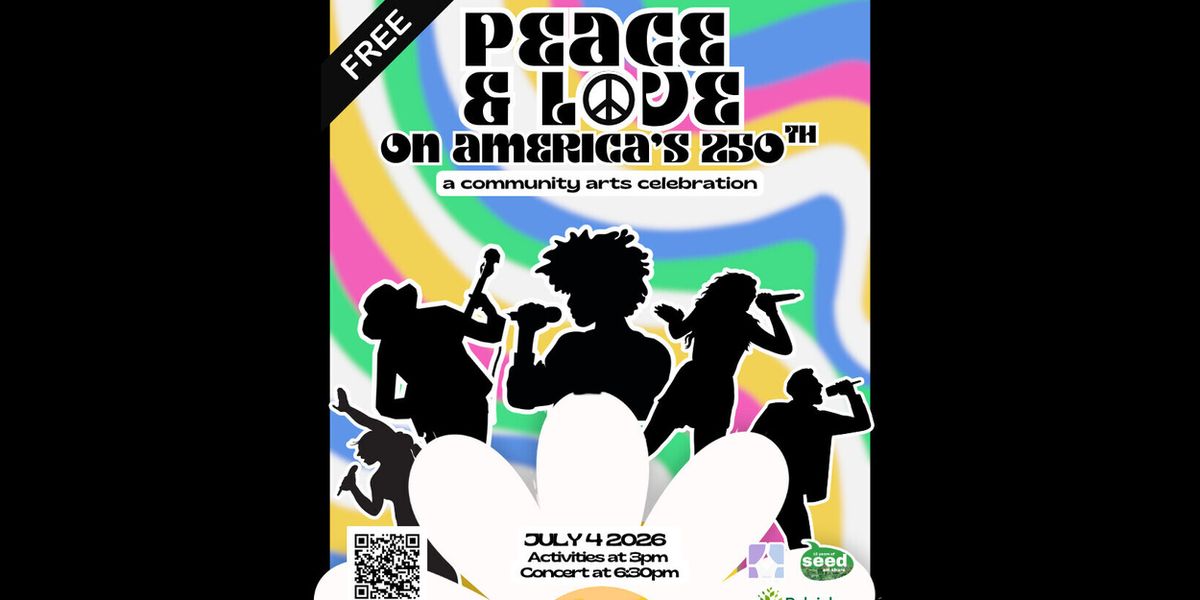
This Fourth of July, Pure Life Theatre, the City of Raleigh, and Seed Art Share will be presenting the 1968 groundbreaking rock musical, HAIR, in concert at Fred Fletcher Park. I recently got in touch with two of the people involved: Dylan Bailey, who's on the board of directors for Seed Art Share as president, and Wade Newhouse, who happens to be the director of this event. We discussed a lot of this and more.
To start things off, would the two of you mind telling us about this upcoming event?
DB: We're really excited about this upcoming concert of Hair. It's turned into quite the big event. It's a celebration of America's 250th Independence Day. But it's an alternative way of celebrating. There's gonna be a million celebrations that day, right? And so we wanted this event to be rooted in community, in truth, to explore a lot of the themes that exist in this iconic musical, Hair, and kind of address ongoing American struggles while also looking forward to a hopeful future. So in addition to the concert at Fred Fletcher Park, many arts organizations are going to be doing free performances on the amphitheater stage. It includes things like opera, we've got some musical theater, recitations of Walt Whitman, we'll have some drumming, some string arrangements from United Strings of Color, and even have some Shakespeare happening on the day of. So it's a lot of really interesting stuff. In addition to celebrating the themes of Hair and exploring those themes, we also want to celebrate the creativity that exists in our arts community and come together. We'll also have arts organizations sharing information about their upcoming seasons and programming that they'll be offering. So it's a day of free-flowing events. Audiences can come and go as they please. None of it's ticketed, it's free to the public. This is all taking place from 3pm to 6.30pm leading up to the concert of Hair that we'll then be doing in the park.
WN: I think it's important to know, or to think about or talk about, that it is a concert, it's not a full production of that show. Hair is, you know, 30-something songs. It has characters, two and a half hours of choreography, a script, and a specific time and place. It's about America in 1968, attitudes toward the Vietnam War, stuff like that, and this isn't that. This is 18 of the songs that Dylan has picked out and decided to express the heart of the show and express the attitudes that sort of thread between that show and America more generally, especially on the 4th of July. So people coming to see this, if they know Hair, they’ll say, “oh, I know that song.” But people who don't know the show might just walk through the park and see a bunch of people really excitedly doing some songs that they may or may not recognize, that they can stop and listen to, or maybe participate in, or tell other people to come by and see. It really is designed to be an experience rather than a show. That's sort of what’s complicated and fun about it, is figuring out how to be true to the spirit of the show, and yet make it accessible to anybody who might not be interested in something that is complete.
How are things going so far?
DB: We're halfway into the rehearsal process. It's been a tight rehearsal process. Again, it's not the full musical, it's not all of the content that's originally scripted in the show. We're working with really wonderful local performers that have the chops to learn the material in a tight rehearsal time of 3 weeks. So we've learned quite a bit of the choreography. We're doing a handful of songs in our performance that are really rapturous and get up and move and groove, and then some are, have, kind of lean into a little bit more stillness. We have a fabulous music director in Titus Pollard, who has taught us essentially the whole score at this point. We're doing a lot of in-space work next week at the amphitheater, so we're gonna be doing a lot of staging. We've been holding rehearsals on William Peace's campus, in either music rooms, or in the Black Box Theater here on site. It's hard to imagine being out in this beautiful park on this amphitheater stage until we get there. So that's what a lot of next week is going to be about.
How familiar were you guys with HAIR prior to this?
WN: I did a production of the whole show when I was in college. Here at William Peace University where I am the chair of the humanities department, the theater program that we had about nine years ago or so did a full production of it. I was not involved in that, except as a sort of backstage producer, you know, I wrote the checks for it. But I saw it and worked with it. In fact, one of the actors who was here at the time who played the lead role, is in the cast of this production. So there are sort of tendrils going in all directions. I did it 30-something years ago, one of our actors did it about a decade ago. We have a student in the production now who is a student here now. That's one of the fun things about it. The show's been around a long time, and people have a lot of different histories with it, a lot of different levels of knowledge regarding it. Like Dylan just said, we have this big cast of 21 people, and they represent a really wide range of experience types and strengths and interests. It’s been interesting to be able to say, “okay, we're working on this today, and see people just sort of jump into it, and learn it and do it.” Every time I make a suggestion that I'm afraid people are gonna be annoyed by, people are always really excited about it. The fun, of course, of doing a show, any show, really, is the people you work with. In this case, because it's kind of an unusual concept, you get a sort of an unusual and never-before-tried relationship between all of these people, and that's, you know, that's what makes it fun. That's what I hope comes across to an audience, too. When I did this show, we spent a few weeks before we even started rehearsing, just bonding as a group, and this group hasn't done that. We came in and we started working on it. It's been really interesting to watch people learn about one another, give each other their own strengths, their own insights, their own expertise, and that's why we do it.
What has it been like for you guys getting to dive into this musical?
DB: I’m in it too. It feels like we're all singing every song, even though it's not quite the case. There are some solos as well, but in these 18 songs, it's a lot of this collective ensemble singing together. Although some of the subjects and the themes that are being explored are heavy and they resonate very deeply today, which is why we're doing a show that's almost 60 years old to celebrate the now, and to celebrate this 250th anniversary, it's also a vibe show. The vibes of the score and singing it is exhilarating. Feeling these rock and roll harmonies and everything, kind of, like, tightly in alignment when we all get it right. It creates this kind of buzz that's been very joyful, and it's the type of music you want to get up and groove. That's one of the reasons we're excited to do it picnic style, where the audience can bring picnic blankets, they can bring bag chairs, they can sit on the grass if they want to, touch grass, get close. Then they can get up and groove whenever they feel compelled to. We want them to be able to join in on the experience.
WN: My daughter knows that I talk about this show, the one that I did a million years ago, as probably the most tiring theatrical thing I ever did. Like I said, if you do the whole thing, it's 30-something songs. The ensemble is in just about every song, and we had some kind of choreo for every song. It was exhausting. Now, as a much older person, it's interesting to think back on what it feels like to have this level of energy. This cast doesn't have to have that much energy, because it's not the entire show. On the other hand, it's outside, and it's July, and it's gonna be 90-something degrees, and there's trees, and there's pollen, and there's bugs. You don't know what the audience is gonna do, you don't know who's gonna come by. That whole sort of improvisational spirit is in some ways truer to what the show is about, than putting up a full production. The show started as the script and score writers hanging around with people in New York City and transcribing stories of people they knew on the streets, and then they wrote these poems, and they hired a professional musician to turn them into songs. But it felt, in 1968, very improvisational, even though there's a script, and this version, even though there is a sort of a script, is gonna feel even more improvisational. We're gonna be in the space for 4 or 5 days. We're gonna run it maybe twice before we do it. The first thing I said to them the first day was, “if you're in the room being part of this process, you have to be willing to drop a line and have someone else take it. You have to be willing to reach for a harmony and get the wrong note, and you have to be willing to do the choreography and then fall down in the grass and grab someone in the audience and hope they join you, but not know if they're gonna join you.” That's… the absolute unknowability, if that's a word of it, is really the most interesting part. It's what I hope the audience gets from it, too. There's just no sense, really, of exactly how it's gonna go down. That's the way I think that show should be done.
This upcoming Fourth of July will mark America’s 250th Birthday. What does it mean to both of you to be presenting this musical on that particular date?
DB: The way this project kind of came about, in truth, it was over lunch at Chili's, a year ago, with a dear friend who also was in that production of, here at William Peace of Hair. I was with my friend Emily Freer, talking, and I said, “you know, I've always wanted to do Hair outdoors. I think it would be beautiful in an outdoor amphitheater, concert style, because the music is what's most exciting about that production to me, and kind of really leaning heavily into the themes that really resonate right now and seem to be increasingly resonating day by day.” At this time a year ago, we were not a country at war. So things continue to increasingly resonate unfortunately and unfortunately. So she asked the question, “If we were to ever do something like that, what day would you do it on?” She asked a lot of questions like that, and I said “July 4th would be interesting. There's already a lot of conversations about America's 250th. There's a lot of references to American history in the score, there's a lot of references to patriotism in the score, and anti-war sentiment is some of what that's rooted in as well.” That felt like a day that would make sense to me, and also kind of intentionally serving as a reclaiming of the holiday, because it is a day that a lot of people have mixed feelings about. It's America's 250th Independence Day, but not everyone gained freedom 250 years ago. We hope that this can be a day that all people celebrate, and it will be a celebration. I make it sound heavy, but it is going to be a celebration where people can get up and dance, sing, and join in excitement. We're telling the truth about history, and telling the truth about our current American condition. But we are hopeful about the future , and coming together in community is the joy of the day. So that's what the day means to me. To me, it feels like the ideal celebration on the 4th with artist friends, and we're all gonna create something beautiful together.
WN: I am a teacher of American culture. I think that by definition, really, any holiday should be an introspective time. Popular culture always pitches holidays as celebrations. I think if a day is set aside on the calendar to commemorate something, a thoughtful person should always be thinking about what that means and how that works. My favorite holiday is Halloween, and there's nothing that's not fun about Halloween, but you still should take a minute and think about how we got there and how it works. I think the 4th of July is one of those things that's built into the fabric of how we grow up. It's part of our year, you know, our calendar from the beginning. But what a little kid finds interesting about it should be different from what their parents find different about it. Someone in my generation should think about different things than someone in my parents' generation. I think it's one of those holidays that the more you know, the more you should think about. I don't mean think about in a critical anti-American or anti-anything way. In the old days, if we wanted to watch the fireworks on TV, we had to choose. The two big ones were in Boston and Washington, D.C. We always would ask, “which one do we want to watch?.” Well, they're very different backgrounds, and they have very different sort of vibes to see fireworks over Washington, D.C, with all those monuments, versus Boston, which was around before Washington, D.C. That sounds dumb, but that's what holidays do for me. To have a thing going on that is as all-American as it can get, and yet, some people really find it, you know, obnoxious, I think, and some people find it only fun, that, to me, is how holidays work. People should have different ideas about them. What's nice about this version is, because we've stripped most of the script out, you can sort of engage with it on as much of a thoughtful level as you want. If people walk through the park and they just see people dancing, and they find that fun, great. If someone walks through and says, “oh, yeah, I know what that show's about,” and they want to see which parts we keep, that's interesting, too. I'll say that I'm personally surprised a little bit at some of the songs that Dylan kept in, and some of the ones he cut. I'm not sure I would have made the same choice, and that's what makes it such an interesting show, is it speaks to so many different topics. Which, again, I think is what holidays should do.
Be sure to catch HAIR in Concert at Fred Fletcher Park on July 4th. For more information, please click here.
|
ONCE Burning Coal Theatre (8/13-8/30) |
|
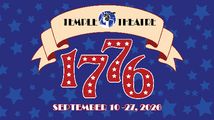
1776 Temple Theatre (9/10-9/27) |

|
The Bodyguard DPAC (12/08-12/13) |

|
The Notebook Durham Performing Arts Center (7/14-7/19) |
|
The Merry Wives of Windsor Snow Camp Outdoor Theatre (7/23-7/25) |
|
Operation Mincemeat DPAC (5/11-5/16) |
|
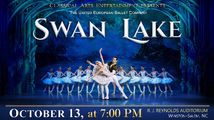
SWAN LAKE by The United European Ballet Company R. J. Reynolds Auditorium (10/13-10/13) |

|
Red, White & Temple Patriotic Revue Temple Theatre (2/25-3/14) |
|
Daniel Tosh Thomas Wolfe Auditorium at Harrah's Cherokee Center (10/18-10/18) |
|
C.S. Lewis' The Screwtape Letters On 12 Sep to 13 Sep 2026 Martin Marietta Center for the Performing Arts (9/12-9/13) |