


EDINBURGH 2026: Interview: Stacey Clare of STRIPPERS ADVICE BUREAU
Its Trojan Horse Activism
Stacey Clare of Ask a Stripper and Strippers Advice Bureau met with us during the Edinburgh Fringe 2026 to discuss her two shows, dissect giving advice, her acclaimed book, ethics, workers rights, safety and why it's important to attend the shows deemed to be on the Fringes of The Fringe.
Her show Ask a Stripper was hosted by Goodtime Mama Jojo, additionally presenting guest Tallulah Bankheart on 12 August 2026, who together provided audience rules, insider secrets and highlighted their impressive career achievements.
Goodtime Mama Jojo was the first British striptease performer to be recognised as a burlesque legend at the Burlesque Hall of Fame in Las Vegas in 2008. She explained: "We are ordinary women doing an extraordinary job."
Mama and Tallulah revealed the way workers often have to pay fees for club work including paying huge house fees to work each evening, high commission issues and also their inspirational work paths, dream work environments, embarassing stories, psychological and emotional labour, and Stacey's respected political influence, which infuses both shows.
Mama shared:
“I started as a burlesque striptease artist nearly 50 years ago. People are often surprised that the performances were full nudity back then. The women were from all walks of life, but the common denominator was a sense of freedom and independence in our work. We were paid a set fee in cash for each performance, and could pick and choose when and where we worked. That changed with the onset of table-dancing and lap-dancing clubs where performers have to pay to work. It’s something I’ve always vehemently disagreed with!”
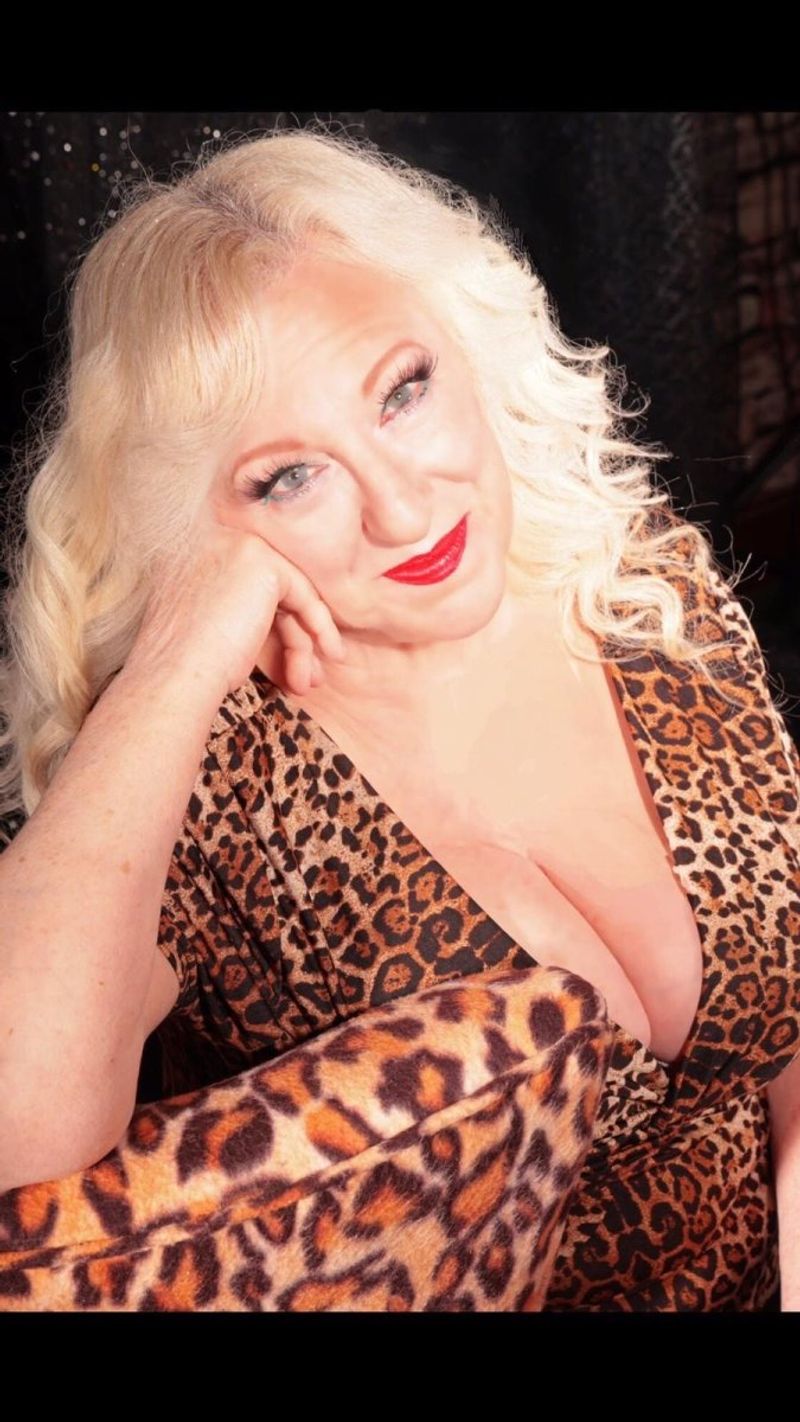
Photo credit: Neil Kendall
Tallulah Bankheart who was featured as a performer on 12th August 2026 at Ask a Stripper credits the work of Stacey Clare in her substack: "Stacey has used this show to bring together important and interesting stripper voices and build community. If her name sounds familiar, it's because I often cite her book in my writing, as she wrote The Ethical Stripper."
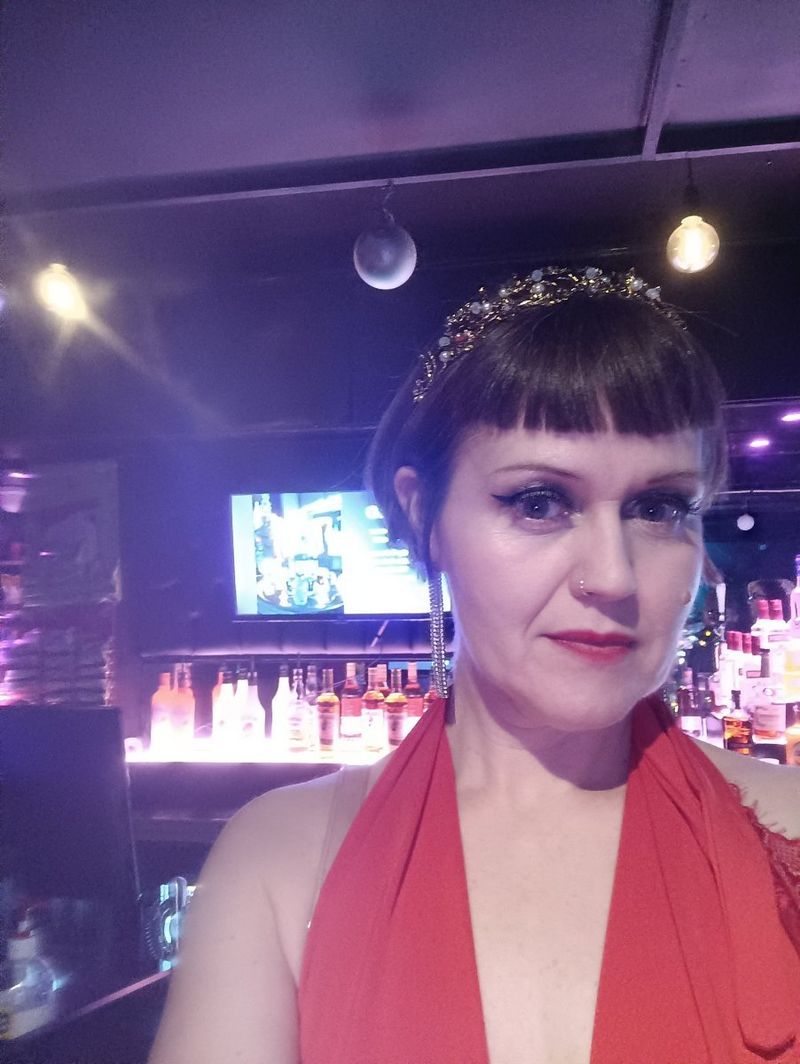
We met Stacey Clare back in August to learn about her creative show outlook and activism:
Q: Stacey, please could you tell us a little bit about who you are, the work you do and the things you're passionate about?
SC: I'm Stacey Clare. I am a sex worker activist of 20 years. I've got a background in fine arts and performance theatre. I found myself working in strip clubs, mainly because it's a very lucrative way to perform. I ended up in East London, and I did a lot of research about how clubs are run. I did a fine art degree and I chose to write my dissertation about licensing laws and policy around strip clubs and sex work, which led me to grow a deeper understanding of the various arguments, feminist discourse and workers’ rights. In 2014, some colleagues and I founded the East London Strippers Collective. I'm immensely proud of its organisation. It's now a CIC, a registered Community Interest Company. We run events and create our own working conditions. It's an autonomous, worker-led business. The mission was to cut out the dodgy club owners, the exploitation, the labour violations going on in the industry. What would it look like if we had to go at running something ourselves?
Q: What was the original idea for Ask A Stripper back in 2019, and did you know then that it would be still going strong several years later?
SC: So, when Gypsy and I worked together on Illicit Thrill, we would come back to her flat, stay up late in her kitchen, cackling away like witches. And we thought, why don't we just get the audience to ask us questions? We knew we knew we had a strong idea. We tested it out that year. Gypsy knows Bob Slayer from the Blundabus! Bob Slayer, a stand-up comedian ran Heroes of Fringe Comedy and pioneered the Pay What You Can (PWYC) model, the egalitarian system which puts money directly in performers pockets rather than waiting for months and paying hidden fees. Bob helped us out with giving us the space to test it. The following year in 2019, we ran it on the top deck of Bob's BlundaBus! It was amazing, we made a profit from our first year, which is unheard of at Edinburgh Fringe. Next year in 2020 COVID killed the festival for some years, so it was hard to get the momentum back, but we did.
Q: What do audiences most commonly misunderstand about strippers and the sex industry?
SC: Oh, lots. That we always make eye-watering amounts of money, that we're all on drugs, that we're victims. People don't fully understand us as workers, people who do a job, who have lives outside of the sex working identity. The understanding is skewed about stripping and ideas around sex work have often been fed to people by popular culture, by film, by fictional characters. A lot of people have no lived experience themselves, they don't know any sex workers in real life, so our show helps them see, yes, we’re real people. You almost watch the cogs turning. You see people's faces change, or they start nodding throughout the show. It's a way of gently dismantling some often really negative core beliefs they’ve held.
Q: The show has been described as raw, hilarious and unapologetically honest. How important is it to you that to tell these stories without sanitising the reality of the industry?
SC: It is very important to not sanitise. I'm very conscious of that. There is a trope of the ‘happy hooker’ like we're all having a wonderful, glamourous time – which rarely matches the reality of the work. I also think in also most people's understanding, there's the other extreme of that, the exploitation, the abuse, the violence, which is also a reality. It's a consequence of the criminalisation of sex work that criminalised marketplaces are run by criminals. We are vulnerable, we are still marginalised heavily, we are still very oppressed. So, we are navigating those lines. It’s really important for us to speak our truth, but to also acknowledge that most of the people who've done the show with me are extremely privileged, we are some of the luckiest sex workers in the industry. We have all of the privileges that afford us various freedoms, such as the language we speak, the education we have, the background, our skin colour. To have an awareness of that really adds depth to what we're doing, so that we're never only speaking from a limited perspective. Many things can be true at the same time. We need to safely move through those realities with care and compassion.
It's really complex, but I'm not an apologist for exploitation. I'll never capitulate to the predatory capitalism within my industry. It's so bad for everyone, for women and the rest of society. But the best way to tackle exploitation is to understand it first. How have we created a world where such things happen? And who can be held accountable? These are some of the founding principles of the show, which is actually intended as a deeply political piece of theatre disguised as a comedy show.
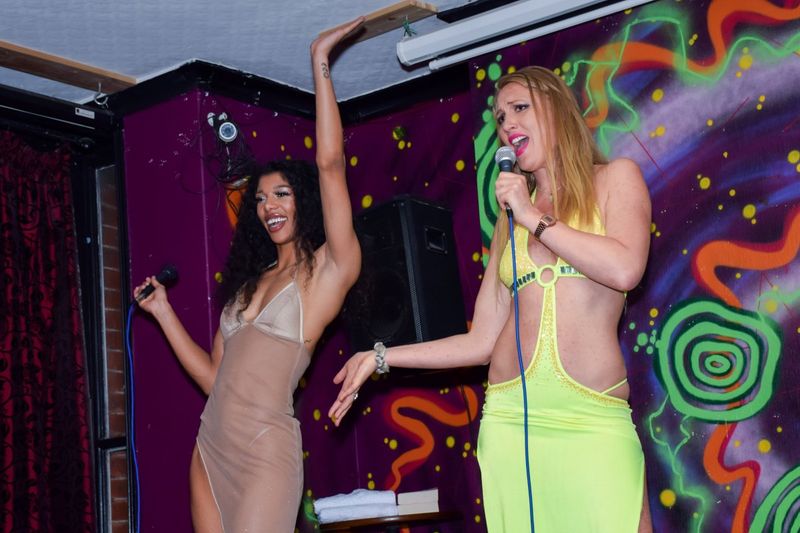
Q: Strippers Advice Bureau feels like a fascinating evolution from Ask a Stripper. Where did the idea of turning strippers into the world's most unconventional agony arts come from?
SC: Truly, that idea was borrowed from a fellow stripper called Chiqui Love. She was one of the original co-founding members of the East London Strippers Collective. She's been in the industry for decades and she's absolutely brilliant, an absolute legend. So, the Strippers Advice Bureau was in fact her idea and it was one of the first events that we ever ran with ELSC back in 2015. The idea was always there; it just never got developed.
Q: Can you give us a bit of a background about how the Strippers Advice Bureau show works?
SC: : The audience arrives. They get given a post-it note and a pen, we then ask them to write down a dilemma. We then collect them from the audience in a really funny way (no spoilers), then we read out the dilemmas between us and we advise. Some can be funny, some are serious. Some, we feel, might need actual therapy. People are invited to put their hand up and say, yes, that was mine if they want to, but we don't want to put people on the spot – the reason for writing them down is to remain anonymous. It's a very funny show, but sometimes it can get really deep. There's nothing wrong with that either. It also moves through different realities, and since it works as an act of care as well as entertainment it can create a powerful atmosphere. We're inviting them to show us who they are, which is the opposite of Ask a Stripper, where we reveal all of who we are to the audience, this format changes the power dynamic. I’m thinking about maybe running it as a podcast.
Q: Why do you think strippers might actually make particularly good people to give advice?
SC: Well, those of us that have done the job long enough, who have weathered the storms, learned the ropes, so to speak, I think there's skill in talking to people. You're talking to the public all day long and you're also selling them your time. A lot of sex workers do have a sort of natural tendency to put other people first. I think over time you start to see patterns. You start developing wisdom, insights, start to really understand people, read people's psyches a bit. Not all of us, I'm not saying this is every worker, but at least a decent proportion of us, who work on their skillset or try and understand it a bit more. Because you need to be able to read the room for your own safety. That comes with the territory, you need to figure out how to keep someone else on a level Playing Field, how not to get dysregulated. So, you learn quickly how to help them become regulated again. It can be survival, that’s an element.
Q: What sort of problems are audiences bringing to you? Are they mostly relationship problems, life crises, work problems, or absolutely anything and everything?
SC: Some of them are just funny and silly. A lot of them are relationship questions, which is quite revealing. The collective psyche of at least our audience. Some are work problems. We had a lady in yesterday who openly said, ‘I think my boss and I are too close’. So, we asked a few more questions. She put her hand up. She told us that they talk about what type of underwear to buy. The audience was like, whoa. So I said, ‘What does the rest of the room think? Are we all in agreement?’ So she got a collective answer from the whole room, which was brilliant. Some questions cover huge stuff like divorce, being cheated on, how do I tell my parents that I'm gay? Like a lot, you know, coming out about various stuff. It’s surprising, how people are quite willing to put it out there.
Q: Your work challenges the idea that people in the sex industry can be only viewed through one particular lens. Is challenging that perception part of the show's purpose?
SC: Yes, absolutely. It always has been the mission of everything I do to intervene and subvert people's fixed narratives. That is the whole purpose. Most people view sex work through usually two lenses. It's that binary again, we're either super powerful, empowered, glamorised, you know, or the opposite, just worthless, downtrodden victims. That binary does not do us any good at all. Integration, revealing, unpacking and dismantling is the whole ethos.
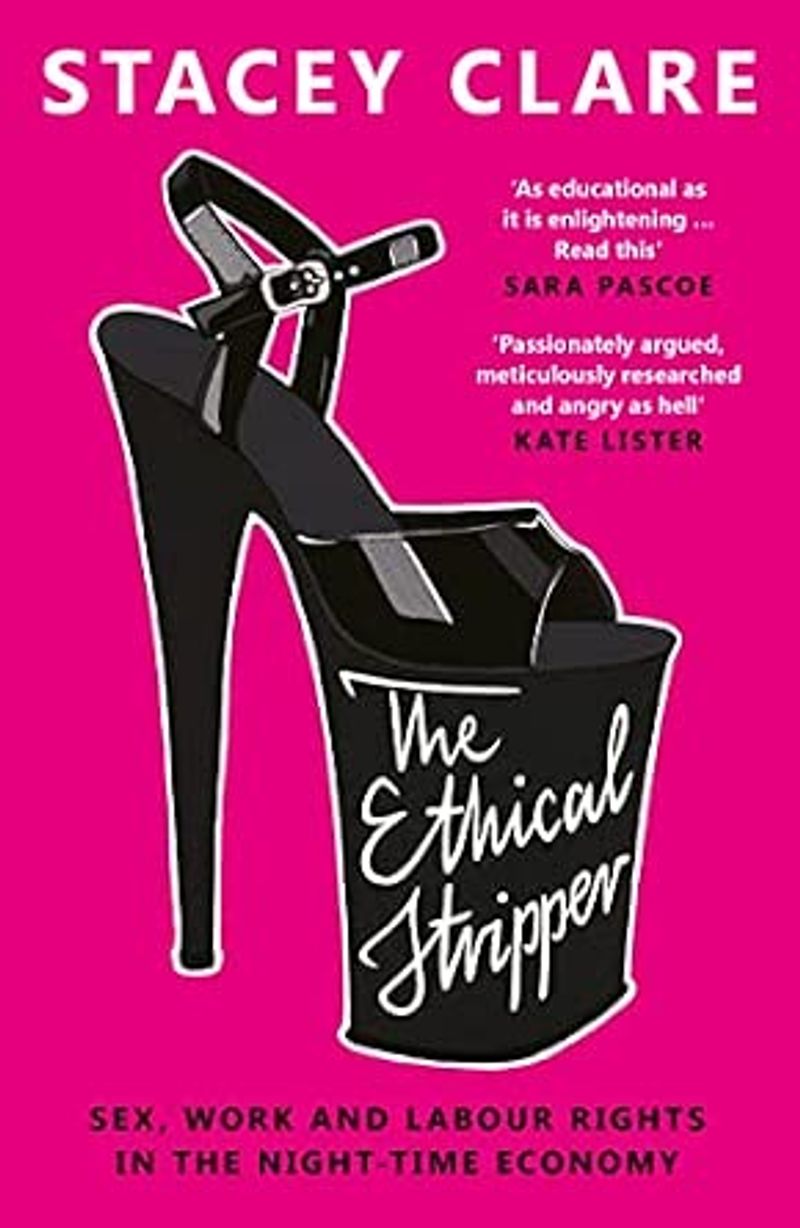
Q: You've written The Ethical Stripper. How does the thinking behind the book feed into these live shows?
SC: Massively, it gives me a depth of knowledge to pull from, years of research, solid data. Everything I do comes from the perspective of a harm reduction principle. Harm reduction is evidence based, rather than a moralistic argument, which is like, oh, is this right or wrong? Harm-reductions asks, how do we make this work safe? What are the policies and legal frameworks which will lead to positive social outcomes? Having then written a book about this gives me the grounding to explain clearly in no uncertain terms why criminalisation does not work. Shutting down strip clubs is not a win for feminism. Criminal marketplaces are run by criminals.
We need a clear legal pathway for sex workers to access safety, rights and protections in our workplaces. Like all other work, we've had hundreds of years of workers' rights movements, but somehow, sex workers are still marginalised in society. Current laws essentially say “you just go over there and work in secret. We don't want to know about you, we don't want to hear about you, if we do then get in jail”. That’s obviously a parody but it’s not far from the truth. People who write policy are often deeply misinformed and haven't properly understood and listened to us. Writing the book has given me a really powerful voice in that respect.
Fringe shows Ask A Stripper and Strippers Advice Bureau by Stacey Clare ran at The Edinburgh Fringe in August 2026.
The Ethical Stripper: Sex, Work, and Labour Rights in the Night-time by Stacey Clare can be bought here.
Get Broadway News on WhatsApp
Receive the latest updates, breaking news, and exclusive coverage from Broadway directly in WhatsApp.

Sign up for all the news on the Summer season, discounts & more...
|
Ed Byrne: No Dramas Music Hall (2/10-2/10) |
|
Aberdeen Arts Centre's Big Variety Show Aberdeen Arts Centre (10/02-10/03) |
|
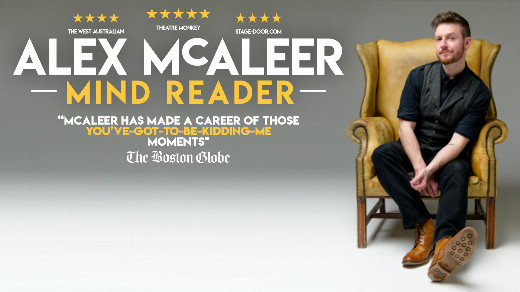
Alex McAleer - Mind Reader Eastgate Theatre (9/26-9/26) |
|
Mark Thomas: 40 In Stand Up Years The Lemon Tree (9/24-9/24) |
|
Disney''s Muppet Christmas Carol in Concert Usher Hall (12/03-12/03) |
|
Trainspotting The Musical Edinburgh Playhouse (10/19-10/24) |
|
Venue Premium - Two Doors Down OVO Hydro (9/25-10/11) |
|
Trainspotting The Musical Alhambra Theatre (3/01-3/06) |

|
Rollers Forever King's Theatre (10/27-10/31) |
|
|
Giovanni: Unstoppable Alhambra Theatre (4/11-4/11) |
