
Season 2, Episode 5: Behind every summer is a community that keeps Fire Island alive. This episode explores the history of the beloved Pines Pantry through the eyes of its iconic Pantry Girls, alongside the volunteer firefighters of The Pines and Cherry Grove who protect the island from fires, hurricanes, beach erosion, and an uncertain future.
After the Reckoning, Williamstown Theatre Festival Is Still Searching for What Comes Next
After shrinking its staff size and fundraising goal, Williamstown plans for a more sustainable future.
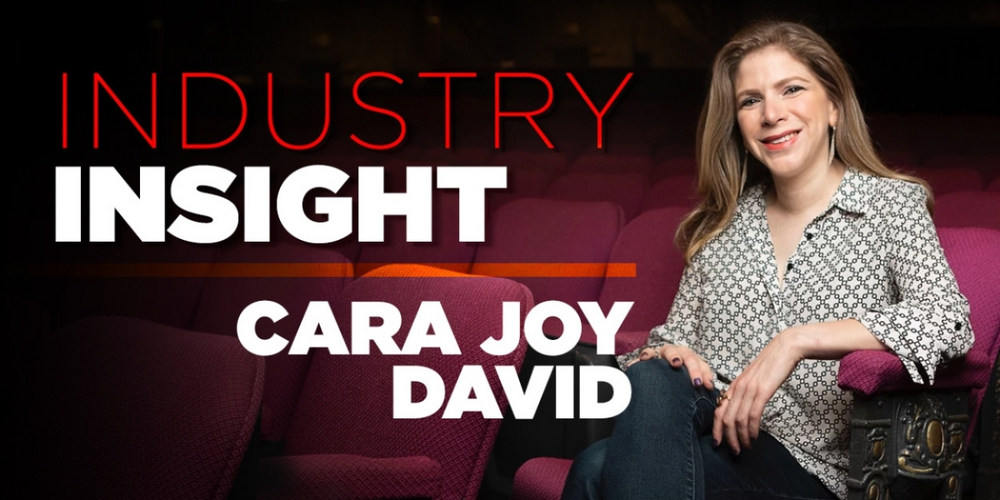
By: Cara Joy David
For several decades after its founding in 1954, Williamstown Theatre Festival was the preeminent summer theater. Stars flocked there. Established writers premiered their work there. Those who wanted future careers in theater apprenticed or interned there. The pandemic, and subsequent cultural reckoning, changed all of that. Few theaters came out of that time unchanged, but the transformation that took place at Williamstown is one of the most significant. Now, after years of struggle and a season hiatus, more questions remain than answers.
The theater closed its New York office and reduced its full-time staff to three. Despite an intentional departure from the artistic director-led model, a search is now on to add an artistic director. There will be a 2027 festival, but the contours of it are unsettled.
“I’m really conscientious about making sure we have money to achieve the things that we announce,” said Kit Ingui, who recently became Executive Director at Williamstown after joining the organization in August 2024 as Managing Director, Operations & Advancement. “One of the shifts we’re trying to make in our operations is more dollars in the door before we start spending them. That’s not just us who this shift is for—it should be for regional theaters in general. So, we are currently focused on bringing in money.”
In the pre-pandemic years, Williamstown was at times so big that it had 12 year-round staff, 75 apprentices, 100 interns and hundreds of other paid summer staff and artists working at the same time. Designers Ben Stanton, Lucy Mackinnon and David Korins are among the alums of the internship program. Philip Seymour Hoffman, Kate Hudson, Allison Janney, Austin Pendleton, Chris Pine, Christopher Reeve and George C. Wolfe were all apprentices at Williamstown. Having so many bodies was seen as a necessity—because it is based on the Williams College campus, Williamstown must wait for the campus to mostly clear, giving it a very short runway before performances began.
Apprentices and interns famously worked long hours. They were also required to pay for the privilege, all in the hopes of some potential career advancement (which many of them did benefit from). Then the world changed.
At first, it seemed Williamstown was doing well. During the summer of 2020, when many summer theaters presented no programming, then Williamstown Artistic Director Mandy Greenfield announced an unprecedented collaboration with Audible. A full season—including the world premiere of Sanaz Toossi’s Wish You Were Here—was produced on Audible.
But, behind the scenes, long-held grievances were starting to come to light. Throughout the theater industry, institutions were dealing with accusations of racism and exploitative treatment. For example, in June 2020, the resident actors of the Flea went public complaining that they endured grueling workloads and a culture of sexism, racism and intimidation; all for no pay or a small stipend. (The Flea at first announced it would pay them, then disbanded the resident acting program.) Message boards were filled with stories of abusive treatment at theaters all across the country, including Williamstown.
In February 2021, a group of alumni and staff calling themselves The WTF, Williamstown?! Collective sent a letter to the Williamstown Board of Directors and artistic leadership outlining a list of demands and attaching the purported “[r]esults from 2020 Survey examining White Supremacy and its intersections at Williamstown Theatre Festival,” which was a compilation of stories broken into three sections: unsafe workplace, racism/classism and other types of discrimination/harassment.
In response, Williamstown hired an outside law firm to investigate the issues raised. It also suspended the Apprentice and Internship Programs for 2021. Those who would previously have been interns were instead called second assistants, paid minimum wage and provided more structure. An Early Career Black, Indigenous, and People of Color Theatre-Makers Program, a collaboration between Black Theatre United and Williamstown, was created, offering participants full room and board along with a $2,500 stipend.
But summer 2021 had its own challenges. It had three shows, all outside. The region faced heavy rain, making conditions difficult. The Los Angeles Times reported that “the entire sound crew of the musical ‘Row’ walked out on a rehearsal, citing the demanding schedule, low wages and unsafe conditions.” I spoke with several staff, crew and artists from that summer, and most countered that narrative, stating only a couple of people left and that Williamstown had hired consultants on outdoor theater and safety before the season began to ensure safe working conditions. But, regardless of the full truth, the instant reputational hit was real. A subsequent Los Angeles Times report, which linked to the February letter and contained stories from 25 current and former festival workers alleging safety hazards and a toxic work culture, made matters even worse.
The 2021 season was extremely profitable—according to tax filings, revenue outpaced expenses by over $2.6 million for the year—but that wasn’t enough to quell the criticism. In November 2021, it was announced that Greenfield, who had been Artistic Director since fall 2014, had resigned. Black Theatre United ended its nascent relationship with the nonprofit. Jenny Gersten, who previously served as Artistic Director from 2011 to 2014, stepped in as Interim Artistic Director. Williamstown was never to return to what it once was, either in terms of its public-facing programming or behind-the-scenes.
To help revamp the organization, Gersten hired Danielle King as Producer and Director of Organizational Culture. (King left after less than two years and the role was eliminated. Those I spoke to said King made an impact, but transforming a theater’s culture is slow, and ideally the position would have remained. Instead, those responsibilities were transferred to an outside HR firm and already-stretched-thin team members.) In February 2022, WTF released “A Progress Report on Equity, Diversity, Inclusion, Accessibility, Anti-Racism, and Anti-Oppression at WTF.” Among other things, the report stated: “Beginning in 2022, the number and scale of Williamstown Theatre Festival’s programmatic activities will match its capacity to support the staff and trainees who make the Festival possible. WTF will no longer be mounting a seven-show season.”
In 2022, Williamstown presented three major productions and some bonus content. While Williamstown had often been profitable in the before times, and managed through 2020 and 2021 with a surplus, tax returns reveal the 2022 year was in the red by over $1.4 million.
To shore up its finances, Williamstown presented no full productions in 2023, but instead put on a series of cabarets, readings and other special events. And it was in the black: expenses were lower than usual, and the theater came out of the year with a net income of almost $2 million.
The following year, Williamstown announced it was changing its leadership model. Gersten was leaving at the end of the season, with no replacement Artistic Director planned. Raphael Picciarelli was named Managing Director, Strategy & Transformation. Ingui joined as Managing Director, Operations & Advancement. And there would be a “Creative Collective,” a group of “multi-disciplinary guest curators who inform the programming of the Festival,” with Jeremy O. Harris serving as the inaugural Creative Director of the Creative Collective.
That summer, Williamstown offered three productions, two of which were one-woman shows, and “WTF is Next,” which was a weekend preview of a new model for Williamstown. Basically, it was a weekend full of activities, including theater, dining and cabaret. The year-end financials reported a negative net income of just over $120,000.
2025 was the fully realized version of that “WTF is Next” model. Branded W71, the entire festival took place over the course of three weekends. There were eight core productions—including a starry Camino Real with Pamela Anderson and Nicholas Alexander Chavez—running concurrently across multiple venues, pop-up events and food. The core productions went beyond traditional theater and included a site-specific piece at a skating rink and a self-guided audio experience. The idea was to get people to buy weekend passes, but individual tickets were on sale for most of the offerings.
Three weekends may not seem like a lot, but the budget for the festival was around $8 million. Even adjusted for inflation, that exceeds the expenses for the eight-week 2019 season. Though nearly $1 million of that went toward turning a former Price Chopper into a black-box venue, The Annex, and that investment may benefit future seasons.
Attracting new audiences was one of the team’s main goals for the season, and Williamstown’s statistics show it worked: 40% of audience members were new to Williamstown. However, according to the company’s audited financials, there was an operating deficit of over $820,000 for the year, and operating at such a deficit is something Ingui said they “shouldn’t do again.” (While Ingui is focused on running in the black, other Berkshire region theater companies have frequently operated at a much greater deficit in recent years, so less than a million in operating loss is not beyond the pale.)
There were also a good number of challenges beyond the financial. Despite Harris saying in a recent Vanity Fair interview that he was “running" Williamstown, the Creative Collective—which, in addition to Harris, included model/actor Kaia Gerber and her Library Science co-founder Alyssa Reeder, music producer Alex Stoclet and dancer Christopher Rudd—was difficult to pin down for planning.
“They received a small fee for their time,” Ingui explained. “The fee was limited and therefore the amount of time we would ask for them was limited.”
That is part of what drove the need for an artistic director.
“The Creative Collective still exists as a part of the organization and that group of artists will continue to work with the organization,” Ingui said, praising the different perspectives the group brought to the table and Harris’ love of the institution. “What became clear was that the organization needed an artistic representative that was really tied to the vision of the organization, not just the vision of a particular season, which is what the Collective was working to do.”
Operationally there were also challenges. Artists and crew I spoke to described late contracts and ill-equipped venues, along with making familiar complaints about low wages and longer-than-expected hours. Audience members, while praising certain shows, noted complicated ticketing structures, onstage sloppiness and offstage chaos.
Ingui praised the “immersive festival experience” as creating an “exciting temporary society” and referenced generally positive feedback from both audience members and artists, but also acknowledged the exhaustion of many on staff and the technical difficulties. She said that “there are some learnings that we take really seriously” from the season, including the need for more hands if the festival ever presents that same scope of programming again.
The over-extension apparent in 2025 led to a season hiatus. In January 2026, it was announced that “Williamstown will adopt a biennial model for its next full summer Festival (W72) in 2027 and will use the intervening period to activate a new phase of artistic research, development, and year-round engagement.” At the time, the company set a $12 million fundraising goal and was considering plans for additional revenue-generation, including a digital subscription model and for-profit producing entity.
Nine months later, priorities have shifted. This summer, the New York office was closed. Picciarelli has moved to an advisory capacity. Ingui, Associate Managing Director Antonello Di Benedetto and Finance Director Emma Whittum are now the only people on staff. The team, collaborating with the Board of Directors, has decided that W72 will be of a significantly smaller scale than W71.
Ingui said the $12 million goal “slid to the side” because that was a number tied to a future vision of the festival believed to be unattainable in the short term. She explained they were now focused on fundraising for two main projects: the 2027 festival and a creative development opportunity to support artists. Details on the latter are expected to be announced before the former; Ingui stressed the program will provide direct assistance to artists and, in that way, benefit the entire theater community.
For the festival itself, Ingui believes the 2027 version will still be weekend-based, though she notes that it is “being tested against some revenue assumptions and expense assumptions.” Harris will return as Creative Director, with the remaining Creative Collective members to be announced. Ingui’s hope is that the festival can be done for a $4 million budget, half as big as the last one. Of course, the artistic director they add may have a say in this, depending on when that person comes aboard.
“My feeling right now is we will have less programming for the weekends, but still robust and a real feeling of a wealth of programming,” she said. “There was a lot in 2025. It was awesome. I think we can give that awesome feeling at a scale that is more in line with our capacity.”
It is unknown if W72 will utilize The Annex. A significant capital investment is needed to make the black-box space more usable, as it currently does not have indoor bathrooms or dressing room spaces. One of the things leadership is looking at is whether to invest in that for 2027, use it as-is for that summer or keep it offline until a new capital campaign can be initiated.
This is among the things the Williamstown team is weighing as they try to tackle planning using a practical cost-benefit analysis. Like any executive director, Ingui hopes the theater can bring in more money in future years and scale back up. It is just that now she is recommending caution.
Digital subscriptions are not in the cards for 2027 because they would be too much of an investment, both of time and money, to get the right systems in place. The for-profit producing entity won’t be created unless the right project requires it—and Ingui does not expect that to happen before the festival.
What will definitely be part of the festival is training—one of the things Williamstown was long known for, though now done in what will hopefully be a more productive manner. There will be opportunities for up-and-coming artists to learn from more seasoned professionals. The details and scope of the program are still unknown, but it will exist, according to Ingui.
Ingui said the plan was to do artistic development every year, which she hopes will evolve to include some non-summer programming, but whether the festival will happen every year remains to be seen. Williamstown, more than many theaters, is trying to enact change to achieve a more sustainable model. Ingui recognizes the transformational pains, but believes the theater is moving in the right direction.
“For decades, Williamstown Theatre Festival has created conditions in which artists are able to experiment, can learn from one another, can make ambitious theater, and where the impact of the work that happens at Williamstown extends far beyond it,” she stated. “Our vision is that Williamstown continues to have that impact. Our board and our team are deeply focused on ensuring that Williamstown continues to create theater for the next 72 years. Stay tuned.”
Breaking Broadway alerts by text
Get the biggest stories sent straight to your phone.
Broadway news in your inbox
Weekly top stories - unsubscribe anytime.
Weekly top stories - unsubscribe anytime.
Popular episode

Tickets From $59
Tickets From $70
Tickets From $59
Tickets From $101