


Review: RIGOLETTO, Royal Ballet And Opera
Oliver Mear's production is a dark, sensual and unflinching study of power.
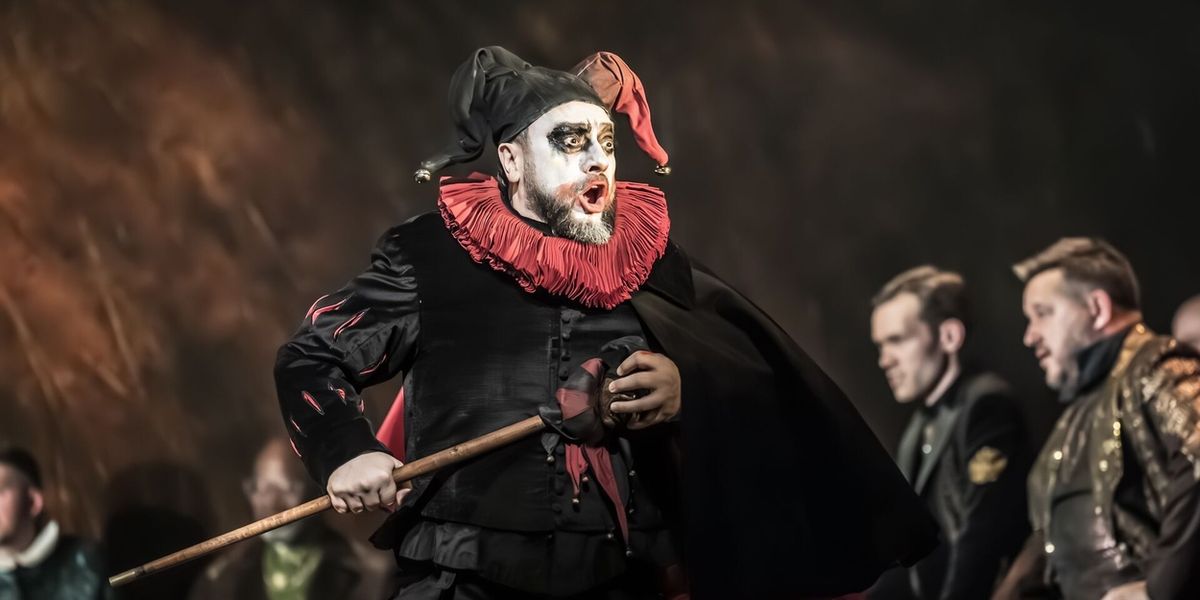
 When this Rigoletto first opened the Royal Opera House’s first full season after the long pandemic silence, it felt less like a return to normality and more like a statement of intent. To relaunch with Rigoletto, arguably Giuseppe Verdi’s bleakest work, was a bold, almost confrontational choice. This is, after all, an opera in which a young woman is roughly kidnapped at the whim of one man and murdered by another. No sugar-coating, no operatic comfort blanket. Just darkness, undiluted.
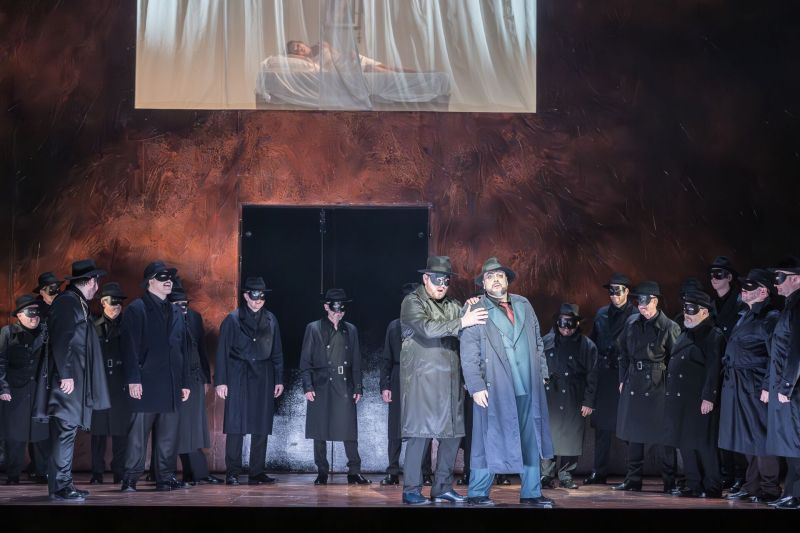
Five years on, Royal Opera House’s revival of Oliver Mears’ production has lost none of its edge. If anything, it now feels even more assured in its brutality. Back then, the audience wore masks; now, the only masks that remain are the metaphorical ones worn by the Duke and the literal ones donned by his lackeys as they abduct Gilda. It is a neat, chilling visual echo of a world where deception is both costume and currency.
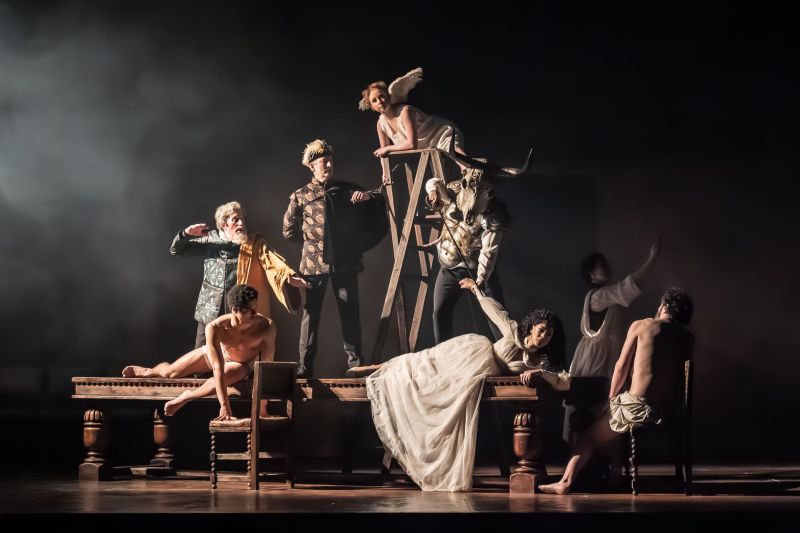
Visually, the production remains close to faultless. Simon Lima Holdsworth’s set is dominated by a wall the colour of dried blood in the kind of deeply hypnotic shade that Mark Rothko would have sold a body part for. It clings to the drama like a second skin. Later, storm clouds gather via projection, lightning cracking not just across the stage but into the auditorium itself. Allan Ramsay’s gloomy lighting pulls us into the spiralling evil. Thanks to the crepuscular palette, there is never any escape from the moral twilight of the piece.
Mears’ direction leans unapologetically into the opera’s erotic underpinnings. There is no nudity, but there is no coyness either. The Duke’s appetites are enacted in full view, his court complicit voyeurs. Maddalena’s desire is equally unvarnished, her physical urgency cutting through the score’s lyricism. These are not symbolic gestures; they are blunt instruments.
The staging’s architecture allows for a constant doubling of action. Mid-level rooms create a verticality that mirrors the opera’s moral stratification: men below conspiring, women above exposed. In Act I, a crowd of trench-coated figures silently gaze upward as Gilda undresses; in Act III, the Duke’s furious coupling with Maddalena unfolds above while Rigoletto bargains for his murder below. Sex and death, stacked one atop the other.
And the tension never relents. Where Jonathan Miller’s gangster-inflected take, recently seen at English National Opera, offered a certain stylised distance, Mears’ vision imposes a chokehold on the senses. There is no release, no ironic detachment. Just a steady tightening of the screw.
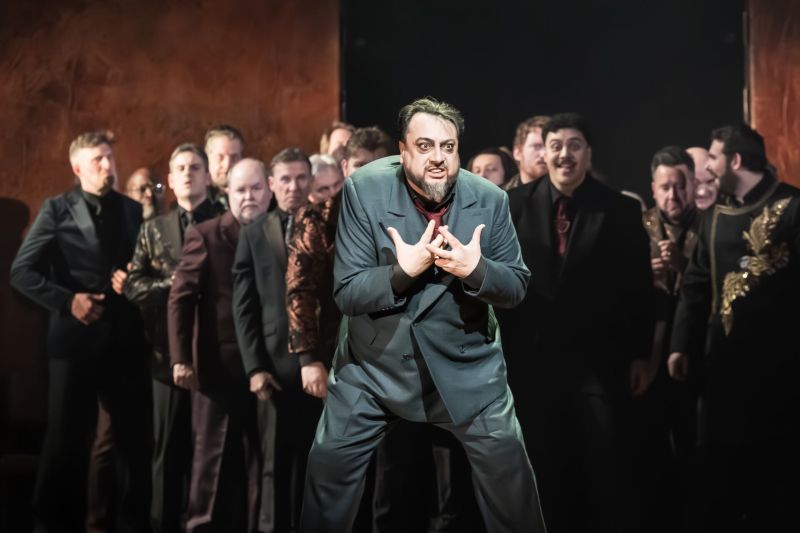
As the libertine Duke of Mantua, Peruvian tenor Iván Ayón Rivas takes Mears’ direction and runs rampant. His acting brings to the fore the high and lows of his character’s search for the next acquisition, be it in the form of female flesh or works of art. He evokes a Trump-like level of self-entitlement (particularly where it comes to women and other objects of desire) that contrasts sharply with Romanian baritone George Petean’s Rigoletto, the court jester who tries - and fails - to protect his daughter from his boss’ charms and tragically fails again when seeking vengeance.
Binding them together is the magnificent Aida Garufullina. The Russian soprano digs deep into Gilda’s dilemma, bewitched by the Duke despite her father’s pleadings. This trio of stellar performances give Mears’ superbly claustrophobic vision the dramatic ballast that it needs to stay focussed.
This is Rigoletto as it was perhaps always meant to be: a dark, sensual, unflinching study of power and its abuses. It does not ask for your sympathy. It demands your complicity.
Rigoletto continues at the Royal Ballet And Opera until 23 April
Photo credits: Marc Brenner
Sign up for all the news on the Fall season, discounts & more...
.jpg?format=auto&width=300)





Reader Reviews
To post a comment, you must register and login.