


Interview: Fiona Reid of THE TEMPEST AND THE IMPORTANCE OF BEING EARNEST at Stratford Festival
Theatre legend Reid creates joyful, imaginative worlds

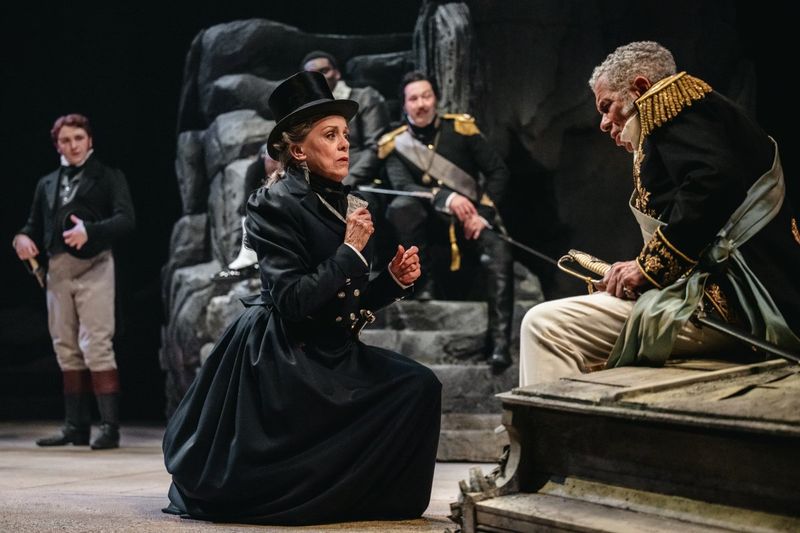
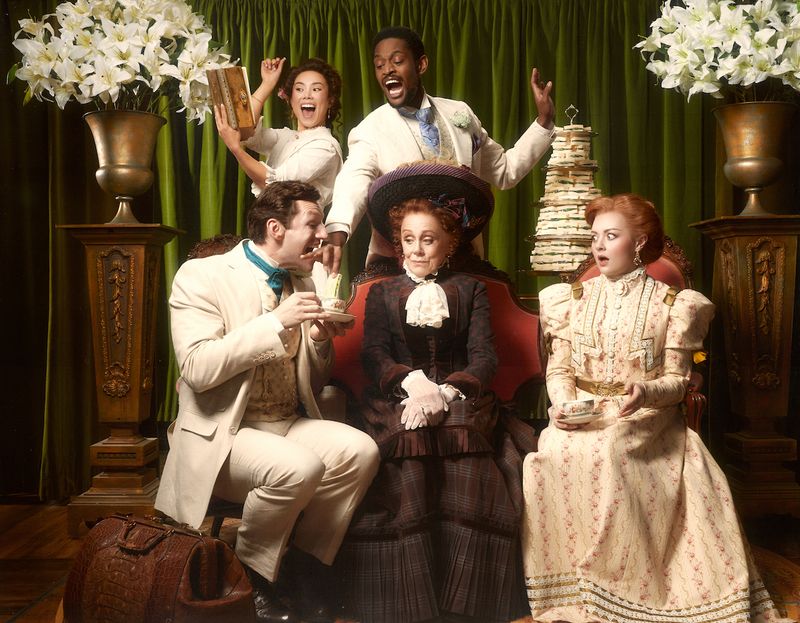
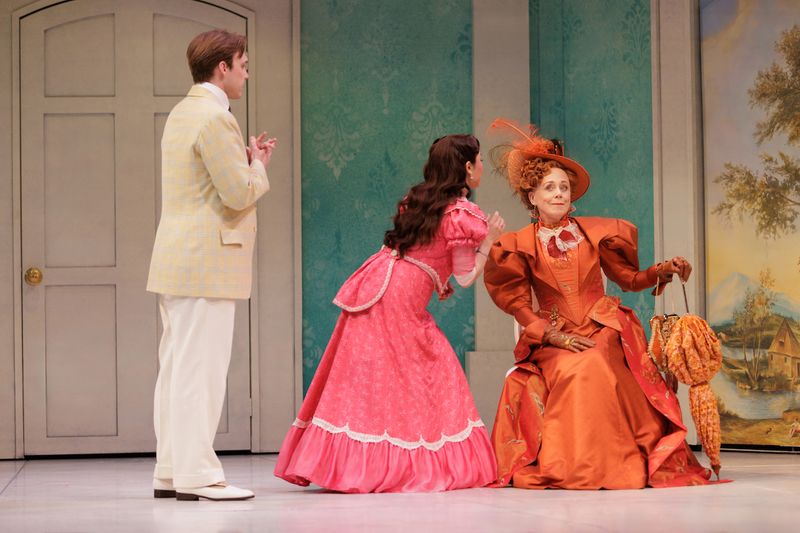
Theatre legend Fiona Reid knows when to follow the rules, and when to break them. The award-winning actor and member of the Order of Canada has delighted audiences for decades in roles ranging from Queen Elizabeth II to Sweeney Todd’s Mrs. Lovett. This summer, the Stratford Festival veteran returns in two classic plays with modern relevance, countering the hypocrisy and corruption of their times in surprising and joyful ways. In Oscar Wilde’s The Importance of Being Earnest, Reid plays the imperious Lady Bracknell, who knows that one’s appearance is everything in Victorian society. In Shakespeare’s The Tempest, she plays a gender-swapped Gonzalo, (now Gonzala), compassionate and idealistic advisor to King Alonso, who dares to imagine a more equal world.
BroadwayWorld spoke to Reid about infusing audiences with a renewed love of language, creating immersive, magical spaces, and subverting hierarchies while challenging expectations both on stage and behind the scenes.
BWW: At Stratford this year, you're playing these two very different characters, Lady Bracknell in The Importance of Being Earnest, and Gonzala in The Tempest. In many ways, they represent opposite sides of what it means to follow societal rules, because Lady Bracknell is deeply cynical, and she's very concerned with upholding all of the hypocritical social rules while exploiting their loopholes, whereas Gonzala is idealistic, and willing to abolish any rule if it's against her values. How do you approach playing within these rule-based societies?
REID: On the first day [of The Tempest], I had a few people come up to me and say, you know, I've heard this play read many times, and hearing a female voice in that character changes how I receive very much what she's saying. Gonzala is the conscience of the court, and sees their hypocrisy, and would like a world that returns to nature without commerce, without usury, without profit. So, in a way, to have a female voice saying that…I think it does change the way in which it's heard. And I find that delightful.
And then you realize what a male-centric play it is—well, so much of Shakespeare is male-centric. And just to tilt it that slight bit, I don't want to put words in Antoni [Cimolino]'s mouth, but it was his idea. I think we were all delighted by how those scenes worked, with a female voice at the centre of it. She does say a lot in Act 2, Scene 1, and we were always warned, this is the point in the play where the audience can fall asleep. So we have to make this interesting. I think we all felt that pressure. I just love our team of actors up there. I have such respect for their talent.
When I'm “asleep,” listening to Gordon S. Miller hatching the plot to kill me and the king, it's just thrilling to hear the text so well-spoken and delivered with such presence of mind and urgency. I frankly can't get over how people like Marissa [Orjalo], who's playing Ariel, and Ashley [Dingwell], playing Miranda, how naturally they speak the text. It seems native to them, and I know that’s due to the serious amount of work they did before they even came into rehearsal. They're both really hard workers and extremely talented women. I find that deeply inspiring.
Just when you think, oh, will people come and see Shakespeare still? You really hope they do, because it just lends itself to reinvention and to being rethought. I know Antoni wanted to tell the story of The Tempest in 2026. You know, he had done it in 2017, and the play just allows itself to be reinvented for whatever the political and cultural currents are of the time.
BWW: What sort of specific relevance do you think The Tempest has right now, that maybe it didn't have in 2017? What's changed?
REID: I think we're trying to find hope in a world where there's a great deal of corruption. And Prospero is on this island because he has been usurped by treason and felony. And yet he finds it in his enormous heart to educate his daughter and to exhibit forgiveness. Just when you feel all his anger and rancour at Antonio, he finds deep in his heart, as he has spoken previous to this in Act 5 Scene 1, that he knows that the greater deed is in forgiveness. The power of forgiveness, and the power of people
to redeem their past deeds. The play gives me hope, and I find a great deal of joy in both plays, I have to say. By different measures, I find a huge amount of joy. I feel so joyful and tearful at the end of every performance of The Tempest. And differently, in Earnest, I can feel at the beginning the audiences come ready for a good time. And then by the end, the utter joy that permeates the whole theatre is just such a palpable result to what we do. It just gives one a great deal of hope.
BWW: That's lovely, because I think you're very right, you know, we're living in such an age of anger. And even when most of us look to the concept of building a better world, there's still this sort of inner meanness that makes us want to take revenge on the people who have been wronging us for so many years, to break down the current hierarchy by putting ourselves on top.
REID: Yes. That message of forgiveness is, I think, a very important one. And nobody has more reason in Tempest than Prospero to exact vengeance. I mean, he does put the court through it. He certainly does visit various supernatural events on the court to make them examine their guilt and the depth of their corruption, and Gonzala gets to witness that.
The vision of [set and Costume Designer] Julie Fox on the first day just emanated such excitement amongst all of us with the world that she's created for us, this sea world of spirits and supernatural characters. You know, in many ways, we all bow down to the spirits in our play, because they do such work, from being the mariners on the ship to the fantastical creatures, they just make everything work. So they're doing a ton of physical work, and they just so generously feed what goes on on the stage, and I really admire them for their physical prowess and their singing voices and everything they do. They really are at the heart of our production.
There's no hierarchy in our production and Geraint [Wyn Davies], who plays Prospero, sets that tone, too. He's very lovely to work with. When I was first at the Stratford Festival, in the late 70s, I really felt the hierarchy from the older to the younger, and I probably didn't breathe a proper, full, deep breath the whole time I was here, and I so don't want to be that person to anybody. Now the ethos of the company is very different. We do these days of familiarizing ourselves on the first day with each other, and I found that just so moving. Everybody talked about their heritage, and where they'd grown up, and what they wanted to get out of working here, and it really did breed a kind of respect in the room that has permeated, I think, all of our work that was really refreshing.
BWW: If you think about it, that's the ethos that Gonzala is going for throughout the entire show. Lady Bracknell, not so much.
REID: That’s true. Lady Bracknell really wants to preserve the social hierarchy. Gonzala says, what if we had a world without that hierarchy. Lady Bracknell, the only thing that redeems her is that, in spite of all her pronouncements, she's an utter hypocrite, such as when she says things like, “I do not approve of mercenary marriages. When I married Lord Bracknell, I had no fortune of any kind. But I never dreamed for a moment of allowing that to stand in my way.” Wilde is just such a master of people saying the opposite of what they intend, and irony, I suppose, in the truest sense of the word.
It's just a joy, that he wrote a perfect play, and it's a challenge for us to come at such long sentences and such beautifully arrayed thoughts, to do them justice, and that's what we've worked so hard at. Again, I'm just bowled over by the work of my peers. It's just delightful to be in their midst. So, we're really having fun, and I'm hoping the audience is too.
BWW: And what Wilde is really trying to do is expose that hypocrisy between the Victorian public face and private face.
REID: That's right. So, I mean, how does that apply to today? Because we feel like we've knocked down all the barriers. But, we still have expectations of the older generation to the younger generation, of appearances versus what is essential to a person.
Lady Bracknell says about her nephew, “he has nothing, but he looks everything,” as if that should be enough. And you will still find people all over the place marrying for what they think is either position or influence or advancement. I suppose, ultimately, Wilde was writing a play that speaks to the triumph of love over expectation and convention.
I thought the Steven Fry movie about Wilde was really beautifully done. Anything I’ve ever read about Wilde…It’s just so tragic, and so moving, because he was one of the most brilliant playwrights to ever live. There are playwrights of the 20th century that you look at and you say, would they have existed without Wilde? You know, could Coward have existed without Wilde? He's just a genius.
BWW: To me, when I think about the relevance of the public versus private face, it actually feels almost more relevant today, with our online avatar social media lives. You say, “He has nothing, but he looks everything.” That's social media for you in a nutshell; everybody is promoting this face.
REID: You're watching something on television, and you're judging the background. Where do they live? Oh, that's a nice kitchen counter. Oh, well, where did you get that money? You know, all that. We've certainly not evaded superficiality, And while the play has a lot to say about superficiality, in many ways, I think we've reinvented superficiality.
We’re subscribing to something that is fashion, that is ubiquitous, and where's the individual in all that, you know?
BWW: I think no matter what generation, we're all slaves to trends, and wanting to be cool, and wanting to stand out in society.
REID: I hope that I don't become judgmental, because I do always slightly inhabit my character, so hopefully Gonzala will mitigate Lady Bracknell’s worst tendencies. My mother always would say, “judge not that ye be not judged,” which is a religious admonition, probably, from the Bible, but if I'd read the Bible, it would help, wouldn't it? But it's true. You only judge things in others that you are afraid of in yourself. I'm convinced of that. So every time I find myself judging I think, okay, what are you so afraid of?
BWW: That's probably true for Lady Bracknell as well.
REID: I have this theory that actors, if they are good actors, are better at playing their opposite. So I do think it doesn't hurt to have a heart and play Lady Bracknell, because I don't see her as brittle. I see her as passionate, and wrong-headed, but I don't see her as brittle. Because she has insights that indicate she's very mischievous.
I mean, when she says to Algernon, “I hope you're behaving very well.” And he said, “Well, I'm feeling very well, Aunt Augusta.” She says, “Well, that's not quite the same thing. In fact, the two things rarely go together.” I mean, she knows where from she speaks, and I think she's utterly bored with Lord Bracknell. So, presiding over young people's lives is far more interesting than sitting at home with him.
BWW: One of my favorite lines from the play is when they’re talking about an older woman who's lost her husband, and say “Her hair has gone quite gold with grief.”
REID: Yes, Algernon says that, and then I say, “It certainly has changed its color. From what cause, I, of course, cannot say.” That still isn't getting the titter that I wanted to get, so Carter [Gulseth] and I are still working on that, because sometimes the stuff that I think is the funniest doesn't get the biggest laugh, but they can't laugh at everything. So, very often it depends on the weather that day.
It's like the waves of the ocean as they come into the shore. You're going to get a certain cascade of waves, but you're not going to get exactly the same measure of wave that you got the day before, and so that day has its own configuration. It's definitely a sea current of laughter, so you'll win some, you'll lose some, it's just the way it goes.
BWW: Comedy often ages very quickly. A lot of comedy is very of its time and place. What do you think makes Earnest such an enduring comedy that we're still laughing at it over a hundred years later?
REID: Deep insight into human nature. When Jack says, “Miss Cardew does not come of age until she's 35,” and I say, “Thirty-five is a very attractive age. London society is full of women of the very highest birth who have, of their own free will, remained 35 for years,” I mean, that's as true today as it was in 1895.
“All women become like their mothers, that is their tragedy. No man does, that's his.” Yes, that's gender stereotyping, but there's got to be something true in it. That's why people laugh. People laugh at the truth.
And it's just so clever. It's ridiculously clever. It's so clever that I am inordinately nervous before I go on stage, because the director told me the other day, which I hadn't realized, that Lady Bracknell has more lines than anyone in the play, but she doesn't appear, time-wise, in a lot of the play. So, when she comes on, she doesn't stop talking. And now that I know that, it makes me nervous. I would be nervous anyway.
I have to be supremely ready to be in the present, and to have my tongue in the right place. We do these wonderful warm-ups beforehand. You get such support here, it's an incredible place for an actor to work because of the degree of support that you get from vocal coaching and text coaching, so that we don't need to be miked.
That's my latest bugaboo. If you're speaking from your feet to your head, then you're speaking with all of yourself, and you don't need to be miked, If one becomes overly reliant on miking, the performance is filmic. You can see it. The sound comes from the head, and it's not informed by the body. Musicals have a different approach, because they are so physical anyway, but for theater, for the spoken word, I lament the fact that now you see more and more miking from the stage.
When I went to see shows in New York in November, sometimes it was just a matter of the miking being, on the one hand, intimate, but on the other hand, me not feeling it was that person speaking it? How do you feel about that?
BWW: I think there's always a level of remove when you hear something processed through a speaker. You're right that musicals have a different challenge, because in a play you're generally not fighting against an orchestra. I think sometimes we get quite lazy with miking whole productions, because I've seen musicals where everything's miked, but the sound balance is still so bad that I lose entire numbers. And I think, how did we get to this point when you have more sophisticated sound equipment than we've ever had? But someone can still stand on the stage at Ephesus, and be heard by 2,000 people.
REID: I went to a production where the sound actually cut out. And they were doing very small performances. They were literally just talking to each other. And I guess maybe the director wanted that, and that's why he wanted them miked, I don't know, but…I love to see an actor speaking with all of their body. I just find that It's an extraordinary skill. And I just hope we don't lose that.
BWW: Something that's very important to theatre as a unique medium is that the audience is always included in a way that they're not in any sort of filmed medium. And so, if the actors are truly only talking to each other and having a private conversation, you feel like you're left outside the door. You don't feel that way when you're watching it on a screen, because you know that you're kind of a voyeur looking in.
REID: Well, and the camera tells you where to look and who to focus on. In recent shows in New York they’ve used an innovative form of miking with GPS, so that wherever you were, it sounded different. It was able to place where you were, which is often what's missing. You hear the sound, but you don't know where it's coming from. This was specific to where the actor was in space, and so that must be easier on an audience. The other thing is the actor has no control. You have no idea what people are hearing or not hearing. I mean, we're all pretty much ambient miked, that's just a general thing. That happens everywhere. Where there's sort of ambient miking at the foot of the stage. So, there's already a bit of an enhancement. Do you think people know that?
BWW: I don’t know. Maybe we shouldn't tell them. Preserve the magic. Speaking of magic, both of these plays deal with locations where people are away from the reality of their day-to-day lives, whether it is in the country where you go “Bunburying,” or on this island of magic. These are worlds where characters are creating illusions. How do you feel that connects with the theatrical experience that the audience is having?
REID: There's a kind of theatre where they'll put the house lights up on the audience, and the audience is as present as the actors are. As an audience member, I like to sit in the dark and imagine a whole other world. That, to me, is the true magic of theatre. Please put me in the dark, so that I'm not self-conscious as an audience member.
These are two entirely different worlds, but they are both magical worlds, in that there is very little day-to-day reality. Tt's as far away as you can get from kitchen sink drama. And hopefully that’s an adventure for people.
When I look at our world of Earnest on the TV monitor backstage, it's so bright and beautiful and the costumes are beyond what I could ever have imagined, in terms of lushness and colour. So it's just an opportunity, as is Tempest, to completely immerse yourself in other universes—which, of course, inform our own. That's how we all appreciate and learn things, I think. I mean, hopefully we can bring back some kind of joy in the written word, and in wit, because texting has reduced the way we express ourselves so much.
So, if Shakespeare and Wilde can induce a love of language by creating these worlds, then that would be a tremendous thing. And so when there are young people outside the theatre, you know, that are just in university, who have loved either play, and children, too, for whom Tempest might be their first Shakespeare, it really does make you value every performance. And realize that this could be somebody's first time at the theatre.
I think it's about creating magical kingdoms for people. Because it's only by showing a different world that one can bring new ideas into our world. We don't have to show people what's familiar for them to launch themselves into that world. If anything, it should take away inhibitions to be able to be in that world.
BWW: I look forward to joining you in these magical spaces!
The Tempest runs at the Festival Theatre until October 24.
The Importance of Being Earnest runs at the Avon Theatre until October 23.




|
The Porch :itâ kâ-wasêtêki tâpwêwin Assembly Theatre (10/21-10/25) |

|
Roses & Thorns Comedy Bar (11/06-11/27) |
|
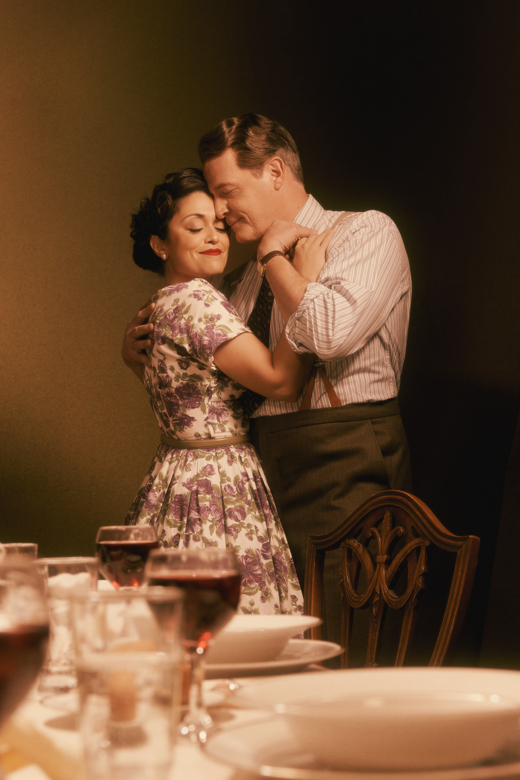
Saturday, Sunday, Monday Stratford Festival (8/04-10/24) PHOTOS |

|
The Second City Toronto: Mainstage Comedy 92nd Revue The Second City (8/18-10/04) |
|
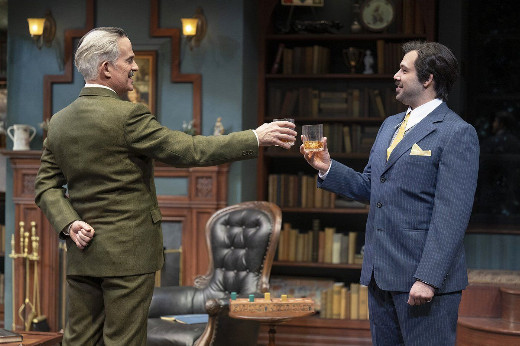
Sleuth The Fleck at Harbourfront Centre Theatre (10/16-11/01) |
|
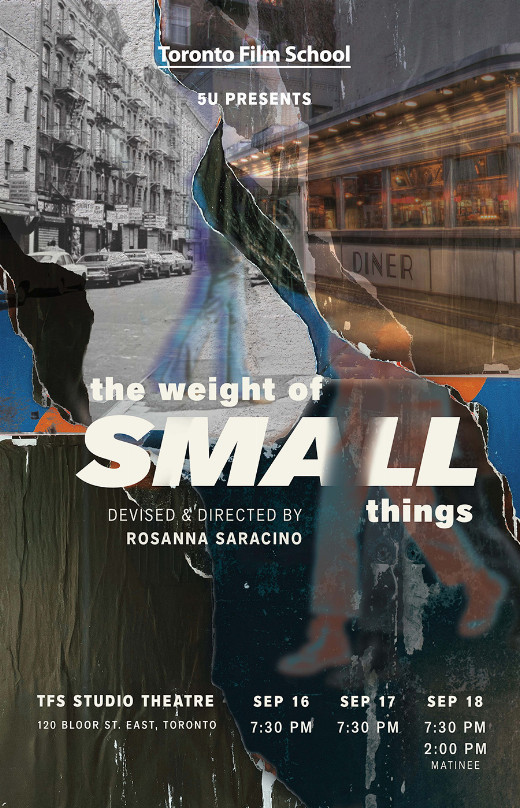
The Weight of Small Things TFS Studio Theatre (9/16-9/18) |

|
Valentine's Bachata & Social Dance Night | Access Ballroom Toronto Access Ballroom (2/13-2/13) |
|
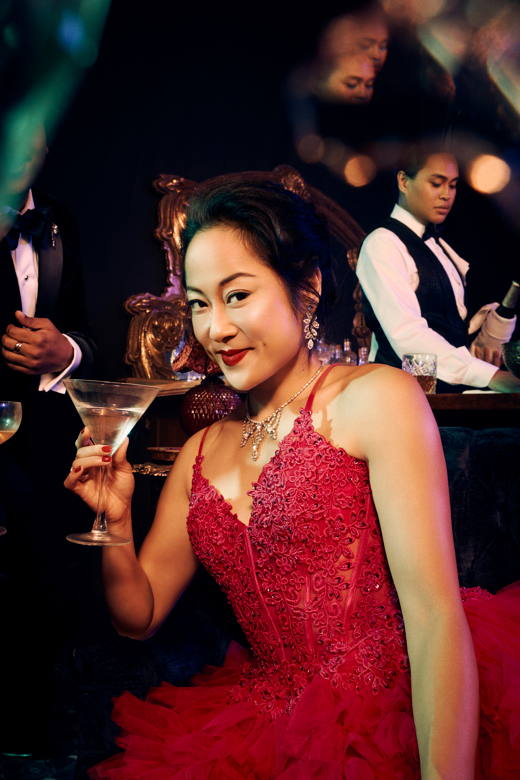
The Tao of the World Stratford Festival (8/02-9/26) PHOTOS |

|
Get Down Tonight! Marsh Street Centre (10/14-10/17) |

|
Sex in the '80s Canadian Stage (1/16-2/07) |
