


Review: MY LORD, WHAT A NIGHT is a timely historical drama at Penguin Rep
Marian Anderson Meets Einstein, and the Rest Is History
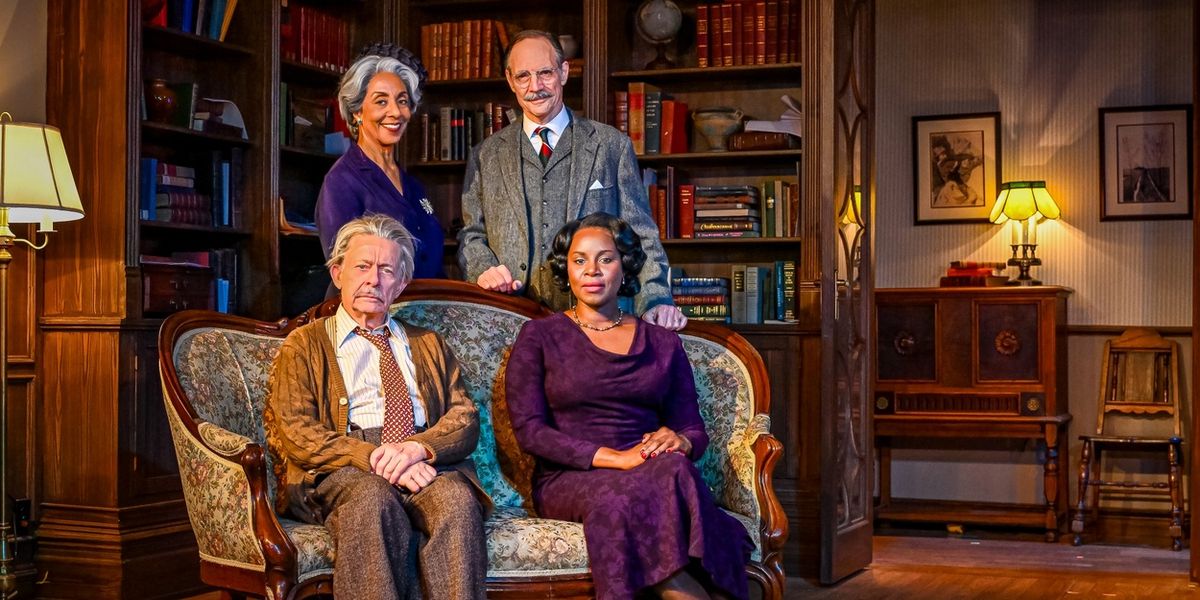
I’m a sucker for the history of it all. On the page, on the stage, on the screen, if it’s historical, they had me at “once upon a time,” so to speak.
And so it is with the fact-based stage play “My Lord, What a Night,” by Deborah Brevoort, directed by Joe Brancato, on the boards through June 7 at Penguin Rep in Stony Point, New York.
It might seem a classical singer who happens to be Black and a mathematician make an odd couple as principals in a play, but when the vocalist is the statuesque talent Marian Anderson (Shirine Babb) and the scientist is one Albert Einstein (John Leonard Pielmeier), well, then, the pairing might seem odder still.
Ms. Brevoort transports us first to 1937, then, in Act II, 1939, inside the Princeton, New Jersey, home of Mr. Einstein, where he is the marquee attraction at the university’s think tank named the Institute of Advanced Study.
For the writer’s provocative and well-crafted material, she delves into a famous incident where Ms. Anderson, a marquee attraction in the world of music, has been unceremoniously refused lodging at the Princeton hotel where she just had performed earlier that same evening.
To the rescue comes the utterly unself-conscious, gnomic presence whose brand is Genius and whose cause is Human Rights, wherever they may be endangered. He offers the singer lodging for the night at his Princeton home.
The supporting characters are the Institute’s founder, Abraham Flexner (Sam Guncler), and a civil rights activist, Mary Church Terrell (Nora Cole), from the emergent National Association of Colored Women. The play’s title refers both to the eventful evening where the animated foursome debate how best to prosecute prejudice, and to the name of a Black spiritual that is briefly sung by Ms. Anderson.
Using these true-to-life circumstances, the playwright economically and compellingly weaves together inter-connected themes of racial intolerance, anti-semitism, the connective tissue tying music to math and advocacy, and even a nascent nuclear arms race on the eve of World War II. How more topical can a play be?
The four-person cast (all Actors Equity members), guided by veteran director Joe Brancato, find the central truths of their characters’ motivations and their conflicted priorities, with the idealism of righteousness warring with the pragmatism of survival.
The most conflicted are Marian Anderson and Abraham Flexner. She wants to do right by her race, by using her stature to push back against the widespread prejudice that marginalizes Blacks at every turn.
But it’s not so simple. As her manager, legendary impresario Sol Hurok, advises her (unseen, by phone), she risks jeopardizing her successful career by having her concerts canceled if her words and deeds become too politically charged.
Yet, this is the late 1930s, and in benighted precincts of the country – including Washington, D.C. – all a Black person need do to be censured is be Black. That’s what happens when the singer is prohibited by the Daughters of the American Revolution (DAR) prohibit her from performing inside Constitution Hall in the nation’s capital.
Ms. Babb doesn’t hit a single false note as legendary singer and civil rights icon Marian Anderson. She is a commanding presence on stage, effusing class and an iron will. The only cavil I have with her singing voice is we don’t get to hear nearly enough of it, but what we do hear is heavenly.
Parallel to Ms. Anderson’s plight is that of Abraham Flexner’s. He, like Mr. Einstein, is a Jew who must suffer the slings and arrows of two constituencies: gentile colleagues who stand vigil over how many Jews are allowed in the faculty at Princeton, and Jewish colleagues who browbeat him for not pushing back against the university’s miniscule quota on Jewish enrollment (reportedly capped at about 3% of the student body).
As with Ms. Anderson, Mr. Flexner is covetous of his livelihood remaining intact, ever mindful that his causing controversy could cost the college, literally, in lost funding from philanthropic anti-semites. (Mr. Einstein calls such people “money devils.”)
Mr. Flexner also is not sanguine about Marian Anderson staying at Albert Einstein’s Princeton house, fearful of what today we would call “optics.” Imagine that: a Black entertainer “mingling” with a Jewish genius. Call out the National Guard.
As Mr. Flexner, Sam Guncler strongly conveys the perplexity of his situation: managing a stiff dose of Jewish guilt for his complicity in the university’s restrictive Jewish policy, which is imperative to protect the critical funding that supports his Institute. Amidst all this, he also must not alienate Mr. Einstein.
The least conflicted and most resolute of the foursome are Mr. Einstein and Ms. Terrell. Where Marian Anderson and Mr. Flexner embody the wages of pragmatism in clinging to their compromised positions, the mathematician and the singer embody the rages of idealism as they stand their ground with steely resolve.
As Ms. Terrell, Nora Cole makes an impressive foil for Ms. Anderson, as she implores the recalcitrant singer to use her formidable influence to fight back against the ignorance of hate. “This is bigger than you,” she tells Ms. Anderson. Ms. Cole projects the confidence and certainty of a battle-hardened ideologue who bounces back up no matter how many times she is knocked down.
“My job is to be Albert Einstein,” says the near-mythical avatar of what we think of as genius. The playwright makes effective use of him as a plain-spoken vessel of wit and wisdom.
His head may be above it all, a pate where lofty insights alight on his grey matter, but his empathy could not be more earthy and earnest. Mr. Einstein states, simply, “Where there is an injustice, I get involved.”
Mr. Pielmeyer is as believable an Einstein as you’re likely to see on stage or screen. It would be too facile to call his interpretation a lovable curmudgeon. Anyone essaying the role could be tempted to play the caricature. Suffice it to say, this Einstein is not a product of artificial intelligence but, in the hands of Mr. Pielmeyer, a very genuine, organic intelligence. He is tremendous fun to watch.
The wonderfully rendered simulation of Einstein’s study is by scenic designer Christian Fleming. Jason A. Goodwin has outfitted the cast in perfectly evocative period wardrobe.
Ms. Brevoort threads the strands of the analogous themes of human rights violations – also invoking what is festering in Nazi Germany -- in a clean, lean style that is as engaging as it is enlightening. Mr. Brancato’s forthright, clear-headed directorial style is a fine match for her straightforward approach. In the end, there is serendipity in all of the characters finding fulfillment. The emotional power of the play’s final vignette, of Marian Anderson singing in front of the Lincoln Memorial on Easter Sunday 1939, is heightened by the lighting design of Cameron Filepas, as it is in a poignant interlude where Mr. Einstein is despairing over the newfound discovery of splitting the atom to create a uranium-charged nuclear warhead capable of total annihilation.
The writer’s storytelling reminds us that, ninety years after these circumstances occurred, we have not lost the innocent capacity to be aghast at how corrosive and inhumane members of the human race can be when we surrender to lazy, willful ignorance. It’s easy to hate. It’s hard to understand.
Joe Brancato is artistic director and Andrew Horn is executive director of Penguin Rep Theatre.
Photo > Dorice Arden Madronero


Sign up for all the news on the Fall season, discounts & more...


|
I Hate Hamlet Elmwood Playhouse (9/18-10/10) |

|
Sordid Lives Veterans' Memorial Building (10/22-10/25) |

|
Norbert Goldberg trio Jazz On Main (12/12-12/12) |
|
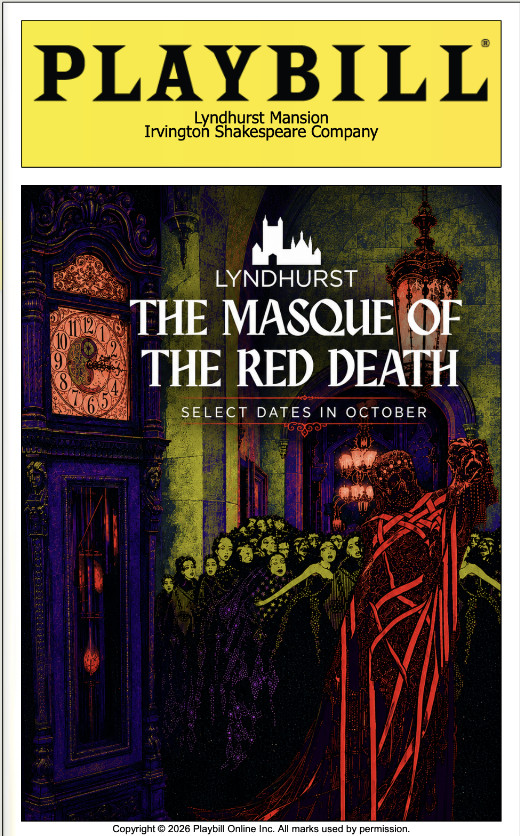
Masque of the Red Death Lyndhurst-Theater-36 (10/15-10/30) |

|
The Victor LaGamma Jazz Quartet Jazz On Main (12/03-12/03) |
|
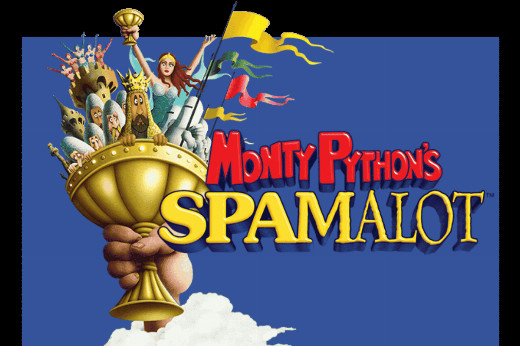
Monty Python's Spamalot The Play Group Theatre (1/16-1/24) |

|
Westchester Collaborative Theater (WCT) Presents Terror Tales Chilling Stories of the Macabre - A Halloween Short Play Festival October 23 - November 1 Westchester Collaborative Theater (10/23-11/01) |

|
The Real Thing Katonah Classic Stage (10/22-11/01) |

|
Keeley Mitchell & The Burr Johnson Band Jazz On Main (10/10-10/10) |
|
Hey Rim Jeon & Friends Jazz On Main (10/17-10/17) |

Reader Reviews
To post a comment, you must register and login.