


Review: INTO THE WOODS We Go Again at Dr. Phillips Center For The Performing Arts
We’ll keep coming back to the Woods, not because we have forgotten what transpired here, but because we have changed since our last time into the woods.
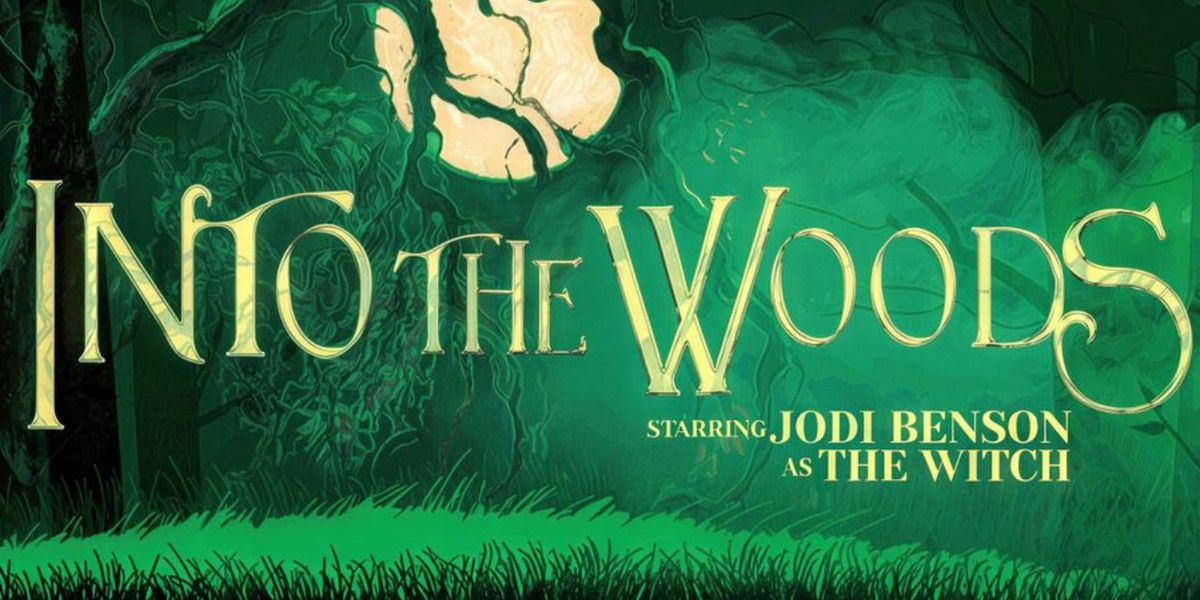
When INTO THE WOODS first graced the American stage in 1987, the concept of an epic, all-inclusive universe for various and different intellectual properties must have seemed largely alien to audiences. This was long before the days of comic-book-movie crossovers; this was a more innocent era when the most exciting merging of fictional universes saw Jessica Fletcher of “Murder, She Wrote” going to Hawaii for an episode of “Magnum, P.I.” Thus, even by the most conventional standards, INTO THE WOODS was innovative by its premise alone. It asked the audience to believe that these disparate fairy tales, all of which lived and breathed within their own, separate “Once Upon a Time”-iverses, could conceivably take place at the same time and not only share a setting, but share characters and interact in ways they had not before. No less than six fairy tales are unfolding on this stage, including an original one written specifically for INTO THE WOODS.
Wait, haven’t I said this before?
While it has been three years since I last saw INTO THE WOODS at the Dr. Phillips Center for the Performing Arts, it’s only been a year since I’ve seen a production of that musical. Last September, I trekked up to the Ocala Civic Theatre for their monthlong production of the show. As my dear friend Caleb Spivey was in the cast as the Baker, I could not objectively review it, attending instead as a spectator. However, this weekend’s revisitation of INTO THE WOODS at Dr. Phillips Center has led to a unique, serendipitous opportunity to allow myself to write a bit about that production in part to how it relates to this one, headed by Jodi Benson of The Little Mermaid fame. Both approaches to INTO THE WOODS allow the audience to enjoy the material in wholly unique ways.
One of the greatest joys of experiencing live theater comes from the ability to revisit a past show through a new lens. When shows are revived or a new company mounts their own production, this allows newer voices to put their stamp on timeless material. The hallmark of any timeless story is its ability to transform and adapt with the changing times. Part and parcel with this is a willingness to step out of one’s comfort zone in order to provide a new emotional truth to material that is both familiar and unknown. Ocala Civic Theater’s approach to INTO THE WOODS framed it as a child running away from home, using her toys as playtime – this action figure is the Baker, this stuffed animal is the Witch, etc. – while she was alone and scared in the woods. It reframed INTO THE WOODS and its various crossovers as the storytelling playground of a child’s mind, a coping mechanism for dealing with trauma and strong emotions. This made the denouement of that show – when the child’s father finds her after searching all night – even more of a tearjerker happy ending than the original material was.
Dr. Phillips Center’s production likewise frames INTO THE WOODS through what we assume is familiar. We have the traditional Narrator (Rasheem Ford) sitting down in his armchair to read us our bedtime story. And yet, as is wont to happen in Act Two, the Narrator is removed from the narrative. We lose the guiding light that is expected to take us to the Happily Ever After that fairy tales should end with. In its place, Act Two of INTO THE WOODS becomes fairly existential in its own Six Characters in Search of an Author kind of way. All of this will always happens in every stage production. The fourth-wall-breaking moment and the chaos that follows has been written into the libretto since 1986. It still shocks audiences, though, because of how well it serves as a commentary on the nature of storytelling. With this production of INTO THE WOODS, though, there is additional stage activity at the conclusion that suggests a new reading of that fourth wall. Upon the conclusion of the entire show, the performer for Cinderella (Kathryn Nash), who had picked up the Narrator’s forgotten book by the end of Act Two, rushes to the side of the stage to place that book back on the shelf. As if to say, “We know this has happened before. We’ve done this a thousand times.”
It’s clever beyond compare. This final act on the stage turns INTO THE WOODS’ approach to fairy tales into a Hadestown type of read. These characters may have been aware, all the time, that they’re fictional. That they are part of what I, in 2023, called the Great Lie of the show. They know they are fated to go through this version of these stories again, but do so with the understanding that whether it be the first or the fortieth time, it’s always done as fresh and as new as possible. It embraces the familiarity of the material by asking the audience to look for the clues along the way to the circular nature of INTO THE WOODS. How effect leads to cause when we least expect it, whether it be in the intention behind a line delivery, or the color filter to suggest certain emotions.
Our familiar story begins in with those same three households: Cinderella (Kathryn Nash), Jack and his Mother (Jonah White, Christine Brandt), and the Baker and his Wife (Jeffrey Correia, Katie Whetsell). Each one has a wish that they’d like to see fulfilled, whether it be attending a Festival, for a barren cow to produce milk, or for a barren wife to produce a child. The Witch (Jodi Benson) visits the Baker and makes a deal with them: if they can get her certain ingredients, she can use them to remove a curse upon his family, whilst also giving them the child they so desire. Jack, unfortunately, may not get his wish as his mother has sent him to town to sell his beloved Milky White, a cow no longer producing milk. And Cinderella, in the more traditional of the fairy tales, wishes to go to the ball and gets it granted thanks to the magic of her deceased mother in an oak tree.
Crossing over into these storylines is the tale of Little Red Riding Hood (Amy Reid), who stops by the Baker’s on her way to visit her Granny (Stefanie Diaz). Red encounters the Big Bad Wolf (Thomas Bradford), who impersonates her grandmother in order to eat her. The Baker, on his search for the four objects to lift the curse, finds the Wolf, and cuts him open to free Red and her Granny. Meanwhile, Jack is conned into selling his cow to the Baker for magic beans, although a beanstalk that grows from the discarded beans leads him to riches beyond the dreams of avarice in the Giant’s world upon the sky. The Baker’s Wife, trying to assist her husband with their shared plight, encounters Cinderella leaving the ball on its first night. The Prince tries to find her, wanting to know the mysterious maiden who would run away from him.
As if that weren’t enough crossovers to keep track of, we also learn that the Witch – who had taken the Baker’s sister to raise as her own in exchange for the vegetables their father stole from her garden – has kept her daughter Rapunzel locked in a tower, isolated from the world except for her company. The Prince’s brother has also encountered Rapunzel as well, wanting to rescue her from the tower and her oppressive upbringing. The stories all converge together by the conclusion of Act One with the “Happily Ever After” that allows the characters to get what they wished for, even after several trials and tribulations to get there. But we still have another act to go, which means these characters must now live with the consequences of their actions, and the satisfaction that came with it.
As mentioned before, this is still INTO THE WOODS as we know it from 1986. The libretto has not changed one word. The set design and direction all point towards a traditional telling. One that reminds its audiences: you’ve probably seen this before, enjoy the comfort of that familiarity. Yet what I found so fascinating in director Kristen Sheola’s approach was how to turn that very familiarity into an invitation to deconstruct why it’s so timeless. Nostalgia is a powerful drug, so fairy tales become the opium of the masses, so to speak. And yet, even with this familiarity, Sheola invents a new reading of INTO THE WOODS by asking the audience: what if these characters were in on it? What if they already knew how their stories would play out? It’s subtle, a very precise reading that I could only detect through the way they delivered particular lines. As someone who’s fairly familiar with that material, it made it easy for me to sense when a line was said with that knowing sense of “Let’s see what happens this time.”
This meta approach to INTO THE WOODS becomes especially apparent in a trifecta of lighting choices during three key songs in Act One. “Hello, Little Girl” alternates traditional stage lighting with an occasional red filter during the Wolf’s inner monologue within the song. A few songs later, “It Takes Two” gets bathed in purple as two characters, the Baker and his Wife, sing about how they have changed for the better and are now working together to reach their goal of a child. Later, as Cinderella has been running away from the ball once more, a softer blue hue gets used during “On the Steps of the Palace.” All three songs – and their lighting cues – create an emotional formula for childbirth. Red signifies the desire, Blue becomes the drive, and meeting in middle as both colors converge is Purple as the final solution. Again, this is INTO THE WOODS telling us effect becomes the cause. Sheola and lighting designer KJ Sales recognized how these three separate arcs come together, just as all the stories interweave together.
Various other little touches throughout the production also helped to reinforce this “Play it again, Sam” reading of the material. The three cottages we encounter at the beginning of the show are intricately designed, almost as if they had been a Little Golden Book illustration come to life. By the second act, the improvements (reflecting the good fortunes of each household) change these cottages from quaint illustrations to more dimensional mini-sets. And yet, it’s these very same sets that get “destroyed” in a sense when the Giant’s Wife comes a-callin’. Their very destruction serves to show the audience that nothing lasts forever, not even in fairy tales. We have to learn to let go of the familiar, to make way for tomorrow and all its undiscovered possibilities. The Woods as a set piece can be inviting, can be dangerous, and can be comforting. But it doesn’t stay the same throughout the show, allowing us to recognize that we may know this material, we may have encountered it before on other stages or on the screen. Yet this version, in the immediacy and impermanence of Today, will only exist for a couple hours.
That’s why when it came to the performers, each one found a way to turn their character into a genuine approach to the story – for newcomers in the audience – as well as a commentary on their own inability to deviate from their story. Much of the cast of INTO THE WOODS are Florida locals, pulled from the wide talent pool of theme park entertainment and local theater companies. I must have recognized about eight names that I’d reviewed in previous productions over the last few years. As a result, that familiarity also becomes a somewhat meta-commentary to how this version of INTO THE WOODS invites audiences to accept a different reading of the same material. I had actually suggested to my friend Caleb (of the Ocala Civic Theater production) that he audition for this version in order to play the Baker again under new circumstances. He would have auditioned, too, if his work schedule hadn’t been so busy. Yet he also wanted to experience the show not from within it, but from the lens of a theatergoer. When you’re on the other side of the proscenium, you see that world differently, after all.
The Baker at this production was now interpreted by Jeffrey Correia, who’s a mainstay at Disney Animal Kingdom’s Finding Nemo stage show and already impressed this reviewer in the two-part Theater West End production of Angels in America. Correia differed from my friend Caleb, and from 2023 National Tour portrayer Sebastian Arcelus, by giving the Baker a more “cinematic” approach to the role. On the stage, line delivery and emotions are heightened. Part of the practice of “playing it to the rafters” as one might say. However, Correia gave The Baker a more intimate approach. While he still projected as necessary to fill the acoustics of Steinmetz Hall, his delivery felt much more attuned to on-camera performance. Inviting the audience – even those of us in the upper balcony – to lean in and get to know his character as if he were in a close-up on a silver screen. It’s as if his version of the Baker knows that the right way to tug at the audience’s heart is to pull them closer to him through a more naturalized performance.
This served as counterpoint to Katie Whetsell’s portrayal of the Baker’s Wife. Where he is cinematic, she is stage. She portrayed the character with the same kind of presence and comfort that Joanna Gleason gave to the role in the original Broadway run. A mother wanting the best for her child – both before it ever was born, and in its early, vulnerable months. And she also made sure to give the role the theatricality that comes with it. The way she mutters “I’m in the wrong story!” with her encounter with Cinderella’s Prince felt very much like someone who’d done this line before and was finding a new way to perfect it each time. Of course, Whetsell also gets the benefit of singing my favorite lines in the entire musical: “Sometimes people leave you halfway through the wood / Do not let it grieve you, no one leaves for good” I’m always a crying mess by the last fifteen minutes of INTO THE WOODS, and Whetsell ensured I’d still be blubbering when she was singing those lines.
Honestly, the vocal delivery within Steinmetz Hall is a prime reason why more musicals should be staged in this space. We’ve seen Hello, Dolly! and The Hunchback of Notre Dame here in past productions. INTO THE WOODS joins that lineup. Imagine if a choir-heavy show like Les Misérables were mounted in this space. Or The Prince of Egypt. Or Show Boat. Much of my enjoyment of this rendition of INTO THE WOODS stemmed primarily from using Steinmetz Hall as its venue. Its fifteen-piece orchestra, conducted by Broadway’s own Benjamin Rahaula, sounded like an ensemble twice its complement. In addition to Correia and Whetsell’s vocals, much of the cast also were able to make the music soar in Steinmetz Hall.
In particular, the Two Princes as played by Thomas Bradford and Seth Walker managed to make the most of their vocal range in this theater space since their duet of “Agony” requires big, baritone belters. Bradford and Walker are also pretty much trapped with a limited amount of choreography for the number – which they do with such exaggerated flourish so they can do something – that it’s the vocal performance the audience remembers. Bradford’s approach to both the Wolf and Cinderella’s Prince allowed him this opportunity to turn “Agony” into the audience-pleasing number, while Walker’s depiction of Rapunzel’s Prince in this same scene gives the required “Little Brother” energy to compete and match with Bradford’s performance. I still find the characters of Cinderella’s Prince and Rapunzel’s Prince fairly useless in the grand scheme of INTO THE WOODS, but always delight in seeing how their portrayers – this time, again, in Thomas Bradford and Seth Walker – manage to turn the ridiculous roles into memorable ones. And, again, it feeds into the theory that these characters have done this before. They know their roles are tertiary to the plot, so they will milk it for all its worth.
If there is one character, though, that is most essential to the plot of INTO THE WOODS, it’s the Witch. My previous review noted how Jack and Cinderella are the most developed characters across both acts of the musical. They embody, after all, the narrative course of the Hero’s Journey for Jack and the Heroine’s Journey for Cinderella. However, when it comes to INTO THE WOODS’ plot, and all its intricacies and crossovers, the Witch reigns supreme. She’s got her finger dipped in different pies, she’s manipulating characters to suit her needs, and she’s also the one who has the most sense of everyone. “I’m not good, I’m not nice, I’m just right,” as her famous line in “Last Midnight” goes. Every production of INTO THE WOODS is always an ensemble production, but they have to do right by the casting of the Witch in order to depict a character who must be viewed as a villain in Act One, but becomes just as much a victim by Act Two. Her peripatetic shift from an antagonist to a casualty must be believable in order for the Sondheim’s thesis of this play to work. With my reading of the play as “Maybe they know they’re in a story” in mind, it makes the casting of Jodi Benson as the Witch an intriguing and ultimately advantageous one.
Jodi Benson may be a renowned stage and screen performer whose iconic turn as Ariel in The Little Mermaid made her a household name for Disney audiences, but she also has a unique perspective when it comes to INTO THE WOODS. Namely, in her unfamiliarity with it. The forty-year-old musical has remained popular with audiences, but Benson admittedly only ever saw the original production and has otherwise not revisited it until her performance. As a result, she brings a much fresher take to the Witch. One that isn’t steeped in reverence and homage to what had been done before. She looked at the material and drew a performance based on the text and her own introspection. It allows for her to put her own stamp on the role, while delivering to audiences a dramatic rendition of the Witch in a new light as well.
In a word, she is marvelous. She hones in on the character’s maternal instincts more than other depictions, making her more sympathetic. Through her performance, we have a fresh and inspired reading on the sacrifices one makes in parenthood and the burden of risk with every decision a parent makes. I still have chills thinking about her vocal delivery in “Stay With Me” during Act One. It’s a song that could be sung as wild histrionics based on the diva-ness of the performer. Benson instead taps into the melancholy of the lyrics, the powerlessness a parent feels when their child wants to leave. Most of all, what I loved about Benson’s take to the Witch was her refusal to play the Witch as a Diva. Which is ironic given how she served the ultimate Diva role three years prior as Mama Rose in Gypsy, then as a biddy Diva in 2024’s Hello, Dolly! (also directed by Kristen Sheola). Here, she makes the Witch a much more layered interpretation. Someone whose choices have adversely affected others, and so her motivation is to correct this mistake while still wanting her own wishes to be granted. The downfall of the Witch throughout Act Two thus becomes much more tragic under Benson’s eye. By the time we reach “Last Midnight,” we see a woman who’s broken. She’s lost her powers, her daughter, her faith in the system. And the way she delivers that song becomes less a cautionary tale for the characters’ fate, but more an elegy for how they got there.
“Happily Ever After” is never truly the end when it comes to INTO THE WOODS. We dare not allow ourselves to believe that once our wish comes true, we have nothing left to want. The satisfaction of a wish granted may, ultimately, be the very thing that holds us back from really getting what we want. Without the desire to do better, to be better, to rectify mistakes, we cannot grow. INTO THE WOODS teaches us that time and again through the tried-and-true formula of fairy tales. Deconstructed, revisited, retold, mashed up and served in a stew both familiar and strange. Director Kristen Sheola knows we know this material. She asks us to consider that by revisiting it, we pay attention to how we have to keep learning, keep evolving. She asks her performers to do the same with their characters. Always keep them aware, just enough, that maybe this time, the story might play out differently. Even if they are trapped in the same lines, the same outcomes, and the same endings.
Ultimately, that’s what makes INTO THE WOODS, no matter who is producing it, so effective. It understands better than any story that we’ve been here before. We know these characters and their songs. We remember the last time we saw them. We compare it to our first. Yet, knowing all of that doesn’t make our journey with them less meaningful. If anything, a revisitation to a familiar tale allows us to better appreciate the nuance and the details that a new storyteller can bring. Whether it be a stage acolyte who’s already familiar with the material, or a seasoned performer who’s approaching it for the first time. The Woods will always be waiting for us, these characters lie in wait until the next time they’re revived for interpretation. They know their lines. They know their cues. They will always know how the story ends. But they still have to live with it, as do we. There’s a reason INTO THE WOODS has endured for forty years. Unlike shows or narratives that feel very much of their time, INTO THE WOODS remains timeless precisely because our understanding of fairy tales continues to evolve and change. We’ll keep coming back to the Woods, not because we have forgotten what transpired here, but because we have changed since our last time into the woods.
“And the road goes ever on…”
INTO THE WOODS plays exclusively this weekend, July 31 through August 2, at Dr. Phillips Center for the Performing Arts. Tickets can be acquired online or at the box office, pending availability.

Sign up for all the news on the Summer season, discounts & more...

|
Havana Hop Orlando Family Stage (9/19-9/19) |

|
THE RAT PACK LOUNGE Winter Park Playhouse (9/24-10/18) |
|
Hamilton (Angelica Company) Dr. Phillips Center for the Performing Arts (9/29-10/18) |
|
Hairspray Riverside Theatre (4/15-5/09) |
|
Deer Tick Revolution Live (11/11-11/11) |
|
Wicked Dr. Phillips Center for the Performing Arts (1/06-1/31) |
|
The Best Halloween Ever Orlando Family Stage (10/10-11/01) |
|
Evil Dead: The Musical Dr. Phillips Center for the Performing Arts (10/02-10/04) |
|
Hadestown (Non-Equity) King Center for Performing Arts (4/20-4/21) |
|
DELORIS SCRUD MOVIN' ON UP: My Meteoric Rise to Fame & Fortune Starlite Room @ SAVOY (9/25-9/27) |

Reader Reviews
To post a comment, you must register and login.