


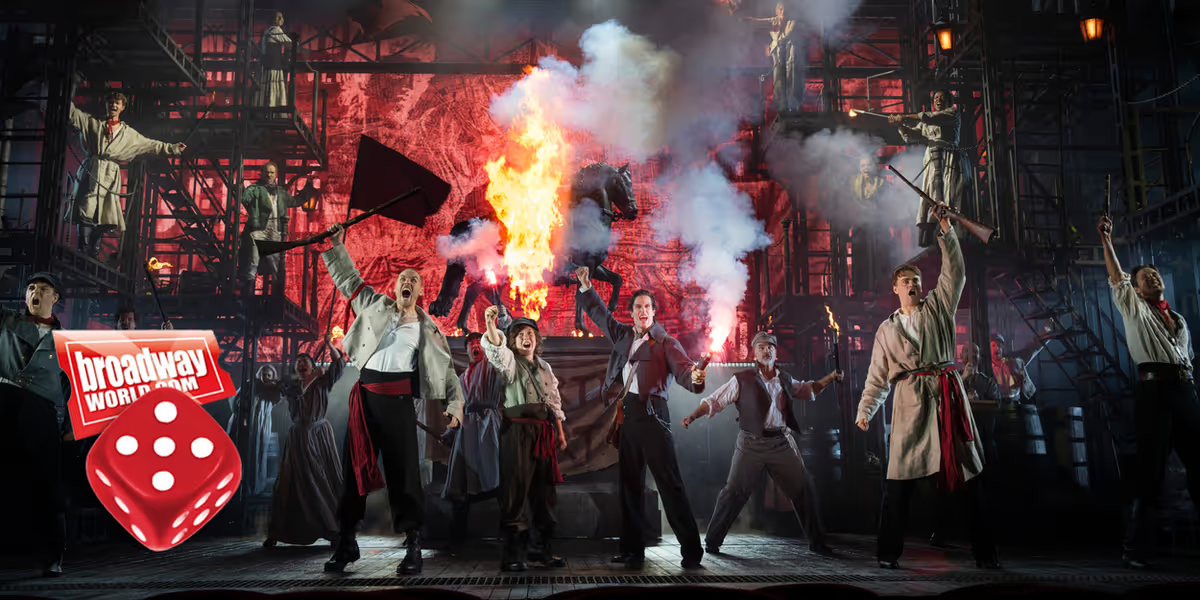
Scenekvelder’s new Les Misérables trusts the score without treating it as a museum piece. Dark, modern and deeply felt, it finds new images for the story while remaining faithful to the form that gives it power. Les Misérables is so familiar that a new production can easily become either a careful reproduction or an argument with its own material. Guy Unsworth’s staging for Scenekvelder finds the more rewarding path between them. It honours the images and emotions audiences bring to the theatre, yet places them in a visual world with a force and logic of its own. The result feels timeless because it understands the past rather than trying to escape it.
That confidence gives the production a particular edge after Per-Olav Sørensen’s 2017 staging for Scenekvelder. To me, that version often gave the impression of a director who did not quite trust, perhaps even like, musicals. The problem was not that it was dark or revisionist, but that the form’s openness seemed to be treated as something to contain: songs were held at a distance when they should have driven the action forward. Unsworth’s reply is practical rather than argumentative. A sung thought produces a decision; a musical phrase changes the direction of a scene. Because the staging follows those impulses, it can be contemporary without denying what Les Misérables is.
At the centre is Espen Grjotheim’s assured Jean Valjean. He has the clean, ‘legit’ line and control the part requires, but at the highest and most exposed moments a rock singer’s edge enters the voice. The contrast works because it is connected to pressure: the sound roughens when Valjean’s strength, fear or desperation breaks through the composed musical line. It also mirrors a production that combines classical form with a hard modern surface. More importantly, Grjotheim acts through the score. He is willing to shorten a phrase, darken a sound or surrender pure beauty when the scene demands urgency. ‘Bring Him Home’ consequently grows from Valjean’s watch over Marius and his willingness to give up what he loves; it does not feel like a famous number temporarily stopping the story. Anders Gjønnes is a superb Javert, not merely because his voice supplies the required authority and weight, but because he knows when not to spend them. Through the first act, the performance remains controlled, economical and emotionally sealed. By refusing to advertise Javert’s eventual breakdown, Gjønnes makes rigidity feel like a structure the man has built in order to survive rather than a sign announcing simple villainy. The restraint also gives the second act somewhere to go. When Valjean’s mercy presents him with a truth his moral system cannot contain, we hear and see control begin to fracture. The confrontations with Grjotheim thus become encounters between incompatible ideas of law, grace and responsibility, not competitions over who can produce the grander sound.
Sanne Kvitnes has far less time on stage as Fantine, yet leaves one of the evening’s deepest impressions. She does so by refusing to play the character merely as a sequence of misfortunes. In ‘I Dreamed a Dream’, the memory of love remains alive inside the damage, so the fall that follows feels personal rather than preordained: this is a woman punished for having loved, then abandoned with a child. The production’s strongest dramatic adjustment keeps Fantine alive beyond the point at which she normally dies in the score. She remains present through much of Valjean and Javert’s confrontation, and their argument about law and duty now unfolds beside the woman who has paid the price for those principles. The choice works because it turns an idea into a body. Kvitnes’s secure technique lets voice and physical distress serve the same story without either appearing forced.
Mimmi Tamba’s Éponine avoids the trap of making unreturned love the character’s only quality. Her warmth is balanced by watchfulness, wit and the independence of someone who has learnt to survive without protection. Those qualities matter in ‘On My Own’: because Tamba has established a life beyond Marius, the song becomes the moment Éponine admits a truth to herself, not a general plea for pity. She allows phrases to follow the character’s thought rather than pressing every emotional point equally. The effect is direct and unsentimental. Her decision to remain part of the action when happiness belongs to Cosette, and finally to go to the barricade, is therefore felt as courage as well as loss.
As Cosette, Andrea Rymoen has a beautiful, bright tone that is less operatic than we often hear in the role. It is a welcome choice, not because the music asks for less, but because the lighter sound leaves room for detailed acting and unusually clear text. The character responds rather than simply radiates, and that makes her scenes with Thomas Wesley Brasel’s Marius feel reciprocal. Together they find the hesitation, wonder and slight absurdity of first love. Their story can easily seem too sweet or dramatically thin beside poverty and revolution; here, its very innocence has a function. It shows the ordinary future that Valjean wants to protect and that the students believe society should make possible.
Marius is a difficult part because the writing gives the actor relatively little with which to prepare for ‘Empty Chairs at Empty Tables’. Thomas Brasel nevertheless traces a convincing line from the naïve, idealism-driven student to a survivor carrying what we would now recognise as post-traumatic stress and profound guilt after his friends are killed in the June uprising of 1832. The song has impact because he does not begin at full grief; thought, memory and shame are allowed to gather, leaving the voice open and exposed when the emotion finally crests. His fine tenor is heard at its best because it communicates vulnerability rather than merely beauty.
Sigurd Marthinussen’s Enjolras gives the students focus by treating their declarations as decisions with consequences, not as invitations to applause. Their commitment therefore feels serious rather than romantically decorative. The Thénardiers provide comic relief without becoming harmless. Siren Jørgensen’s Madame Thénardier is gloriously nasty, and her timing works because she lets the audience register the joke before adding the final sting. At the premiere, first understudy Niklas Gundersen played Monsieur Thénardier. He seemed hurried at first, particularly in ‘Master of the House’, though the staging must share the blame. Comedy depends on focus and a clear sequence of actions; here, attention is scattered across so many simultaneous details that several strong moments vanish in the bustle before they can land. Gundersen settles as the evening continues, taking more time and finding a firmer relationship with the audience. With more performances behind him, he should be able to make the role fully his own.
Designer David Woodhead has placed something like a vast iron refinery on the Folketeateret stage. Towers, walkways, staircases and platforms form a vertical city in which people can be watched, sorted and controlled. Power quite literally occupies the levels above them, while the poor move through the machinery below. Yet the iron is not brutally functional. Spiral stairs and curved details recall the decorative metalwork of an old railway station, while the height and shadow add a hint of the Gothic. ‘Industrial Gothic’ may be the nearest description. This combination is what makes the setting timeless. A strictly realistic factory would pin it to one industrial period; the softer lines admit memory, beauty and even the sacred, without making the world nostalgic or safe.
Black, white and red dominate: soot, judgement, blood and revolt. Yellow and gold enter more sparingly, which is why they register as hope rather than simple warmth. They also carry an awareness that life is brief. That second meaning becomes especially moving when autumn leaves begin to fall from high above and continue through the final part of the performance: the same colour can suggest radiance and decline. The massive wooden barricade is a superb counterpoint to all the iron. Its rough timber is temporary, irregular and visibly handled by people; the surrounding metal looks as though it could outlast them all. The contrast makes the politics physical. This is human resistance assembled from whatever can be found, set against a system built to endure. Its scale impresses from the auditorium, but its material keeps it vulnerable. Howard Hudson’s lighting is unapologetically contemporary. Hard white beams cut through haze, deep shadows swallow whole levels of the set, and saturated red gives the stage the scale of a modern concert without turning it into one. Together with Daniel Denton’s LED and video work, the light repeatedly reorganises the iron architecture around the emotional centre of a scene. That is why the technology works: it can isolate a performer inside an enormous structure, expose a body to the full height of the stage or release it briefly from the crowd. The important exception is Javert’s death. An enormous image of his face takes command just as the scene ought to become inward and solitary. The projection repeats information Gjønnes is already giving, divides attention and makes a private collapse feel externally illustrated. More technology produces less intimacy, and the moment loses force.
Torbjörn Bergström’s costumes preserve the shape and texture of the early nineteenth century, but use colour and detail freely enough to belong within Woodhead’s less fixed world. That historical anchor matters because it allows the set and lighting to range more widely without leaving the characters in a visual vacuum. Cressida Carré’s movement gives the ensemble an equally firm dramatic purpose. Workers, prisoners, sex workers, students and the poor do not resemble a chorus waiting for the next entrance; they continue to bargain, watch, recoil and organise while the principal action passes through them. Individual lives therefore remain visible inside the crowd. This is what shared musical-theatre training can achieve, on stage and behind it: voice, movement, orchestral pulse, light and scene change arrive together, so difficult coordination is experienced as dramatic necessity rather than display.
Bendik Eide’s musical direction gives the score sweep without flattening its changes of scale. The orchestra drives the large ensemble passages with enough weight to make collective anger tangible, then withdraws far enough for a breath or change of thought to redirect a scene. That contrast prevents the evening from becoming one long crescendo. Bjarne Dankel’s sound design generally preserves the same hierarchy: the orchestra surrounds the voices without burying the words, so musical force does not come at the expense of narrative clarity.
Les Misérables remains relevant because its questions have not become historical: who receives mercy, who is protected by the law, and what a society owes people it would rather ignore. This production makes those questions immediate without forcing modern references onto them. The poor are not background scenery, and authority is not treated as an idea without human consequences. Its real achievement is collective. When performers, musicians and designers know the form and work towards the same dramatic end, technique stops calling attention to itself and becomes feeling. By the time the final voices rise beneath the falling leaves, the spectacle has become an act of shared remembrance – and the musical feels urgently alive again.
.png?format=auto&width=800)
Få Broadway-nyheter på WhatsApp
Få de siste oppdateringene, nyhetene og eksklusivt innhold direkte i appen.

Sign up for all the news on the Fall season, discounts & more...
|
|
RIKSTEATRET: UBESVART ANROP Brygga Kultursal (10/08-10/08) |
|
ULD // St. Petri kirke St. Petri Kirke (11/14-11/14) |
|
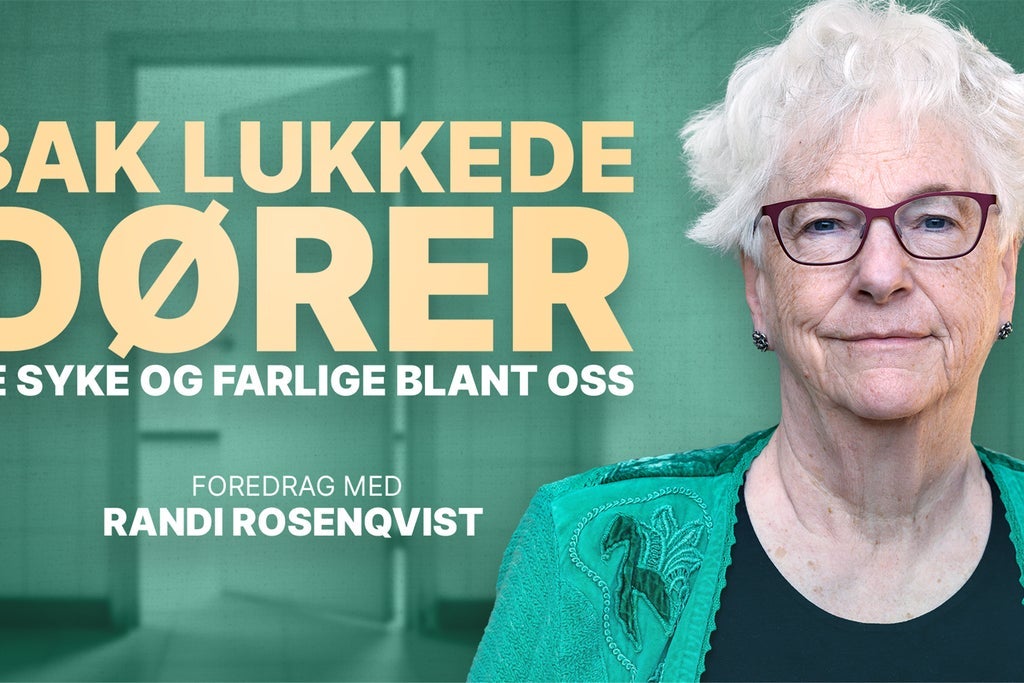
Bak lukkede dører - foredrag med Randi Rosenqvist Maihaugsalen (11/23-11/23) |

|
Det kan alltid bli verre - foredrag med John Hammersmark Chateau Neuf,Storsalen (2/17-2/17) |
|
Julietnorth - Utsatt, mer info kommer Kulturhuset (12/31-12/31) |
|
|
Sigvart Dagsland - Det er makt i de foldede hender - Salmekonsert Vår Frue Kirke (9/26-9/26) |
|
|
Sigvart Dagsland - Det er makt i de foldede hender - Salmekonsert Bragernes Kirke (10/30-10/30) |

|
Odd Nordstoga - Før du går Maihaugsalen (10/23-10/23) |

|
Bærre Bjarne - Bjarne Brøndbo solo ! Edderkoppen Scene (10/31-10/31) |
|
Peer Gynt med Kåre Conradi Grefsenkollen (10/22-10/22) |

Reader Reviews
To post a comment, you must register and login.