


Photos: CLASSICAL CINEMA Series to Open at Metrograph In Theater
The lineup spans works by Jean-Marie Straub, Danièle Huillet, Marcel Camus, and Ray Harryhausen.
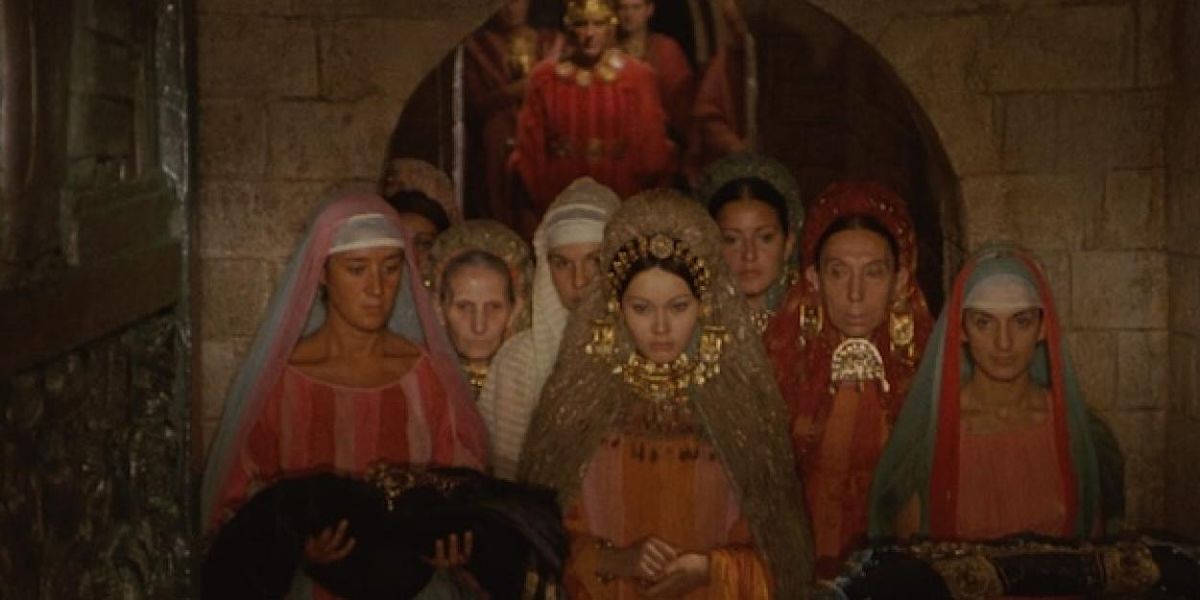
Metrograph presents Classical Cinema, beginning September 6 at Metrograph In Theater.
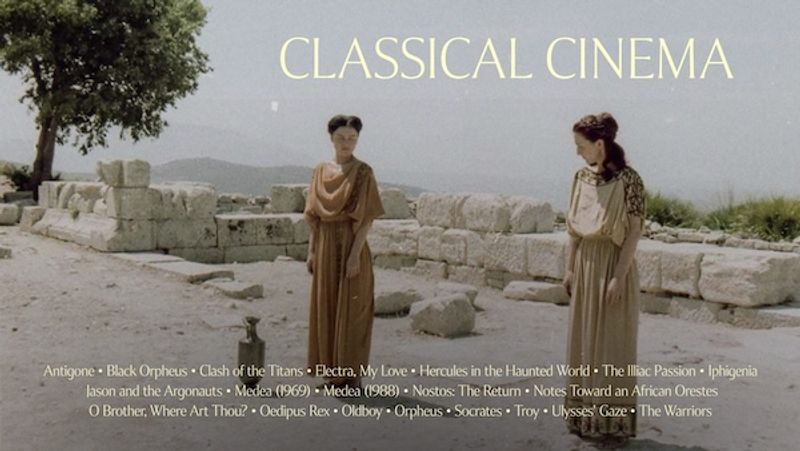
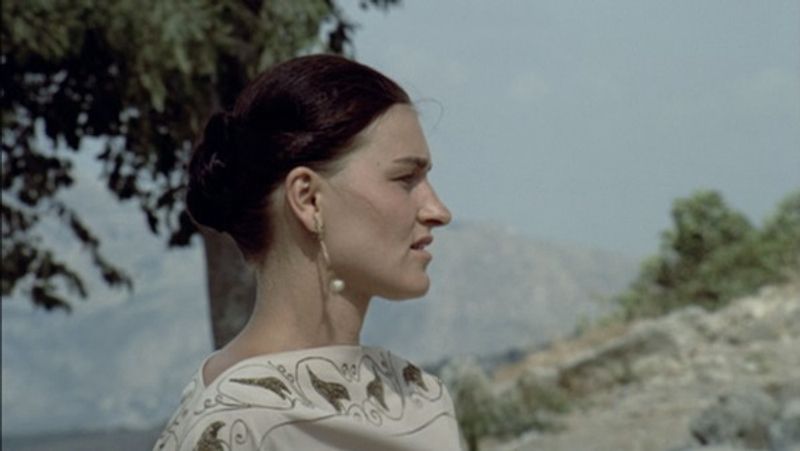
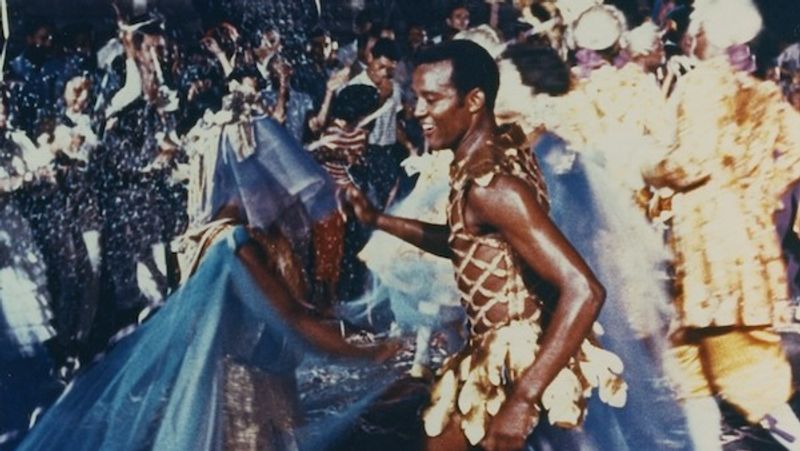
We are far today—very far, indeed—from the world of Spartan discipline and Athens under Pericles, that of Homer's wine-dark Mediterranean, of Aeschylus, Socrates, and Sophocles… but, as the success of a certain recent box-office juggernaut has proven, the echoes of this world resonate deeply with us still. The ancient tragedies, the rich storehouses of Greek mythology with its superhuman heroes and all-too-human Olympians, the melic epic poem: these have been drawn on by an astonishingly diverse collection of filmmakers, providing inspiration for experimental odysseys by Gregory Markopoulos, Italian peplum spectacles, exercises in awestriking austerity by Danièle Huillet and Jean-Marie Straub, and some of Ray Harryhausen's most enchanting stop-motion wizardry. A cinematic crash course in the classics that will have you giving votive offerings to the Gods.
Classical Cinema runs from September 6 to October 23, with select encore screenings to follow. Titles include Antigone, Black Orpheus, Clash of the Titans, Electra, My Love, Hercules in the Haunted World, The Illiac Passion, Iphigenia, Jason and the Argonauts, Medea (1969), Medea (1988), Nostos: The Return, Notes Toward an African Orestes, O Brother, Where Art Thou?, Oedipus Rex, Oldboy, Orpheus, Socrates, Troy, Ulysses' Gaze, and The Warriors.
Film Lineup
ANTIGONE — dir. Jean-Marie Straub, Danièle Huillet, 1991, 100 min, 35mm. Brecht's adaptation of Sophocles's Antigone—concerning the title character's rebellion against the uncle, King Creon, who has condemned her to death—is performed in its entirety in Straub and Huillet's final film set in the ancient world, which recalls their 1975 Moses und Aron in its antiquarian setting: the ruins of a Greek theatre in Segesta, Sicily.
BLACK ORPHEUS — dir. Marcel Camus, 1959, 107 min, 35mm. Winner of the Palme d'Or at Cannes and the Academy Award for Best Foreign Language Film, Camus's international arthouse smash transposes the legend of Orpheus and Eurydice to the favelas of Rio de Janeiro and sets the proceedings shimmying along to a bossa nova beat courtesy composers Antônio Carlos Jobim and Luiz Bonfá. Intoxicating in its zestful, go-for-the-gusto vitality, with Breno Mello charming in the title role and Marpessa Dawn every bit as appealing as the ill-fated beloved he's determined to follow into the underworld.
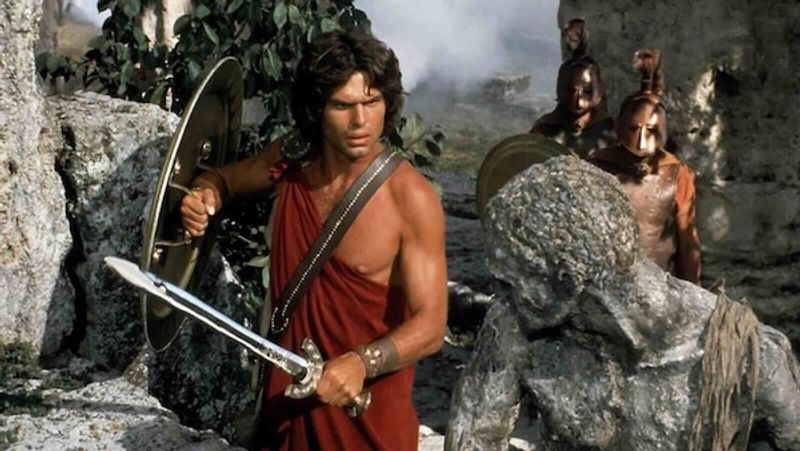
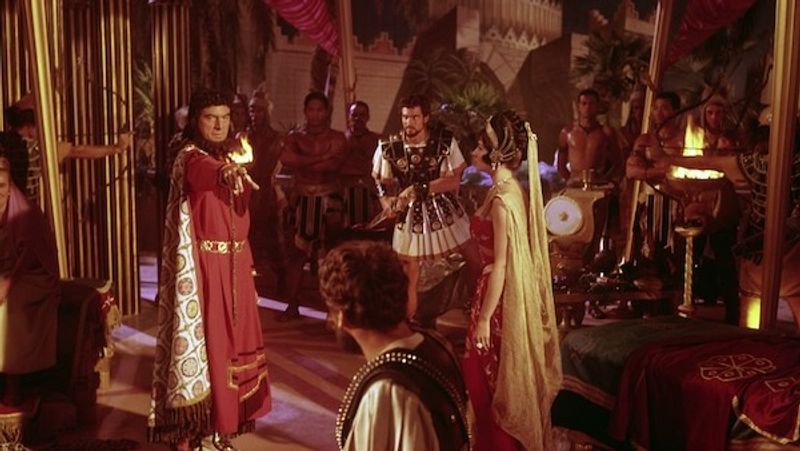
CLASH OF THE TITANS — dir. Desmond Davis, 1981, 118 min, 35mm. A feast of practical stop-motion effects wizardry courtesy the legendary Ray Harryhausen, also co-producer on Clash of the Titans, this beloved Gods-and-monsters epic centers on Harry Hamlin's Perseus—scion of Immortal philanderer Zeus (Laurence Olivier) and Danaë of Argos, as well as thorn-in-the-side to the wrathful sea nymph Thetis (Maggie Smith), whose iron grip Perseus sets out to free Judi Bowker's Princess Andromeda from. Figures familiar from myth—including Pegasus, the two-headed dog Dioskilos, and a memorably loathsome Medusa—share screentime with inventions original to the film, notably Andromeda's ogrish betrothed, Calibos, and the gold-wrought mechanical owl, Bubo, in this irresistible flight of fancy.
ELECTRA, MY LOVE — dir. Miklós Jancsó, 1974, 71 min, DCP. Jancsó's radically original, downright hypnotic retelling of the Ancient Greek myth against the backdrop of the puszta, Hungary's vast, muddy plains, is among the long-take master's most bravura stylistic performances, its 70-minute runtime made up of only twelve intricately composed shots. Reworking the tale of Electra and her ill use at the hands of Aegisthus—the man who loved her mother and murdered her father 15 years ago—Jancsó produces a timeless meditation on tyranny and rebellion—and a resounding call to resistance.
HERCULES IN THE HAUNTED WORLD — dir. Mario Bava, 1961, 84 min, 35mm. Brit bodybuilder Reg Park straps on the sandals and exomis to play Zeus's swole love child in Bava's deliciously delirious peplum, co-written by Mondo Cane's Franco Prosperi, which follows our hulking hero—as well as Theseus and Telemachus—on a perilous mission to save Herc's lover Princess Deianira, stricken senseless by illness, endeavoring to procure for her a sacred stone from the depths of Hades, home court of Christopher Lee's sinister Lyco and his zombie hordes. A triumph of resourcefulness over limited resources, rich with Gothic atmosphere, swirling with nigh-psychedelic colors, and offering at every turn ample evidence of cinematographer-turned-director Bava's consummate mastery of the motion picture apparatus. IB Technicolor print courtesy of a private collector.
THE ILLIAC PASSION — dir. Gregory J. Markopoulos, 1967, 90 min, 16mm. Markopoulos corralled together the underground's haute monde—Taylor Mead, Gerard Malanga, Jack Smith, Gregory Battcock and, in the role of Poseidon, Andy Warhol—for his radical reinterpretation of Aeschylus's Prometheus Bound, in which the filmmaker can be heard on the soundtrack reciting Thoreau's translation of the source text betwixt snatches of Bartók's Cantata Profana. A rebel posing a direct challenge to Zeus's absolute authority, Prometheus was a figure of fascination for Markopoulos, who saw in the outlaw Titan something of a kindred spirit. Hence his vainglorious description of The Illiac Passion: 'Metamorphosis of the filmmaker. Passions of the filmmaker. Out of his breast the free flowing blood of the creation of a motion picture which depicts the passions of mankind and of everyman in general.'
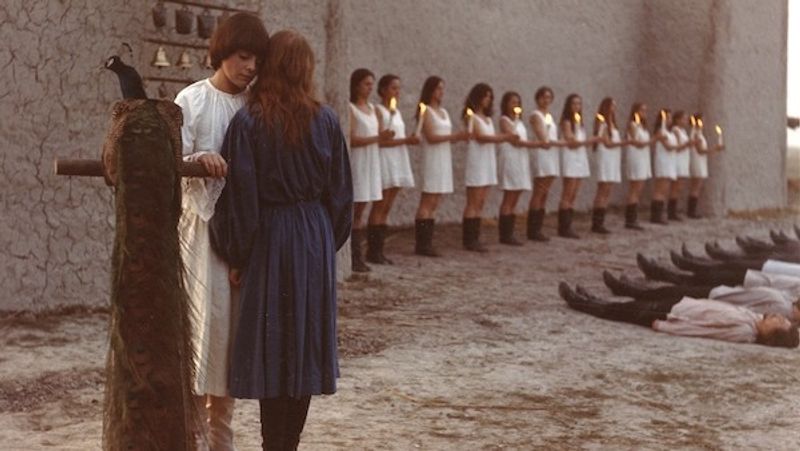
IPHIGENIA — dir. Michael Cacoyannis, 1977, 127 min, 16mm. The final film of Cacoyannis's 'Greek Tragedy' trilogy, following 1962's Electra and 1971's The Trojan Woman, adapts Euripides's Iphigenia in Aulis, with an exceptional Tatiana Papamoschou as the waifish, doe-eyed daughter of Agamemnon and Clytemnestra, and Kostas Kazakos and Irene Papas—the latter a throughline in the trilogy—as her royal parents, commanded to sacrifice their daughter so the Greek fleets might set sail for Helen and for Troy. Bringing a naturalistic touch to the lyric drama and grounding it in real locations, including the ruins of Mycenae and the breathtaking Peloponnese coast, Cacoyannis gives us an Iphigenia that's faithful but not slavishly so, true to the world of antiquity yet bracingly immediate. Print courtesy of the Wisconsin Center for Film and Theater Research.
JASON AND THE ARGONAUTS — dir. Don Chaffey, 1963, 104 min, 35mm. The story is that of heroic Jason sailing far and wide questing for the Golden Fleece of lore, but it's never looked like this before, thanks to stop-motion superstar Ray Harryhausen's ability to put flesh on mythic fancy. An energetic epic in Eastmancolor, with Bernard Herrmann contributing soundtrack fanfare and Harryhausen realizing a veritable menagerie of monsters, including the animate statue of Talos, the hissing Hydra and, in the film's piece de resistance, seven scimitar-wielding skeletons who face Todd Armstrong's Jason in a swashbuckling battle royale.
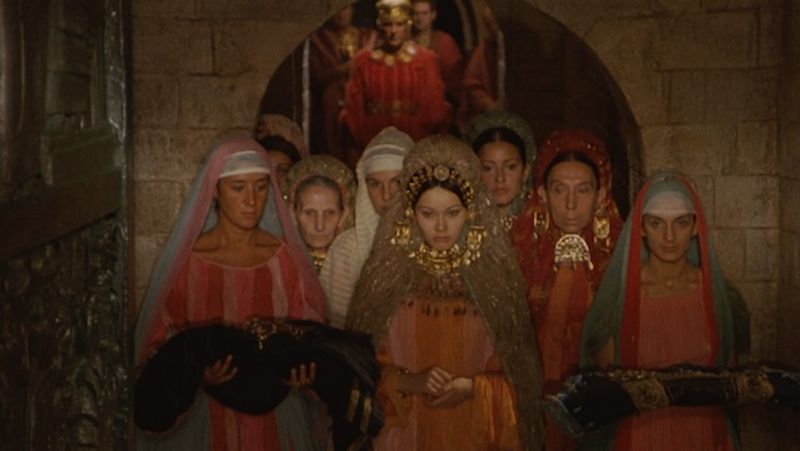
MEDEA — dir. Pier Paolo Pasolini, 1969, 110 min, DCP. Returning to the well of Greek myth, Pasolini fixed on the figure of Medea, the pagan priestess loved and left behind by the questing Jason, whose story became for Pasolini a symbol of the colonization of the classical world and the vanquishing of the precious forces of the irrational. Opera star Maria Callas, not singing and barely speaking in her only dramatic role, is riveting in her interpretation of the Medea of Euripides's tragedy, a woman manipulated by a power-hungry adventurer, driven to vengeance by deceit.
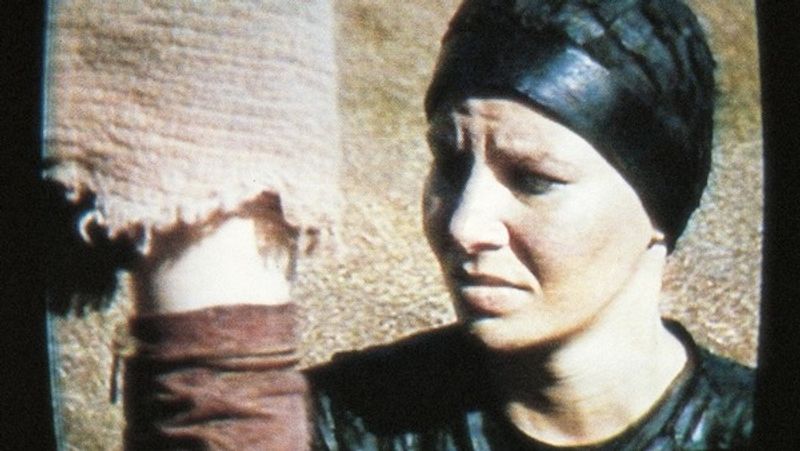
MEDEA — dir. Lars Von Trier, 1988, 75 min, Digital. Based on an unfilmed screenplay by Carl Theodor Dreyer and, of course, Euripides's tragedy of the same title, von Trier's made-for-television film—save for two epiphanic eruptions—is uncharacteristically austere, the enfant terrible of Danish cinema making himself a medium for the Old Master's vision, setting the source material in a pre-Christian Denmark.
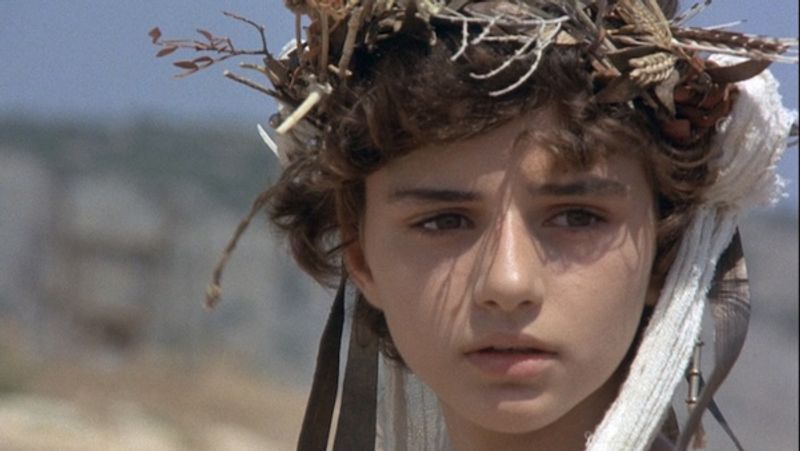
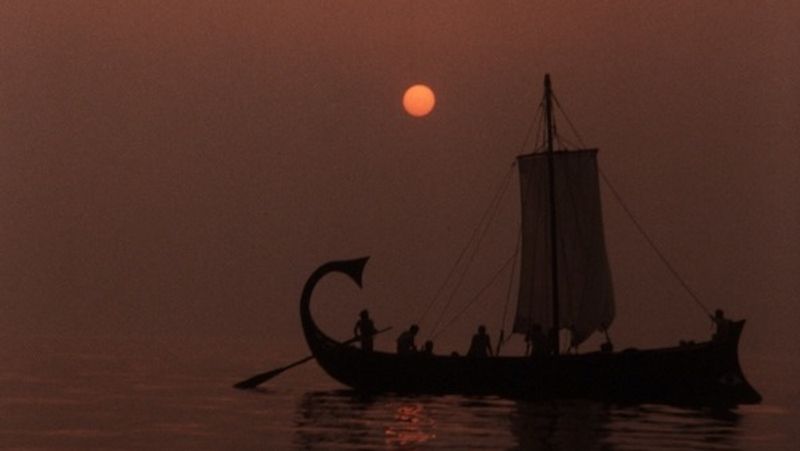
NOSTOS: THE RETURN — dir. Franco Piavoli, 1989, 85 min, DCP. Rather than weighing the merits of one translation of The Odyssey against those of another, Piavoli dispenses with language—or, at least, readily comprehensible language—altogether, giving us an interpretation of the Homeric epic that is first and foremost a sensual, audiovisual experience, what dialogue there is spoken in a hotchpotch of ancient Thessalonian Greek, Sanskrit, and Latin. Free of the anxiety of influence, Piavoli—in his first foray into fiction filmmaking in a career that stretches back to the 1950s—transforms his source into a lyric memory piece, difficult to describe, impossible to forget, and at times positively overwhelming in its beauty. The film was restored in 2K by Cineteca Milano in 2017 from a 35mm positive print. The restoration was carried out under the supervision of Franco Piavoli.
NOTES TOWARD AN AFRICAN ORESTES — dir. Pier Paolo Pasolini, 1970, 65 min, DCP. Pasolini's thrillingly freeform, intellectually adventurous documentary, narrated in the style of thoughts dashed off in a notebook, charts his preparations to make a film of Aeschylus's Oresteia trilogy in Tanzania, Ethiopia, and Uganda. Forming a trilogy of sorts with previous Greek tragedy adaptations Oedipus Rex and Medea—a trilogy that, in the phrasing of scholar Daniel Humphrey, encapsulates Pasolini's paradoxical 'archaic modernism'—Notes Toward an African Orestes proposes metaphorical parallels between the source texts and events following the emergence of many African nations into independence, and also finds the filmmaker testing his own presumptions and prejudices against the lived experience of African students at the University of Rome.
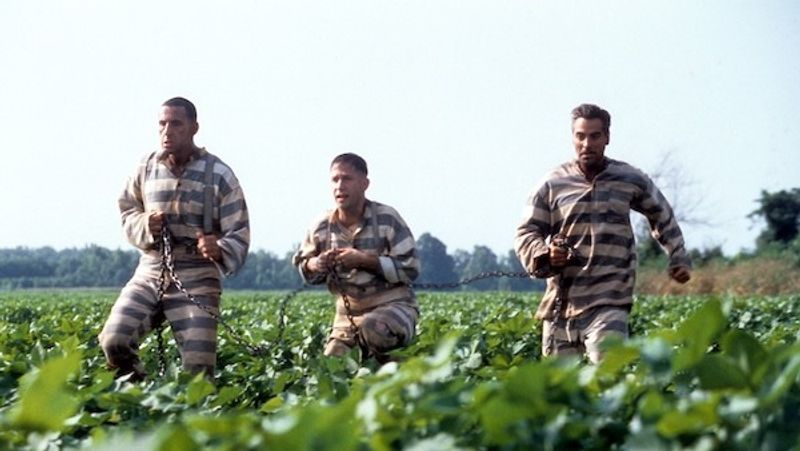
O BROTHER, WHERE ART THOU? — dir. Joel Coen, Ethan Coen, 2000, 107 min, 35mm. The Coens' country-fried, Depression era, quasi-musical take on The Odyssey borrows its title—and more than a bit of its anarchic sense of humor—from Preston Sturges's Sullivan's Travels, choreography cues from Busby Berkeley, and rips a few dozen pages out of the Great American Songbook for good measure. Pomaded convict Everett Ulysses McGill (George Clooney) takes a powder from a Mississippi chain gang with dimwit pals John Turturro and Tim Blake Nelson in tow and sets out to scare up his Penelope (Holly Hunter), along the way running afoul of Klansmen, gangsters, sultry creek-side sirens, and a Bible-thumping Cyclops (John Goodman), even taking a quick break en route to record a jubilant rendition of 'Man of Constant Sorrow.'
OEDIPUS REX — dir. Pier Paolo Pasolini, 1967, 104 min, DCP. Seeking source materials from which to forge a new 'primal cinema,' Pasolini delved into the storehouse of mythic heritage. Taking on Sophocles's Oedipus Rex, he begins with a prologue set in prewar Italy, and goes on to defy expectation throughout, depicting Oedipus (Franco Citti), unknowingly betrothed to biological mother Silvana Mangano, as a victim of his own ignorant innocence, here far from an unambiguously positive virtue. Pasolini's first film in color, featuring costumes and art direction that evoke an almost science fiction vision of the ancient world, and a showy role for Carmelo Bene, then-reigning bad boy of Italian stage and screen.
OLDBOY — dir. Park Chan-wook, 2003, 120 min, 4K DCP. Homer with a ball-peen hammer. Kidnapped and stuffed in a hole without explanation for 15 years of solitary confinement, when Oh Dae-su (Choi Min-sik) is suddenly let loose on the streets, he's stone-cold pissed off and very, very dangerous. Winner of the Grand Prix at Cannes and an international pop phenomenon, Oldboy was a revenge thriller unlike any that had come before, featuring passages of pure bravura filmmaking (that one-shot hallway donnybrook!) and surreal sicko humor that'll put you off of sushi for a while.
ORPHEUS — dir. Jean Cocteau, 1950, 95 min, 35mm. Cocteau's lushly lyric, allegorical update of the Orpheus myth, based on his play of the same title, depicts a famous poet (Jean Marais) who's scorned by the Left Bank youth, torn between his love for his wife, Eurydice (Marie Déa), and a mysterious, black-clad princess (Maria Casarès). Seeking inspiration, the poet follows the princess from the world of the living to the land of the dead, a dreamlike journey that begins with his passage through Cocteau's famous mirrored portal, one of the film's several enchanting low-budget effects.
SOCRATES — dir. Roberto Rossellini, 1970, 120 min, DCP. Beginning in the mid-'60s and ending with his death in 1977, Rossellini committed himself to producing a series of films, telefilms, and serial works that would together constitute a narrative of human progress and the history of ideas from Paleolithic to present times. Socrates, initiating a tetralogy of works on epoch-defining thinkers, sets its scene in an Athens humbled by Sparta and increasingly irritated by the prickly, prodding philosopher in their midst, finally determined to silence him. Using out-of-vogue in-camera effects to transform an ancient Spanish village into Athens, probing scenes with his customized, remote-controlled Pancinor zoom, and employing a dirge-like electronic score by Mario Nascimbene, Rossellini gives us a singular vision of antiquity, one that's downright avant-garde.
TROY — dir. Wolfgang Petersen, 2004, 163 min, 35mm. Before The Odyssey there was The Iliad, and before Christopher Nolan's sword-and-sandals smash there was Troy, Petersen's rather free adaptation of Homer (with a smidge of Quintus Smyrnaeus's Posthomerica for flavor.) Orlando Bloom's Paris lures the lovely Helen (Dianne Kruger) away from her throne in Sparta to the city of Troy, and so launches a thousand ships from the Peloponnese hellbent on dragging her back, among those aboard the fabled warrior Achilles (Brad Pitt) and the cunning strategist Odysseus (Sean Bean), soon to test their mettle against Trojan champion Hector (Eric Bana) and his armies. A strapping slab of impassioned spectacle, opulent production design, and earnest romanticism which, though critically divisive on its initial release, has in recent months seen the ranks of its admirers swell.
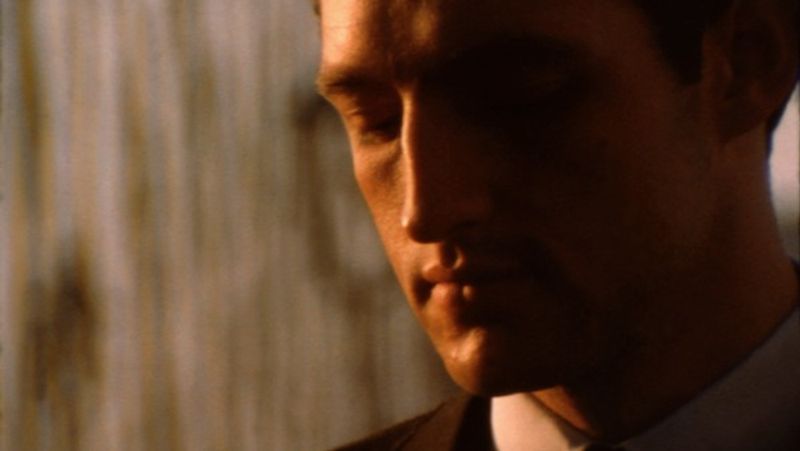
ULYSSES' GAZE — dir. Theodoros Angelopoulos, 1995, 176 min, 35mm. An Odyssey through the Balkans after the fall of communism following a Greek American filmmaker, known simply as 'A' (Harvey Keitel), who has returned to Hellas after an absence of decades on a quest to find his own personal 'Ithaca': three reels of undeveloped film shot at the turn of the century by the Manaki Brothers, Macedonian cinema pioneers who bore witness to the last years of the Ottoman Empire. An eloquent, entrancing meditation on war, the inevitability of imperial decline, the capacity of art to render grief and loss into finer materials, and much else besides, magisterial in its melancholy.
THE WARRIORS — dir. Walter Hill, 1979, 93 min, 35mm. 'Waaarriors! Come out and play-ay!' Falsely accused of responsibility for the assassination of New York's most powerful ganglord during a citywide summit in the Bronx's Van Cortlandt Park, Swan (Michael Beck) and his fellow Warriors now have to fight their way back, block by block and mano a mano, to the safe shores of their Coney Island turf. The film's knuckle-busting action choreography and its vision of NYC as a coliseum-like proving grounds for epic heroism—its source, at a distance, is Xenophon's 4th century BC Anabasis—are delectable, but its greatness lies in its attention to character, how it lets us see a crew of provincial Brooklynites gradually discovering they're the toughest dudes in town.


Sign up for all the news on the Fall season, discounts & more...
.jpg?format=auto&width=300)
.png?format=auto&width=365)




