Photos: Ute Lemper Releases MOTHERS Across 17 Languages for Peace
The song carries messages of freedom and equality across English, Spanish, Portuguese, German, Italian, Hebrew, Arabic, Ukrainian, Russian, Turkish, Hindi, Chinese.
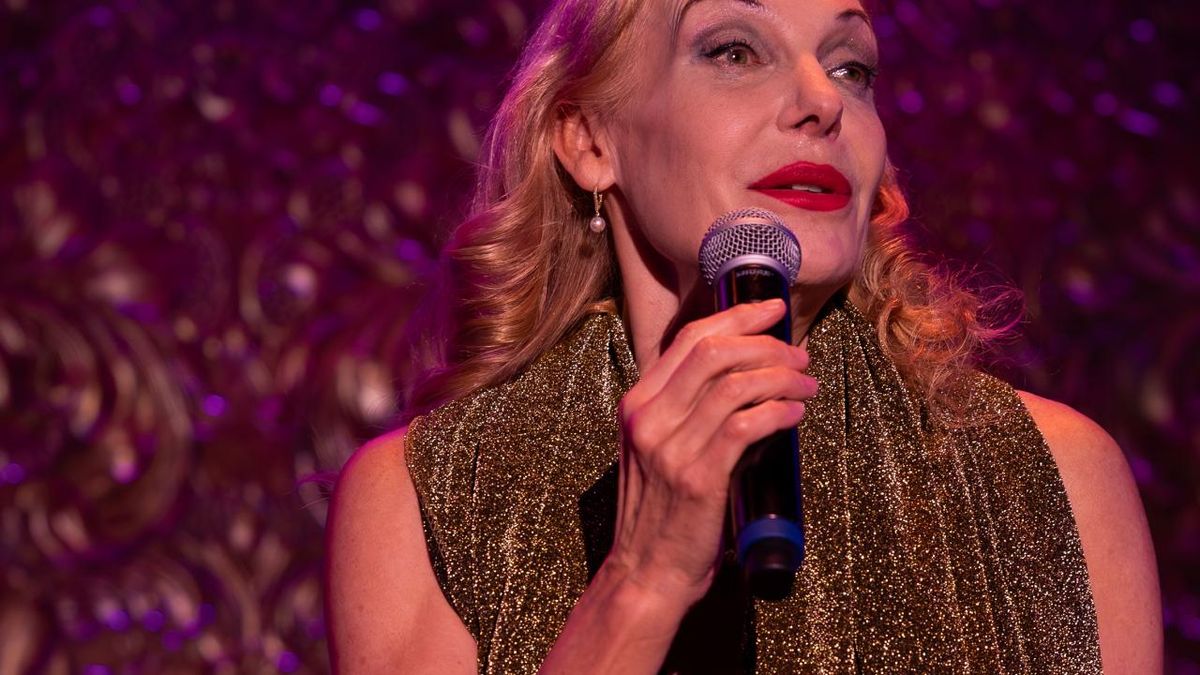
Internationally acclaimed singer, actress, composer and recording artist Ute Lemper has released MOTHERS, a new international peace project built around one original song presented across 17 languages and cultures.
Photo Credit: Jim Rakete; Photo caption: Ute Lemper
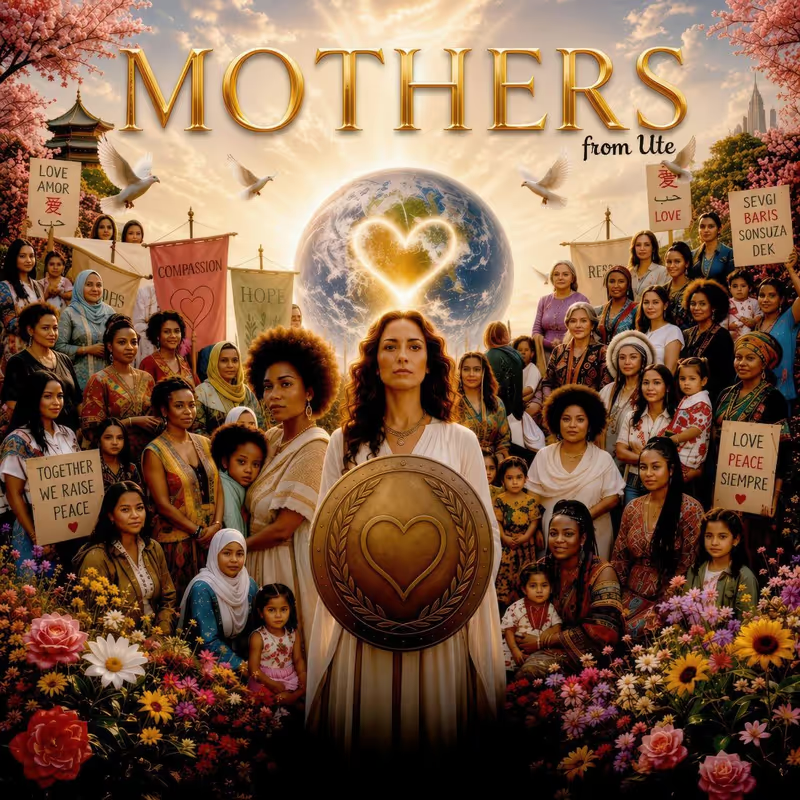

Arriving on the International Day of Peace, MOTHERS begins with something immediate and universal: the instinct to protect children, worry about their future and create the conditions in which they can grow. Across its many versions, the song carries the same central message while moving through different languages and musical traditions, calling for peace, freedom, equality and dignity across borders, religions and political systems.
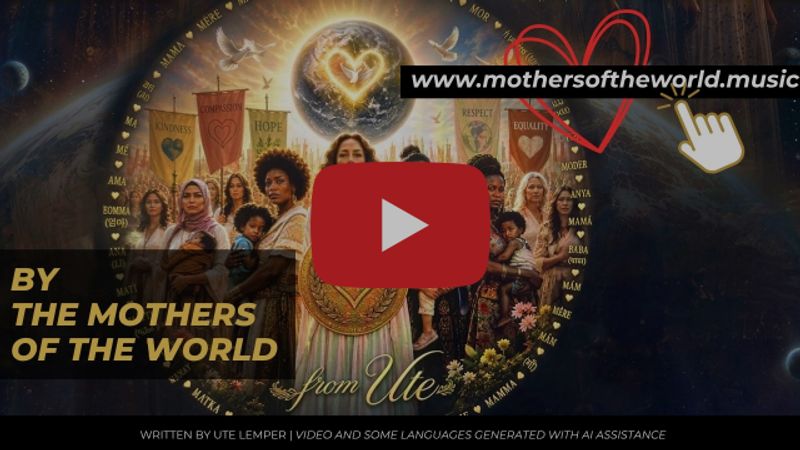
The release is accompanied by a new video that moves between hopeful imagery and real footage of protests and demonstrations around the world, reflecting both the urgency behind the song and Lemper's belief in the power of people to speak up for change.
'What unites us is a lot more important than what separates us,' says Lemper. 'No mother wants to lose her child in a war, as a soldier, as a victim of war, as a victim of a humanitarian crisis that is created by war.'
Lemper first wrote 'MOTHERS' while hosting a European television series of the same name. Across three seasons, she spoke with women from different professions, including athletes, doctors and politicians, about motherhood. She wrote and recorded a song for the program, but the producers ultimately chose instrumental music instead.
Lemper kept the song.
'I said, 'Wait a minute, the time will come,'' she remembers. 'I will find another way to recreate it, to bring it out into the world.'
That time arrived this spring. Lemper returned to the recording amid wars in Ukraine and the Middle East, a renewed sense of geopolitical division and her own growing anxiety about the world her four children will inherit. She revisited the lyrics as well, sharpening the song's call for peace, freedom and equality.
What began as one song gradually expanded into a multilingual project spanning English, Spanish, Portuguese, German, Italian, Hebrew, Arabic, Ukrainian, Russian, Turkish, Hindi, Chinese, Japanese, Swahili, Farsi, French and Kurdish. Within that international framework, Lemper also wove in themes of women's emancipation and liberation from restrictive doctrines, giving the project a broader call for dignity, agency and human rights.
The lyrics begin with refuge and care, then become increasingly direct. Mothers are described as an 'army of love,' asking for dignity, tolerance, equality, rights and the ability to elect their leaders. By the song's final section, the focus turns entirely toward children: 'All children are equal in our world.'
The project also continues a thread that has run through Lemper's work for more than four decades.
Growing up in Münster, Germany, Lemper discovered the work of Bertolt Brecht and Kurt Weill as a teenager in the late 1970s. She found in Brecht a writer who understood art as a means of confronting injustice, political failure and human weakness, and went on to become one of the leading international interpreters of Weill, Brecht and the music of Weimar Germany.
Over the decades that followed, Lemper moved through Broadway and the West End, won Olivier and Molière Awards, earned GRAMMY nominations, and interpreted artists ranging from Marlene Dietrich and Edith Piaf to Jacques Brel and Astor Piazzolla. Her own projects increasingly explored political conscience, memory and the responsibility of artists to engage with the world around them.
Among them was Songs for Eternity, created from music written by Jewish prisoners in ghettos and concentration camps during the Holocaust, as well as Rendezvous with Marlene, inspired by Lemper's three-hour telephone conversation with Marlene Dietrich and the singer's extraordinary history of standing against Nazi Germany.
Lemper describes that social and political consciousness as the 'red thread' running through her career.
That history sits quietly beneath MOTHERS. The questions are contemporary, but familiar: What happens when nationalism overwhelms empathy? What responsibility do individuals have to one another? And what can art communicate when political language no longer reaches people?
'I am not sure whether art can make a political difference,' Lemper says. 'But it can express something in a very direct way that is not political talk. It comes from the inside.'
Motherhood has made those questions increasingly personal. Lemper has lived in New York for roughly three decades and raised her four children there, describing the city as a 'mirror of the world' where cultures, religions and nationalities coexist while retaining their differences.
Twenty-five years ago, after the Cold War, she believed her children might inherit an increasingly connected world. Today, she sees war, climate change, disinformation, inequality and geopolitical division moving in the opposite direction.
'We are worried about tomorrow,' she says, 'and also outraged about the present.'
The international versions of MOTHERS grew from Lemper's realization that the song's message should sound as though it belonged wherever it was being heard. Using AI-assisted production as a creative tool, she preserved her original composition, melodies, structure and instrumental elements while exploring arrangements rooted in different musical traditions, from American soul and R&B to Brazilian rhythms and traditional musical languages from the Middle East, Asia and Eastern Europe.
For Lemper, the technology is a means rather than the author.
'This is not AI-generated music,' she says. 'I'm just using the tool for this multicultural project.'
After four decades of writing, singing, recording and performing, Lemper approached the technology as another instrument to direct, using it to extend one human-authored song across cultures while maintaining the same message at its center.
And she already imagines MOTHERS growing beyond the recordings themselves.
A new Just Mothers platform is being developed to invite women around the world to submit videos depicting their own lives and experiences. Lemper ultimately hopes to see women singing the song in their own languages at gatherings, marches and in everyday life, and envisions a future live event bringing together singers from different cultures to perform their individual versions before joining together at the end.
For Lemper, the project comes at a moment when the concerns that have shaped much of her artistic life feel newly urgent.
'I'm certainly a lot more worried now than I was six years ago,' she says. 'It's a perfect moment in my life, in this world, to make a statement.'
With MOTHERS, that statement begins with the people raising the generation that will inherit what comes next.
Listen By Language
Матері - Ukrainian: listen
Anneler - Turkish: listen
MADRI - Italian: listen
Mães - Portuguese: listen
母亲们 - Chinese: listen
母たち - Japanese: listen
माएँ - Hindi: listen
MAMA - Swahili: listen
About Ute Lemper
Ute Lemper is an internationally acclaimed singer, actress, composer and recording artist whose career has spanned music, theater, film and visual art for more than four decades. She is celebrated worldwide for her interpretations of the works of Kurt Weill and Bertolt Brecht, as well as Marlene Dietrich, Edith Piaf, Jacques Brel, Astor Piazzolla and many others.
Her stage career has included Broadway, London's West End, Paris and Berlin, earning honors including the Laurence Olivier Award and Molière Award, while her extensive recording career has brought GRAMMY nominations and collaborations with artists and writers including Tom Waits, Elvis Costello, Nick Cave, Pablo Neruda and Paulo Coelho.
Throughout her artistic life, Lemper has explored themes of humanity, memory, justice, freedom and cultural dialogue. MOTHERS continues that work as a global musical project dedicated to peace, women and the future of children around the world.
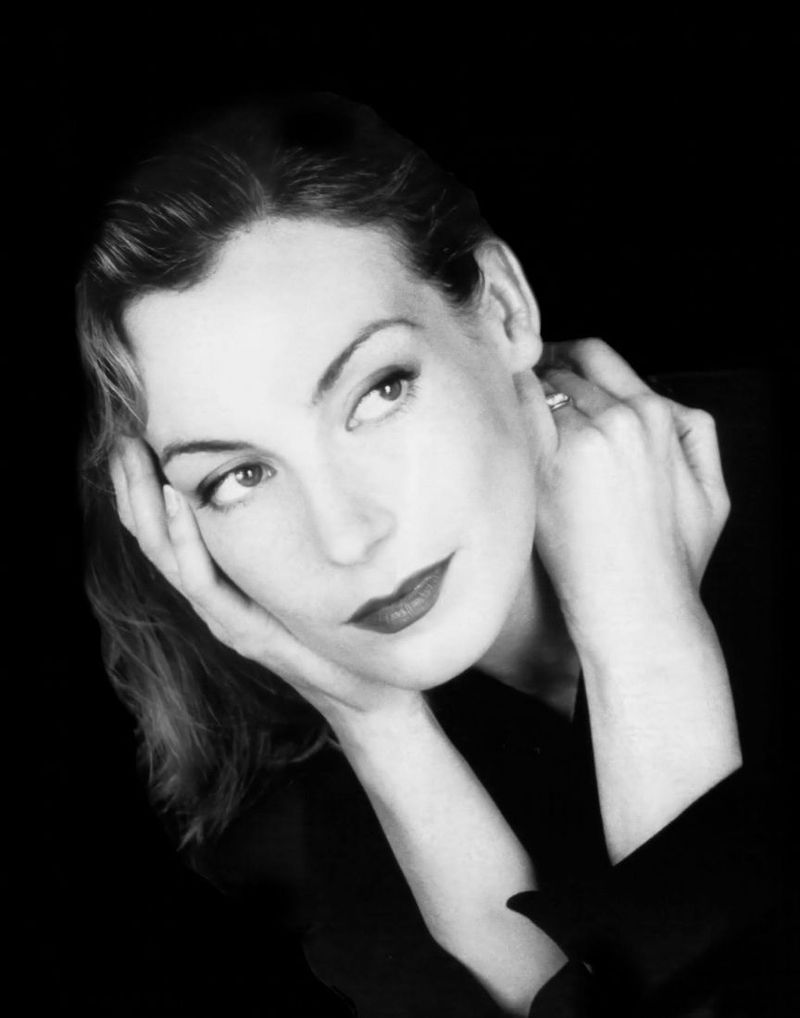
Photo Credit: Jim Rakete; Photo caption: Ute Lemper
Prefer BroadwayWorld in Google Search?
Add us as a preferred source so our stories show up more often in Top Stories and Google’s AI answers — for you.


Sign up for all the news on the Summer season, discounts & more...
.jpg?format=auto&width=300)