


Review: The Huntington's TO KILL A MOCKINGBIRD Isn't Novel
The production runs through November 8 at the Huntington Theatre
Harper Lee’s Pulitzer Prize-winning 1960 novel “To Kill a Mockingbird,” the tale of a fictional small town in the Depression-era South grappling with violence and racial inequality along with issues of class, courage, and compassion, long ago earned its enduring status as a classic of modern American literature.
Through November 8 at the Huntington Theatre in Boston, under the layered direction of artistic director Loretta Greco, The Huntington is presenting a patchy production of the classic story based on the 2018 Broadway adaption by Academy Award-winning screenwriter Aaron Sorkin (“The Social Network”). First presented locally in 2022 by Broadway in Boston at Citizens Opera House on national tour, the Sorkin version places the character of Atticus Finch front and center and uses adult actors in the children’s roles.
An earlier stage version by Christopher Sergel, which like the novel, focuses on the bright and sensitive 10-year-old Scout and her increasing awareness of the consequences of bigotry, has been widely produced, including locally at Gloucester Stage in 2017 – where Lewis D. Wheeler, double cast at The Huntington as the Bailiff and Dr. Reynolds, played Atticus – and at the Umbrella Stage Company in 2018 and again this past spring.
The best-known adaptation, however, is the 1962 feature-film version, with screenplay by Horton Foote, that introduced Lee’s characters – including widowed attorney Atticus Finch, and his two young children, Scout and Jem – to the moviegoing public and won Gregory Peck, as Atticus, the Academy Award for Best Actor.
In Boston, Karl Kenzler is an introspective Atticus. He has quiet dignity rather than the saintliness with which Peck played him, more a wise man with the strength to follow his conscience even when his fellow townsfolk disagree with him. The actor’s overall performance is hampered, however, by the way he is styled. His hairstyle, by wig and makeup designers J Jared Janas and Cassie Williams, gives Kenzler’s Atticus the look of a blow-dried Southern preacher. And he’s also saddled with a nondescript brown three-piece suit with a plaid vest by Costume Designer Celeste Jennings that lacks the gravitas of the familiar off-white version.
Lee – a Monroeville, Alabama, native – wrote the book as a semi-autobiographical story of Scout (a compelling Karen Killeen) and her older brother Jem (a convincingly gangly Benjamin Isaak), whose carefree childhood is upended one hot summer when their father Atticus is appointed to defend Tom Robinson (a heartbreaking Rafael Jordan), a young black man accused of raping a white woman, which turns the heat up scarily on the town’s low-simmer racial tensions.
Indeed, something seems to be happening in every direction when an overwrought, unsympathetic, and in Sorkin’s hands one-dimensional Mayella Ewell (Jackie Scholl), manipulated by her drunken and abusive father Bob Ewell (a frightening and slovenly Liam Craig), falsely accuses Tom Robinson of having raped Mayella. What follows is a torrent of malicious gossip, an eager-to-pounce lynch mob, and the spread of corrosive racism throughout the town.
Greco’s intimate staging of the iconic courtroom scene – presided over by the always fascinating Ken Cheeseman as the impatient Judge Taylor – achieves its emotional impact through the fine scene work of Kenzler, Jordan, Jesse Garlick as tightly wound prosecutor Horace Gilmer, Michael Poignand as sympathetic sheriff Heck Take, and Kyle Cameron as Tom’s believed-to-be alcoholic employer whose paper bag really contains a soda bottle. If this sub- plot seems familiar it’s because Lee originally wrote it for a character called Dolphus Raymond, whom Sorkin wrote out of his script.
A separate subplot finds Scout, Jem, and their-visiting-for-the-summer friend Dill (the wondrously quirky Andrew Stevens Purdy) intrigued by the reclusive Boo Radley (Jesse Hinson, also Mr. Cunningham), who not only never shows his face in public but who also, according to Jem, lives on “raw squirrels and whatever cats he can find.” These moments capture the inherent charm of adventurous youngsters too young to understand how challenging everyday life can be even when you think you’re among friends.
One of the children’s truest friends is Finch family housekeeper Calpurnia, played with stalwart kindness by the commanding Patrice Jean-Baptiste. When Atticus decides the three children should not attend the trial, it is Calpurnia who uses her connections in the community to arrange for Scout, Jem, and Dill to watch from the “colored balcony.” Jean-Baptiste’s proud Calpurnia also gives the play one of its most thought-provoking moments when she firmly faces down Atticus about how he sometimes makes her feel.
While Sorkin’s changes are significant, with the townsfolk noticeably dumbed down to virtual stereotypes, the heart of Lee’s deeply affecting story remains with the three children learning first-hand the meaning of the phrase “to kill a mockingbird” – the death of innocence – and that the world can be unjust.
America in 2026 is quite different from Alabama in 1936 but our country is somehow still fractured, still contending with racial injustice. That Atticus shows the children that the path forward runs through empathy makes Lee’s original writing still timely and relevant today.
Lighting designer Christopher Akerlind and sound designer Chris Brousseau contribute to the ambience suggested by Andrew Boyce’s spare set, which makes do with plain walls, a weathered swing, a screen door, café chairs, and one towering tree draped in Spanish moss. The mood is also enhanced by onstage violinist Ashley Frith.
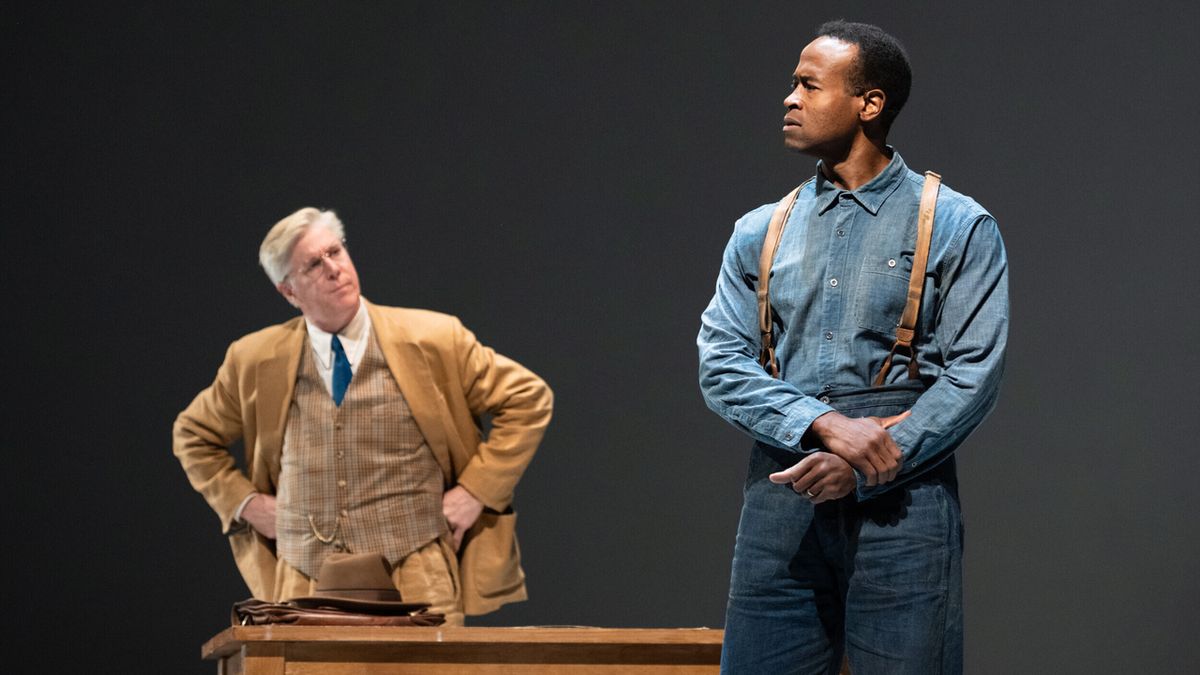
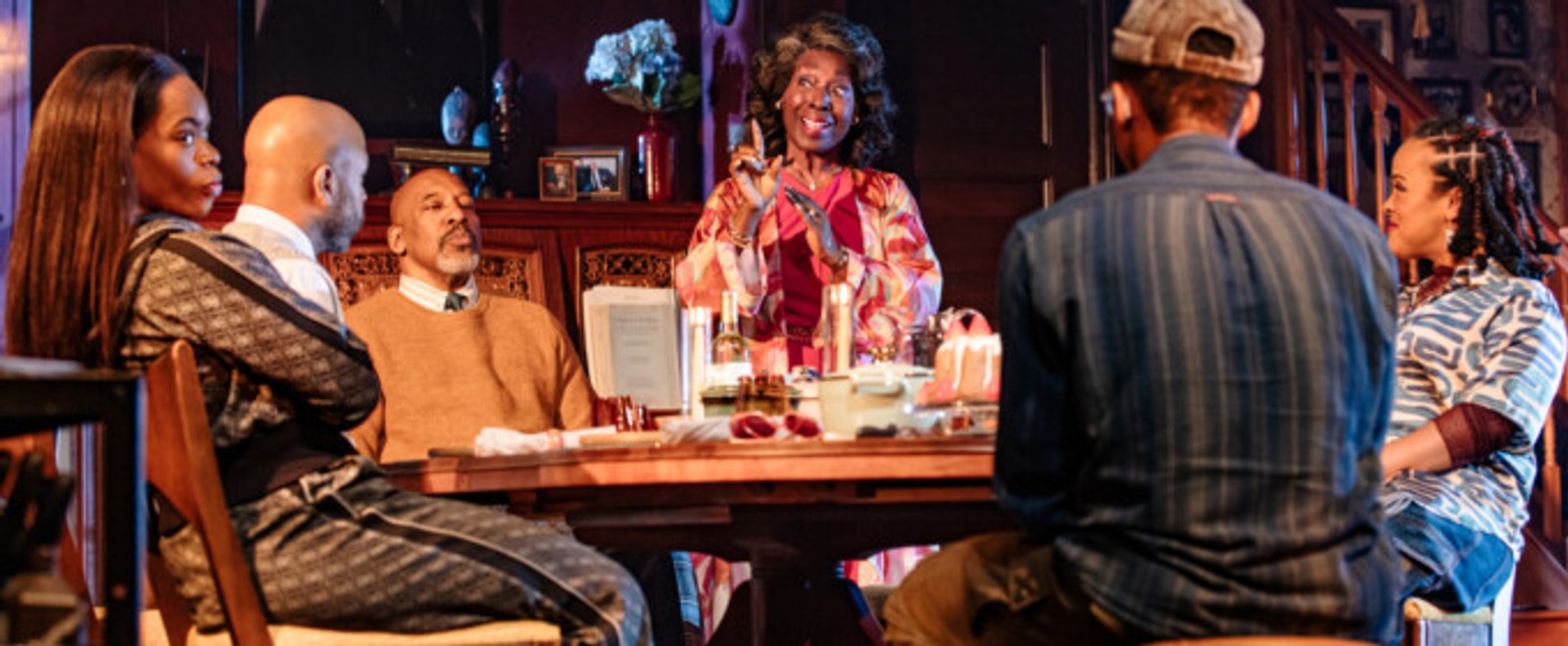
Photo caption: Karl Kenzler (Atticus Finch) and Rafael Jordan (Tom Robinson) in a scene from The Huntington production of “To Kill a Mockingbird.” Photo by Liza Voll.
See more BroadwayWorld in Google
Our stories show up more often in Top Stories and Google’s AI answers.
Breaking Broadway alerts by text
Get the biggest stories sent straight to your phone.
Sign up for all the news on the Fall season, discounts & more...
|
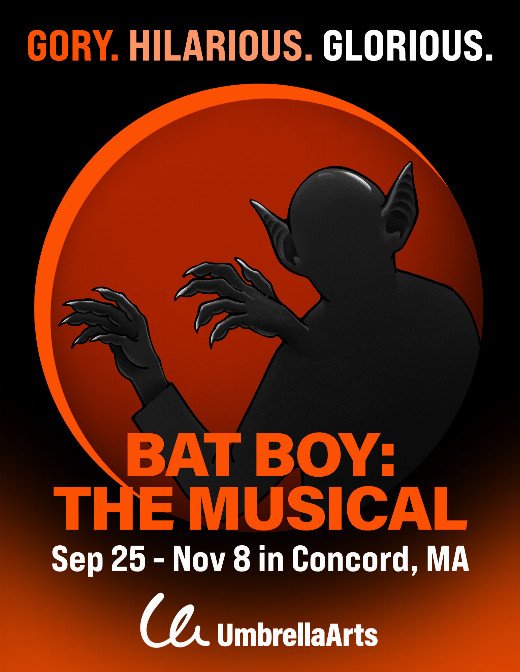
Bat Boy: The Musical The Umbrella Arts Center (9/25-11/08) |
|
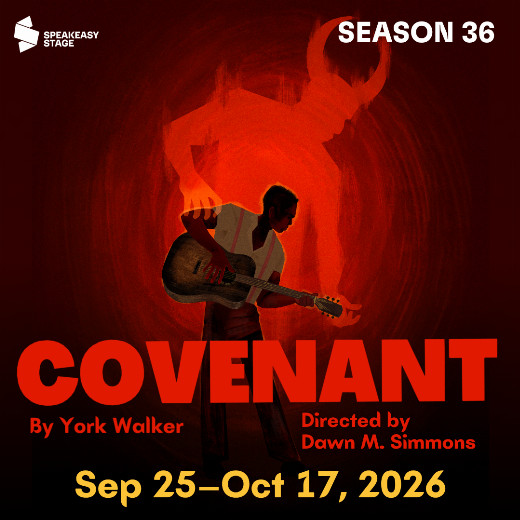
Covenant SpeakEasy Stage Company (9/25-10/17) |
|
|
The Sound of Music Boch Center Wang Theatre (11/17-11/22) |

|
An evening with LaChanze Berklee Performance Center (11/01-11/01) |
|
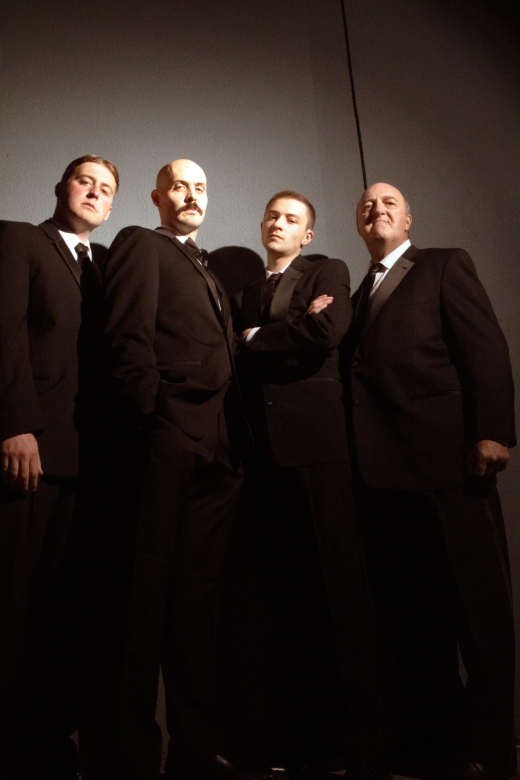
BOUNCERS by John Godber Modern Theatre At Suffolk University (10/01-10/24) |

|
Cheyenne Jackson Shalin Liu Performance Center (10/18-10/18) |
|
Rocky Horror Show The Company Theatre (10/02-10/18) |

|
Floyd's Row at Harmony on the Green in Lexington Harmony on the Green (3/13-3/13) |
|
Jim Gaffigan Wang Theatre (10/24-10/24) |

|
Rachel Sumner and Travelling Light at Harmony on the Green Harmony on the Green (5/01-5/01) |

Reader Reviews
To post a comment, you must register and login.