


Season 2, Episode 5: Behind every summer is a community that keeps Fire Island alive. This episode explores the history of the beloved Pines Pantry through the eyes of its iconic Pantry Girls, alongside the volunteer firefighters of The Pines and Cherry Grove who protect the island from fires, hurricanes, beach erosion, and an uncertain future.
Interview: Edwin Aparicio On the World Premiere of ENTRE DOS SOMBRAS at GALA’s 22nd Fuego Flamenco Festival
The co-creator of the festival honors three pillars of Washington’s artistic community lost this year in a new contemporary flamenco work, November 13 through 15
By: Joshua Wright
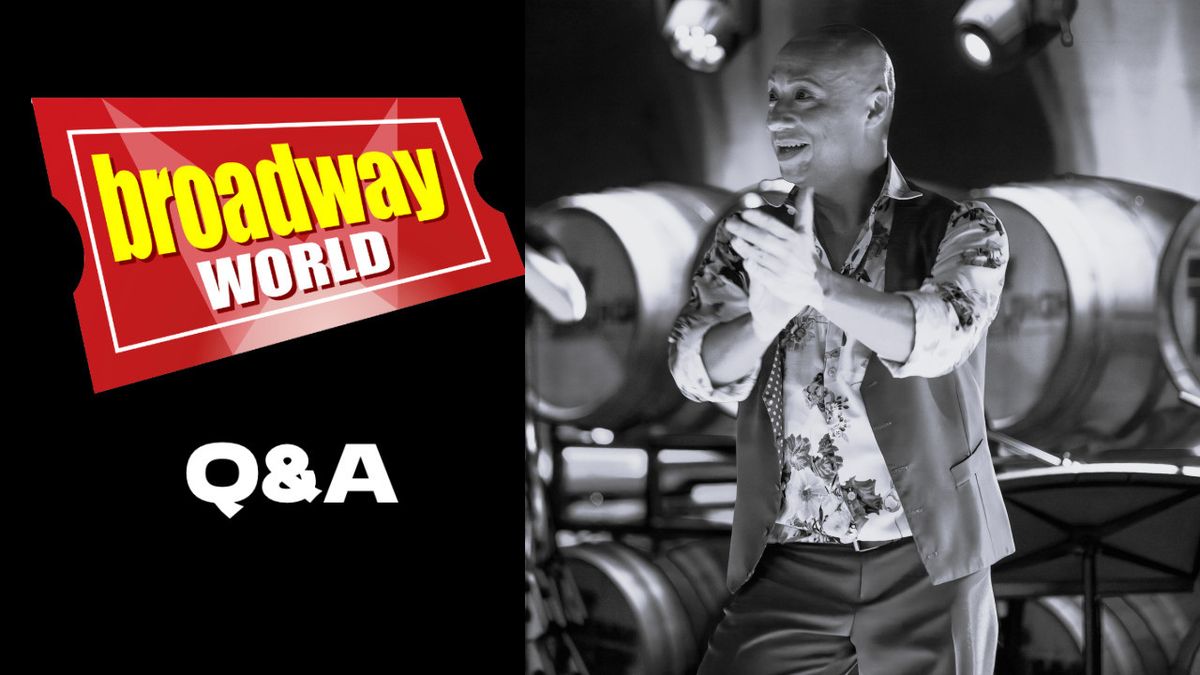
GALA Hispanic Theatre continues its 51st season with the 22nd edition of its annual international Fuego Flamenco Festival, running November 5 through November 22, 2026. Renowned for presenting stellar artists in an intimate tablao setting, the festival celebrates flamenco as a universal art form that champions both tradition and innovation. This year’s lineup opens with the DC premiere of LA VELADA, created and performed by Spain’s Marta Gálvez, November 5 through 8, and closes with the DC premiere of DANZAS SOLEMNES by Escuela Bolera icon Cristina Cazorla, November 20 through 22.
At the heart of the festival, November 13 through 15, is the world premiere of ENTRE DOS SOMBRAS by Flamenco Aparicio Dance Company, a new contemporary work about intensity, hope, love, and the miracle of being alive. The piece pays homage to three artists Washington’s creative community lost this year: pillars of DC’s flamenco world Ana Martínez and Paco de Málaga, and Salvadoran photographer Muriel Hasbun. The program features principal dancers Norberto Chamizo and Cristian Rubio Truco “El Truco,” winner of the GALA Fuego Flamenco Award at the 2024 Certamen de Coreografía de Danza Española y Flamenco.
Edwin Aparicio, co-creator of the festival since its inception, is a Salvadoran choreographer, dancer, and director based in Washington, D.C., and one of the most sought-after flamenco performers, instructors, and choreographers in the United States and Latin America. Critics have described him as “the most amazing dancer seen in years,” with “hellfire footwork.” He debuted at the legendary Casa Patas in Madrid in 2001, founded Flamenco Aparicio Dance Company, and is a recipient of the Cross of the Order of Civil Merit, granted by King Felipe VI of Spain.
BroadwayWorld spoke with Aparicio about keeping flamenco alive in Washington for 22 years, the losses that inspired ENTRE DOS SOMBRAS, and the life that lives between two shadows.
Why has it been important to keep a flamenco festival alive in the Washington, DC area for 22 years?
Flamenco has deep roots in Washington, but sustaining a festival for 22 years requires more than presenting performances. It means building a community around the art form and creating a place where audiences can encounter flamenco in its full range, from deeply traditional work to contemporary experimentation. The festival connects Washington artists and audiences with extraordinary performers from Spain and other parts of the US, while also giving our Flamenco Aparicio Dance Company a major stage on which to create and premiere new work. Keeping it alive is important because flamenco itself is a living tradition. It survives by being performed, shared, questioned, and continually reimagined.
How did the festival evolve from its inception to this 22nd edition, and what does that growth mean to you personally?
The festival started when two paths met. GALA began to bring performers from Spain’s Casa Patas, while Edwin Aparicio, who had worked with GALA before, was looking for an artistic home to use flamenco as his voice and to share his art with the DC audience. It proved to be a match made in heaven, and we joined forces to organize it into an annual festival. Aleksey joined as a co-director for my productions a few years later. Over the years, it has grown into an international festival that presents artists from Spain alongside performers and companies based in the United States. In recent years, it has expanded to three weeks, with three distinct productions representing different facets of Spanish dance and flamenco.
Personally, the most meaningful part of that growth is not simply that the festival has become larger. It is that it has developed a history of its own. Artists have returned at different stages of their careers. Audiences have learned to appreciate the breadth and complexity of the art form. After 22 years, the festival has become part of Washington’s cultural landscape and part of the story of flamenco in this city.
Most years, you present world premieres based on your own story, current events, or ideas you bring to life through dance. How do you come up with these ideas?
The ideas often begin with something personal: an experience, an image, a question, or an emotion that stays with us. The starting point always comes from our own lives. We usually do not begin with a fully formed narrative. We begin with a central idea and allow the work to reveal itself through music, choreography, conversations with the artists, and the discoveries that happen in rehearsal. Flamenco gives us a rich language for this process. It can contain grief and joy, intimacy and theatricality, tradition and experimentation within the same work.
How long does it typically take to put together a new flamenco show like ENTRE DOS SOMBRAS from concept to opening night?
A new production usually develops over several months, and sometimes the initial idea begins taking shape close to a year before the premiere. The process starts with the concept and a range of imagery and particular points of expression on that concept. We then come up with a choreographic language, a high-level storyboard, and an idea of how it maps to the various flamenco forms. From there, we assemble the artists, develop individual sections, and begin integrating music, dance, lighting, costumes, and projections.
Much of the creative work happens in stages because the artists are often working in different cities or countries. Individual elements may develop separately before everyone comes together. The final rehearsal period is when those elements begin to breathe as one production. Even then, the work continues to evolve until opening night.
What was the starting point or inspiration that led you to create ENTRE DOS SOMBRAS specifically?
The starting point was very personal to us. Within a relatively short period of time this year, we lost three wonderful and deeply influential artists, mentors, and friends: Ana Martínez, Paco de Málaga, and Muriel Hasbun. Their deaths made us acutely aware of how brief life is, and how suddenly someone who has been such a strong presence in your life can become part of your memory.
That realization became the seed for ENTRE DOS SOMBRAS. We began thinking about life as this fleeting instant between what has already passed and what is still to come, and about everything we carry with us during that brief time: the people who shaped us, the experiences that changed us, and the traces we leave in others. From there came the structure of the work, moving through Youth, Adult, and Elder. But although the piece was born from loss, we did not want it to be about death. It is very much about life: its brevity, its beauty, and the way something of us continues through the people we touch and the work we leave behind.
ENTRE DOS SOMBRAS pays homage to Ana Martínez, Paco de Málaga, and Muriel Hasbun. Why were these three artists important to you personally and professionally?
Ana, Paco, and Muriel were important to us not only because of the stature of their work, but because our relationships with them were personal and lasting. Ana and Paco were foundational figures in Washington’s flamenco community. They helped create the environment in which generations of local flamenco artists could study, perform, and grow. They were teachers, mentors, collaborators, and friends. Edwin performed and toured with them earlier in his career and learned a ton in the process.
Muriel was an internationally recognized artist and educator whose work explored memory, migration, family, and cultural inheritance. We had previously collaborated with her on SALVADOR, a production that incorporated her photography. Her images possess a particular ability to make absence feel present, which made her work deeply connected to the emotional world of ENTRE DOS SOMBRAS. Each of them showed us, in a different way, that an artist’s work does not end with the artist. It enters other lives and continues to change through the people who receive it.
How did Ana Martínez, Paco de Málaga, and Muriel Hasbun each impact your life and your work in DC’s creative community?
Ana shaped the movement and aesthetics of many dancers in Washington. Her choreography had a distinctive elegance, strength, and musicality. When Edwin was on tour with Ana and Paco, he remembers getting into footwork battles with Ana to see who would go longer and/or faster. Usually she’d win. Elements of her movement and style remain within the bodies of the artists she taught and influenced. For ENTRE DOS SOMBRAS, we bring out Ana’s aesthetic and even particular steps more deliberately, especially in a trio with fans as well as Edwin’s solo.
Paco helped shape the musical life of Washington flamenco as a guitarist, composer, and teacher. He understood flamenco as something passed personally from one generation to another. In the production, our guitarist and musical director Richard Marlow reimagines a falseta from Paco’s composition ‘Recuerdo,’ which Paco had created in tribute to his own teacher, Ramón de Algeciras. That passage of music from teacher to student and then into a new work embodies the idea at the heart of the production.
Muriel expanded our understanding of what flamenco theater could hold visually. Her photography carries family histories, displacement, memory, and loss, but it also continually transforms those materials into something new. In ENTRE DOS SOMBRAS, her images enter into conversation with dance, music, lighting, and projection. Through all three artists, the production reflects the creative exchange that has made Washington’s artistic community so rich.
This year’s program features principal dancers Norberto Chamizo and Cristian Rubio Truco. What made them the right fit for ENTRE DOS SOMBRAS?
Norberto and Cristian are very different dancers, but both possess the depth, individuality, and emotional honesty that this production requires. ENTRE DOS SOMBRAS is not simply a display of technique. It asks the dancers to inhabit different stages and intensities of life and to communicate what cannot be expressed through words.
We have known and worked with Norberto for many years and have grown as artists together, learning from each other. Norberto brings maturity, dramatic presence, and a strong understanding of theatrical structure. He can be tremendously powerful, but he also carries a remarkable elegance and sophistication in his movement.
Cristian, known professionally as El Truco, brings a raw and immediate energy grounded in his flamenco heritage. His dancing is deeply rooted in tradition, yet he brings a distinctive contemporary presence to the stage. Of note, back in 2004, we collaborated on a production with his mom, Eli “La Truco,” at the GALA Theatre. For us, this connection brings another layer of meaning to ENTRE DOS SOMBRAS.
Together, Norberto and Cristian give the work both contrast and coherence. They are not trying to dance in the same way. Each brings his own history and artistic voice into the larger journey of the production.
What do you hope audiences take away emotionally after experiencing ENTRE DOS SOMBRAS?
We do not want to tell audiences exactly what they should feel. The production holds grief, love, intensity, hope, and celebration, and each person may recognize something different within it. We hope audiences leave with a heightened awareness of the present moment and of the people whose influence they carry within them.
Although the work was shaped by loss, it is ultimately about life and continuation. It asks us to consider how something of the people we love remains in what we create, teach, remember, and pass to others. Between two shadows, there is light. Between two silences, there is music. Between the past and the future, there is this moment. And this moment is life.
GALA’s 22nd Fuego Flamenco Festival runs November 5 through November 22, 2026 at GALA Hispanic Theatre, 3333 14th Street NW, Washington, D.C., with ENTRE DOS SOMBRAS playing November 13 through 15. For tickets and information, visit galatheatre.org or call (202) 234-7174.
Breaking Broadway alerts by text
Get the biggest stories sent straight to your phone.
Broadway news in your inbox
Weekly top stories - unsubscribe anytime.
Weekly top stories - unsubscribe anytime.
Popular episode

|
Lighting Round Maryland Ensemble Theatre (10/30-10/30) |

|
The Legend of Sleepy Hollow The Colonial Players of Annapolis (10/23-11/08) |

|
A Christmas Carol Chesapeake Shakespeare Company (11/28-12/23) |
|
The Rocky Horror Show Iron Crow Theatre (10/16-11/07) |
|
The 39 Steps Maryland Ensemble Theatre (5/21-6/13) |
|
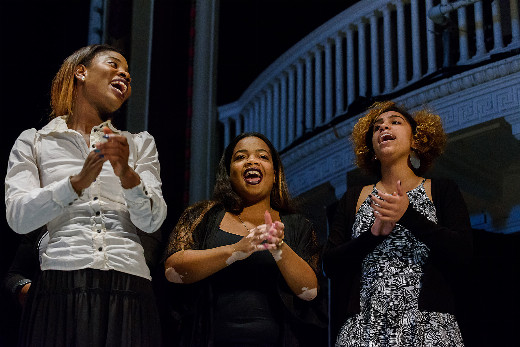
Gospel Choir Concert McDaniel College (12/06-12/06) |
|
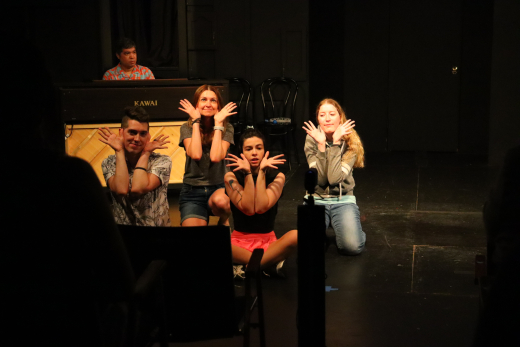
Unofficial! Improvised Musical Baltimore Improv Group (11/05-11/05) |

|
Mouth Stuff Maryland Ensemble Theatre (11/06-11/06) |
|
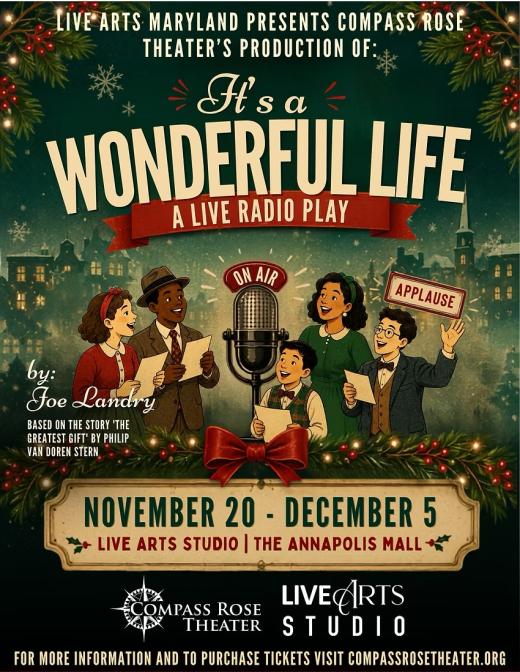
It's a Wonderful Life: A Live Radio Play Live Arts Maryland (11/20-12/05) |
|
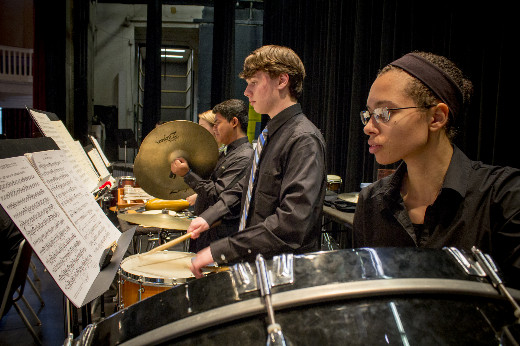
College Band Concert McDaniel College (12/04-12/04) |