


Season 2, Episode 5: Behind every summer is a community that keeps Fire Island alive. This episode explores the history of the beloved Pines Pantry through the eyes of its iconic Pantry Girls, alongside the volunteer firefighters of The Pines and Cherry Grove who protect the island from fires, hurricanes, beach erosion, and an uncertain future.
Review: HENRY 4.1 at Austin Scottish Rite Theater & How Much?! Studios
a Bold, Immersive Shakespearean Adventure
By: Victoria Schwarz

What happens when Shakespeare's political intrigue, family dysfunction, and questions of honor collide with Austin's contemporary theater scene? The result is HENRY 4.1, an ambitious, energetic, and thoroughly engaging production by Walking Shadow Shakespeare Project in collaboration with Austin Scottish Rite Theatre and How Much?! Studios. Under the imaginative direction of Stephanie Crugnola, this adaptation of Shakespeare's Henry IV, Part 1 transforms a centuries-old history play into an immersive theatrical experience that feels remarkably relevant to the political and social tensions of our own time.
Shakespeare's Henry IV, Part 1 follows three interconnected worlds, each with its own loyalties, ambitions, and conflicts. King Henry IV struggles to maintain control of a kingdom increasingly threatened by rebellion, while the fiery young Hotspur and his allies challenge the king's authority. Meanwhile, Prince Hal, Henry's son and heir, seems far more interested in drinking, mischief, and the questionable companionship of the irrepressible Falstaff than preparing for the responsibilities of the throne. As political tensions escalate, these three worlds move toward an inevitable confrontation at the Battle of Shrewsbury, where questions of honor, leadership, and personal identity come sharply into focus.
Walking Shadow Shakespeare Project has found an exceptionally creative way to bring these three worlds to life. Drawing inspiration from three distinct branches of Austin's music culture — outlaw country, indie dance (goth?), and hardcore punk — the production invites audience members to choose which story they will follow during the opening portion of the performance. Will it be the weary but powerful King Henry IV, the rebellious and somewhat irresponsible Prince Hal, or the passionate and impulsive Hotspur? Each character inhabits a distinct theatrical environment, allowing the audience to experience the unfolding drama from a different perspective before the separate narratives converge.
This choose-your-own-adventure approach is one of the production's greatest strengths. Rather than simply watching Shakespeare's characters from a distance, audiences become participants in the world of the play, moving through the performance spaces and finding themselves gently, and occasionally more directly, incorporated into the action. The immersive elements never feel like gimmicks. Instead, they offer an intriguing way to experience the competing perspectives that make this particular Shakespearean history so compelling.
Austin Scottish Rite Theatre provides a remarkable setting for this approach. The building's varied performance spaces lend themselves beautifully to four distinct environments, and the production team makes excellent use of the possibilities each location offers.
The throne room is sparse and functional, suggesting a contemporary seat of political power rather than the elaborate royal chambers we might traditionally associate with Shakespeare. Its simplicity emphasizes the business of governing and the considerable weight of authority. The bunker, meanwhile, is particularly impressive. Papers are scattered across tables, military strategies are laid out with miniature plastic soldiers, and characters move through the space with an urgency that reflects the frustration and instability of a rebellion taking shape. There is a wonderful sense that these people are desperately attempting to organize a revolution while the world around them threatens to unravel.
The tavern is equally exceptional, although for entirely different reasons. Graffiti, playbills, milk crates, plastic furniture, and a wonderfully eclectic assortment of other objects establish a decidedly less-than-respectable gathering place. It is a space that feels lived in, chaotic, and entirely appropriate for Hal and his companions. The contrast between these environments is striking, and each offers an immediate visual understanding of the people who inhabit it. When the action eventually moves to the battlefield, the wide-open performance space provides an effective canvas for the confrontation that has been building throughout the evening.
Cece Sanchez's costume design is another outstanding element of the production. Rather than attempting to recreate the clothing of medieval England, Sanchez embraces a contemporary aesthetic that draws upon punk, street goth, and Western influences to distinguish the different groups. These choices are visually exciting, but they also serve a significant storytelling purpose. Audiences can quickly recognize the cultural identities and social positions of the characters, even when Shakespeare's language and complicated political relationships require a little extra attention.
That attention to accessibility extends to the production's clever incorporation of contemporary communication and media devices. Modern technology becomes part of the storytelling, helping audiences follow the shifting alliances, political maneuvering, and interpersonal relationships. Shakespeare's language can sometimes require considerable unpacking, particularly in the history plays, and these familiar elements provide helpful points of connection without diminishing the integrity of the original work. The result is an adaptation that respects the text while recognizing that contemporary audiences bring their own cultural language to the theater.
The technical elements are thoughtfully integrated throughout. The lighting effectively establishes the character of each environment and helps guide the audience through the production's many transitions. The sound design is equally effective, although some of the media elements could benefit from additional volume adjustments to ensure that important information is consistently clear. These are relatively minor concerns in an otherwise remarkably cohesive production. Will Fynes, serving as the live score musician, contributes an additional layer of atmosphere and energy, helping connect the production's varied musical influences to its dramatic storytelling.
At the center of this ambitious undertaking is a talented ensemble led by several particularly memorable performances. Jazmine Noble Graves brings an impressive sense of authority and weariness to King Henry IV, capturing the frustrations of a ruler whose political responsibilities are compounded by disappointment in his son. Graves allows the audience to see both the public strength and private exhaustion of a monarch struggling to hold together a fragile kingdom.
Mike Crugnola is exceptional as Hotspur, delivering a performance charged with passion, intensity, and restless energy. His portrayal makes Hotspur's fierce commitment to honor and loyalty both understandable and dangerously consuming. Crugnola commands attention whenever he appears, creating a character whose conviction is as compelling as it is potentially destructive.
Jesse Ray Payne is outstanding as Prince Hal, successfully navigating the considerable distance between the prince's carefree public persona and the responsibilities he will eventually be forced to embrace. Payne brings charm, intelligence, and a welcome sense of mischief to the role, while allowing glimpses of the more thoughtful and calculating individual beneath Hal's seemingly irresponsible exterior. The contrast between Hal and Hotspur becomes particularly effective as their competing ideas of honor move toward their inevitable confrontation.
Yet the performance that simply must not be missed belongs to Taylor Flanagan as Falstaff. Flanagan is absolutely marvelous, bringing a delightful combination of comic timing, physical expressiveness, irreverence, and larger-than-life personality to one of Shakespeare's most beloved characters. Falstaff is a wonderfully complicated figure: boastful, dishonest, cowardly, clever, and somehow irresistibly entertaining. Flanagan embraces these contradictions with tremendous confidence, creating a character who can command a scene with a glance, a gesture, or a perfectly delivered line. It is a performance that provides much of the evening's humor while reminding us why Falstaff has remained such an enduring theatrical favorite.
The supporting ensemble contributes significantly to the production's success, helping establish the distinct personalities and tensions within each of the three groups. With so many characters and competing loyalties, maintaining clarity is no small task, yet the company works together to keep the story moving with purpose and momentum.
Particular recognition belongs to Stephanie Crugnola, whose work as director and producer demonstrates an impressive understanding of both Shakespeare's dramatic structure and the possibilities of immersive theater. Coordinating a production of this scale, with multiple performance environments, overlapping narratives, contemporary cultural references, and a large ensemble, is an enormous undertaking. Crugnola has created an experience that feels adventurous without becoming unnecessarily complicated, and the creative choices consistently support the larger story.
Andrew Solis's fight direction also deserves attention, particularly during the climactic battle sequence. The final confrontation is exciting, well coordinated, and dramatically satisfying, making excellent use of the available space and the physical abilities of the performers. It is a fitting culmination of the political and personal conflicts that have driven the evening.
Perhaps the most intriguing aspect of this production is the way its contemporary setting encourages us to reconsider the social commentary embedded within Shakespeare's work. Henry IV, Part 1 is concerned with legitimacy, power, loyalty, public image, generational conflict, and the ways people construct identities to suit their ambitions. These concerns are hardly confined to medieval England. In a world where political authority is constantly questioned, public personas are carefully manufactured, and competing groups struggle to define what loyalty and honor should mean, Shakespeare's observations remain remarkably recognizable.
The production's use of modern music cultures, media, and immersive storytelling makes those connections without forcing a particular interpretation upon the audience. Instead, we are invited to consider how these characters, with all their contradictions and competing priorities, might exist in our own communities. We recognize the exhausted leader, the passionate revolutionary, the reluctant heir, and the charismatic troublemaker. We may even recognize something of ourselves.
Walking Shadow Shakespeare Project has taken on an enormous challenge with HENRY 4.1, and the results are impressive. This is a production that demonstrates what can happen when a company approaches a familiar classic with imagination, confidence, and a willingness to experiment. The combination of strong performances, exceptional design, creative staging, and immersive audience participation makes for an evening that is both entertaining and intellectually engaging.
Whether you are a longtime Shakespeare enthusiast or someone who has always found the Bard a little intimidating, this production offers an inviting and exciting way to encounter one of his great history plays. Come prepared to move, to participate, to laugh, and perhaps to discover that the political struggles of fourteenth-century England are not nearly as distant from our own world as we might wish.
I highly recommend HENRY 4.1. It is inventive, ambitious, and wonderfully theatrical, with a particularly unforgettable Falstaff. Walking Shadow Shakespeare Project has created a Shakespearean adventure well worth experiencing.
Content Advisory: Recommended for mature audiences. The production contains staged violence, combat, mature language, drinking, criminal behavior, and adult themes involving political conflict, betrayal, and warfare. Parents should carefully consider the content before bringing children or younger teens.
HENRY 4.1 by William Shakespeare
Theater Company: Walking Shadow Shakespeare Project
Venues: Austin Scottish Rite Theater, 207 West 18th Street, Austin, TX, 78701 & How Much?! Studios, 6910 Shirley Ave, Suite L, Austin, TX 78752
November 6-22:
Scottish Rite: Nov 6, 20, 21, 2026: 8:00 p.m.; Nov 7: 6 p.m. - featuring live sets from three Austin bands; Nov 9, 21, 22: 3:30 p.m.
How Much?! Studios: Nov 11, 12, 13, 2026: 8:00 p.m.
Run Time: 2 hours and 15 minutes with a 15-minute intermission
Tickets: $10
Ticket Links: Scottish Rite: https://tickets.atxtheatre.org/events/henry-41-scottish-rite-theater; How Much?! Studios: https://tickets.atxtheatre.org/events/henry-41-how-much-studios
Broadway news in your inbox
Weekly top stories - unsubscribe anytime.
Weekly top stories - unsubscribe anytime.
Popular episode

|
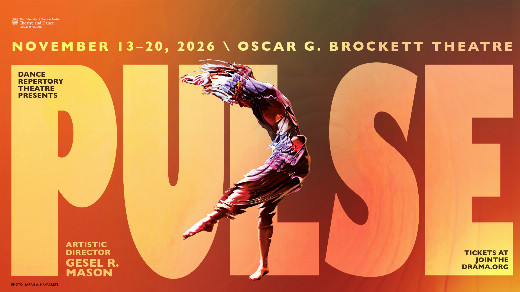
Pulse Oscar G. Brockett (11/13-11/20) |
|
The Visit B. Iden Payne (10/29-11/08) |

|
Winter Wonderettes TexARTS: Theatre & Academy (12/04-12/20) |

|
ALL MY SONS by Arthur Miller The Filigree Theatre (10/30-11/14) |
|
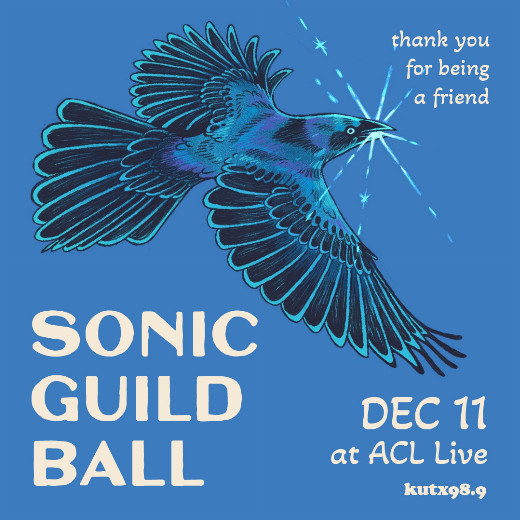
2026 Sonic Guild Ball ACL Live at the Moody Theater (12/11-12/11) |
|
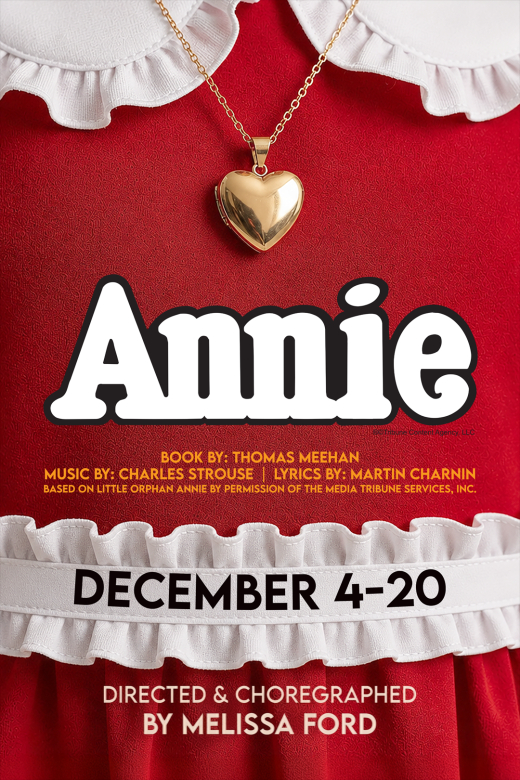
Annie BASTROP OPERA HOUSE (12/04-12/20) |

|
Our Our Town Rude Mechs (11/05-11/21) |

|
Honky Tonk Angels by Ted Swindley Southwestern University Theatre Department (11/13-11/22) |
|
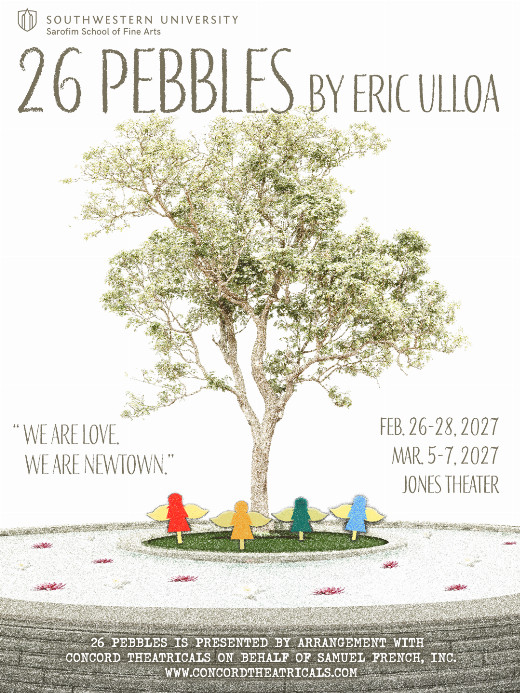
26 Pebbles by Eric Ulloa Southwestern University Theatre Department (2/26-3/07) |

|
Your Old Fashioned Die Hard Holiday Radiocast The Driskill Ballroom, The Driskill Hotel (12/22-12/23) |
Reader Reviews
To post a comment, you must register and login.