


When Broadway Musicals Are Reimagined- A Complete History
This fall, Broadway will welcomed a reimagined version of The Fantasticks, running at the Hayes Theatre.
Do you have a burning Broadway question? Dying to know more about an obscure Broadway fact? Broadway historian and self-proclaimed theatre nerd Jennifer Ashley Tepper is here to help with Broadway Deep Dive. BroadwayWorld is accepting questions from theatre fans like you. If you're lucky, your question might be selected as the topic of her next column!
Submit your Broadway question here!
The discourse surrounding reasons for reviving musicals on Broadway is a relatively recent phenomenon. These days, if a show is announced for a revival, a sentence that often follows is: “Why are they reviving it?”
A century ago, only the most popular musical entertainments were ever revived on Broadway. Musicals lasted a season and then basically disappeared. Rarely, hits entered the canon and were later revived. It was a special treat when audiences could see musicals revived the way they saw Shakespeare plays revived. Often, musical smashes would return only once, a few years after their original hit run. The reason was always simply so that more theatergoers could experience a given work and those who enjoyed it could see it again, with no thought given to bringing something new to the show or to how the piece might be deserving of a permanent, recurring spot in the canon.
In the late 19th century and early 20th century, several hit operettas joined the theatrical canon and inspired regular revivals. These included Gilbert and Sullivan classics like H.M.S. Pinafore, The Mikado, and The Pirates of Penzance as well as home-grown operettas like Blossom Time and Robin Hood. The Beggar’s Opera, considered to be one of the first musicals to ever play New York, in 1750, has been revived on Broadway six times, most recently in 1973. The Bohemian Girl, one of the most indelible romantic operettas in history, has been revived on Broadway 15 times since its 1844 premiere. While most revivals of musicals prior to a century ago were of operettas, the early musical comedy Little Johnny Jones, a 1904 George M. Cohan vehicle, returned to Broadway five times.
The early days of musical revivals didn’t call for a concept that was different from the original production. When a show was notable enough to be considered for a revival, the goal was for new audiences to have the opportunity to see exactly what had been seen before. Of course, there were different actors and creatives involved, but there were rarely any directorial changes or major adjustments to the script.
The landmark musical Show Boat, which opened in 1927, ushered in a new era for Broadway revivals. The door opened for a collection of important original American musicals to be established, and Show Boat was first. The original production closed in 1929 and was revived only three years later. It would thereafter be regularly revived, bringing the piece to new Broadway audiences each time. Of course, Broadway isn’t the only place to see an established musical. Show Boat has been seen in opera houses, regional theaters, summer stock, school auditoriums, and elsewhere, all over the world, since it came out. But Broadway is a leader in theatrical production, meaning that if a show is revived on Broadway, it is much more likely to be regularly seen on other stages too.
Following Show Boat, as the art form of musical theatre developed, more shows emerged that became canonical and ripe for revival. First came Pal Joey (1940), which set an interesting precedent for musical revivals. The original production was respected but somewhat misunderstood and underappreciated as well. Some critics and audiences balked at the unlikeable protagonist and dark themes. When the show was revived the following decade, Broadway’s first Pal Joey revival ran longer than its original production. Time, exposure, and further development of the form had allowed for audiences to catch up to Pal Joey, a pattern that would be replicated with later musical revivals including recent ones like Merrily We Roll Along and Chess. In the modern age, Pal Joey was the pioneer of this kind of comeback, epitomized by the record-breaking Chicago revival, which has run on Broadway for nearly 30 years in comparison with the original’s two year- run.
After Show Boat and Pal Joey, as Broadway moved into its Golden Age of musical theatre, the works of Rodgers and Hammerstein, from Carousel to The Sound of Music, entered the classics, as did a variety of other major works from those years, from Guys and Dolls to My Fair Lady to Fiddler on the Roof. This is where the shift started to happen, leading to musical revivals becoming their own sub-genre within the art form. These shows became such permanent pieces of the architecture of Musical Theatre that their popularity led to regular revivals. Musicals were not just for a season; they were artistically enduring pieces of art that warranted regular revisits in the form for which they were originally written: live performance.
New York City Center, which currently presents the Encores! series, has been reviving musicals that deserve another look in various ways, for over 80 years. In the 1940s, City Center brought shows like The Desert Song, Carmen Jones, and The Pirates of Penzance back to the New York stage. At the time, their shows were sometimes considered Broadway contracts, and sometimes eligible for Tony Awards. In the mid-20th century, they revived Show Boat twice and added Broadway classics to the worthy-of-revival collection, including Brigadoon, Carousel, South Pacific, Guys and Dolls, and Finian’s Rainbow.
The increasing popularity of Broadway musical revivals (thanks to the Golden Age) is exactly what led to the invention of reimagined Broadway musical revivals. The idea that a musical was great, and had been seen in its original form plenty of times—but still deserved to be seen—sparked the creativity of artists and led to an exciting slate of 1970s musical revivals on Broadway that reimagined shows.
Only nine musicals were revived on Broadway during the entire 1960s. In comparison, the 1970s brought us 39 Broadway musical revivals! This was partially inspired by nostalgia; Broadway wanted to look back to a different time of less complex, lighter works. The roaring 20s delight, No, No, Nanette, was a huge smash in its 1970s revival for this reason, and the college-set charmer Good News, a relic of the 20s, was revived for this reason as well, as was Whoopee! Even 1910s shows like Very Good Eddie and Irene had a comeback.
There were also major pioneers in the 1970s as far as productions that challenged racial assumptions and reimagined what casting could be. This actually started with a non-revival in the previous decade. In 1967, the original Broadway production of Hello, Dolly! which had been running for several years, did a casting switch-over, creating an all-Black cast led by Pearl Bailey. The 1970s brought the same concept to Guys and Dolls, with an all-Black cast revival. Some revivals, like the 1973 Pajama Game, brought a color conscious casting to their lineups that had not been present during the original productions, leading to new diversity in casting.
Many of the 1970s revivals wanted to celebrate and capitalize on the fact that the art form now had a permanent oeuvre of worthwhile works that new generations should see. As such, some presented the works without any alterations, and others had the instinct to shape the show for a new time. The 1976 Threepenny Opera featured a new and modern book. The 1976 Porgy and Bess changed the perception of the show from an opera to a musical. The 1974 Candide valuably further developed the show, conceived it as an immersive piece, and turned it from a cult treasure into a revivable classic. At the same time, many of Broadway’s musical revivals presented the shows as they were, simply putting up existing versions in similar stagings so new audiences could attend.
At the same time, there was a sentiment that the greatest stars of a given era should get a shot at some of the greatest roles, not at summer stock but on Broadway. The 1970s gave us Angela Lansbury in Gypsy, an On The Town with Bernadette Peters, Donna McKechnie, and Phyllis Newman as the three leading ladies, Sandy Duncan flying into Peter Pan, Stop The World-I Want To Get Off as a Sammy Davis Jr. vehicle, and Where’s Charley? as a Raul Julia vehicle. To a degree, this kind of casting inherently led to reimagined productions, shaped around the talents of the revival’s star. At this point though, Broadway still rarely saw musical revivals that were majorly reimagined from their original concepts. Candide was one exception, newly conceived in order to fix the reputation of the original. Other much older shows had their books updated in order for language to keep up with modern audiences. But the trend of reimagining of a musical on Broadway, whether it had previously been a flop or a hit, with the intention of looking at the work in a completely new way, was still ahead.
The 1980s brought Broadway several musical revivals that infused their original sources with modern music. From the successful 1981 Pirates of Penzance to the unsuccessful 1989 3 Penny Opera (title deliberately altered), the decade featured a variety of canonical works brought to a new generation by way of pop, rock, contemporary humor, and edgy casting choices. 1987’s Anything Goes gave a 1930s musical comedy a new spin and brought it back to our collective attention. Both Anything Goes’ notable reimagining off-Broadway in 1960s and the 1987 Patti LuPone-led Broadway revival gave the title a new lease on life. It became more common to see new books for the revivals of musicals that had originally premiered prior to Oklahoma! New adaptations were intended to shape the works for modern ears and dramaturgical sensibilities.
The 1990s were responsible for the sensation whereby shows that had originally been successful were revived with magnified, monstrous success. The previously mentioned Chicago, which played two years in 1970s but was somewhat misunderstood and overshadowed by A Chorus Line, was proven ahead of its time when the 1996 revival became the longest running American musical in Broadway history, chalking up 30 years on the boards. The 1998 Cabaret revival stunned a new generation of theatergoers and led to the rare phenomenon of a revival production being revived. These productions both had distinct, original, directorial concepts.
At the same time, Golden Age hits like Guys and Dolls, Damn Yankees, How To Succeed, and Annie Get Your Gun were revived faithfully, but through a shiny, 1990s lens. And Broadway continued to look at classic works with a new eye on who could play them, with instances like Whoopi Goldberg leading A Funny Thing Happened on the Way to the Forum. By the 1990s, it was a given that revivals would be seen alongside original musicals on Broadway. In 1994, Best Revival of a Musical got its own Tony Award category. Most productions were not seen as either standard or reimagined, but rather as somewhere in between. The long-running 1994 Grease revival didn’t have a completely different concept than the original, but there was no mistaking the two productions for each other either.
It wasn’t until the 21st century that it really caught on for celebrities who wanted to do a Broadway musical to be far more interested in appearing in a revival than an original production. Revivals were thought to be a proven, safer entity. Precursors like Chicago and Grease showed how celebrities might slot in to classic shows. Names who could carry a musical used their power to bring revivals to Broadway in increasing numbers in the 2000s. Some of these productions were reimagined, like Nine starring Antonio Banderas and others were more standard conceptually, like Sweet Charity starring Christina Applegate or A Little Night Music starring Catherine Zeta-Jones. The first decade of the 21st century saw 40 musical revivals on Broadway, giving two of our greatest stars a crack at Rose in Gypsy (Bernadette Peters in 2003 and Patti LuPone in 2008), bringing A Chorus Line and The Rocky Horror Show to new generations too young to have seen the originals, and re-staging many canonical musicals in relatively typical fashion.
But the 21st century was also when musicals began to be legitimately reimagined on Broadway in increasing numbers. Musical revivals had been prolific on Broadway for long enough that today’s question began to be asked with more frequency: “Why now? Why this show?” Sometimes the answer was about bringing a vital work to new audiences as created by new artists, period. While a degree of reimagining was present, the emphasis was on relating to the work in modern day, as with Hair, rather than seeing it from an entirely new angle. But increasing numbers of revivals did begin to change the angle as well.
The 2003 revival of Big River reimagined the show through the creative lens crafted by Deaf West Theatre. Deaf actors and hearing actors performed side by side, utilizing American Sign Language to tell the story. This brought new resonance to the show, which starred Michael Arden; Arden would take the director’s role when Deaf West returned to Broadway to take a new look at Spring Awakening in 2015.
John Doyle’s actor-musician musical revivals also took root in the 2000s on Broadway, with first Sweeney Todd in 2005 and then Company in 2006. The text of these shows was re-examined as actors took up instruments, comprising the orchestra at the same time as they played the roles. This brought new meaning and intent to the script and inspired audiences to look at the intersection of the shows’ scores and characters in new ways.
New books and new material were seen more and more often, even attached to shows that had succeeded previously with their existing librettos. Important conversations about race came into play as David Henry Hwang updated Flower Drum Song’s book in 2002 and West Side Story was given Spanish lyric translations by Lin-Manuel Miranda in 2009.
In great contrast to how things had been half a century before, it was now not a given that a revived musical on Broadway would be done in standard fashion. Original productions were rarely re-staged. Ragtime was done with a more intimate lens, Jesus Christ Superstar given a more modern rock concert setting, Follies tried with a grittier approach. And inevitably, the farther away the timeline got from each original production, the more a re-set became the necessary norm.
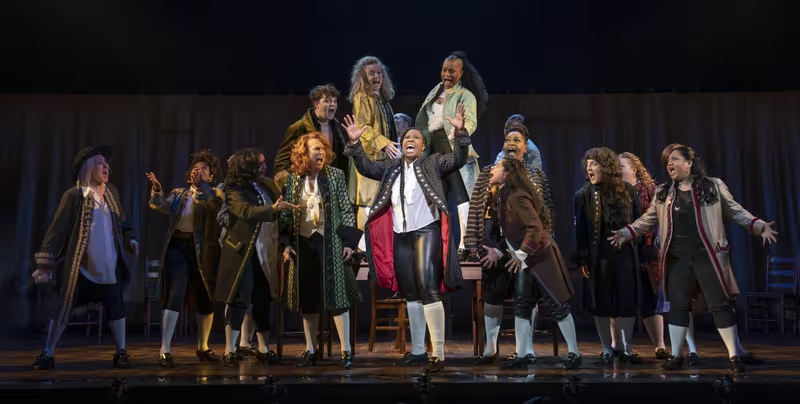
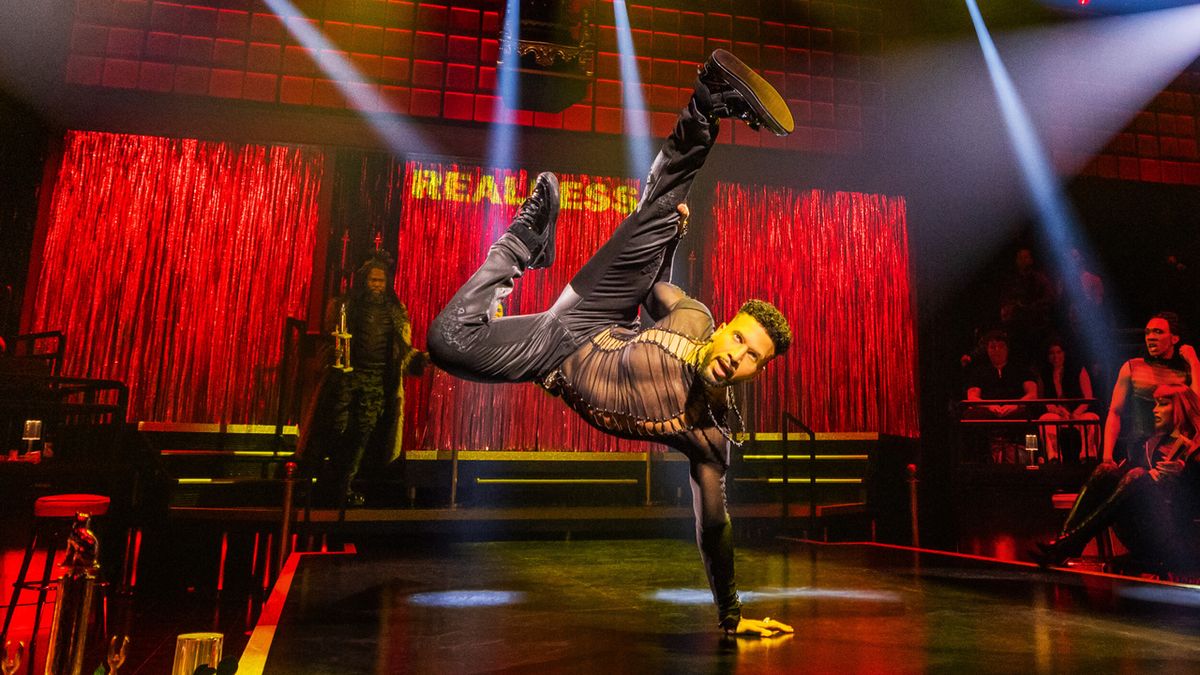
The 2010s and 2020s brought reimagined musical revivals to Broadway in increasing numbers. Hits like Cats were given new leases on life with dramatically reimagined productions like Cats: The Jellicle Ball. Merging the long-running 1980s feline musical with LGBTQ+ ballroom culture resulted in a highly acclaimed and innovative event on Broadway. Another substantially reimagined revival of a hit was 1776, which in 2022 got an all-female, transgender, and non-binary cast production, with this interrogation of gender layering new meaning onto the historic story. Jamie Lloyd entered the scene, stripping away the traditional spectacle from Sunset Boulevard and giving the show a bold new concept, including the integration of live film elements. Lloyd will return with his take on Evita later this season. 2019 saw a production that received the nickname of ‘Oklahoma! That f-cks’, a distinction that theatre folks of the 1940s could never have imagined. More and more, these classic works are being seen as worthy of not just revival but re-interrogation.
While not given hugely reimagined concepts on the level of the examples above, previously underappreciated musicals including Chess, Merrily We Roll Along, Parade, Side Show, and Caroline or Change were revived on Broadway with intentional adjustments from their original stagings. The landscape of musical revivals on Broadway now allows for the revival of worthwhile shows that did not hit commercially in their original productions but deserve another chance.
Of course, Broadway will seemingly always present traditional revivals of musicals as well. The past century has illustrated a major shift in how we think about revivals, but bringing back worthwhile shows without a reimagined concept continues to have value, as these shows are brought to life with new artists for new audiences. The level of reimagining present in a musical revival has become more of a spectrum and less of a yes/no question.
Sign up for all the news on the Fall season, discounts & more...


.png?format=auto&width=365)





Comments
To post a comment, you must register and login.