


How Have Broadway Theater Sizes Changed Over the Years?
Do you know when Broadway theater capacity rules changed?
Do you have a burning Broadway question? Dying to know more about an obscure Broadway fact? Broadway historian and self-proclaimed theatre nerd Jennifer Ashley Tepper is here to help with Broadway Deep Dive. BroadwayWorld is accepting questions from theatre fans like you. If you're lucky, your question might be selected as the topic of her next column!
Submit your Broadway question here!
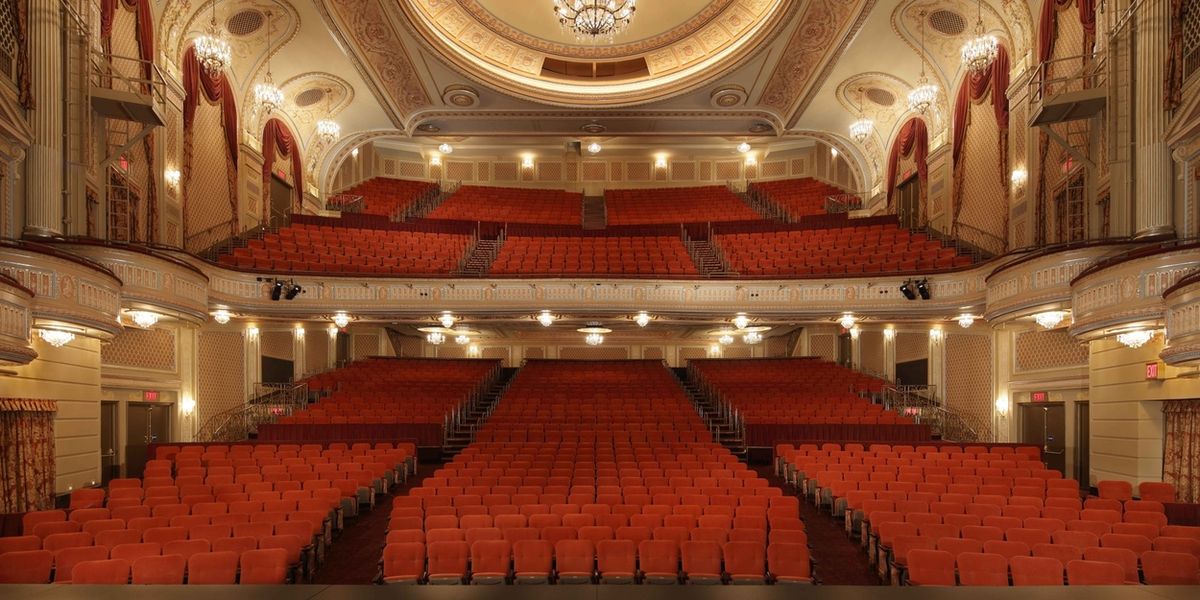
Currently, there are 41 venues considered to be Broadway theaters. In order to be awarded this distinction, these houses must follow several rules. They must have 500 or more seats. They must adhere to specific union contracts. And they must be located within a certain set of blocks in midtown Manhattan.
Having separations between types of theaters in New York is a positive thing for several reasons. For one, differing standard contracts based on theatre size allows for professionals to be paid fairly based on the amount of possible income for a production. (Of course, this has become more difficult to govern during the era of variable pricing and third party internet sales.) These days, the distinction between Broadway, off-Broadway, and off-off-Broadway and beyond also works to shape award season, pitting productions against each other that are on as equal playing ground as is possible.
Broadway’s current theater capacity rules have not always been how they are now. The distinctions between Broadway, off-Broadway, and other types of venues have changed over the decades as the industry has evolved.
Have you ever heard reference to the 1927-1928 season on Broadway with its record number of ‘Broadway productions’? References to this year are often made and framed as though everything about Broadway was more robust and healthy then. But while there were about 280 new productions during this season, the only way that was possible is because most ran for an extremely short period of time, vacating their theater and allowing the next show to come in. The industry worked very differently at that point. Further, and relevant to the topic of theater capacity and Broadway vs. off-Broadway, this count of 280 productions included shows at venues like the Provincetown Playhouse and the New Amsterdam rooftop theater (then called the Frolic Theatre)—which would most definitely not be considered Broadway by today’s terms.
In the early days of the 20th century, if a show was in the midtown neighborhood and featured all professional thespians, it was almost always considered a Broadway production, regardless of the size of the house. This was prior to awards coming into play, necessitating differentiation. There were no Tony Awards, Drama Desk Awards, New York Drama Critics’ Circle Awards, Outer Critics Circle Awards, Lucille Lortel Awards, and so on. Theatrical unions also were in a much earlier chapter of their existence and so contracts were not as firmly determined based on theater level.
At this point, there were theaters considered to be Broadway houses that had only about 300 seats. The Princess Theatre, later called the Lucille La Verne Theatre and Labor Stage Theatre, opened in 1913 on 39th Street, back when the center of the theatre district was a bit farther south than it is today. At first, the Princess presented short plays. Because the theater featured professional thespians, it was considered a Broadway house. This designation continued even when the venue’s longest running show moved in, although it featured amateur actors (alongside a professional creative team); this was Pins and Needles, a revue put together by the International Ladies Garment Workers Union. The theater’s last legit production closed in 1947 and the house was demolished in 1955.
The Punch and Judy Theatre, with 300 seats, was also considered a Broadway house. From 1914 to 1932, this theater on 49th Street hosted intimate productions from its home between Broadway and 6th Avenue. Like many Broadway houses at the time, it struggled during the Great Depression and eventually became a movie theater. The Punch and Judy had very unique theming, dedicated to the Elizabethan era, including medieval tapestries and chandeliers, ushers in costume, and leather benches for seating. It would eventually host the New York premiere of Deep Throat and be demolished in the 1980s.
A block away on 48th Street was the President Theatre, in legit operation from 1926 to 1956. Some of the President’s shows were considered to be Broadway and some considered to be Off-Broadway. In fact, several productions billed themselves as “Off-Broadway on Broadway”. In the 1920s, the off-Broadway movement began to birth avant-garde productions in small houses, usually in Greenwich Village. Any theater in the “Broadway box” in midtown was still considered to be a Broadway house because of its location. But in the mid-20th century this started to evolve and the President being alternately considered Broadway or off-Broadway depending on its show is emblematic of this.
While the Princess, Punch and Judy, and President are long gone, we do still have one of our 300 seat Broadway houses that was built in the early 20th century—and it’s still a Broadway theater! When today’s Hayes Theatre was erected in 1912, it was called the Little Theatre and it had a capacity of only 300. The following decade, seats were added to expand the profit margin. Today, the Hayes is our smallest Broadway house, at 597 seats.
In 1938, Actors’ Equity created the first “Little Theatre contract”. This governed the rules for payment and treatment for Equity members who appeared in non-commercial productions in small spaces. At this point, the differences between the two major types of theater being created in New York were not the same as they are today with Broadway vs. off-Broadway. That said, the seeds for each type of theatre were present. In the 1930s, there was Broadway, which mostly disregarded location and theater size but had to consist of professionals creating a show with commercial intent (i.e. an open-ended run intended to turn a profit). Then there was the Little Theatre contract, which was in play for what were considered non-commercial productions: shows that had limited runs and/or featured performers who weren’t considered professional since they weren’t members of the union—which were often performed in smaller spaces.
Following World War II, off-Broadway began booming. Collectively, there was a need for places that were driven by artistic rather than commercial intent, where worthwhile shows could be presented even if they might have a smaller potential audience. (Of course, off-Broadway still operated within the world of capitalism and much of Broadway was driven by artistic purpose—so the separation by intent was as blurry at the start as it always would be.) In 1949, Actors’ Equity began efforts to hold all theaters starting to be considered off-Broadway to their own standard contract. At this point, ‘off-Broadway’ was often roughly considered to define theaters with less than 200 seats that employed a majority of non-Equity actors.
In 1950, a new house opened in the theatre district that invigorated the conversation of how to determine what was a Broadway house vs. an off-Broadway house. The Arena Theatre, created in the ballroom of the Edison Hotel on 47th Street, had a capacity of 500, was near Times Square, and featured stars. But, its type of programming—repertory productions, presented in the round—pointed to what the industry considered to be off-Broadway. New York City Center also confounded efforts to classify in the mid-20th century. Again, its size, location, and casting said ‘Broadway’ but its programming—revivals for limited runs—was what audiences had come to consider being synonymous with off-Broadway. At this point, distinctions had to made clear for the sake of multiple union contracts and award designations but the rules that should govern what was considered Broadway were hotly debated by all governing organizations and not always consistent across venues.
Another thing that affected these conversations was the way that newspapers treated the productions. In the early 1950s, press began increasingly covering theatre beyond Broadway in New York City. That said, for awhile, many journalists claimed that the term off-Broadway covered absolutely everything that wasn’t Broadway, even what we’d consider today to be off-off-Broadway, concerts, or student theatre. Amateur, professional, and semi-professional shows were all lumped together, if they weren’t ‘Broadway’. Critics frequently mentioned and made jokes about the far-flung locations of off-Broadway productions and how many subways, buses, and leaps of danger one had to take to ‘travel’ there. Much of the time, the papers wouldn’t cover off-Broadway at all.
During this time, there was a reductive stigma that because anything off-Broadway was non-commercial, it was unprofessional. The business model where a producer would attempt to run a show for as long as the audience would allow was considered the professional model whereas off-Broadway’s scrappy beginnings and general intent to present theatre ‘for the sake of art’ without making money or hiring based on union status put it in the category of unprofessional.
Revivals like Summer and Smoke at off-Broadway’s Circle in the Square downtown in 1952 and The Threepenny Opera at Theatre de Lys (now the Lucille Lortel) in 1954 changed the conversation. These off-Broadway productions were critically acknowledged and acclaimed and became financial successes with essentially open-ended long runs. The perception of what off-Broadway productions could be was shifting. Before the decade was out, The Phoenix Theatre would be granted an exception to present off-Broadway productions in a large capacity space, again challenging the conversation, and the League of Off-Broadway Theatres and Producers would be founded.
The early 1960s found the venue on 46th Street now known as Sony Hall joining the Broadway vs. off-Broadway debate. The space had been Billy Rose’s Diamond Horseshoe, a club not considered a theatrical space at all—but was now converted to the Mayfair Theatre, a 299-seat house. Reports at the time noted that there were now two off-Broadway contracts: one for 199-seat theaters and one for 299-seat theaters. 300 seats and up was still arguably a Broadway space as long as there were professionals around. So the Mayfair, in the heart of Broadway and with professionals on board, became classified as an off-Broadway house, with its 299 seats. In 1970, the theater changed its contracts so it could be considered a Broadway theater instead and thus be eligible for more press coverage and awards consideration. The Mayfair was not the only theater with this kind of back-and-forth between categories at the time.
In 1962, the Stage Directors and Choreographers Society began efforts to organize and standardize off-Broadway contracts for the sake of fair wages and terms for their members. They defined off-Broadway as theaters with 299 or fewer seats and finally entered an agreement with the League in 1970. From then on, most new off-Broadway houses were built with 299 seats in order to be classified as off-Broadway but maximize capacity for income’s sake. By 1964, it was reported that over 250 off-Broadway groups were operating in New York—not over 250 distinct off-Broadway spaces, but 250 independent troupes and organizations dedicated to assembling productions.
The off-Broadway scene by 1974 was very different from what it had been only two decades earlier. In 1974, a strike called for an increase in the maximum number of seats in what was considered an off-Broadway house. As a result, off-Broadway capacity maximum was raised from 299 to 499. Professional artists fought to do this so that off-Broadway could be commercially viable and thrive, given economic realities. This was a far cry from what were widely considered to be off-Broadway’s intentions and structures in the 1950s. Off-Broadway had grown to encompass the work of many professional theatre makers who wanted to make sure that shows in smaller houses and less central locations with fewer resources could be sustained.
From 1974 onward, Broadway theaters would officially have a minimum of 500 seats. But, a few exceptions were made for Broadway houses of 499 seats, called “middle houses” on distinct contracts. These theaters, largely in play in the 1970s and 1980s, allowed for more alternative shows to be presented but be considered Broadway, again blurring the line between the perception of Broadway vs. off-Broadway. The Playhouse, later Jack Lawrence, on 48th Street from 1970 to 1987 was one of these, opening shows like Don’t Bother Me, I Can’t Cope! and Quilters. In 1979, the former Latin Quarter night club was transformed into a legit space called the 22 Steps (eventually renamed the Princess and then the Latin Quarter again) where shows like Pump Boys and Dinettes and André De Shields’ Haarlem Nocturne found a home. Roundabout’s former Broadway space, the Criterion Center Stage Right, operated from 1988 to 1999 in an oddly shaped space that was once part of the Criterion movie theater. All three of these Broadway houses had 499 seats and were on a special contract. With their closure, a chapter ended for 499-seat Broadway theaters.
In the 1990s and early 2000s, more off-Broadway houses at 499 seats began operating, while Broadway theaters at this capacity ended their reign. Economic realities and growing production costs meant that both off-Broadway and Broadway theaters needed more seats in order to survive and be financially viable—many off-Broadway shows needed 499 seats in order to break even and run shows and many Broadway shows needed far more than 499 seats and couldn’t survive on that amount. There was thus a boom in 499-seat off-Broadway spaces being built or opened in existing spaces, including the Variety Arts, New Victory, Daryl Roth, New World Stages, and Stage 42. A few decades earlier, a 499-seat house featuring professional actors would naturally have been considered a Broadway theater, but now these were the epitome of what off-Broadway stood for. By this point, there were multiple levels of contracts that determined actor minimum payment at off-Broadway houses based on capacity and many other unions involved as well. Today, our smallest Broadway theater has over 500 seats and many of our off-Broadway houses operate at a capacity of 499.
Photo Credit: Whitney Cox
Prefer BroadwayWorld in Google Search?
Add us as a preferred source so our stories show up more often in Top Stories and Google’s AI answers — for you.
Sign up for all the news on the Fall season, discounts & more...








Comments
To post a comment, you must register and login.