


Did You Know That These Broadway Shows Originally Had Different Names?
Do you know what these Broadway shows were originally titled?
Do you have a burning Broadway question? Dying to know more about an obscure Broadway fact? Broadway historian and self-proclaimed theatre nerd Jennifer Ashley Tepper is here to help with Broadway Deep Dive. BroadwayWorld is accepting questions from theatre fans like you. If you're lucky, your question might be selected as the topic of her next column!
Submit your Broadway question here!
Perhaps the most well-known instance of a show changing titles during the development process belongs to the groundbreaking 1943 phenomenon, Oklahoma! The Rodgers and Hammerstein musical that changed the art form in terms of subject matter, integration of elements, and more was originally titled Away We Go! when it went out of town for a New Haven tryout. Expectations were low; Hammerstein had had several flops in a row and Rodgers had just lost his former writing partner, Lorenz Hart.
In hindsight, folks just think of Oklahoma! as a hit. But back in 1943, professionals were cabling back to New York about how hopeless the show was and calling a musical Oklahoma! seemed as odd as calling a musical New Jersey! The latter example was noted by successful writer Helene Hanff, who was a press assistant working in The Theatre Guild office when Oklahoma! opened. She later wrote a terrific book called Underfoot in Show Business about her early days working in theatre. The book includes the tale of how she missed Oklahoma!’s opening night. She was tasked with putting an exclamation point on every program, poster, and print where the show’s title appeared once it was decided that the musical would be Oklahoma! and not Oklahoma—and promptly fell asleep after finishing the task.
Why did the show formerly known as Away We Go! change its name? During the out of town tryout, the title number with its vibrant staging and vocal arrangement proved to be a show-stopper. So the first Rodgers and Hammerstein collaboration strategically changed its name to match its hit song. The rest is musical theatre history.
Oklahoma! is far from the only instance where a musical changed its title along the development road.
The next decade, another major musical phenomenon—that wouldn’t exist without the innovations made by Oklahoma!—hit Broadway. This was My Fair Lady (1956), Alan Jay Lerner and Frederick Loewe’s adaptation of the George Bernard Shaw classic, Pygmalion. According to Lerner’s memoir, The Street Where I Live, My Fair Lady’s creative team had trouble agreeing on a title. They finally came to a consensus on the title that they collectively found least objectionable—although no one was passionate about it. This was My Fair Lady—which turned out to work well for them!
While My Fair Lady was the title in place by the time the show had its first public production, the musical’s Working Title during its initial development was My Lady Liza. In fact, most of the show’s contract contain that title. Ironically, My Fair Lady was the title of a Gershwin musical from 1925—but only out of town, before that show’s title was changed to Tell Me More!
Similarly, the early rock musical Bye Bye Birdie (1960) had the Working Title Let’s Go Steady during its development in the late 1950s. Bye Bye Birdie originated with fledgling producer Edward Padula, who wanted to present a happy teenage musical. As he brought creative team members on board, including composer Charles Strouse, lyricist Lee Adams, book writer Michael Stewart (after a series of other writers), and director-choreographer Gower Champion, the show evolved into a more satiric look at youth culture. The title Bye Bye Birdie centered the teen idol at the story’s center, Conrad Birdie.
Just like with Oklahoma!, it was a would-be title song that changed the name of Hello, Dolly! (1964). The Jerry Herman-scored vehicle for a mature female star was initially titled Dolly: A Damned Exasperating Woman, a reference to a line in the show. It’s hard to imagine that title would’ve made it all the way to opening night on Broadway, since it would have required censoring in some publications. When Louis Armstrong’s cover of “Hello, Dolly!” became a massive hit, the show adjusted its title accordingly.
Individual songs often guided Golden Age Musical creators in the titling of their musicals. While Mame (1966) was initially called My Best Girl and that song is reprised three times in the show, the simpler title Mame emerged as victorious based on how that showstopper played.
Later that same year, a highly anticipated musical came to Broadway that closed after only four previews. Breakfast at Tiffany’s (1966) starred Mary Tyler Moore and Richard Chamberlain and was based on the beloved Truman Capote novel of the same name. Initially, the musical version of Breakfast at Tiffany’s was called Holly Golightly. In the 1960s, stage adaptations often prioritized having different titles than their source material to differentiate. In opposition to how adaptations are marketed today, where audiences want to consume different versions of the same intellectual property, when the movie The Apartment was turned into a musical, it was called Promises, Promises. Similarly, Breakfast at Tiffany’s was at first called Holly Golightly before it was decided that the musical was in such trouble that it had to capitalize on the one thing going for it: the affection for the source material.
In the 1970s, a musical changed its title on the journey to Broadway for a most unique reason. The first show ever at the Gershwin Theatre, which was initially called the Uris, was Via Galactica (1972), a rock musical set in space. The show’s original title was Up! But when it went on the new theater’s marquee, the signage read: Up! Uris… an unintentional vulgar insult.
Another short-lived rock musical of the 1970s also had a different title during development than it wound up with on Broadway. Rockabye Hamlet (1976) originally had the title Something Rockin’ in Denmark, poking fun more lightly at the notion of turning the Shakespeare classic into a rock opera.
The popular movie about the origins of Facebook, The Social Network, finds one character suggesting “Drop the ‘The’. Just ‘Facebook’. It’s cleaner.” Indeed, Facebook was originally called The Facebook… but not for long. The 2017 musical Bandstand had a parallel journey with its name, as it was first titled The Bandstand before the ‘The’ was dropped.
2009 Pulitzer Prize-winning musical Next to Normal had the name Feeling Electric during much of its development—including its New York Musical Theatre Festival presentation in 2005. The original title song did conclude act one during Next to Normal’s 2008 off-Broadway run but was cut before the move to Broadway in 2009.
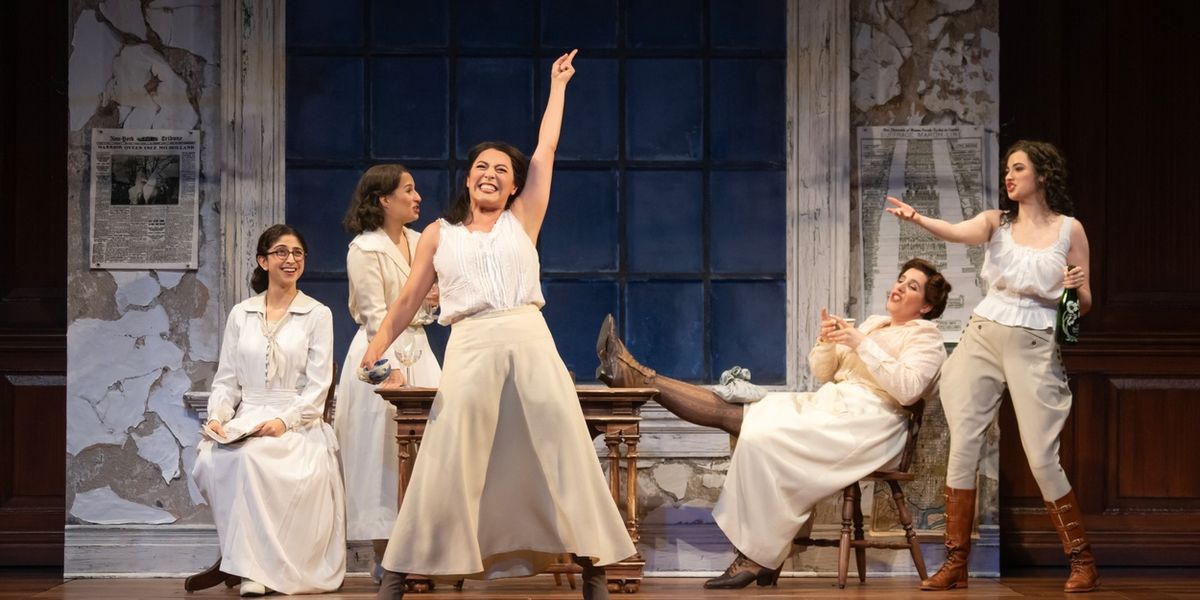
If not for the COVID-19 pandemic, Suffs might have been titled Suffragist or The Suffragists. Shaina Taub’s chronicle of the suffragist movement was supposed to land at The Public Theater in 2020 but was delayed due to the shutdown. During much of its development, the show had the above slightly longer titles.
Should Stephen Sondheim’s Road Show ever make it to Broadway, it might become the Broadway musical with the most title changes during different public productions. Having been called Bounce, Wise Guys, Gold!, and eventually Road Show over the years, Sondheim and John Weidman’s show about the Mizner brothers has played multiple times off-Broadway but has yet to make a Broadway bow.
Of course, there are also shows that have switched titles after Broadway. But that’s a whole other story!
Sign up for all the news on the Fall season, discounts & more...
.jpg?format=auto&width=300)





Comments
To post a comment, you must register and login.