


Interview: 'Something Is Missing From The Way We Portray Circus': Writer And Director Jack Horner On Developing Jim Tully's CIRCUS PARADE
'The circus should not always be spectacular'
For Jack Horner, Circus Parade is a story 20 years in the making. First discovering Jim Tully’s raw and uncompromising account of life inside an early 20th century American circus while studying circus himself, Horner immediately saw something which had rarely been brought to the stage: not the sequins, spectacle and romanticism of the circus, but the sawdust, sweat, hardship and humanity beyond the tent.
Described by Horner as ‘a new kind of circus musical’, Circus Parade fuses live music, physical theatre, storytelling and circus to explore a community of outsiders who find one another on the road. Against a backdrop of poverty, racism, exploitation, class division, loss and survival, these characters discover friendship, love and a sense of family. As next year marks 100 years since the publication of Circus Parade, Horner talks about the extraordinary journey from a book he could not put down as a student, to a deeply personal piece of theatre, why he refuses to sanitise its darkest stories, and how circus can become far more than spectacle.
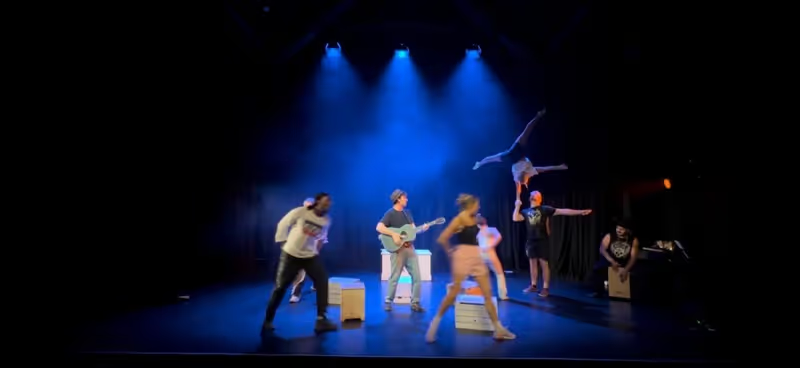
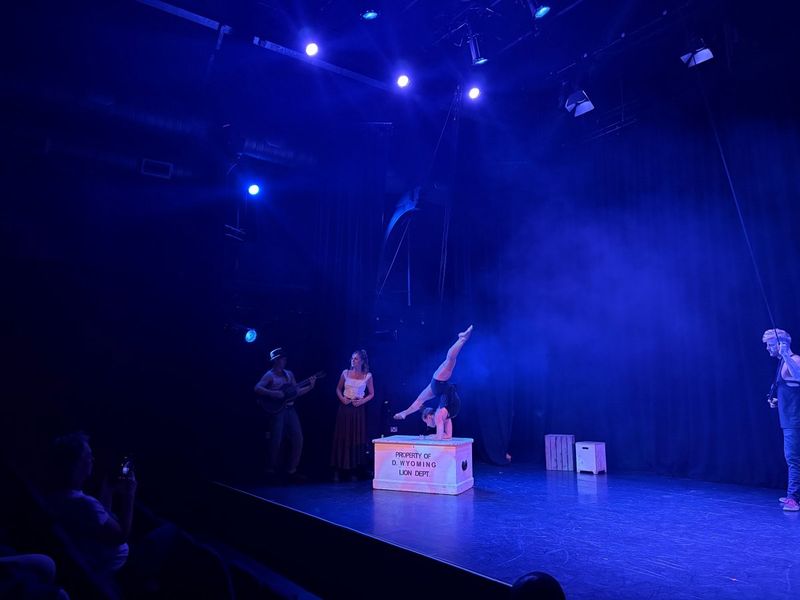
Circus Parade spent a week in development with a cast and creative crew in August 2026, culminating in a performance of four scenes and six songs at Jackson's Lane on 28 August 2026.
What was it about Jim Tully's Circus Parade, which first made you think this needs to become a piece of theatre?
I was a student when I first picked up Circus Parade. There was a wonderful library at the college, and I remember sitting down and reading the first page. I couldn’t put it down. I was immediately inspired by the idea of bringing it to life, and I started making notes. I’ve been working on those ideas, sporadically, ever since.
Jim Tully was known as a pioneer of hard-boiled American fiction, and what really struck me was the way he writes. His sentences are short and direct, but somehow he creates an incredibly vivid world.
When I first read it, I remember thinking, I’ve never seen anything like this before. But twenty years ago, when I was in my third year as a student, I did not have the knowledge or experience to know how to turn it into a piece of theatre. Now, I feel I’m at the right point in my career, and perhaps more importantly, that this is the right time to tell this story. There’s something missing from the way we often portray circus. We tend to see the spectacle, the glamour and the extraordinary skills, but rarely do we look at the raw reality of the working environment and the people who live it, the hardship, the exploitation, the camaraderie and the survival. The circus should not always be spectacular.
Tully experienced circus from the inside as well as poverty, homelessness, and exploitation. How important was it to preserve the rawness and honesty of his writing rather than romanticising the circus?
In Circus Parade, Tully has used real-life events. It is what he saw and how he lived. Tully doesn't coat it in sequins or glitter. This is the sawdust of a story, outside the tent. We rarely see any stories from inside, he leans towards the hardship. The people, who worked on the circus back were red lighted, beaten up. They were slaves, pretty much, all ruled by tyrants. Now I'm not saying Barnum was a tyrant, but Tully sure seemed to think he was.
What do you think audiences today might recognise in Tully's world, particularly when it comes to inequality, exploitation and people living on the margins of society?
I’m working with Giles Terera, our dramaturg, and when he read my first draft, he said, “This is a microcosm of the world today.” That was something I was very consciously trying to achieve, because I think the book itself holds up a mirror to society. Tully was writing about the early 1900s, but when you strip away the period, so much of what he describes is still with us. We haven’t moved on as far as we might like to think.
Racism and exploitation still exist, the divide between classes remains, and the rich continue to get richer while others struggle to survive. That contemporary relevance is a big part of why I feel this story needs to be told now.
Circus Parade has survived for nearly a century, but it has never been properly brought to the stage. Next year marks 100 years since its publication. So, for me, this feels like the right moment to finally give Tully’s story a new life.
Tully wrote about people who were often ignored or looked down upon. How have you approached giving these characters dignity and humanity without sanitising their experiences?
I stay incredibly close to Tully’s book, particularly in the moments that matter. I don’t want to sanitise the racism, exploitation, suicide or violence, because those are fundamental to the world he describes. The death of the lion tamer is a particularly brutal example. Cameron sees him as disposable. When he dies, he simply replaces him with another man of the same colour, as though one life can be exchanged for another. That tells us everything about how little he values the people who work for him.
For me, giving these characters dignity comes from allowing their stories to be told honestly. I’m interested in the people behind the spectacle, their hopes, relationships, vulnerabilities and the ways they try to survive.
Does Jim Tully himself appear in the production, and if so, what role does he play in guiding us through the world?
It was impossible to create this story without Jim Tully himself being at the heart of it. We open with Jim at around 40, now a writer, looking back on a memory from his time with the circus, the night the train breaks down in the middle of nowhere after the circus has been forced to flee a town following a fight between the locals and the circus workers. That older Jim becomes our narrator and guide. Then, suddenly, we’re taken back to Jim at 15, fleeing Mississippi from the police. He finds the circus and hides there, eventually becoming part of it. From there, we move between Jim’s experiences as a young man and the older Jim looking back. I have taken the most poignant moments from the book; the encounters, experiences and lessons that stayed with him throughout his life, and used those to shape the narrative.
You describe Circus Parade as ‘a new kind of circus musical.’ What does that mean to you and how is it different from a traditional circus show or a musical?
It is different from a traditional circus show because circus is often structured around a series of separate acts, with the story taking a back seat. Circus Parade is much closer to a musical. I’ve written specific circus sequences into the narrative to heighten the story and reveal something about the characters. The production brings together live music, physical theatre, circus and storytelling as one theatrical language. The circus isn’t there simply to showcase a skill, it’s there because it serves the story.
What can circus communicate physically, which perhaps words alone could not?
Circus has an emotional power that words sometimes can’t achieve. Circus artists are extraordinary physical performers and athletes, capable of creating moments of real danger, vulnerability, strength and beauty. For me, the physicality isn’t just about what the body can do, it’s about what that movement makes us feel. The circus becomes another way of expressing the characters' emotions and telling the story.
How did you develop the musical identity of Circus Parade?
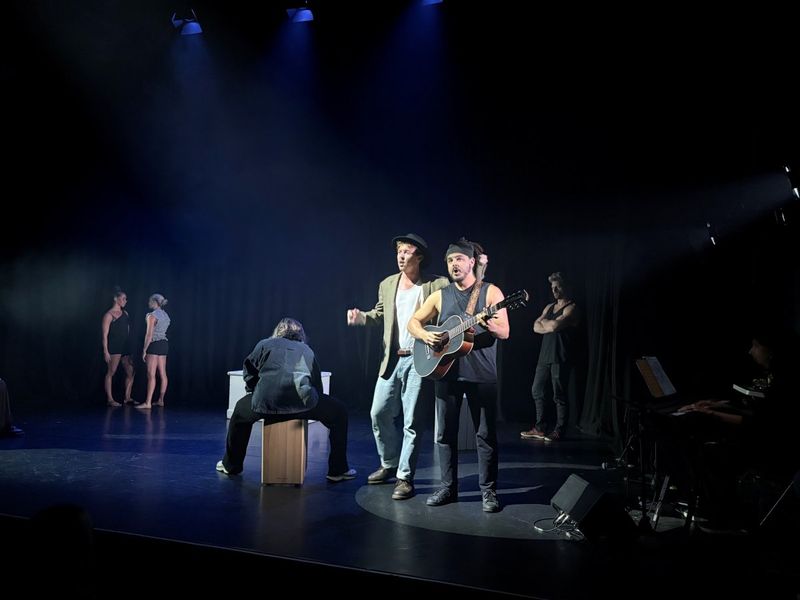
Jack Horner: I’ve leaned heavily into blues and Americana, but also brought in Latin influences. We’re in the Deep South of America, and I imagined that some of the roustabouts may have come up from Latin America, bringing their own musical traditions with them. That’s allowed us to explore swing, Latin rhythms and percussion alongside the blues, creating a musical identity that feels rooted in the place and period, but also reflects the diverse people within the circus.
What drew you to the outsiders and the misfits of the circus?
Jack Horner: I’ve always been drawn to the odd ones, probably because I’m one myself. I only discovered relatively late that I have ADHD, and I’ve learned to use the way I think differently as a creative strength. I connect with characters who don’t quite fit the mould. There’s something powerful about embracing that difference. This is also the biggest piece I’ve ever created from my own ideas. I carried it in my head for years, and now I’ve been able to bring it into the rehearsal room and hand it over to an incredible creative team, who have taken it to another stratosphere.
Circus Parade rehearsal and development continues and hopes to be performed in 2027
Photographs published with permission from Jack Horner
Sign up for all the news on the Fall season, discounts & more...

.png?format=auto&width=365)




