


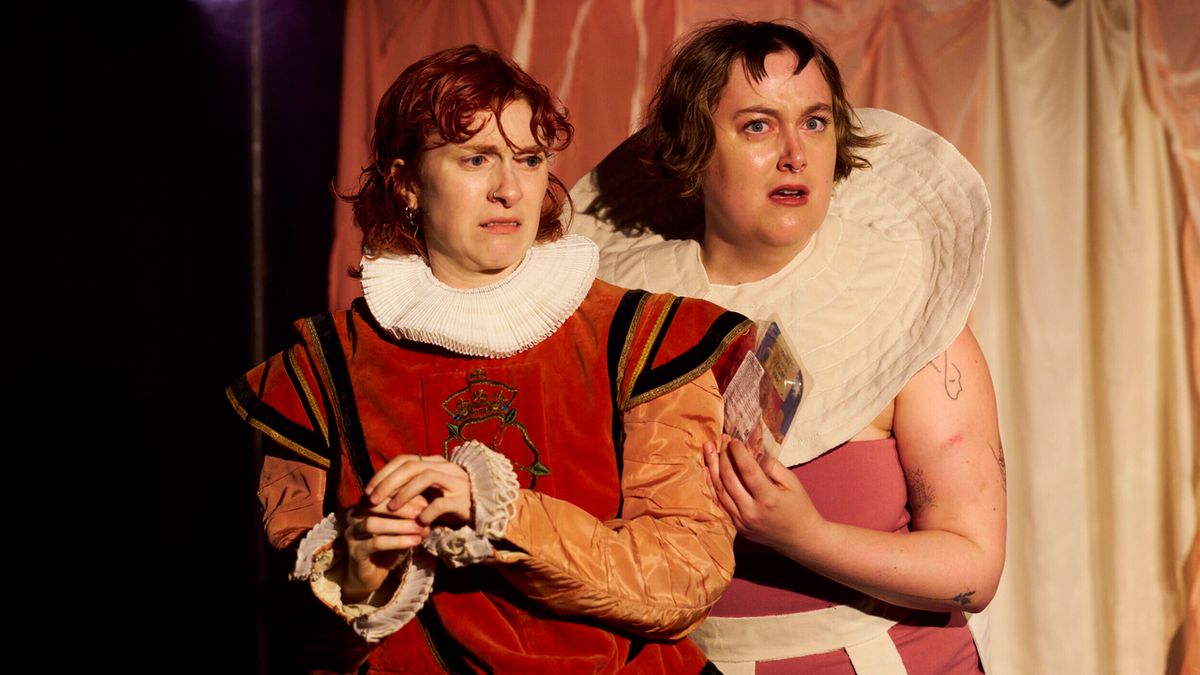

Feminist theatre duo Hotter Project don’t want you to take their veganism-themed riff on Hamlet too seriously – any commentary on climate change is just for Arts Council funding purpose, they tell us. The duo get a lot of easy laughs out of inserting references to protein powder into Shakespearean monologues. Ophelia in this iteration is a deceased cat.
The basic conceit of this Edinburgh Fringe transfer is that Hamlet (Mary Higgins) has recently become a vegan, more out of teenage rebellion than anything else, startling his kebab-loving mother Gertrude (Ell Potter, who also plays the ghost of a slaughtered pig haunting Hamlet, while clad only in a hot pink sheet). The play-within-a-play is an attempt to shock Gertrude out of her carnivorous ways, and involves some light humiliation of a meat-eating member of the audience.
Wacky as it sounds on paper, this all works rather better than one would think: Gertrude taking joy in food is an intriguing substitute for her pursuit of extramarital desire in the Shakespeare play, and her mutually guilt-ridden relationship with Hamlet maps well onto the dynamics of privileged boomer parents and their socially conscious zillennial children. “To be or not to be” is ingeniously reworked into a lament for the daily dilemmas we all face trying to consume ethically in a broken system.
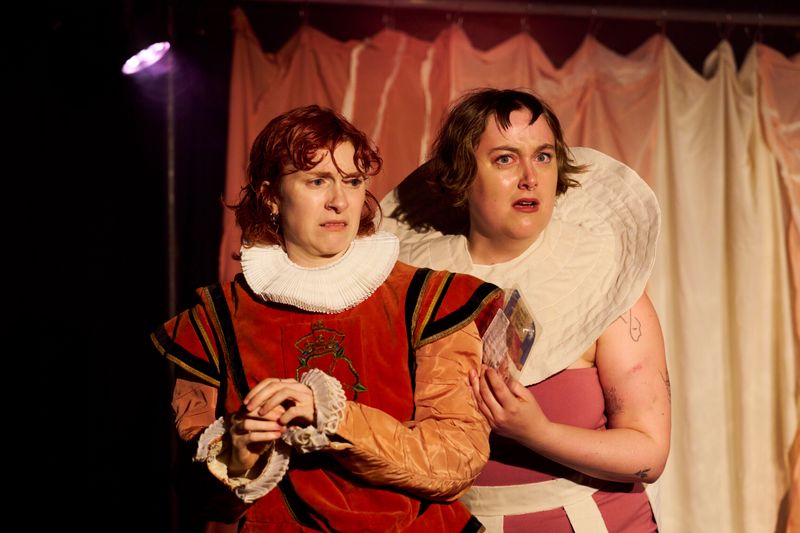
In real life, Higgins is a vegan, and Potter is not: they thus treat both Hamlet’s climate anxiety and Gertrude’s hedonism with empathy. This fence-sitting is understandable, and both sides have their merits, but it also belies a lack of confidence in their show’s politics.
There is graphic, sobering imagery from abattoirs projected before our eyes throughout, and alarming stats peppered in about the carbon footprint associated with consuming animal products. But practically a scene later, Hamlet is “mad” for staging a protest (albeit an absurd one, at his cat’s funeral). The duo are so eager to poke holes in their own overwrought moralising that they end up weakening their own message.
In their bid to qualify everything they say, Higgins and Potter even dampen their choice to adapt Hamlet, by reverting to personal reflection wherever possible. This introduces some interesting angles on veganism, including Potter’s experiences with fatphobia and eating disorders, but these are underexplored and add to the overall tonal confusion. Higgins’ apocalyptic visions of the world after the climate crisis has taken hold are a highlight of the final act, but they do feel lifted from a different show.
What comes across most clearly, in fact, is Higgins and Potter’s passion for theatremaking itself: there are frequent asides about how the show came to be, which are self-indulgent but also heartfelt. Perhaps the main takeaway here is actually about how difficult it is to make theatre that engages meaningfully with the climate crisis, to call people to action without being preachy. In a thorny, metatheatrical way, the show has been a success.
Ham plays at Soho Theatre Dean Street until 31 October
Photo credits: Jonny Ruff
Sign up for all the news on the Fall season, discounts & more...


.png?format=auto&width=365)





Reader Reviews
To post a comment, you must register and login.