


Review: A STREETCAR NAMED DESIRE at Dupont Underground
Tennessee William's iconic work crackles to life at site of DC's long abadoned streetcar.
 Click for Tickets!
Ten years ago saw two developments in DC’s streetcar scene, one being the opening of the DC Streetcar running up and down a small tract of H Street and the other being the transformation of the long-abandoned Dupont Circle underground station into an arts space.
Now the DC Streetcar, like the Dupont Circle underground and New Orleans’ Desire line before it, has joined the storied list of expensive, defunct projects that litter our cities like specters, hiding deep underground or just under a surface of asphalt but never completely disappearing, serving as unwelcome reminders of past trollies and follies that sounded like good ideas at the time.
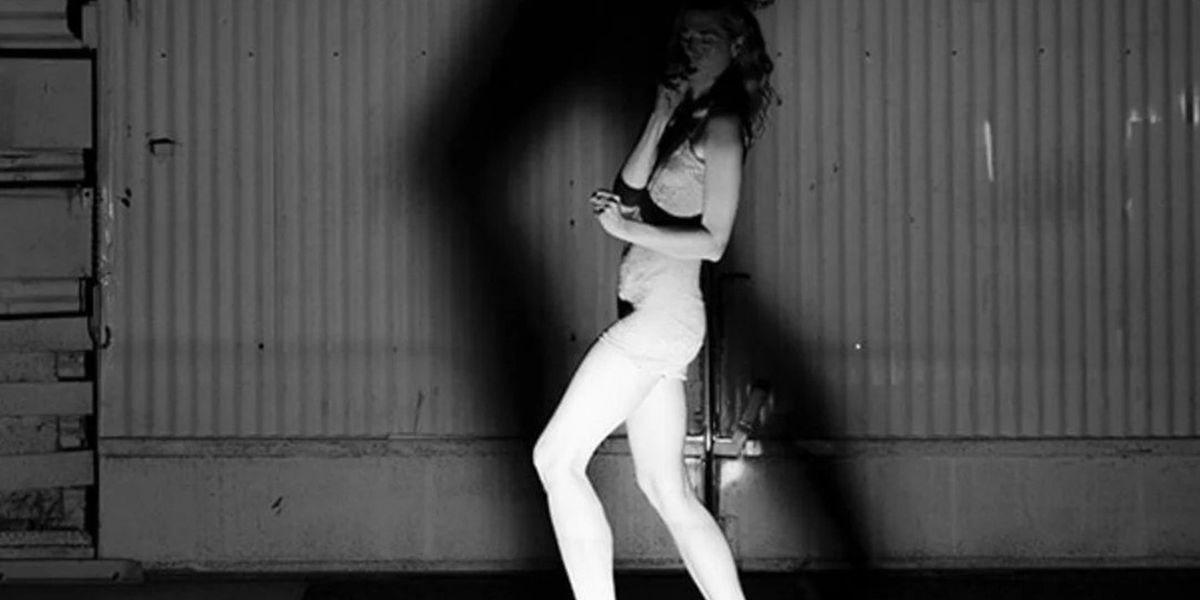
Three weeks after the DC Streetcar closed, a new, fitting project has opened in the Dupont Underground space. Lucy Owen and Nick Westrate’s four actor take on Tennessee Williams’ A Streetcar Named Desire sounds like a very good idea. The project aims to put on Williams’ monumental work in unconventional, often very intimate spaces, in a minimalist production that puts the focus on the actors’ performance. The choice of venue for their DC stint feels like kismet: an abandoned streetcar station turned arts space in which Brad Koed’s Stanley Kowalski can shout out to Stella while literally walking on said abandoned streetcar’s tracks.
In practice, unfortunately, Owen and Westrate’s Streetcar shares much in common with the kinds of misguided and mishandled public transportation projects that created the abandoned tracks and stations that haunt our cities.
The dead, like abandoned trollies, are always circling in Streetcar. “All of those deaths!” cries out Blanche DuBois, the play’s central protagonist played in this production by co-creator Lucy Owen, declaring that “the Grim Reaper had put his tent up on our doorstep!” A man offers Blanche a cigarette from a silver case gifted to him by a dying woman who inscribed it with “I shall but love thee better after death!” An unnamed woman paces the street outside, peddling flowers, calling out “Flores para los muertos…” before Blanche famously observes that death is the opposite of desire.
Blanche arrives in the play by taking the Desire and Cemeteries streetcars to Elysian Fields Avenue (Elysian Fields being the afterlife in Greek mythology) in New Orleans. The first question she is asked in the play is “Are you lost?” And yes. Blanche is, indeed, already completely lost from the very outset. Blanche has lost most of her family, has lost (secretly) her job, and has lost the DeBois’ family home, Belle Reve. Belle Reve is, like any other character in Streetcar, only ever lost — not bought, or sold, or foreclosed on, but lost. All of which leaves Blanche with nowhere to go but her last remaining touchpoint with the world of the living, her sister Stella (Mallory Portnoy), carrying nothing but a trunk full of impractical clothes and bundles of love letters from her now-deceased husband.
Unfortunately for Blanche, there is no salvation or respite to be found in Elysian Fields. Stella’s small, cramped New Orleans apartment is shared with Stella’s husband, Stanley, a crude and cruel man prone to violent outbursts. Stanley immediately clashes with Blanche, wanting her out of the place as soon as possible and going so far as to dig up dirt on her past to prove that she isn’t the proper southern lady she purports to be.
The only real glimmer of light for Blanche in all this comes from Mitch (James Russell, who also covers most of the bit parts), the most mild-mannered and polite of Stanley’s friends, who takes a liking to her and the two begin dating with an eye towards marriage. But even that much is thrown away by Stanley after he uncovers all of Blanche’s secrets — namely that she was fired from her teaching job after becoming involved with an underage student and that she then worked as a prostitute. If stripping her of that last semblance of hope isn’t enough, Stanley brutally attacks Blanche in the play’s climactic scene, taking her into his bed and sending her into a catatonic state from which we don’t ever see her recover.
A Streetcar Named Desire, first produced in 1947, is a work of tremendous grit, touching on the most intimate and vulnerable insecurities of American society: the performance of class, domestic abuse, closeted homosexuality to name a few. This particular production put on by The Streetcar Project purports to cut to the heart of the text with a performance that, according to the project’s website, strips bare to the bones the greatest piece of American drama…” with “just four performers - no props, no set…” That combined with a declaration that The Streetcar Project is “dedicated to centering the actor as the most crucial member of the process… [recognizing that] all you need is a great text and a great actor to create great theater” begins to paint a picture in the prospective audience member’s head that this Streetcar will be an intimate meeting of four actors and the audience with no theatrical artifice in the way.
This would be a blatantly incorrect assumption, it turns out. This Streetcar may have cut designers out of the process, loosely crediting production design to director Westrate and star/co-creator Owen, but it has continued to cling surprisingly close to the work that theater designers are meant to do.
The most immediately apparent example of this is in the sound design. While Streetcar may be un-mic’d (to its detriment, but put a pin in it) it is very much not unscored. In the DC production there is one, crackly speaker placed in the far corner of the space that is a distressing constant throughout the entire performance.
What appears at first to be an accidental oversight to switch off the house music at the start of the play gradually reveals itself to be an intentional decision to play fairly loud music almost non-stop. From the get go, the supposed focus on the actor and only the actor (misguided as the mantra may be) is entirely obliterated by the insistence on drowning out and overpowering the cast with an endless, concept-less accompaniment of songs, sometimes diegetic, sometimes not so, but always present and always crackling. Most outrightly offensive are all the tragic monologues underscored by a generic piano solo in a production beat that is straight out of the trashy reality TV playbook.
If that’s not on the nose enough, there’s also the surprisingly literal approach to foley, with stock sound effects so comically loud and out of place they turn the Desire streetcar into a freight train.
The lighting design is less ostentatiously awful, but suffers from the exact same general lack of deliberate thought, care, and intentionality. Although the project’s description of itself implies that the space might very well just simply be lit, with the rest left in the hands of the actors, there is a minimal grid set up with a few lights that are put towards a design concept that lacks any consistency. Sometimes actors turn on and off the practical lights that simply exist in the space, sometimes there are dramatic light changes out of the blue, sometimes actors gesture wildly at the board operator to initiate a cue.
This aimlessness is even present in the approach to props. While the “Artist Statement” boasts about having no props, there are a couple, in the form of a water bottle here and a candle there, which only serve to further muddy the conceptual waters. There’s no convincing answer to why one glass deserves a prop and why another deserves only a mime, and if props and miming are on the table why do the actors spend so much of the show with their hands locked at their sides, eschewing both props and mimes to produce a murky end result that is honestly confounding to follow?
All things being equal, these would just be bad choices that neither support the actors’ performance or add to it. When paired with the specific use of the Dupont Underground space, however, the production becomes disastrous.
Westrate has staged Streetcar at the very end of the Dupont Underground space (which is essentially one very long, arced corridor) with two long parallel rows of audience chairs facing each other. The actors spend most of their time at various points in the middle, sometimes going behind a row, or even further down either end where they often simply disappear from view for extended periods of time. There are not a very large amount of seats to account for, but the viewing angles for the majority of them are quite poor for pretty much most of the show.
The space is also, as can be expected from an abandoned underground streetcar station, very boomy. Whether this could have been successfully mitigated with some combination of rugs and pipe-and-draping will have to remain a mystery, but what can be said for certain is that the acoustics render the actors mostly unintelligible whenever they aren’t directly facing you, which—given the blocking in the space—is basically always for at least one of them.
To compensate for this, the actors yell. Really yell. Nary a line in the play isn’t delivered at a sharp, full-on yell. This is, on its own, an irritating enough thing to experience before even getting to what it does to the performances. Imagine a Streetcar stripped of all nuance, of all character development, of all shades of grey, until all that’s left is the difference between yelling and louder yelling, all while an endless jazz soundtrack crackles on in the background, booming between the concrete walls of the Dupont Underground.
And that’s what it all comes down to — the acting that’s supposed to be at the very core of this supposedly stripped-down production. It’s all static. Loud, crackly static. Owen’s Blanche arrives on the scene so loud and wasted and boisterous that there’s nowhere for her character to go; completely subverting her intended spiral towards rock bottom. The performance is big and loud in an overly-indulgent way that takes up plenty of space and time while getting across absolutely nothing of depth about the character. Owen is so sexually charged from her very first scene opposite Stanley that she essentially digs open a plot hole as to why Stanley had to do so much detective work to prove Blanche’s hypocritical improprieties in the first place.
Koed’s Stanley, similarly, has nowhere to go. In a production where loudness is everything and in a part most famous for Marlon Brando’s yelling, there’s simply nothing for Koed to do but yell louder, make even more noise. In one of Stanley’s tantrums, Koed repeatedly throws a metal chair at full force onto the Dupont Underground’s tracks. Over and over again. Is this great acting? It’s definitely an irritating thing to have to experience, is what it is.
Portnoy’s Stella, then, has nothing to work with. In the big yelling competition, Streetcar’s tamest, most nuanced character ends up steamrolled, not only in-universe by the imposing personalities of Blanche and Stanley, but also by a production that has no interest in the moderate.
There’s an unignorable arrogance at play here. In this production that eschews designers in order to hone in on the actors only to completely overshadow the acting with unnecessary, poor design work. In this production that subjects its audience to torturous, distorted music on top of yelling on top of screeching metal chairs. In this production that forces its audience to convulse into uncomfortable positions for a full three hours in the hopes of catching most of what the actors are doing. In this production that equates aggressive loudness with something akin to depth.
Is this what is meant by raw theater? Sure, if one is thinking of raw as in unappetizingly undercooked, underbaked; raw as in toxic, even. In that sense, this Streetcar is not unlike biting into a raw eggplant.
Like Blanche DuBois, this Streetcar is more than capable of putting on big and fancy airs. The Streetcar Project proclaims itself to be more than just a show, but rather as part of a greater project to “...create new, economically viable models of theater.” The project stresses hiring only working class actors, whatever that means, and paying them a living wage — the details of which are left to the imagination.
These are all bold, fairly vague statements that don’t do much to combat the fact that this production is employing a much smaller number of artists than the average DC production and that it is priced, at $85 for general admission and $125 for for VIP tickets (the ones with the least bad viewing angles,) it has most certainly priced out a working class audience. The site also boasts discounted tickets for “ARTISTS ONLY,” even eschewing the significant education, activism, and outreach work that is taken for granted in our regional non-profits.
This is a Streetcar happy enough to define Tennessee Williams as America’s greatest playwright in its program, and A Streetcar Named Desire as the greatest piece of American drama, but one simultaneously incapable of holding Williams and Streetcar to a high enough esteem to trust the “complete, unabridged text” it claims to present without giving in to the cheap desire to switch up the ending with one that is, yes, bigger and louder, and, like the Desire, Dupont, and DC streetcars, ultimately hollow and empty.
A Streetcar Named Desire plays at Dupont Underground through May 4, 2026. Performances run a bit over 2 hours and 30 minutes with 1 intermission. There are no on-site restrooms.
Sign up for all the news on the Fall season, discounts & more...

|
Brian Henson's Puppet Up! Lincoln Theatre (9/30-9/30) |

|
GARBO: EL ACTOR QUE SAVÓ AL MUNDO (Garbo: The Actor Who Saved The World) GALA Hispanic Theatre (9/03-9/27) |

|
Mr. Burns: A Post-Electric Play Clarice Smith Performing Arts Center (10/09-10/18) |

|
Special Event: ARTS By George!: Jeff Goldblum and the Mildred Snitzer Orchestra Center for the Arts (10/03-10/03) |

|
The Second-Best School Shooting NextStop Theatre (9/17-10/11) |

|
Coming to America: An Immigrant Cabaret ExPats Theatre (9/30-10/18) |

|
Some Like It Hot Bernard Family Theatre, Olney Theatre Center (9/18-11/08) |
|
Stonewall's Bust The Writers Center (10/09-10/25) |

|
Hamlet Folger Shakespeare Library (3/02-4/11) |

|
Come From Away Ford's Theatre (9/10-10/18) |

Reader Reviews
To post a comment, you must register and login.