
Feature: Lots of Talent, Lots of Heart, Gone Too Soon, Remembering James Raitt
Remembering the extremely talented musical genius 32 years after his passing.
 Click for Tickets!
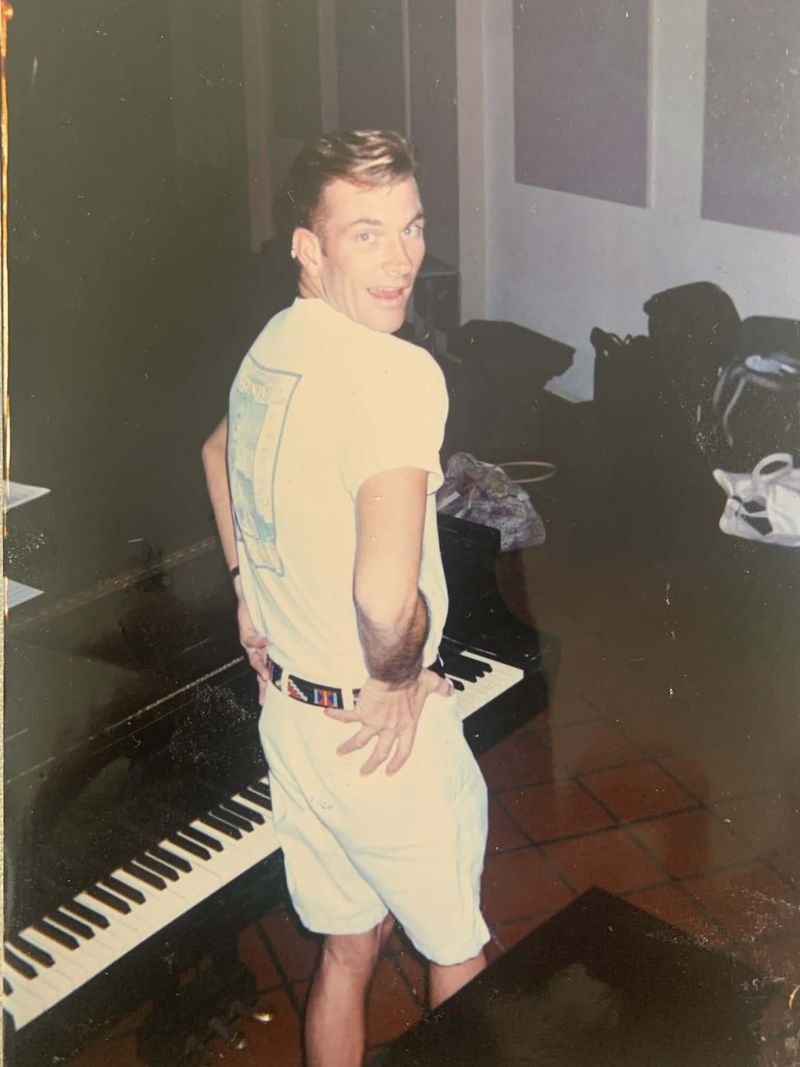
February 21, 1953- April 25th, 1994
Photo from the personal collection of Mike Cline.
Tomorrow, April 25th, will mark the 32nd anniversary of the passing of vocal arranger, musical director, pianist, and musical genius James Raitt. He was only 41years old when AIDS took him from us far too soon. While James’ career was cut short, what he left us will always be a reminder of his many talents.
James was probably best known for his work on the show that celebrated the male singing groups of the 50s and 60s with those tight harmonies Forever Plaid. He served as the show’s original pianist and vocal arranger while setting many productions around the country. I think it’s fair to say that he was one of the reasons the show hit as big as it did.
James’ career was not limited to Forever Plaid by any means. On Broadway he was the Musical Director/Vocal Arranger/Dance Arranger and Orchestrator for Stardust, Dance Arranger for Meet Me in St. Louis, and Dance and Vocal Arranger for Late Nite Comic.
His final project was the 1994 Broadway revival of Damn Yankees where he served as Musical Director while providing musical continuity and vocal arrangements.
His other credits included the off-Broadway musical Pageant and Elegies for Angels, Punks and Raging Queens in London.
I wanted to write this piece because while I never met Jame Raitt in person, I was and still am a fan of his work. His simple but haunting orchestration for Elegies for Angels, Punks and Raging Queens consisted of only piano, harp, and cello but the small ensemble sound was perfect and conveyed musically what the show was going for in tone. It might be my favorite of his work.
What follows are some remembrances from James’ colleagues and friends. I hope their memories serve as a reminder that artists like James Raitt should NEVER be forgotten. His arrangements will always live on in theatres around the world.
To paraphrase a lyric or two from Damn Yankees “A lot of brains. A lot of talent, and miles and miles of heart.”
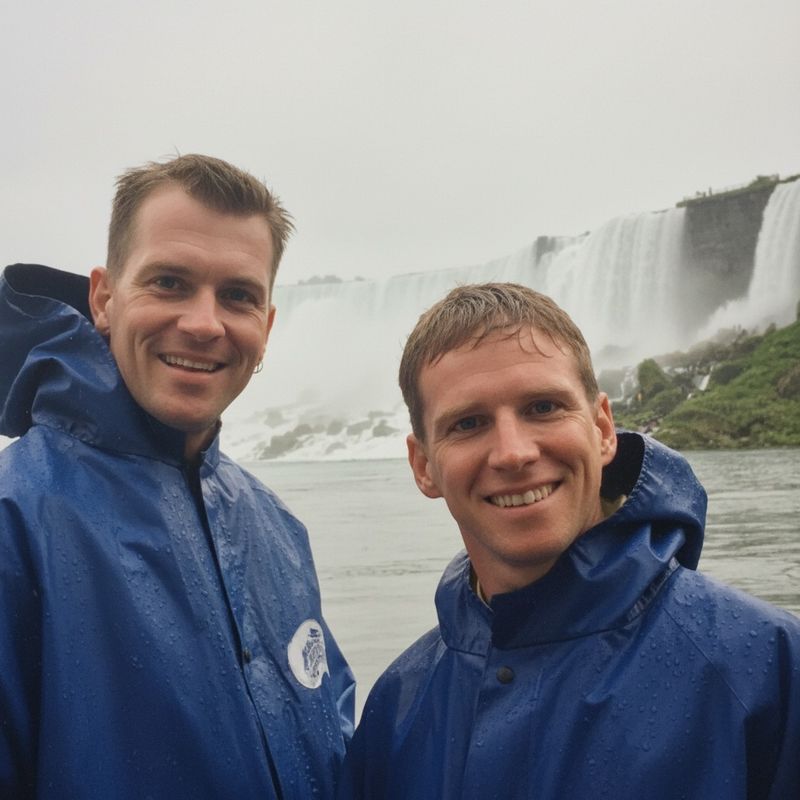
Photo from the personal collection of Mike Cline.
Photo restoration by J..J. Kaczynski.
Personal friend to James Raitt for Mike Cline- You knew James the last four years of his life quite well. What was the man behind the sterling arrangements like in his personal life?
James was the kind of friend who stayed with you. He had a quirky, infectious humor that made us inseparable; we were the only two people who could truly obsess over The Sweeney Sisters and bad pageant talent in the same breath. Even through the hard years after David died, James leaned into our friendship for fun and light. He had a big heart and a 'whatever will be, will be' attitude that defined him. He was exactly the same person in private as he was in his professional life: authentic, hilarious, and full of soul.
Orchestrator/Composer Martin Erskine- What was the most enjoyable thing about working with James Raitt on any given project?
The laughter. As we worked diligently in my studio, he would occasionally lighten up. He was very serious when he was focused while in the trenches of creation. But sometimes he would come out with a wry and very astute observation that would leave me in stitches. For instance, one day, during a break, I was breathless with excitement as I recounted how I had finally managed to convince someone I had been obsessed with to go out on a date with me. He dryly remarked, “Did you bake brownies and talk about BOYS?”
Creator of Forever Plaid Stuart Ross- What was it about James Raitt that made him the perfect choice to create the vocal arrangements and be the original pianist for Forever Plaid?
James and I began working together when he was a rehearsal pianist for shows that I was directing. We had gotten along uproariously with great jokes and laughs about intricate musical arrangements. He was a fan of the first show I had co-written and directed based on the music and lives of The Boswell Sisters called The Heebie Jeebies. He couldn’t believe anyone would actually be celebrating this (At that time obscure) brilliant singing sister trio. I invited him to see An Evening with The Four Plaids at the West Bank Café. This was the initial show I had been developing for about a year. We had been transcribing the arrangements from the original Guy Group recordings and learning them. I had been creating the four quirky characters that found emotional solace in the music. He came up to me after our show and said,’ “I have some ideas. I’d like to do a couple of arrangements.’ They were brilliant. They were filled with ironic, hilarious musical savvy. He had the right combination of heart felt sincerity and humor. We began working together and started adding to the roster of songs that became part of the final show. We sailed along through a very remarkable development phase till the show opened. We kept developing specialty numbers for Broadway Cares and other charities for the next four years.
Musical Director/Author/One of the Broadway community’s biggest supporters Seth Rudetsky- How did you first meet James Raitt and how did he help your professional musical theatre career?
He was definitely the person that started my professional life in New York City. He invited me to go see Forever Plaid. And in terms of the influence the idea of combining comedy with a musical arrangement. My mind was blown. One of the most brilliant things did is in, the song “ Gotta Be This Or That.” It’s a song about being indecisive with the words hem and haw repeated over and over in one section. James took those two words and turned them into verbs making each of them specific.
He influenced me in terms of the idea of bringing comedy into the global arrangement. The first show he hired for was as a sub for Pageant and then for Forever Plaid. I suddenly was part of the professional new world.
Orchestrator Doug Besterman- How would you best describe working on any given project with James Raitt?
James Raitt was perhaps the most joyfully creative individual I’ve ever had the pleasure of working with. Being in the room with him felt like stepping into a cartoon world—full of color, music, and endless possibility. He was always brimming with ideas, eager to share his vision and the influences that inspired him.
James and I bonded over a shared love of jazz vocal arranging and 1960s television music. He also had a deep appreciation for the great big band arrangers, so we spoke a common musical language and always had fun exploring those influences together in the projects we worked on.
He was also one of the most appreciative collaborators I’ve ever known. He took genuine delight in hearing his ideas come to life through collaboration, and that delight was infectious. Being in the room with him was like being in the presence of a warm, bright sun.
Actress/Singer Kim Criswell- What was the best piece of advice you received from James Raitt
I worked with James first on Stardust (off Broadway/ Broadway), Side By Side By Sondheim (Olney Theatre, Maryland) and Elegies for Angels, Punks and Raging Queens (Criterion Theatre, London)-we were friends for several wonderful years. Somewhere in there he gave me this immortal advice: "Kimmy, no matter what the question is, the answer is, FOR MONEY I WOULD!!!!” Of course, we laughed hugely when he said this, but you know...damn if he wasn't right! I have passed that on to many young hopefuls. Thank you James!
Here is Kim Criswell performing "Angels, Punks, And Raging Queens" from Elegies For Angels, Punks, And Raging Queens. Orchestration and Vocal Arrangement by James Raitt.
Director/Lyricist/Librettist Bill Russell- Elegies For Angels, Punks, And Raging Queens has a very distinct chamber sound to it with the instrumentation of Piano, Cello, and Harp. How did James Raitt arrive at that choice of instruments? Was it a group decision between you, Janet Hood, and James?
James came up with the instrumentation and orchestrations for Elegies which we added for the transfer to the West End. Opening night he told the company he had AIDS. It certainly brought what we were doing home -- they all loved him.
He also did the orchestrations and was music director for Pageant. His partner was quite ill (AIDS) at the time, and he told me a story which i incorporated into Elegies.
Ensemble member of the 1994 revival of Damn Yankees Paula Leggett Chase-You worked with James Raitt on the 1994 Broadway revival of Damn Yankees. What are your memories of rehearsing that show with him?
I remember how beautiful he was, just a stunning God of a man. When he’d stride into the room; he was tall, chiseled, bright-eyed and full of confidence. His intelligence was laser-sharp, and he moved through the rehearsal space with purpose and energy. He had a bright orange shirt “good for my chakra”, a terrible color for most people but on James it somehow worked. His extensive knowledge of vocal groups of 1950s and 60s formed the musical base for his masterful work on Forever Plaid and also his arrangements for Damn Yankees.
I remember him playing cassette tapes he made of what is now widely known as lounge music, to help us understand and deliver the smooth lush vocal quality he wanted for the show. His passion for it was infectious; we all fell in love with James and everything he played for us. We listened to Esquivel (humorous, groovy, “space-age”), the amazing Peggy Lee (easy sophistication and musicality, June Christy (for her airy, 2-pack-a-day sound), laid-back Julie London, the astonishing Ima Sumac, and sexy wide-range Gloria Wood as well as the prevailing vocal groups like the Lettermen and the Chordettes. We studied the am radio and blossoming television commercial music sound of the day “see the USA in your Chevrolet”.
James educated us in a specific musical moment in American popular music, explaining why and how it came to be. He gave us an appreciation and understanding of a sound that had been ridiculed and relegated to the dust bin of time. Thanks to James, we were introduced to the cultural impact along with the musical delights that era holds for a new audience. That education not only shaped my performance as a cast member of Damn Yankees but has been a gift that has informed my musical tastes and understanding of all American popular music.
Musical Supervisor/Conductor/Arranger David Chase- You worked with James Raitt on a number of projects including the 1994 Broadway revival of Damn Yankees. The show would end up being his last. Can you please tell us how you assumed the position of conductor on that show after being James' assistant?
I met James in 1991 — I had been hired to play replacement auditions for Pageant. On the first break he asked whether I was free the following week — I was — he needed someone to play Forever Plaid for a week between Seth Rudetsky, who was leaving, and Doug Besterman, who was coming in. I ended up playing not only for that week, but for several weeks in Coconut Grove (with the “DC Plaids” — Paul Binotto, Michael Winther, Neil Nash, and Greg Jbara), and eventually took over the NY show for a little over a year in 1992-1993. I also ended up subbing on Pageant, and we did a number of other projects on the side — he arranged and I orchestrated the Easter Bonnet show (directed by Bobby Longbottom), and I was his associate MD on the pre-Broadway workshop of Jekyll and Hyde in the summer of 1992. (Keen theater historians will note that J&H didn’t arrive on Broadway until several years later, and in a very different production. Fun fact: the music assistant on that workshop btw was young college student Jason Howland, who began his long association with Frank Wildhorn that summer). James was a friend and confidante throughout, and it was an especially really rich time in my life: Paula and I got engaged on a Sunday in August of 1992, on the day off from the workshop, and before a Forever Plaid matinee.
Sometime in early 1993, James was offered the position of Music Director and Arranger for Damn Yankees based on his brilliant work on Forever Plaid. He had been a music director (from the piano) on a couple of Broadway outings — Stardust, and American Dance Machine, and had been the dance arranger for Meet Me in St. Louis — but his dream was to be what we call a “stand-up” conductor” - a very rare sight on Broadway these days. We were hanging out in his lovely downtown apartment one day when he turned and said to me “I’m going to be the Music Director for Damn Yankees, and you’re going to be my assistant and then take over because I’ll be dead.” Just like that. It wasn’t a question; it was a demand. We all knew that at the time that AIDS was a death sentence, but James never let it hold him back. He jumped full force into Damn Yankees, and I was with him and beside him the whole time. He had enormous energy in the room when we were at The Old Globe, and conducted the show through previews and opening night, at which point he said he needed to go back home and deal with various other projects, including multiple companies of Forever Plaid. But we knew that he was spent and exhausted.
We closed in late fall in San Diego, and a Broadway transfer was announced. In San Diego, Thom Fay, the brilliant pianist and dance arranger, had done the lion’s share of the dance music (much of it based on Roger Adams’ originals), but Thom and choreographer Rob Marshall weren’t always in sync. (Thom had been hired by the original choreographer, Michael Smuin. Michael and Thom had done the Lincoln Center Anything Goes together, very successfully). Michael left the show after the first day of auditions, and Rob came in, but Thom had already been contracted, so he came to San Diego and ended up leaving early, I finished writing all the dance music, including big swaths of the Blooper Ballet and Who’s Got the Pain. By the time the show went into rehearsal, James’ health had seriously deteriorated, and he was only able to show up for the last hour or two of each rehearsal day. Rob Marshall, knowing that I was the acting Music Director by this point, asked if he could bring in David Krane to help with changes that were happening in the dance room. Of course.
Despite not being physically present, James was still very active in the decision making, and we stayed in constant touch. He managed to harness enough energy to conduct the orchestra rehearsals (there’s some amazing footage of him from a 60 Minutes piece of people living with AIDS.) I continued to run all of the cast rehearsals and tech rehearsals, and he came in when the band was there — for all of the final dress rehearsals, including the invited dress (formerly known as the “Gypsy run”) on Sunday night (February 13th, it must have been…?), and the first two previews on Monday and Tuesday. After the Tuesday night show, he asked if I would conduct the Wednesday matinee so he could sit out and take notes. Absolutely. After the matinee, I went to find him, but was handed a note from the stage managers — James had gotten too busy to come in. Could I conduct tonight, and he’d come take notes then? This back-and-forth went on for several performances, until he sent word that he had gone into the hospital. Perhaps the extraordinary effort of the previous week had been too much, but it was what he always wanted, and when he was on that podium he glowed with a fierce and transcendent energy and joy.
Nobody was willing to accept that he wasn’t coming back — we finished the preview period (during which I turned 30 and James turned 41— and Doug Besterman had his first child, Max), we opened the show, and we recorded the cast album, all the while hoping that he would return. He remained the Music Director until his death in late April — rightly so, since it was his musical vision that was clearly being heard on that stage. I am aware of one very established Music Director (name withheld) who offered to come in to take over the show, but I know that Rob Marshall put his foot down on my behalf. And because it was very clear that James’ wish was that I take over permanently. The odd irony is that I had never personally had the goal of being a conductor on Broadway — in fact, with the exception of one night of A Chorus Line at Papermill, I hadn’t conducted a single performance of anything until Damn Yankees in San Diego. So, I give James credit for not only believing in me, but for seeing something in me that I didn’t see myself. He was, first and foremost, a teacher and educator — not in the classroom sense, but in the sense of seeing potential in people and then bringing it out in the most glorious ways.
His musical gifts were extensive, but what I most remember was his humor — a little dry, a little sardonic, but always smart. His arrangements were full of wit and always backed up by enormous knowledge and research. The most important lesson he taught me was that music must always have a point of view. That seems like an inherently obvious tautology, but I remain constantly surprised and often disappointed by Broadway music directors who don’t bring a POV to what they do. I suppose it’s inevitable since most of what we do is essentially invisible and usually unheralded, but if you don’t have a point of view, what’s the point?
One final thought: I still have James’ baton that he left sitting on the podium after that Tuesday night preview of Damn Yankees. It’s perfectly balanced, and unlike any other baton I’ve ever picked up. It’s the only baton I’ve ever used.
Mike Cline- What do you recall about James Raitt's last days? Did his personality change?
James' last days were filled with dementia. But even through that haze and inability to focus or make sense, he would smile often and rarely complained about anything. I was still rooming with him, sleeping on the couch, but all I could do was just be there for him and let him know I loved him.
Paula Leggett Chase- What do you remember about the last time you saw James?
The last time I saw James was very near the end of his brief, but extraordinary life. David and I went to visit him in his apartment; James had fallen asleep, he was in his bed tucked in with lush, elegant sheets and a brocade comforter. He was surrounded by rich wood, soothing lighting and his collection of vintage and antique Salt and Pepper shakers.
Martin Erskine- If James were still with us, what do you think he would consider to be his greatest achievement?
It’s hard to tell, he knew for so long that his time might be limited that he worked really hard in the time he had. The final step for him was to be a music supervisor for Broadway. Which he did on Damn Yankees. Not just mounting the score musically, but re-conceiving it and putting his own stamp on it which he did masterfully. Perhaps he might’ve veered into composing, for he was good at it, but that didn’t seem to interest him as much as arranging.
Doug Besterman- What do you think James would want his legacy to be and how you will you always remember him?
I think James would have wanted the sense of humor and joy in his work to be his legacy. He took great pride in his musical authenticity and his sense of humor, and he had a remarkable ability to blend the two without ever tipping into slapstick or parody. He was one of those rare people who could thread that needle effortlessly, and I know I was inspired by him to try to do the same.
I will always remember James’s big smile, and his voice on the other end of the phone saying, “Hey you.” A call from James was usually the beginning of a great adventure, and I miss that.
My favorite project with him will always be our version of Damn Yankees, which I consider to be his masterpiece.
Bill Russell- What was the best thing about collaborating with James?
He was fun! He loved show biz gossip! He was fast and he brought so much talent to his tasks!
Kim Criswell- What do you miss the most about James not being with us anymore?
His humor! Even when things were extremely tough, he would always find what was funny in a situation (his partner David's funeral comes to mind). That humor was put to excellent use in all the shows we did together, even in Elegies..., which as an AIDS piece could have been very heavy. It instead was joyous, poignant, life-affirming and yes, funny in places. A very close second to his humor has to be his musicality--those arrangements, both orchestral and vocal were unmatched in my experience---a pure joy to perform and listen to. The man was made of music, and I for one am the better for it!
David Chase- What do you miss the most about not being able to collaborate with James?
James was perhaps the only person I’ve ever known who was able to push me harder as an arranger and music director than I realized I could be pushed. And he would do it with searing honesty, humor, and encouragement. Like one section of the “Who’s Got the Pain?” dance that I wrote — I can still hear him saying in his uniquely dry, slightly covered tone: “That sucks! You can do better than that!”. And of course he was right. I rewrote it, and it was better.
Seth Rudetsky- If James was still with us today, where do you think his career would have gone?
He was so beyond a musician. I think he just would have been beyond a music director. He would have been creating giant projects for Broadway. No one else has come close to those arrangements.
He had HIV before people were living with it which makes it all the more such a tragic loss because he was jus that talented and gifted.
From the Forever Plaid Cast Recording here is "Love is A Many Splendored Thong." Vocal arrangement, perfect chord and all, by James Raitt.
Stuart Ross- Forever Plaid ends with “Love is a Many Splendored Thing” and the Plaids hitting that "perfect chord." What do you think James is saying up above every time that perfect chord is sung in a production of the show?
James used to call me every morning around 5:45 when we were doing the show at Steve McGraws even after we’d opened. And usually he’s say, with a smile that beamed through the land line- ‘How ‘Bout Them Plaids.’ And I’d say, “Ain’t we lucky.'
I thought that James should have the last word. Here is a feature that ABC did on him. It features footage from the first orchestra rehearsal of Damn Yankees with James on the podium and enjoying every second of it.
Prefer BroadwayWorld in Google Search?
Add us as a preferred source so our stories show up more often in Top Stories and Google’s AI answers — for you.
Sign up for all the news on the Fall season, discounts & more...
|
Brian Henson's Puppet Up! Lincoln Theatre (9/30-9/30) |
|
GARBO: EL ACTOR QUE SAVÓ AL MUNDO (Garbo: The Actor Who Saved The World) GALA Hispanic Theatre (9/03-9/27) |

|
Mr. Burns: A Post-Electric Play Clarice Smith Performing Arts Center (10/09-10/18) |

|
Special Event: ARTS By George!: Jeff Goldblum and the Mildred Snitzer Orchestra Center for the Arts (10/03-10/03) |

|
The Second-Best School Shooting NextStop Theatre (9/17-10/11) |

|
Coming to America: An Immigrant Cabaret ExPats Theatre (9/30-10/18) |

|
Monsters of the Villa Diodati Creative Cauldron (10/08-11/01) |

|
Some Like It Hot Bernard Family Theatre, Olney Theatre Center (9/18-11/08) |
|
Stonewall's Bust The Writers Center (10/09-10/25) |
|
Hamilton (Angelica Company) National Theatre (12/15-2/07) |
