


Review: The Stratford Festival's DEATH OF A SALESMAN is Powerful and Heartbreaking
Tom McCamus Gives a Moving Performance as a Man Betrayed by his own American Dream

After a comparatively upbeat first three nights of the Stratford Festival’s Opening Week, there was a palpable tone shift with the opening of Dean Gabourie’s excellent, but devastating production of famed Arthur Miller play DEATH OF A SALESMAN at the Avon Theatre. The shift in tone was due entirely to the heartbreaking story, as the production itself was incredibly impressive and moving.
DEATH OF A SALESMAN is the story of Willy Loman (Tom McCamus), an aging travelling salesman who has always found his sense of purpose and identity in his career and in the idea of being ‘well liked.’ This story explores the challenges of a capitalist society where workers like Willy are promised success, only to be cast aside when they are no longer deemed useful to society. Full of pride and always the salesman, Willy continues to desperately try to sell both himself and those around them on the idea that he is popular and successful. This extends beyond himself, as he is also determined to present his son Biff (Joe Perry) as a success, despite being disappointed and baffled by him behind closed doors. Willy’s denial and inflated sense of self set the tone in his household, where the truth of everyone’s situation is rarely spoken. This is particularly infuriating to Biff, who has grown up with the pressure of his father’s expectations only to be disillusioned by the discovery of his father’s shortcomings as well as his own.
Considered to be one of the great American plays, SALESMAN explores themes that have remained painfully relatable since it first premiered in 1949. In a clever easter egg of casting, Tom McCamus is playing Willy Loman in this production, after playing Arthur Miller in the much-lauded world premiere of SALESMAN IN CHINA on the very same stage two seasons earlier.
Before the house lights dim, a 1940’s busker (Michael Louis Johnson) begins trumpeting on stage. In between numbers, he explains (in character) that he’s playing some songs of the time to help us “settle in”. He also takes this opportunity to remind audience members to turn off any devices, and to – still in character – provide a more personalized land acknowledgement. As the lights dim and the play begins, the trumpeter begins playing Irving Berlin’s Blue Skies – a tune that returns multiple times throughout the show – sometimes played live on trumpet, sometimes in a recording, and at one point, even hummed by Lucy Peacock’s Linda Loman. The use of this song is very effective. The optimistic lyrics paired with a haunting minor chord parallel the idealistic ‘American Dream’ that Willy desperately and somewhat delusionally tries to cling to, undercut by the harsh reality of his situation.
In addition to Willy’s physical and emotional exhaustion caused by a life spent striving for the lie that is ‘The American Dream’, there are also clear signs that he is experiencing significant cognitive decline. Although his symptoms are certainly exacerbated by exhaustion and depression, if he were to be assessed by a doctor today, he would likely receive a diagnosis of dementia. His symptoms – forgetfulness, confusion, struggles with attention, and slipping into hallucinations triggered by memories – are distressing to his wife and sons, who, in an attempt to elevate his spirits and keep him well, continue to lie and play into the delusions he built for himself long before his mind began to fail him. It is interesting that the themes of capitalism and family conflict are timeless, but when it comes to what is happening to Willy’s mind – although a profoundly relatable experience for families of today, would be a mystery to a family in the 1940’s and 1950’s. Families like the Lomans must have felt profoundly confused and helpless in trying to cope with this not yet understood ailment.
McCamus’ Willy is visibly tortured by both his fear of being a failure and with the loss of his faculties. As Willy seamlessly switches from dialogue in the present day, to memories of his past, it may be unclear to those around him as to where his mind is or who he is speaking to, but because of strong direction by Gabourie and Lighting Design by Louise Guinand, the audience is always aware. McCamus gives a powerful performance as he fully embodies this deeply flawed, yet sympathetic man.
Lucy Peacock is also great as Willy’s concerned wife Linda. There is a moment where she is alone at home and the phone rings. A flash of terror subtly crosses her face. In this moment, the audience fully understands where Linda is emotionally. She is living her life in a state of constantly worry that she is about to get bad news.
Joe Perry’s Biff is desperately trying to break through the façade that his family has carefully built brick by brick for his entire life. His desperation to have a genuine moment with his parents and brother, and increasing anger and frustration when they are incapable of giving him that or even understanding why he wants it, is palpable.
Willy and Linda’s younger son Happy might actually be the most tragic character in this play. While Willy’s story is heartbreaking, Happy witnesses it firsthand yet learns nothing from it. Instead of gaining the self-awareness that could perhaps break the cycle of denial and external validation, he learns all the wrong lessons from Willy’s downfall and is likely destined to suffer a similar fate. Josh Johnston is excellent in this role.
Stellar performances also come from Matthew Kabwe as the Loman’s neighbour, and Willy's only true friend, Charley, and Raymond Strachan as Charley's son Bernard. These two are foils for Willy and Biff – they represent integrity, hard work, self-awareness and realistic expectations. No moment is more telling of how differently they operate from the insecure, self-aggrandizing Willy, than when Willy is shocked to learn that Bernard is off to argue a case in front of the Supreme Court. “He didn’t even mention it!” Willy exclaims, only for Charley to matter-of-factly respond “He don’t have to – he’s gonna do it.”
Scott Penner’s Set Design provides a simplistic scene, most frequently of the kitchen where the Loman family dynamics are on full display. A stunning backdrop of the Lomans’ apartment complex is always present - with different windows lighting up as unseen characters pursue their own dreams. This is a constant reminder that though this is an intimate story of one family, it is also a commentary on humanity as a whole.
DEATH OF A SALESMAN is not a happy story. It will rip your heart out – but it will also allow you the privilege to reflect on your own values and sense of identity. It acts as a necessary mirror and allows audiences the opportunity to do what Willy can not.
DEATH OF A SALESMAN continues in repertory at the Avon Theatre until October 24th.
PHOTO CREDIT: David Hou
Sign up for all the news on the Fall season, discounts & more...

|
Bee Gees Celebration - Soirée du jour de l''an Théâtre Capitole (12/31-12/31) |

|
Ladies Night - Drôlement sexy Théâtre Capitole (1/22-1/23) |

|
A Very Merry Magic Show Wychwood Theatre (12/19-12/23) |
|
Creditors Canadian Stage (4/09-5/02) |

|
THE PIRATES OF PENZANCE Terminal Theatre (6/18-6/20) |

|
The Tao of the World Stratford Festival (8/02-9/26) PHOTOS |
|
887 - Ex Machine / Robert Lepage The Elgin & Winter Garden Theatres (12/10-12/13) |
|
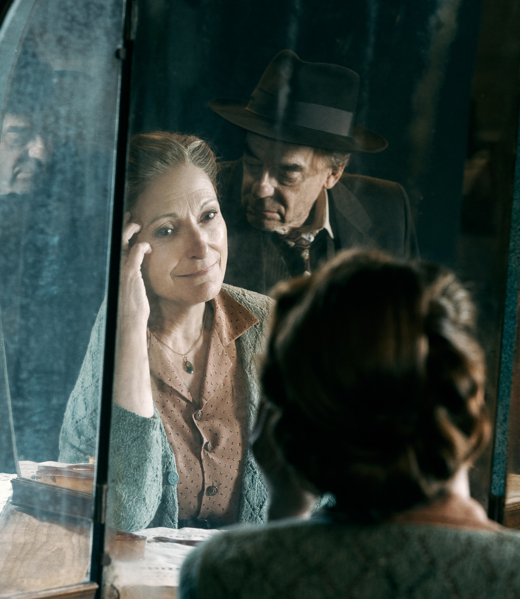
Death of a Salesman Stratford Festival (5/05-10/24) PHOTOS |

|
Mean Girls Oakville Centre for the Performing Arts (9/24-9/27) |

|
SERENADES AND SWEETHEARTS 19 on the Park Stouffville (2/11-2/11) |

Reader Reviews
To post a comment, you must register and login.