


Interview: Carey Perloff of OEDIPUS: KING/COLONUS at PlayMakers Repertory Company
Director/Adapter Carey Perloff discusses their upcoming adaptation of Sophocles' Oedipus story, running at PlayMakers Repertory Company September 9-27
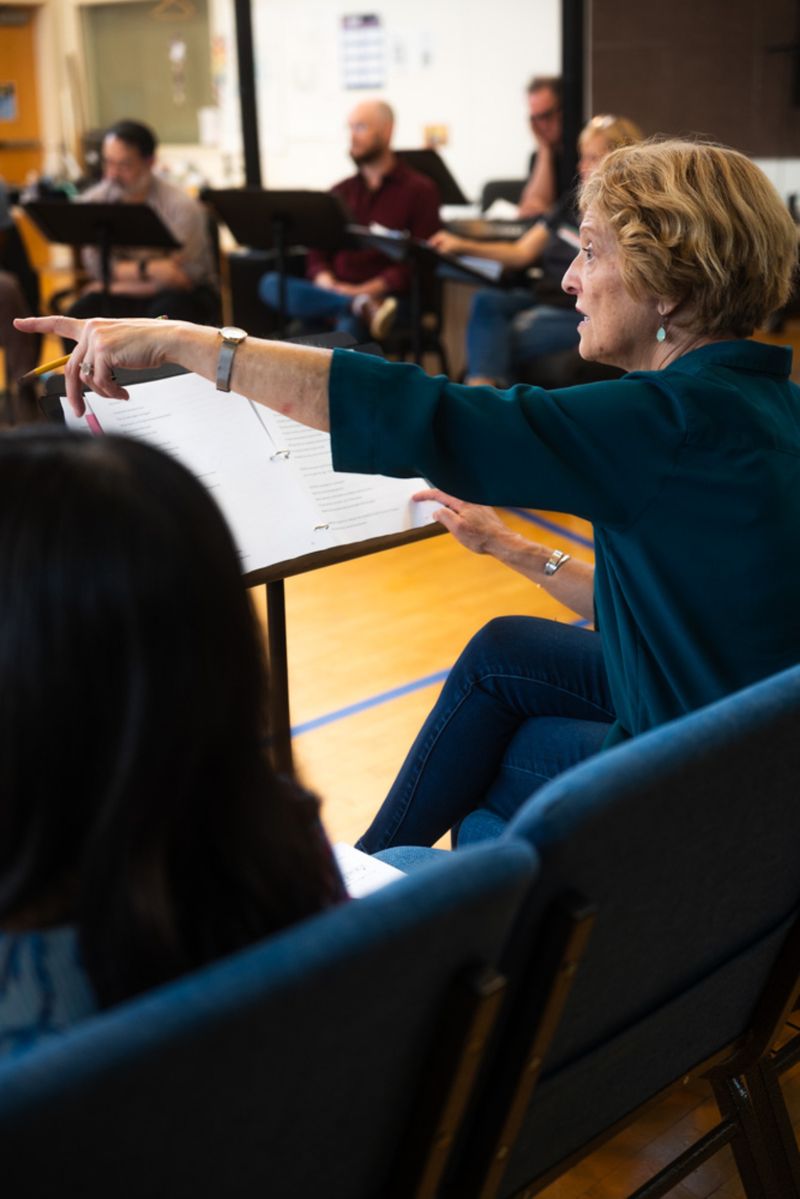 PlayMakers Repertory Company will open its 50th anniversary season with the world premiere of Oedipus: King/Colonus, adapted and directed by Carey Perloff with original music by David Coulter. Bringing together Sophocles’ Oedipus Tyrannus and Oedipus at Colonus, with elements of Antigone, the production looks across the entirety of Oedipus’ life while asking audiences to reconsider one of Western theatre’s most enduring figures.
Ahead of the production’s September 9 opening, BroadwayWorld spoke with Perloff about the evolution of the piece, finding a contemporary musical language for Greek tragedy, directing her own adaptation, and why she believes audiences don’t need to know anything about Sophocles before walking into the theatre.
This interview has been edited for length and clarity.
You’ve spoken about Sophocles returning to Oedipus throughout his life. You’ve now spent several years returning to this story yourself through different iterations. How has your understanding of Oedipus, and what you want to explore through him, changed during that time?
I started my career wanting to be an archaeologist, so way before I was in the theater, I studied ancient Greek, and we learned Greek through studying drama, and that’s sort of how I ended up in the theater. So for me, the Greeks are always the touchstone for every moment of complexity and crisis and whatever, in our democracy, in my life, and in a family situation, the Greeks always got there first. So I go back to them all the time.
And oddly, Oedipus is a play that had sort of escaped me, which is kind of ironic since it’s the most famous, or Oedipus Tyrannus anyway, is the most famous Greek tragedy. People who’ve never seen a Greek tragedy know something about the man who slept with his mother and killed his father.
But it started, as these things do, during COVID. So of course, Oedipus Tyrannus is a play about a plague written in about 446 BC when Athens was experiencing plague.
Well, there we were, we were all sitting at home thinking that live theater would never happen again. The wonderful Braden Abraham, who at the time was the artistic director of Seattle Rep, was giving out director commissions to help those of us directors who had lost our healthcare ’cause our productions had been canceled.
He said to me, “Well, what would you like to work on? A production to plan, whether or not you ever do it.” And I said immediately, Oedipus, because of the situation in which we found ourselves, and my questions about what happens to a body politic when everybody’s locked down and no one can be together and we count on our leadership to guide us, but nobody really knows what’s going on and what the right decision is, and is there ever drama about that? And of course there is, and the great play is Oedipus.
I was working on it at the time with the actor John Douglas Thompson, and he said this odd thing to me: “Well, you know, when I look at stories, I always start at the end and go backwards.” And I said, well, then we should start with Oedipus at Colonus.
So that’s how the journey began. I decided to look at both of them, and then I had the idea to nest the famous Oedipus play, Oedipus Tyrannus, inside Colonus.
Now, I have to say, because classicists will scream, “Doesn't she know these plays were not written to be done together and it's not the same character?” I do know that. The first of the Oedipus trilogy was written when Sophocles was in his late 30s, and that's Antigone, the play about the young characters who are Oedipus's children. Then comes Oedipus Tyrannus when he was in his mid-lifetime about the curse and Oedipus finding out who he was. And then when he was 90, he wrote Colonus. So I get it that these 3 plays were not performed together. However, it is the same character, even if it's a playwright reimagining that character over long periods of time. And that's a very interesting thing.
That’s such an interesting critique from the classicists, because aren’t we all different people at different points in our lives? How does looking at Oedipus across those different stages change the way you understand him?
That’s right. I remember when I was directing T.S. Eliot’s The Cocktail Party, there’s a line that says, “We die to each other daily, and the character we present to the world the next day is not the person who walked out the door yesterday.” And that’s very moving to me. Like, we’re constantly reinventing ourselves anyway.
I think that the salient thing about Oedipus as a character is he’s an adopted child. I don’t believe Freud that the play really means we all want to sleep with our mothers and kill our fathers. I think the important thing is what happens when we do not know who our parents are and we are lied to about our origin.
I think the story of an adopted child, the fragmented self of an adopted child who’s been lied to about his or her birth and therefore doesn’t know who they are. And the desperate desire to know who they are informs all the behavior of the play, both Oedipus’s forensic self-knowledge, self-exploration, but also his incredible temper.
He preemptively pushes people away rather than being abandoned again, which I think is a real characteristic of adopted children who are so terrified about being abandoned again. I think Jocasta has what we now call relinquishment trauma, right? She’s had to give away this baby at three days old for an oracle she didn’t even believe in, and she’s very bitter about that.
So, I think there are ways to understand these characters that way, and that to look at them over time - Oedipus doesn’t have a future because he didn’t really have a past, and the only way that he can die in a way that means something to him is to have this kind of supernatural death in which Mother Earth, the mother, cracks open and takes him into her womb.
For audiences who hear “Greek tragedy” and assume something ancient or inaccessible, how are you making this production feel immediate and relatable today?
Well, I think one of the great weird fortuitous things that happened, whether you like the movie or not, is that Odyssey came out. What it reminded all of us, the world, is that these are our foundational myths. They are the most profound and amazing and entertaining and fascinating action-driven stories. They are eternally new. So you can interpret them a million different ways.
Every issue the play brings up is an issue we’re wrestling with. The centerpiece of the story is birthright citizenship, which is who gets to be a citizen. In Thebes, Oedipus thinks he’s not really a citizen. He’s not a birthright Theban. And of course, what he discovers, the great irony of the play, is he’s more Theban than the Thebans.
But these deep questions about who gets to belong, who’s a citizen, those run right through the play. Also, what happens when the rule of law is totally upended.
And the reason I think it’s so immediate and that audiences will have fun with it is that the chorus are all the company members and fabulous MFA students at Playmakers. In contemporary versions of the Greeks, they usually get rid of the chorus altogether. They get rid of the gods, they get rid of fate, they get rid of all of that. And so what it kind of ends up being is a melodrama about family, right?
So I’m putting the chorus right at the center. I didn’t get rid of any of it. The chorus is us. They are us in the world saying, “hang on, what’s happening? Our leaders said we should do what? We should what? Wait, should we believe in the gods? Should we not believe in the gods? Should we follow the science? Do we not follow the science? Who’s telling us the truth? What’s going to happen to us?”
Sometimes the chorus walks right into the audience and sits down right next to somebody in the theater at Playmakers. So I feel like it’s not going to be a dusty old universe. It’s going to feel very immediate.
The production also features original music by David Coulter. What inspired that musical element, and what can audiences expect from the musical landscape?
I met David Coulter through Tom Waits, when we were doing this wild Robert Wilson opera called The Black Rider. I adored him immediately because he sat on stage bent a saw and started bowing the saw, which is the most beautiful, the most haunting, the most complicated, the most evocative sound. And I thought, oh, I have to work with this man.
So we have made many plays together, and I mentioned Tom Waits because there’s something that is Tom Waitsian about David’s music. I will say something to him like, “At this moment, write me a chorus that is a howl.” And that’s what he does. It’s visceral and sometimes melodic, but sometimes he’s very percussive.
So there’s every kind of drum, bell, tubular bell, thunder sheet, rhythm stuff, cymbals. He has a whole cockpit of instruments up there, and he underscores a lot.
The Colonus chorus, who are the old people, they have these staffs, these big wooden staffs with leaves on the top that shake and make a sound. And they can use them as sweepers, as brooms. He does a lot of rehearsal with the chorus, banging their staffs and coming up with rhythms for them.
But the Tyrannus chorus, the young actors in Playmakers’ MFA program, they sing it all and they’re amazing. And I did not cast them because they were singers. I just said to them, you know, this is a song like a protest song or a prayer or a hymn or that kind of collective. And when we all sing together in a religious thing or we all sing a protest song, we’re not all trained singers. But we join, and so they’ve really done it in that spirit.
The music is sometimes a lamentation. There’s some very beautiful ones where they’re grieving the plague and the deaths, but there’s some that are really violent and like real protest songs.
You’re both the adapter and director of this production. How do those two roles interact in rehearsal? Have there been moments where the director in you has had to tell the adapter, “This works on the page, but not onstage”?
Totally, every day. Every single day.
We workshopped many different translations, many of which are really good. I took one by a classicist and writer who recently passed away at 91 like Sophocles called Robert Bagg because I thought it was so accessible and he’s American.
I am a really passionate believer as American artists that we shouldn’t be borrowing British versions of foreign plays. So when I do Chekhov or Gorky or Euripides or Brecht or whatever, I always try to find an American version so that we as Americans can use our own voices and dialects and not try to pretend we’re something that we’re not.
He told me, “You can cut and paste it any way that you want,” which was unusual. So I started with a version, then I did two workshops in New York at Red Bull Theater. Then Vivian Benesch, who runs Playmakers, gave us a week’s workshop, which was an unbelievable gift.
So I got to come here with David Coulter in April. I met the whole company. Instead of auditioning them, we just read it with different people doing different roles every day. So I really got to know them and cast them in a very organic way. Immediately we heard this doesn’t work, this does work, this is too long, this connective tissue is not clear, etc. So then I rewrote. And I cut a bunch.
I’m wrestling with the big question at the end of the play. I could end it the way Oedipus at Colonus ends, which is that Oedipus goes off in this incredible thunder cue into the cave upstage and disappears, and this messenger comes out and goes, “You’re not going to believe what just happened. He kind of vaporized, and I don’t know where he went. And it was wondrous to behold.”
So I have taken a little section of Antigone, a little section, and put it at the very end of our play. It still is not sitting exactly right to me, so both with my director hat and my adapter hat, we spent hours sort of trying. You can’t start a whole new play at the 11th hour.
So that’s my adapter hat. Then I go home and I look at the script and I cut some things or change some things and then they bring it back in, and then we try it again.
I can sit and look at the Greek and look at the English and try and remember what is it exactly that was originally being said, and are we saying it clearly, or what do we have to change? So that happens every day.
Even though you’ve reached the world premiere, do you feel like the piece will continue growing and changing after this production?
I got this commission over five years ago from Seattle Rep, and I’ve been noodling around with it ever since. So it was thrilling to me when Vivian came to the workshop in New York and said, “I want to open our 50th anniversary season with it,” which seems perfect to me given what Playmakers is and that this is the oldest public university in America celebrating its 250th anniversary connected to the birth of democracy.
All those things - it’s kind of perfect, and I hope it will be the first pass. I hope we’ll do this again in other cities.
A lot of people will come see it here, and I hope that we’ll have a chance to look at it here and look at each other and say, “What worked? What didn’t work? What do we want to do next?” and keep it alive.
Finally, what’s the one thing you want audiences to know before they experience the production?
That when you go to a Greek tragedy, you are part of the play. It is immersive. It was drama that was done in broad daylight. Everybody in the community participated. The chorus were made up of real citizens in the community. They rehearsed it for a year to perform it one time, and everybody sitting there watching it knew who those people were, and we’re all in the world together.
So this is like the anti-AI. That’s what I feel it really is like. Put your phones away, put your screens away. You don’t have to know anything. You just have to walk into an immersive world that is really about you and your experience of being a person in a complicated world and just let it take you on that journey.
Oedipus: King/Colonus runs September 9–27 at PlayMakers Repertory Company.
Prefer BroadwayWorld in Google Search?
Add us as a preferred source so our stories show up more often in Top Stories and Google’s AI answers — for you.

Sign up for all the news on the Fall season, discounts & more...

|
Ghost Light: Echoes of The Revoluton Garner Performing Arts Center (9/26-9/26) |

|
Beetlejuice JR (Live On Stage!) Kids On Stage (10/16-10/18) |
|
|
MAYBE HAPPY ENDING Steven Tanger Center for the Performing Arts (9/22-9/27) |
|
Charlotte's Web Raleigh Little Theatre (4/09-4/25) |

|
War Bonds Temple Theatre (2/04-2/07) |
|
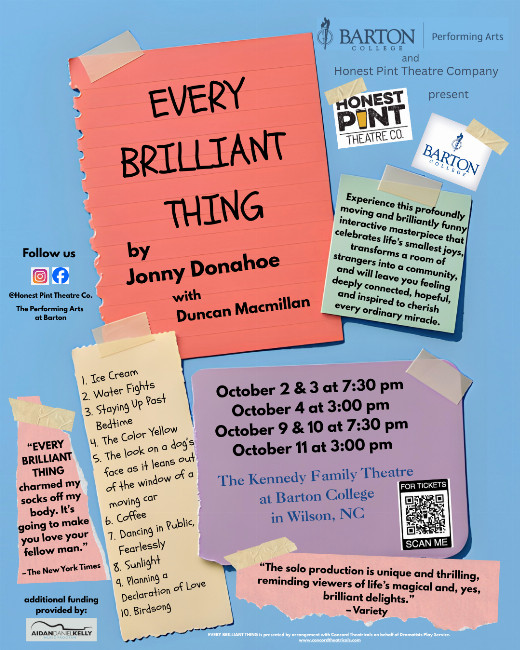
Every Brilliant Thing The Kennedy Family Theatre (10/02-10/11) |

|
August Wilson's Radio Golf Net Friends Theatre at the Durham Arts Council (10/22-10/31) |
|
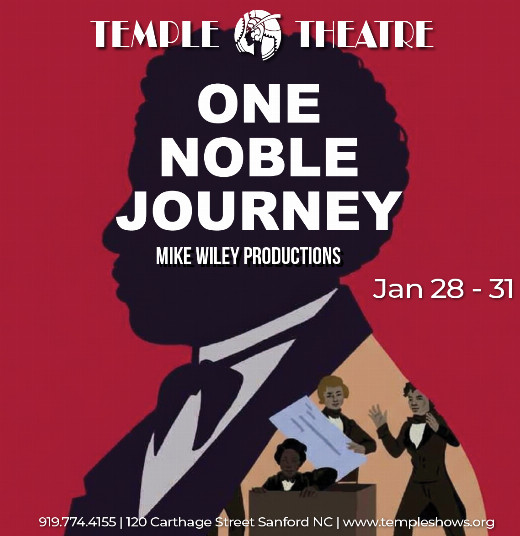
One Noble Journey Temple Theatre (1/28-1/31) |
|
Inside Out and Backwards (Theatre for the Very Young) Raleigh Little Theatre (1/20-2/07) |
|
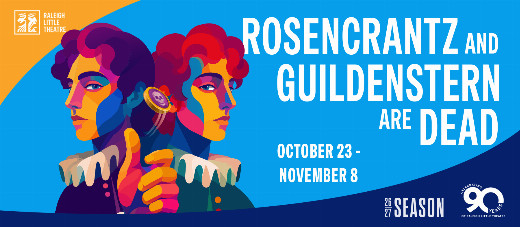
Rosencrantz and Guildenstern Are Dead Raleigh Little Theatre (10/23-11/08) |
