


As we know, Malta Festival mixes two theatrical things at once: wild street theatre and carefully chosen international productions brought into closed theatrical spaces. This year, the festival joined forces with TP 1875 Fest - a celebration of local theatre and the season’s most important premieres at Teatr Polski from Poznań. Outside of that collaboration, though, only three international theatrical shows made it into the programme. Three. I may have raised an eyebrow. I may have even sulked, briefly. But then the curtain went up, and I understood. Brave, vulnerable, ruthless, and moving you through the bones. Quality wins. Always.
A red thread: the Cosmos.
First up: CocoRosie and their La Mort de la Mer - a sweet trans-journey (my word, I'm keeping it!). A trip to a world of hypnotic visuals and music that bypasses your conscious mind entirely and goes straight to your lungs. You don't understand the plot so much as you 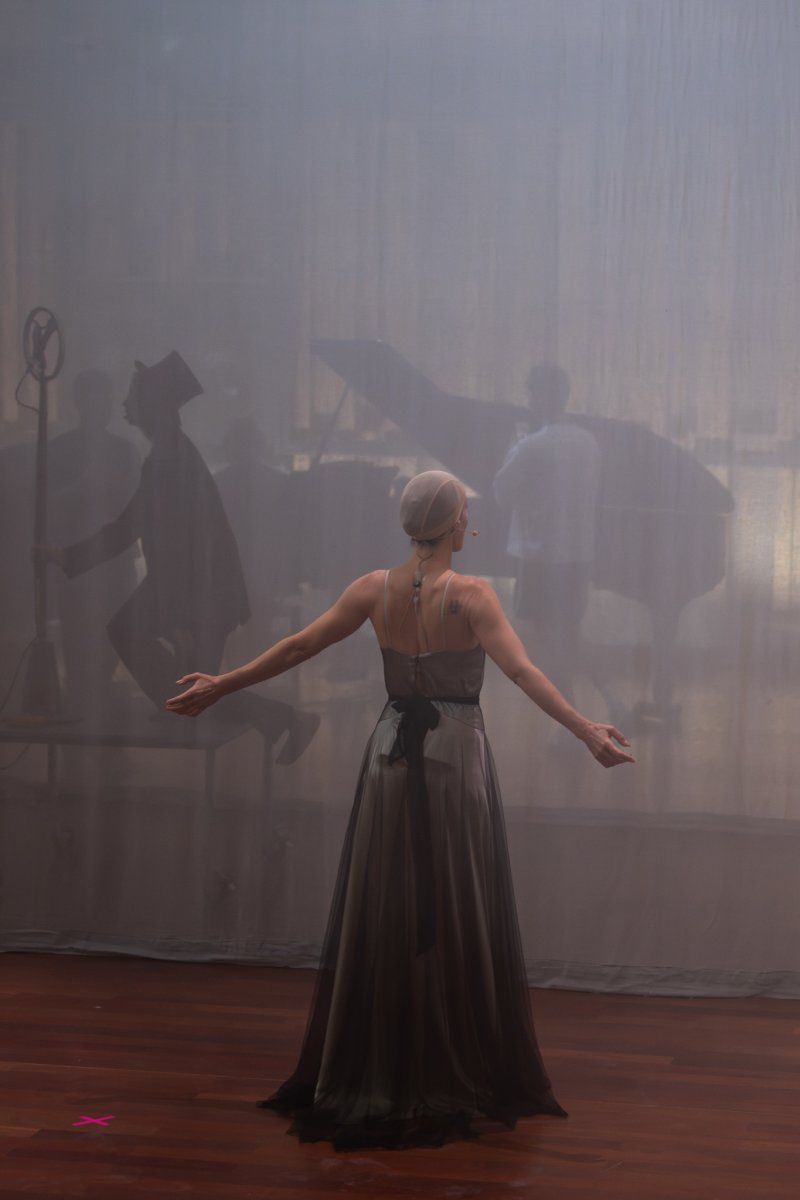
breathe it - which sounds strange until you're in it, and then it's the only thing that makes sense. Time disappears. Space disappears. Even you disappear, a little.
I was lucky enough to be sitting on the floor in the first row, which means the actors were passing right in front of me - and I could feel their movements in my chest before I even processed them with my eyes. The ensemble of sisters Cassady, together with a special appearance by Justyna Wasilewska, took us aboard their spaceship of vulnerable fragility and refused to bring us back down.
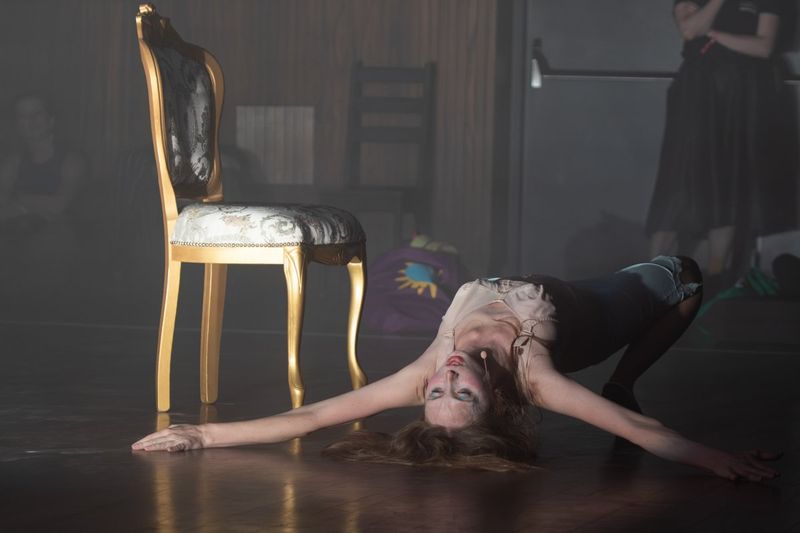
And then there was dancer Akihito Ichihara - like an alien that seemed to exist slightly outside the laws of physics - performing butoh and transmitting emotions through his body in a way that made those emotions spill out into the room, float between the fog and the transforming light, to land somewhere in the audience that words can't quite locate. It was as if feelings had learned to swim. This is the kind of show so full of fragility that it becomes powerful, like a small brook that quietly, inevitably turns into a fast-flowing river. You don't see it coming, and then you're already carried away.
The second show was La Distance by Tiago Rodrigues: a story set in 2077, in a world where humanity has split between two planets. 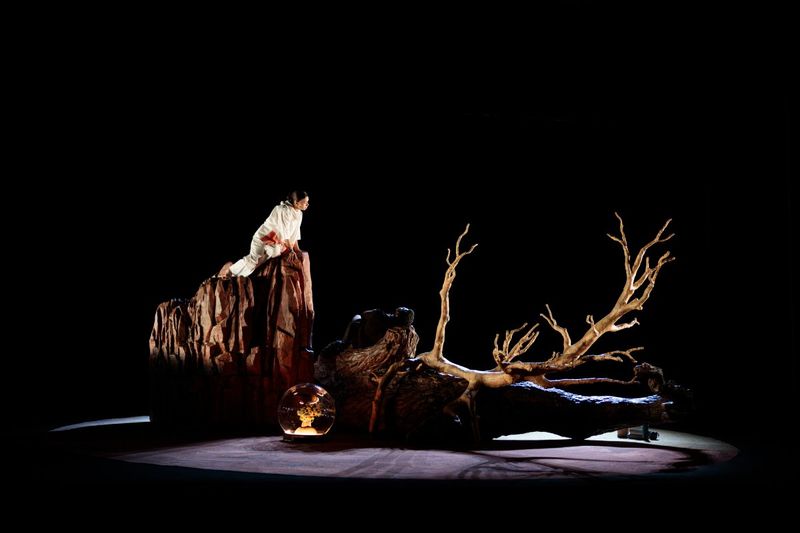
The whole action unfolds between their voice messages - his from Earth, her from Mars - as the distance between them is measured not in miles but in the slow, creeping realization that she is not coming back. With relentless fury and a parent's desperate love, the father tries everything to convince her to return, but her vision of the future is so different from his that not only does she decide to stay on Mars as one of its first colonizers, she also agrees to erase all her memories, as the programme requires. He knows he will lose her forever. He knows there is nothing he can do. 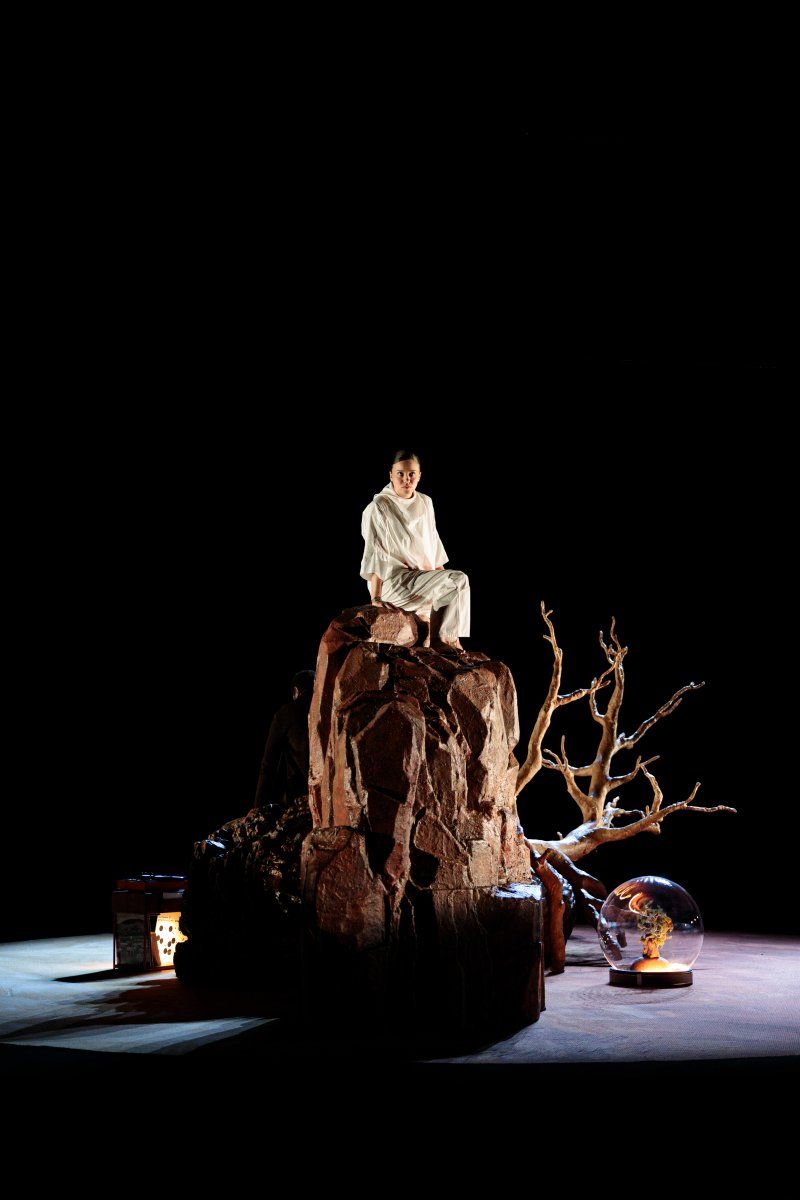
And he keeps calling.
Adama Diop and Alison Dechamps are nothing short of extraordinary. Their movements on the rotating stage are precise and purposeful, the scenography simple and perfect - minimalism that doesn't limit the story but holds it, the way cupped hands hold water. Every element fits its place, but you would not remember items on the stage — you would remember your heartbeats accompanying the story.
He calls her "little sunshine”, Mon soleil. Two words that will follow you home, sit with you in the car, and find you again at 2 am when you least expect it. Along with a tissue, wet from tears.
This is proof, if proof were still needed, that great theatre doesn't require spectacle. It requires truth served on a simple plate. And this has plenty of it.
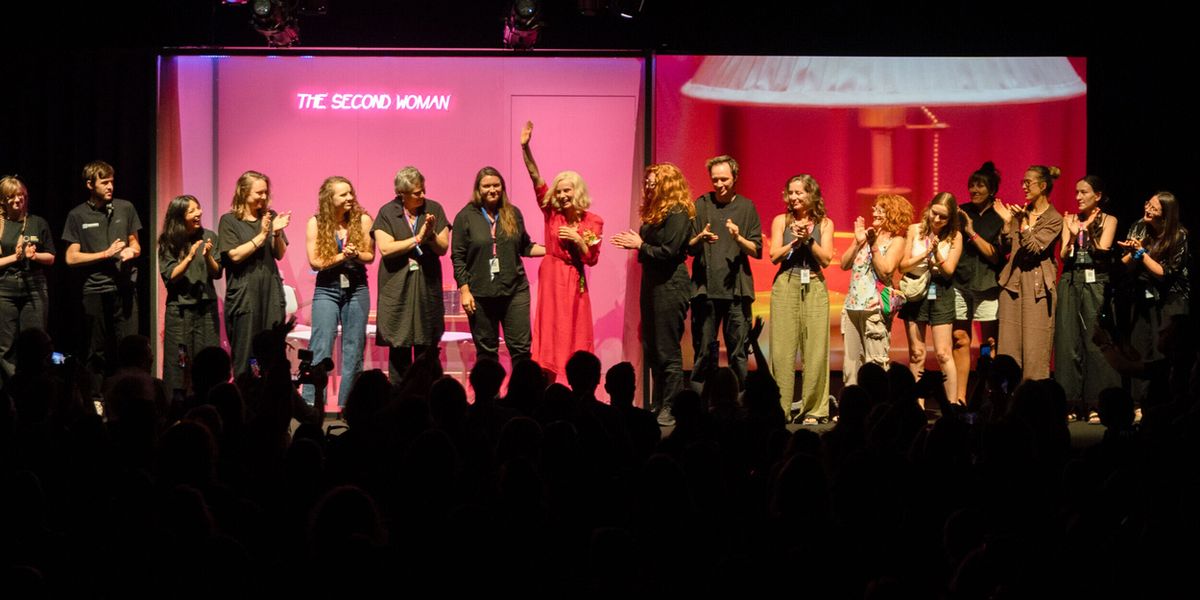
Last but very much not least: A Second Woman - a project by Nat Randall and Anna Breckon, brought to Poland for the very first time. A 24-hour play (yes, 24) with Magdalena Cielecka on stage, repeating a 10-minute scene of rupture with 100 different partners with no rehearsal with any of them, one after another, with a short break every 2 hours. I sat there for 6 hours, and I would have stayed for 60 more. 24 hours of continuous movement - like an orbit. Except orbits don't wear high heels.
The concept was simple and ruthless in equal measure. The partners (most of them men with two women among them) came from a mix of casting and Cielecka's personal circle, actors and amateurs. None of them had watched the show before their turn, nor had they seen the stage design. Any interaction with others before going on was strictly forbidden, so every partner arrived fresh, unguarded, unrehearsed. Which meant that every 10 minutes, the actress was stepping into a completely different scene with a completely different human being.
And every time, she was ready.
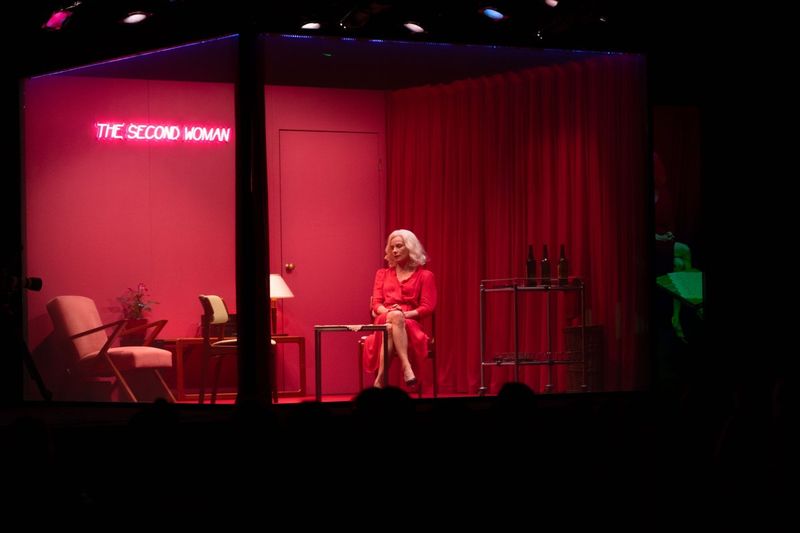
There is no doubt that Magdalena Cielecka is one of the greatest Polish actresses of our time. But what she showed on that stage went beyond acting. Her ability to slip into a different dynamic with every single partner - to read them, meet them, respond to them in real time - was nothing short of mind-blowing. Her replies were razor-sharp, her presence absolute, her freshness unquestionable. She gave each partner the freedom to improvise, but make no mistake - she was always in control. One gesture, one word, one perfectly timed sarcasm, and the scene was exactly where it needed to be.
Also: she wore high heels the entire time.
Cielecka wasn't just playing with the men on stage - she was playing them. When they tried to dominate the scene, she dismantled them with such quiet elegance that they were helpless. She was ironic when irony was needed, cynical when someone got too comfortable, and warm when warmth disarmed faster than anything else. During my six hours, I didn't see a single partner who was truly in charge, and some tried. There were moments from this performance that belong in a masterclass on being the most elegant and powerful person in the room without ever raising your voice. She is a Master of it - the kind that makes it look effortless, which is the most impressive trick of all, to the point that around hour two, I started taking notes.
The social and philosophical dimension of this piece deserves its own essay. Watching the same words land differently in a hundred different mouths is quietly devastating as a reminder that relationships are impossibly complex and utterly incomparable, and a reminder of something else too: that when a woman trips, most men don't react. She tripped one hundred times; only a few cared.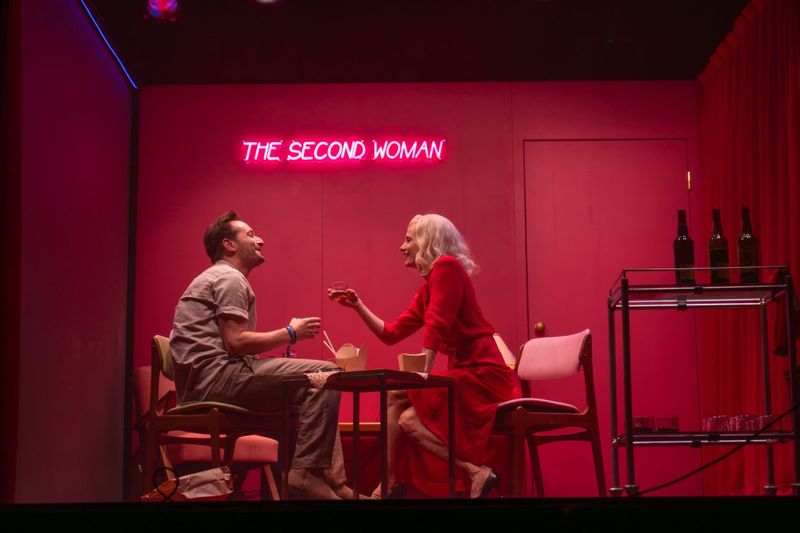
The cherry on top was the audience. A packed house, erupting in applause between every single scene - I'm fairly sure I spotted a sign somewhere suggesting this wasn't encouraged, but nobody cared, and rightly so. It was that good.
My admiration for Magdalena Cielecka is through the roof. And the ceiling above that roof. And possibly into orbit.
Three shows. Three completely different worlds. One conclusion: quality wins. Always.
Photo: Bartosz Klimczak, Aleksandra Bębenek, Julia Karczewska
Otrzymuj wiadomości z Broadwayu na WhatsAppie
Otrzymuj najnowsze aktualności, wiadomości i ekskluzywne treści bezpośrednio w aplikacji.

Sign up for all the news on the Fall season, discounts & more...

Reader Reviews
To post a comment, you must register and login.