



Featured

Dates: 9/24/2022
📍 Theatre: Caveat NYC
The Symposium: Academic StandUp
21A Clinton St
New York City, NY 10002
Phone: 3477094776
Tickets: $15 adv/$20 door ($10 livestream)
A recording of a rehearsal is only as useful as your ability to work with it. Audio and video files sit on hard drives, rarely revisited. But the moment you convert speech to text, something shifts. Suddenly a two-hour run-through becomes a searchable, annotatable document. You can compare what was said against what was written. You can track how a director's notes evolved week by week. You can study a performance the way you would study a published script, word by word, line by line. This is why transcription technology has become one of the most quietly essential tools in theater education and theater research.
Key Takeaways
- Transcription turns audio and video recordings into searchable, editable text for close analysis
- Theater students use text output to compare live delivery against published scripts
- Researchers rely on transcription for oral history preservation and production documentation
- Directors benefit from timed exercises and structured rehearsal segments to keep sessions on track
- The same tools that serve a student scene study also serve a doctoral researcher cataloging archival footage
Most people think of transcription as a shortcut. A way to avoid rewinding a recording twenty times. But in theater education, the text output of a recording is a primary analytical object, not a convenience feature.
When a student watches a production and then reads its transcript alongside the published script, patterns emerge that are nearly impossible to catch in real time. Pauses that the playwright did not write. Lines that consistently get dropped. Moments where a performer's phrasing shifts the meaning of a sentence. These observations become the foundation of scene analysis papers, acting technique critiques, and dramaturgy reports.
Student transcription workflows are built around exactly this kind of comparative reading. Students upload a recording, receive a timestamped text file, and use it to build annotations against the original source material. The timestamps matter because they let you jump back to the exact moment in the recording that produced a particular word or phrase, without hunting through the file manually.
Theater programs have started incorporating transcription into assignments that used to rely entirely on written reflection. The logic is simple: asking a student to describe a performance from memory is asking them to reconstruct something they experienced emotionally. Asking them to work from a transcript is asking them to analyze something they can actually see.
Students attend a production or watch an approved archival recording. They generate a YouTube transcript of a key scene. They then annotate that transcript against the published script, marking every deviation and noting what the deviation accomplishes, or fails to accomplish, dramatically.
A common assignment structure looks like this. Students attend a production or watch an approved archival recording. They generate a transcript of a key scene. They then annotate that transcript against the published script, marking every deviation and noting what the deviation accomplishes, or fails to accomplish, dramatically.
This is not a minor shift in pedagogy. It changes how students relate to the idea of a "text." Theater has always existed in tension between the written script and the living performance. Transcription makes that tension visible, literally, on the page.
Directors in conservatory programs use the same approach with their own students. A read-through of a new play can be recorded, transcribed, and distributed before the next session. The cast sees what the reading actually produced, not what they remember producing. That difference, between the intended and the actual, is where real rehearsal work begins.
Academic theater researchers face a different but related problem. They are working with recordings that may be decades old. Interviews with directors, designers, and playwrights. Documentation of productions that never received official archival treatment. Recordings of community theater performances that no one thought to preserve systematically.
Researcher tools designed for this kind of work handle source material that is noisy, inconsistent in quality, and often multilingual. Oral history projects in particular depend on transcription as the bridge between an audio artifact and a citable academic source. You cannot footnote a recording the way you can footnote a page. A transcript changes that.
Production documentation is another major use case. When a company closes or a long-running production ends, what remains is often a mix of video recordings, production notes, and anecdote. A researcher trying to reconstruct the creative process needs to work from whatever is available. Transcribed interviews with cast and crew, combined with timestamped notes from recorded rehearsals, create a documentary record that can support serious scholarly work.
The theater department library at many universities is beginning to build these records systematically. Students and faculty who want context for the productions they are studying can find relevant background in curated performance studies reading collections that span decades of published scholarship and production analysis.
Transcription helps after the fact. But a lot of theater education happens in real time, inside a rehearsal room, with a clock ticking.
Directors who run structured workshops, timed read-throughs, or unit-by-unit rehearsal blocks need a way to keep each segment honest. The temptation to let a scene run long, to spend forty minutes on the first ten pages and run out of time before the third act, is one of the most consistent productivity problems in rehearsal rooms. A classroom timer gives directors and teachers a visible, shared reference that keeps everyone accountable to the structure.
This matters especially in educational settings where class time is fixed and the material is dense. A three-hour rehearsal block needs to serve multiple scenes, multiple students, and sometimes multiple pedagogical goals. Timed segments, enforced with a visible countdown, make it possible to work through a full reading without losing the back half of the session.
Some directors pair the timer with a recording setup from the start. Each timed segment gets its own timestamp in the recording, which makes it far easier to generate a usable transcript afterward. The segments become chapters. The transcript becomes organized, navigable, and much more useful for post-rehearsal review.
Transcription captures spoken word, but not gesture, staging, or spatial relationships
Audio quality significantly affects transcript accuracy, especially in large rehearsal spaces
Overlapping dialogue in group scenes often requires manual cleanup after automated transcription
Archival recordings from analog formats may need conversion before transcription tools can process them
Speaker identification remains an imperfect feature in most automated systems, requiring human review
These limitations are real, and researchers and students both need to account for them. A transcript is not a complete record of a performance. It is one layer, the linguistic layer, extracted and made searchable. The work of interpretation, of connecting the text to everything else that happened in the room, still belongs to the human reader.
That said, the linguistic layer is often the most analytically rich one. How a line is phrased, how a character's speech patterns evolve across a play, how a director's verbal notes change from week one to week four: these are the kinds of questions that transcription makes tractable.
The most effective programs treat recording and transcription as habits, not as occasional documentation projects. When every rehearsal is recorded and every recording is transcribed, the cumulative record becomes something genuinely valuable. Students can trace their own development. Directors can review their own process. Researchers can access a contemporaneous account of how a production came together.
This does not require expensive equipment or elaborate systems. A decent room microphone, a reliable transcription workflow, and a consistent naming convention for files is enough to build a serious archive over a single academic year.
The broader insight here is that transcription technology has matured to a point where it belongs in the theater studio alongside the whiteboard and the promptbook. It is not a technology tool grafted onto an analog practice. It is a way of making performance legible, and legibility is what makes analysis possible.
What transcription ultimately does for theater students and researchers is give the ephemeral a foothold. Performance has always resisted documentation. It happens once, in a room, and then it is over. Recording preserves the surface. Transcription goes one step further and makes that surface readable.
For a student writing a scene analysis, that readability is the difference between a vague impression and a specific argument. For a researcher reconstructing a production history, it is the difference between anecdote and evidence. For a director trying to hold a busy rehearsal schedule together, it is one part of a larger discipline of structured, intentional practice.
The tools exist. The workflows are not complicated. The results, when used consistently, are genuinely useful for everyone in the theater building, from the first-year acting student to the senior dramaturg finishing a book manuscript.
|
|
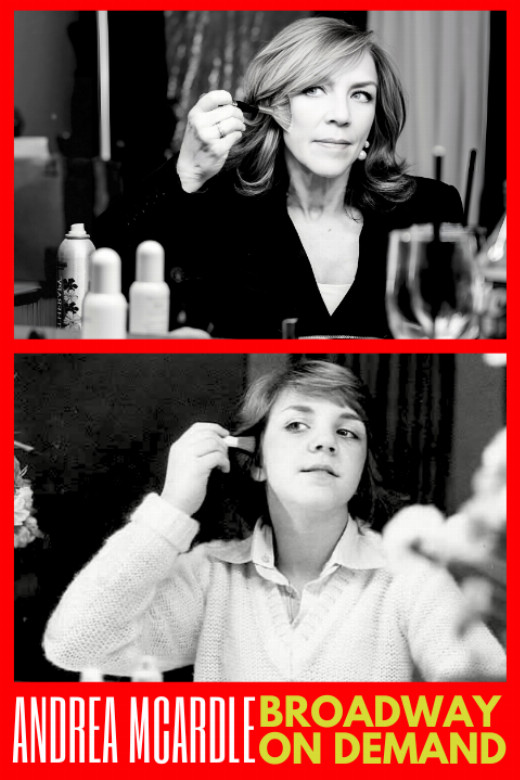
Andrea McArdle's Broadway On Deman The Laurie Beechman Theatre (10/10-10/10) |
|
|
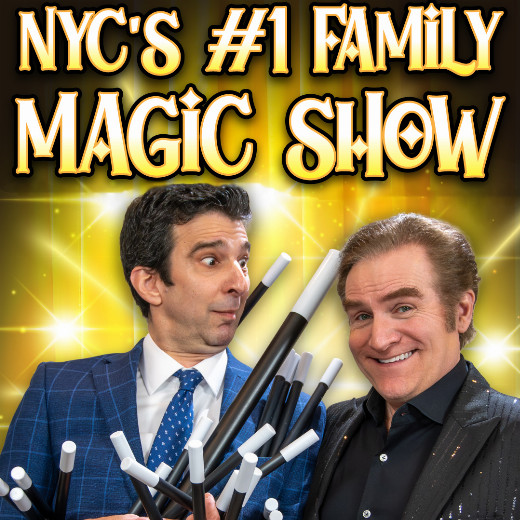
Broadway Magic Hour Broadway Magic Hour: Magic Show (7/25-1/02) |
|
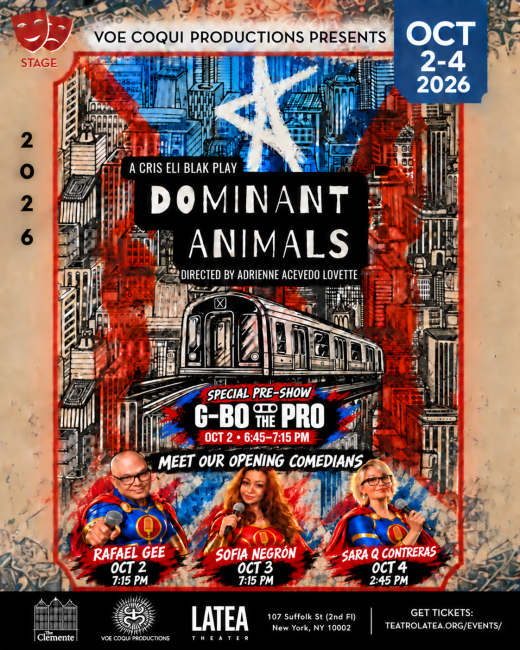
Dominant Animals Teatro LATEA (10/02-10/04) |

|
Eileen Barnett: Back Again...For The Very First Time! The Laurie Beechman Theatre (10/06-10/06) |
|
From America, With Love 28th Street Theatre (10/11-10/11) |
|
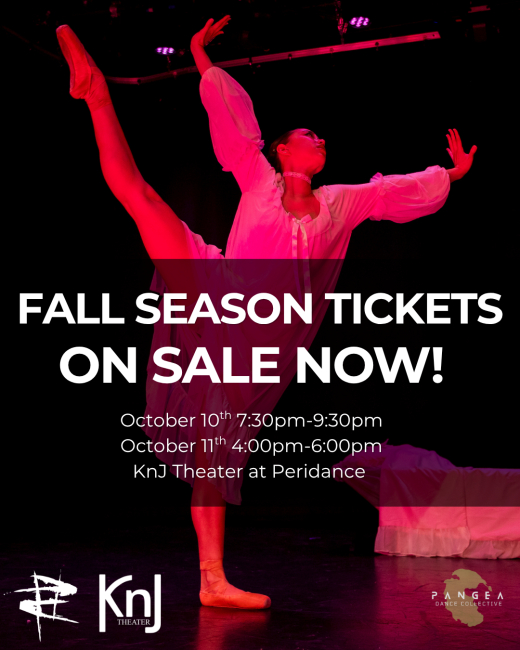
PANGEA: UNLEASHED KnJ Theater (10/10-10/11) |
|
|
Peribáñez y el Comendador de Ocaña Teatro Círculo (9/18-10/04) |
|
|
ShakesBEER Prospect Bar and Grill (9/19-10/10) |
|
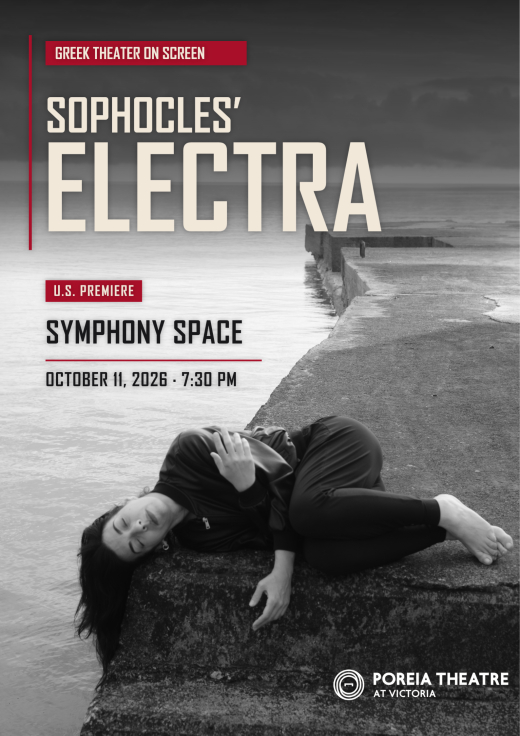
Sophocles' Electra Symphony Space (10/11-10/11) |
|
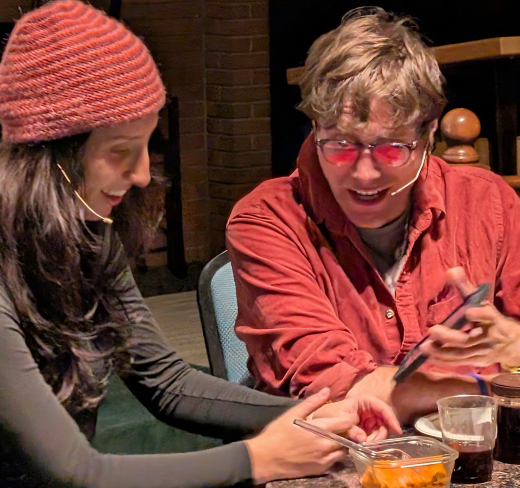
Sparks! Reverie Room (10/21-10/21) |
