
Season 2, Episode 5: Behind every summer is a community that keeps Fire Island alive. This episode explores the history of the beloved Pines Pantry through the eyes of its iconic Pantry Girls, alongside the volunteer firefighters of The Pines and Cherry Grove who protect the island from fires, hurricanes, beach erosion, and an uncertain future.
CONDOLENCE OR A RUG & AN ELF to Open at New York Live Arts
Three-time Obie winner Ain Gordon and composer Josh Quillen collaborate on their latest intimate theater work at the downtown venue.
By: Stephi Wild
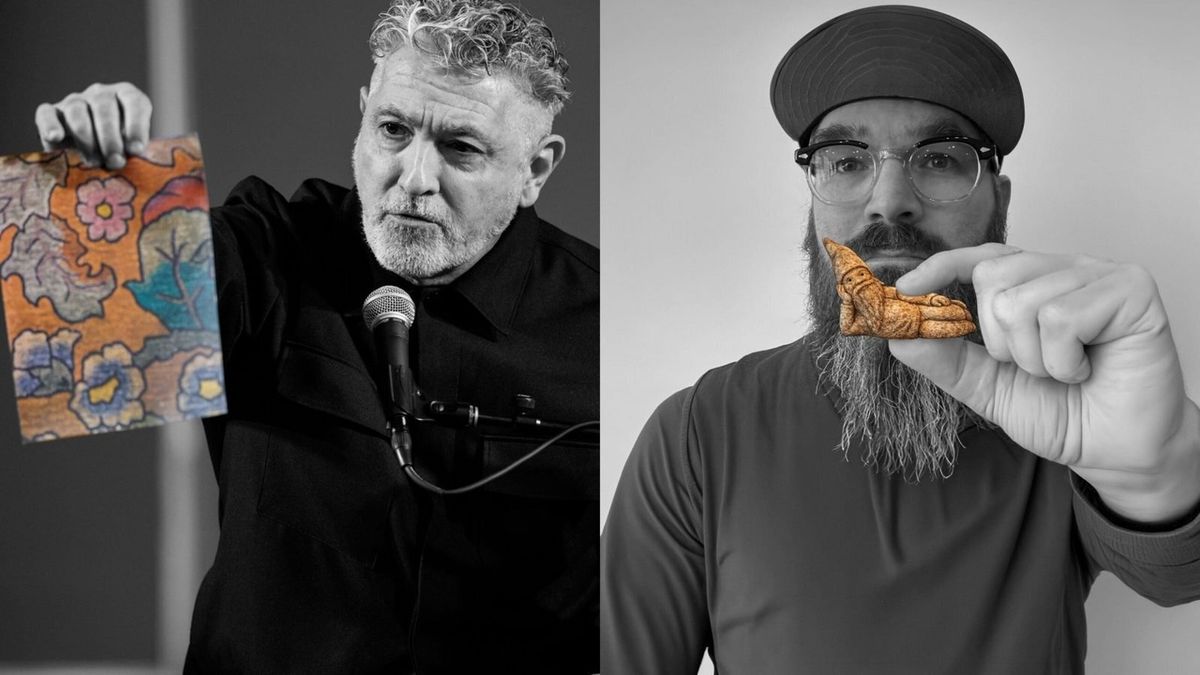
New York Live Arts will present Pick Up Performance Co.'s world premiere production of CONDOLENCE Or A Rug & An Elf, by three-time Obie winner Ain Gordon with Josh Quillen of Sō Percussion, December 10-12 at New York Live Arts (219 W. 19th Street). In CONDOLENCE, Gordon, who recently experienced the back-to-back deaths of his parents, the artists Valda Setterfield and David Gordon, contends with secular America's lack of mourning rituals-realizing that his own may be theater.
2023: crematorium ashes arrive in a Ziplock bag, inside a plastic box, inside a cardboard box, all in a non-compostable tote emblazoned with an eternal flame. Eternal like the tote's forever-synthetics or eternal like maybe grief? Via little songs and tales of a thrift shop rug, a garden elf, Brooklyn's Sheepshead Bay, small-town England, 3 wedding rings, a single cufflink, and a glimpse of the stars, Ain Gordon and Josh Quillen mourn familial absences with bracing candor and silly detail. Explains Gordon, 'If someone dies, everybody gets ready for you to stop talking about it long before you do. But now, as I say in the play, 'I have you, the audience.''
CONDOLENCE Or A Rug & An Elf's team is Ain Gordon (Writer/Director/Performer), Josh Quillen (Composer/Performer), Ain Gordon, Ed Fitzgerald (Performers), Jennifer Tipton (Lighting Designer), Krista Smith (Associate Lighting Designer), Ed Fitzgerald (Production Stage Manager/Props/Performer), and Alyce Dissette (Producer).
Ben Brantley wrote of Gordon in The New York Times that the writer and performer 'haunts the margins of history...conjur[ing] the sort of distant lives that don't make it into textbooks, processed into oblivion by what he calls history's 'ruthless editing machine.'' Gordon traces his knack as an unofficial historian to his childhood: when he'd be dropped off at his grandparents' house during Shabbat and, without electricity, found the only option for entertainment was prying into their lives. Unsatisfied with the versions of stories that get calcified on repetition, he learned to push past them to deeper territory.
'Slowly, detail that was often more scandalous and surprising would come out,' he recalls. 'In those moments what I saw was that inside those aging bodies were more interesting, more dangerous, more problematic people who had now been erased into oldness, even by their own children. At my maternal grandparents' place in England I witnessed the same thing: I got dropped there for two weeks at a time. They lived in a tiny Little Village where everyone had either died during the war or moved away, and it felt like I was the only child within 100 miles. The erasure of detail in order to make a digestible story became what I was experiencing with them, too: so it became the exact same practice of asking questions.'
Items Gordon sorts through in a jewelry box in CONDOLENCE become something akin to mediumistic objects-evoking the vivid, messy recollection that can so easily slip away, stretching from his last respective days with both his parents, back into family history. The seemingly mundane bears its own weight and worlds of complexity here: 'Anyone can say 'and then my father died and it was hard,'' says Gordon. 'But it's like 'and then he died and we were arguing about jam-topped individual cheesecakes.' That's what makes it real.'
In researching the project-which encircles the question of when death truly begins and ends-Gordon spoke with astrophysicist Dr. Amy Secunda about the parallels between the deaths of stars and people. She likewise provided Gordon and Quillen with frequencies stars were vibrating at on given dates in Gordon's stories, which Quillen-who created the piece's sonic world and plays keyboard in performances-has in turn made into music.
Born of different generations and rooted in different disciplines, Gordon and Quillen have forged a highly personal, nearly fraternal, collaboration. They first worked together when Gordon directed Sō Percussion's Where (we) Live. Their earliest two-person work, Radicals in Miniature (2017), was, per Alexis Soloski's New York Times Critic's Pick review, a 'furtive heartbreaker of a piece...an elegy for the men and women, now dead, who populated the electric, ungentrified New York that he knew in the 1970s and '80s.' With Relics and Their Humans (2024), the duo turned from Gordon's past to Quillen's, in a work based around an interview transcript (with Gordon voicing Quillen's mother and Quillen voicing himself) that revisited the three-year odyssey following Quillen's father's ALS diagnosis. Though about Quilen's family, the work ended up becoming, off the page, a dual mourning process: Gordon's father died as they began work on it, then his mother died a month before its premiere.
Recalls Gordon, 'There's a communal mourning history happening here in these works: Josh and Ed Fitzgerald - a stage manager of 35 years, who worked with my father before me, and is onstage too in CONDOLENCE - lived through all of this with Relics. These collaborations with Josh began with a show that was about everyone I knew who had died, with every story ending the same f-ing way: everybody dies, again and again and again. Who would say yes to that? Josh would say yes to that. It was that simple; we did not know we would enjoy it as much as we did or that audiences would like it as much as they did. And it's been a bond ever since. That's what this is again: who else would I do this with?'
The December 10 performance is followed by a conversation with Gordon's friend, celebrated performer Carmelita Tropicana, whose recent collaboration with Branden Jacobs-Jenkins, Give Me Carmelita Tropicana!, was hailed by Helen Shaw in The New Yorker as an 'elegiac farce' and 'anarchic catalogue raisonné... summon[ing] a living inventory of three and a half decades of radical (and radically queer) performance work.' She, alongside Gordon, is one of 11 downtown NYC artists comprising the LGBTQ+ Artists Archive Project, a Pick Up Performance Co. project.
Performances take place December 10-12 at 7:30pm pm at New York Live Arts Theater (219 W. 19th Street), with a Stay Late Conversation with Carmelita Tropicana December 10.
More on New York Live Arts
Broadway news in your inbox
Weekly top stories - unsubscribe anytime.
Weekly top stories - unsubscribe anytime.
Popular episode


|
Trump and Melania american theatre of Actors (10/28-11/01) |
|
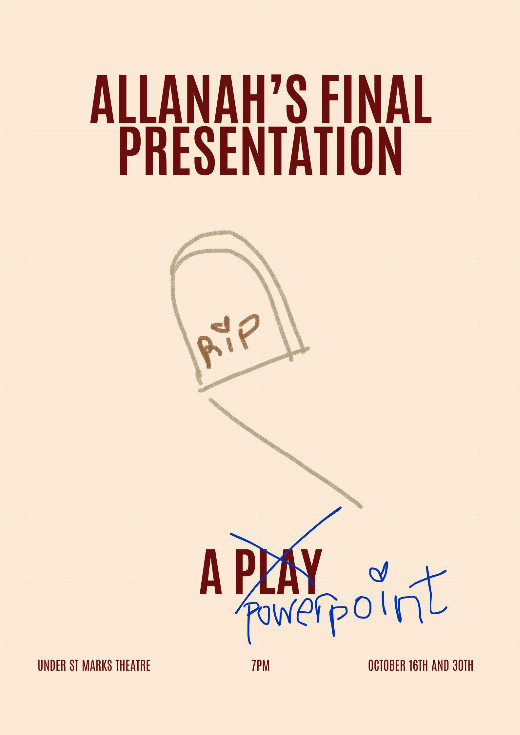
Allanah's final presentation Under St Marks (10/30-10/30) |
|
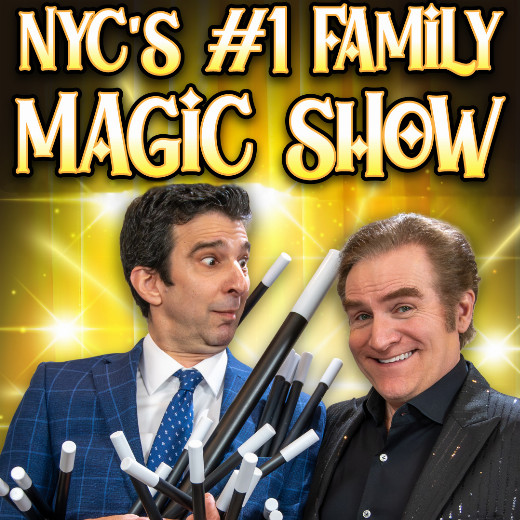
Broadway Magic Hour Broadway Magic Hour: Magic Show (7/25-1/02) |
|
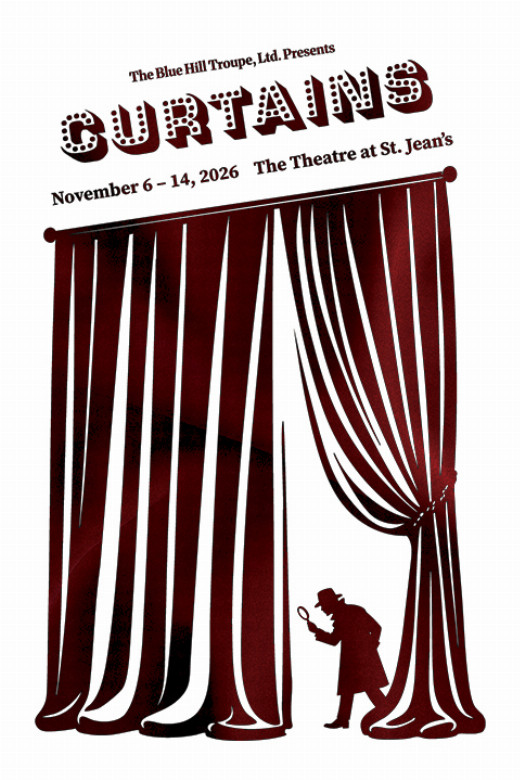
Curtains Theatre at St. Jean's (11/06-11/14) |
|
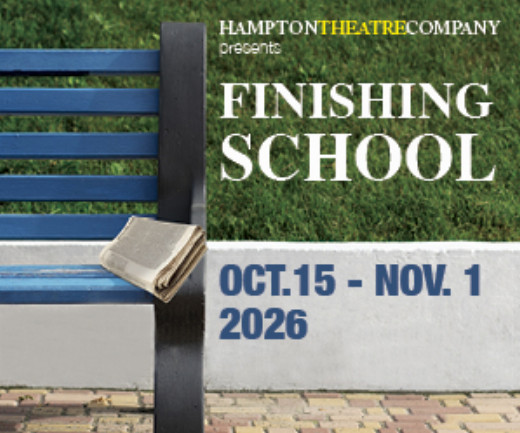
Finishing School Hampton Theatre Company (10/15-11/01) |
|
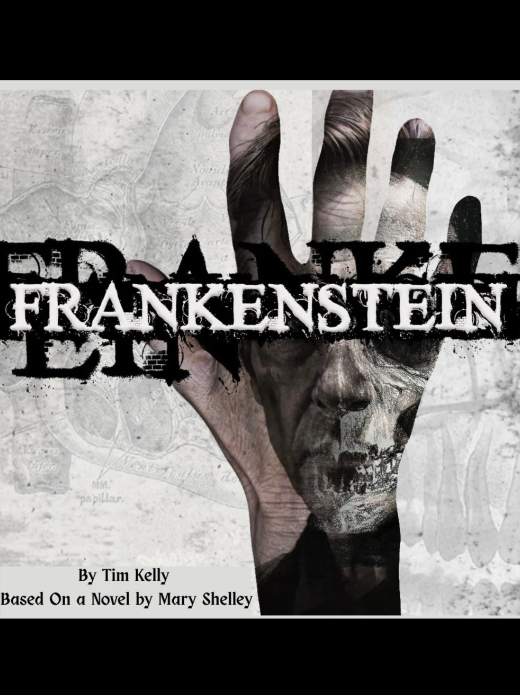
Frankenstein Manes Studio Theatre of Long Island (10/09-10/31) |
|
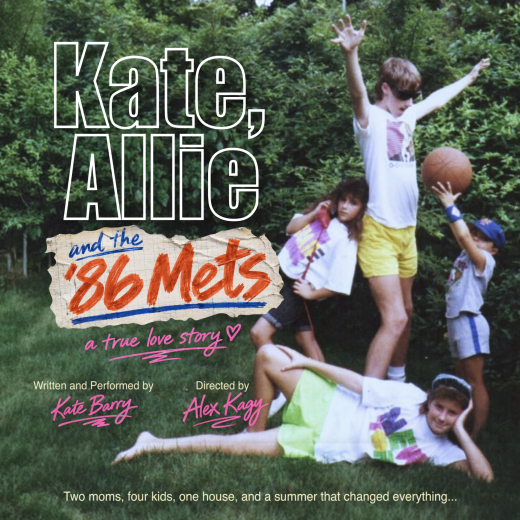
Kate, Allie and the '86 Mets Asylum (11/05-11/10) |

|
No nos merecemos soñar Teatro LATEA (10/28-10/30) |
|
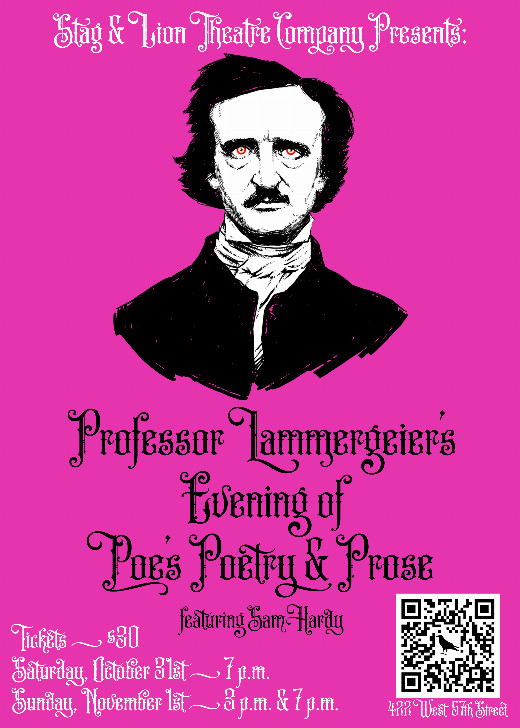
Professor Lammergeier's Evening of Poe's Poetry & Prose Stag & Lion Theatre (10/31-11/01) |
|
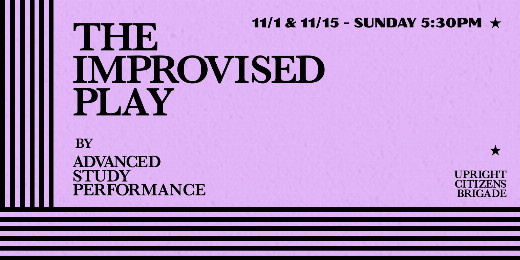
The Improvised Play The Upright Citizens Brigade (11/01-11/15) |