


August Strindberg Rep Sets DAMASCUS II in '60s California This Spring
By: BWW News Desk
From March 12 to April 2, August Strindberg Repertory will present Strindberg's DAMASCUS II, adapted by Edgar Chisholm, directed by Robert Greer. This is the second installment of the three-part work in which Strindberg first introduced true surrealism to the stage in the theatrical representation of the dream. Strindberg's tale of life in decadent artists' circles of 1890s Sweden will be brought to life in 1960s California and its leading character, an alienated writer, has been re-envisioned as an author modeled on Amiri Baraka.
Although the events of the Trilogy are sequential, you needn't worry about what you have missed. The production will open with a six-and-a-half minute condensation of "To Damascus, Part 1," which was presented by August Strindberg Rep in 2014. Part 3 will be presented next year. This is the first time any company has presented the trilogy complete in any language in 99 years.
The trilogy has been described as "Strindberg's most complex plays" and as "his greatest plays" due to their synthesis of a wide variety of myths, symbols and ideas with a profound spiritual analysis in a new dramatic form. They are Strindberg's most overtly autobiographical dramatic works and deal very directly with his attitude toward religion. The three plays foreshadowed styles to be seen later in Strindberg's "The Dream Play" (1902) and "The Ghost Sonata" (1907). They trace the spiritual downfall and redemption of The Stranger, an author in mid-career.
In Part 1, The Stranger persuades a high-class character named The Lady to leave her husband, a Doctor. The pair elope but their dreams of freedom are shattered by feelings of guilt. Penniless, they return to the Lady's parental home, where her pious mother persuades The Lady to read The Stranger's book, which he had forbidden her to do. Having "eaten of the tree of knowledge," The Lady drives her husband away. A broken man, he recuperates in an asylum in a convent, where he is cursed by his confessor. He returns to The Mother, who tells him he is on the Road to Damascus and that he, like Saul, must seek forgiveness. In 2014, August Strindberg Rep began its comprehensive adaptation of the Trilogy, updating Part 1 to Harlem, 1962 and envisioning The Stranger as a black radical writer in the image of Amiri Baraka (author of "The Dutchman").
Part 2 has The Stranger and The Lady living together unhappily. She is pregnant and makes his life miserable by intercepting his mail and interfering with his scientific work. Although his is primarily a literary man, he has been dabbling in alchemy and electricity (as Strindberg actually did). He hopes to turn lead into gold, not to enrich himself but to redress economic inequality by making gold worthless. Surprisingly, his experiments are successful and he is honored at a grand banquet, which turns into a farcical nightmare. He is exposed as a charlatan and stuck with the bill, which he cannot pay. The Banquet, in all its fantastic oddity, dominates the play. It is one of the most suggestive treatments ever of the ancient theme of the fickleness of fortune. Subsequently, The Stranger abandons The Lady when her daughter is born, but is persuaded to return to them by The Beggar, a sort of alter-ego he had met in Part 1, and the Confessor persuades him to return to the monastery.
August Strindberg Rep will be setting Part 2 in mid-sixties California, with its counterculture in full bloom. The production will have 60's-style period music composed by Andy Evan Cohen. Strindberg drank deeply of the exotic lifestyle of 1890's Paris and Berlin, with its free love and feminism, and this is key to the logic of this adaptation. To August Strindberg Rep, the lifestyle of California in the 60's has remarkable parallels to the societies of fin de siecle European capitols, with their avant-garde cultural movements and anarcho-syndicalist ideologies. As in Part 1, the character of The Stranger is re-imagined as a radical black writer and the class difference between The Stranger and The Lady is expressed in their racial difference. Strindberg envisioned The Stranger's alchemy as an act of political rebellion. Transporting this to modern times, it might be perfectly reasonable for a revolutionary black writer in the 60's to try to turn lead into gold to bring down the world economy, considering the distrust of the period toward the capitalist banking system, corporate culture and Military-Industrial Complex.
Among its modernist influences, the trilogy is an early example of the Stationendrama (drama of stations), common to German Expressionist plays, in which a central character passes through a series of stations, usually in a quest for redemption. On his path, he meets characters who may be versions of his own personality or the same character reappearing in different guises. Most disturbing of these in "To Damascus" is The Lady, who in Part 1 contains the redemptive features of Goethe's 'eternal woman' but in Part 2 transforms into an evil persecutor.
Jarde Jacobs plays The Stranger and Ivette Dumeng plays The Lady. The cast also includes Diana Lynne Drew, Camilla Goeritz, Tomike Lee, Al Foote III, Andres Pina and Randall Rodriguez. Set design is by You-Shin Chen. Costume design is by Zulema Griffin. Lighting design is by Leslie Smith. Sound and video design are by Andy Evan Cohen and Janet Bentley. Prop design is by Lytza Colon. Dramaturg is Janet Bentley. Producer is Jessa-Raye Court.
IF YOU GO:
Damascus II
March 12 to April 2, 2016
Gene Frankel Theatre, 24 Bond Street (between Bowery and Lafayette, East Village)
Presented by August Strindberg Repertory Theatre in association with Theater Resources Unlimited.
Half Price Previews March 12 & 13 at 2:00 PM, opens March 16 at 7:30 PM
March 16 to April 2: Wednesdays and Thursdays at 7:30, Fridays and Saturdays at 8:00 PM, Sundays at 2:00 PM.
Tickets $18 general admission; seniors and students $12.
Box office: SMARTTIX, 212-868-4444; www.smarttix.com
Company's website: www.strindberg.org
Running time: 1:50 plus intermission.
Pictured: Ivette Dumeng (The Lady) and Jarde Jacobs (The Stranger). Photo by Farnaz Taherimotlagh.

|
Murder on the Orient Express Manes Studio Theatre of Long Island (8/28-9/13) |
|
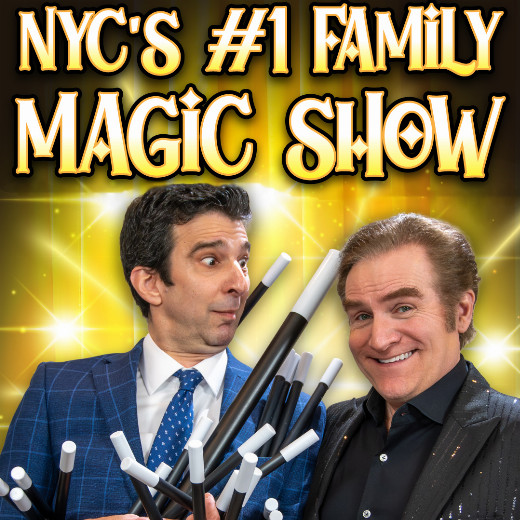
Broadway Magic Hour Broadway Magic Hour: Magic Show (7/25-1/02) |

|
Broadway Takes On The 80s The Cutting Room (9/14-9/14) |
|
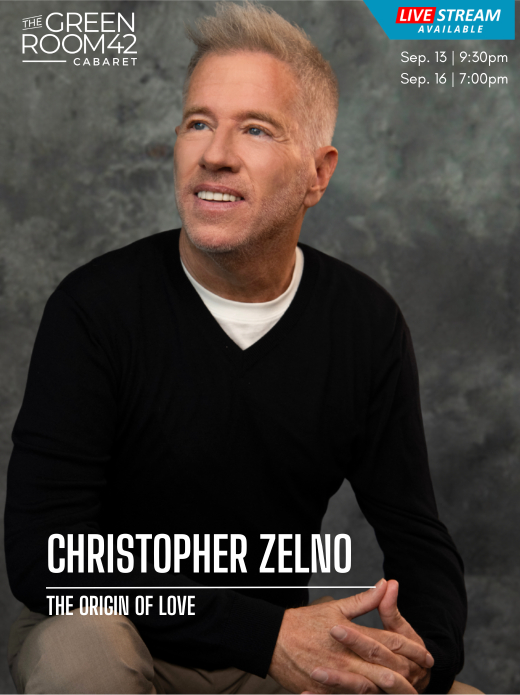
Broadway Veteran Christopher Zelno Celebrates 40 Years in New York with The Origin of Love The Green Room 42 (9/13-9/16) |

|
Eileen Barnett: Back Again...For The Very First Time! The Laurie Beechman Theatre (10/06-10/06) |
|
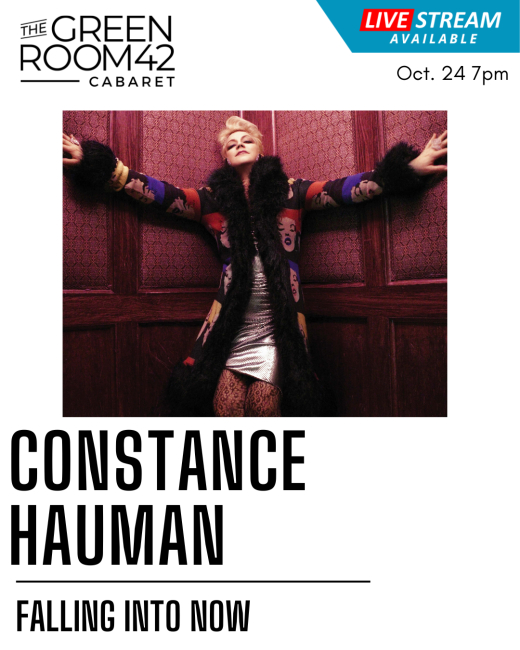
Falling Into Now Greenroom42 (10/24-10/24) |
|
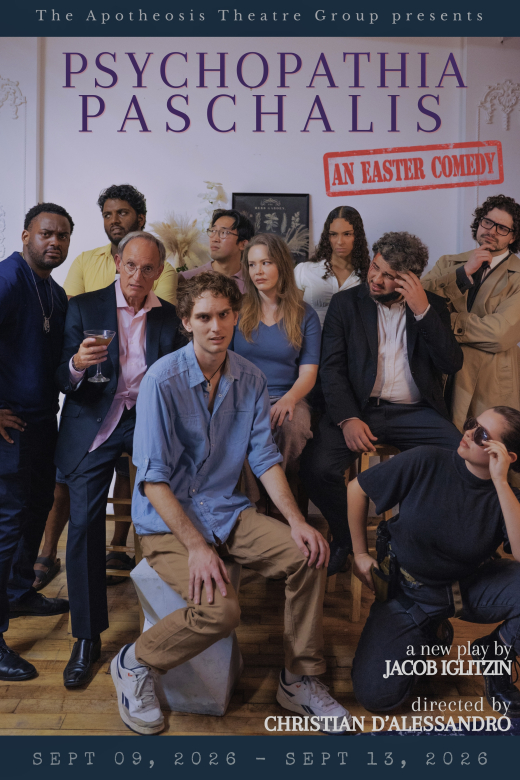
Psychopathia Paschalis: An Easter Comedy Factory Series at Chain Theatre (9/09-9/13) |

|
Rock Never Dies Hard Rock Cafe (5/29-8/30) |

|
Shangri-La-La, a comedy musical about Siegfried & Roy Theater for the New City (8/29-8/29) |
|
Worth the Wait - Steph Koffroth The Laurie Beechman Theater (8/26-8/26) |