


Review: OC's Segerstrom Center Welcomes HARRY POTTER AND THE CURSED CHILD
A visually enchanting follow-up to J.K. Rowling’s global franchise, the play continues its tour stop in Costa Mesa through July 25.
 Click for Tickets!
One of the most prevalent recurring motifs featured within the Wizarding World of Harry Potter is the idea that the past never truly stays buried. The choices one makes, the relationships they forge, and the burdens they inherit ripple across generations in ways both wondrous and heartbreaking.
In the fantastical, visually-enchanting stage play HARRY POTTER AND THE CURSED CHILD—the Olivier and Tony Award-winning theatrical continuation of controversial author J.K. Rowling's beloved magical saga—that very idea of revisiting the past is embraced as its central theme, which in turn shifts the focus away from the mischievous school adventures that made the franchise a global phenomenon, but, instead, explores the far messier realities of adulthood, parenthood, regret, generational trauma, and the very concept of leaving behind a proud legacy.
The stage play's much-anticipated national tour production has finally arrived in Orange County, where it continues performances at Segerstrom Center for the Arts in Costa Mesa, CA through July 25, 2026.
One can certainly argue that the play—written by Jack Thorne from an original story by Thorne, Rowling, and John Tiffany—is essentially, still another exciting adventure story in the franchise. Now, though, the story employs a seemingly familiar narrative that feels like its foundations were "borrowed" directly from the Back to the Future film trilogy, but with a decidedly more magical twist. Great Scott!
Here, present-day figures—many of whom are the offspring of important characters in the original run of stories—engage in some, oh, light time traveling to revisit familiar past personas with the aim to "fix" something tragic in the past, consequences be damned. There's even a moment (a lá Back to the Future Part II) when a significant change made in the past to try to "correct" a future wrong ends up creating a dark new timeline that completely wrecks the pleasant, Voldermort-free future everyone has come to know. Uh oh.
While the "borrowed" plot structure feels a bit lazy on the surface, much of its execution on stage feels—particularly with this production's high-tech magic—the play definitely spellbinds.
And… not gonna lie—it was definitely cheeky fun getting all these Easter eggs in the play recalling the original franchise—but is it all mere fan-service storytelling?
In the spirit of full disclosure, I am not ashamed to admit that I have been quite a huge fan of the entire Harry Potter film adaptation series since their original theatrical releases, despite never having read any of the books. Admittedly, it is much harder these days to remain a fan of the franchise when its chief architect continues to spew hateful rhetoric. But, still, the thought of experiencing one more follow-up that continues the story after the events of that final film (and that revelatory epilogue)—this time as a stage production—felt like an exciting prospect.
The play—or, rather, plays—first debuted back in 2016, billed as a two-parter, meant to be experienced back-to-back on a single day or on consecutive nights. The two shows have since been whittled down to a much more palatable single two-act play (thank goodness) running just under three hours (plus an intermission), which, assumably, retains just the more important content of the two separated plays.
Did the play feel like it was missing elements? Honestly, not really, though I should say I never saw the original two-part version, so I have no basis for personal comparison. Though as it stands, the play has, perhaps, still way more exposition happening here than needed. But, again, as a fan of the stories, it is a delight even hearing about a past character or event or locale mentioned or referenced in the play while this new narrative unfolds.
But, of course, more than anything, HARRY POTTER AND THE CURSED CHILD's eye-popping stagecraft is its main draw.
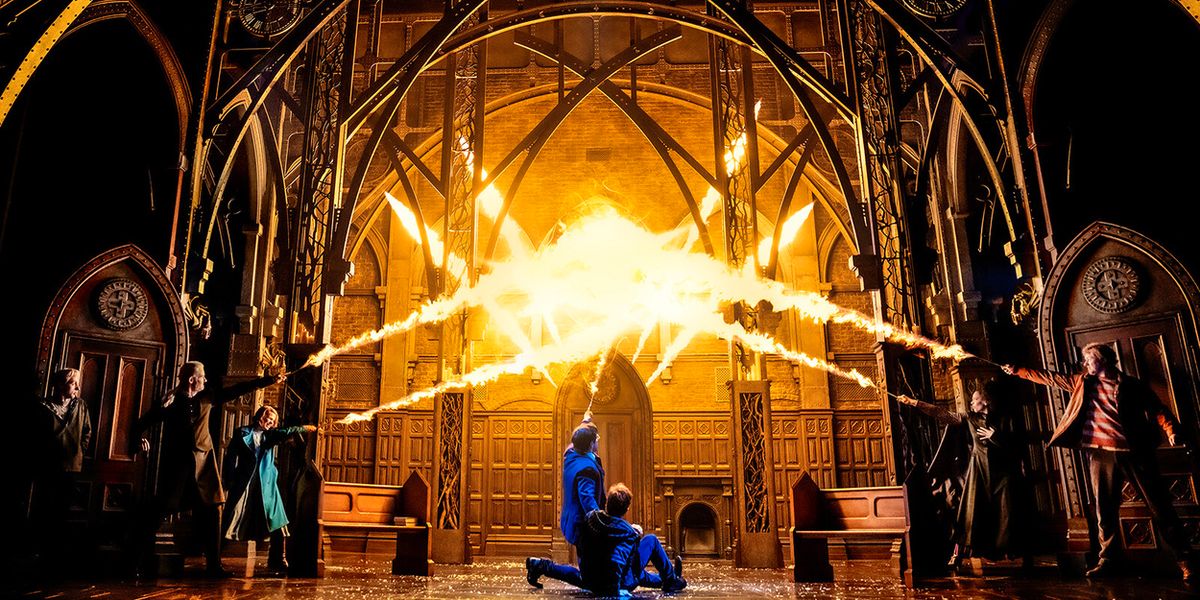
Visually, the play—as one might have expected in an IP like Harry Potter—is a marvel of theatrical magic, mesmerizing in spectacle and movement, and filled with fantastical elements that will have audiences continuously wondering "how the heck did they do that?!" Theatergoers even get an early costume-change trick that instantly wows and doesn't seem to let up. Ever wonder how Dementors can be portrayed on stage? Wonder no more because this play shows ‘em as if lifted directly from the films—haunting and enthralling with every appearance.
Honestly, that kind of visual splendor alone is reason enough to see the production, I feel, particularly for serious or even casual fans of the franchise.
On the surface, the resulting play appears to be one of the most technically astonishing achievements ever mounted on a theatrical stage. However, I have to admit that its hit-and-miss narrative and, yes, its use of an extremely familiar trope of a plot line, continues to divide my own feelings for it, resulting in an experience that is at once emotionally affecting, visually breathtaking, and, at times, narratively frustrating. But, again, I should reiterate that the play overall is, nonetheless, an enjoyable, wondrous experience I would actually love to see multiple times if only to take in some of the magic I might have blinked and missed the first time.
Set nineteen years after the major events of Harry Potter and the Deathly Hallows, this "sequel" play reintroduces audiences to the heroic threesome—and many associates—now all grown up with children of their own. Everyone's favorite ginger Ron Weasley (the funny Matt Harrington) now runs the Diagon Alley joke shop with his brother George, while wife the super smart Hermione Granger-Weasley (Rachel Leslie) is, natch, now the Minister of Magic!
And, finally, there's, of course, Harry Potter (Nick Dillenburg), now the respected but overworked Head of Magical Law Enforcement at the Ministry of Magic. Understandably, he strives to balance the immense weight of his legendary status with the everyday hurdles of being a good husband to Ginny (Abbi Hawk)—now a sports reporter for the Daily Prophet—and a father to three children. At present, he finds himself struggling most particularly with a challenge far more complicated than defeating dark wizards: connecting with his youngest son, Albus Severus Potter (the winning Adam Grant Morrison).
The central nucleus for the play, Harry's son Albus is sensitive, vulnerable, and thoughtful, having spent his entire life burdened beneath the impossible expectations attached to his infamous surname, which, in turn, causes him to feel incredibly misunderstood by his own family and whispered about by his peers.
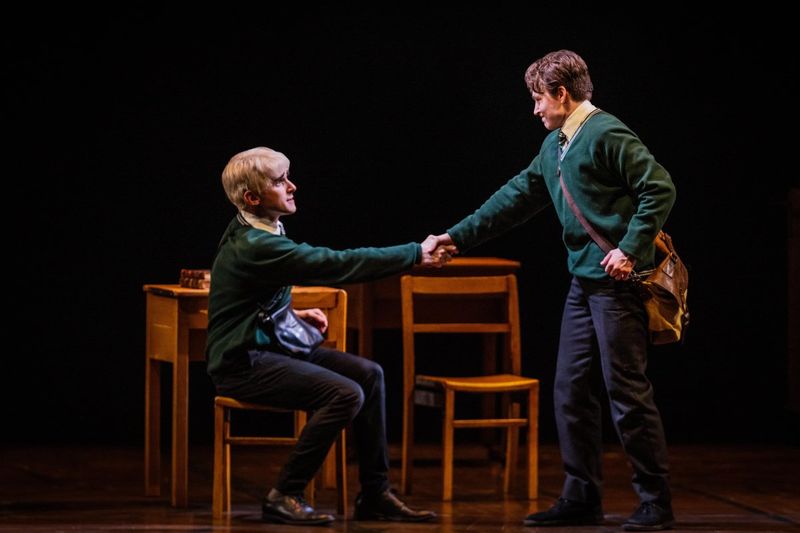
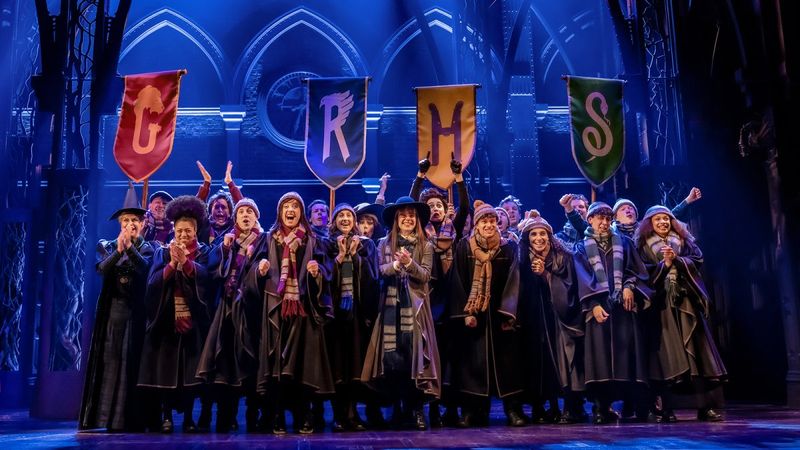
Now himself a student at the infamous Hogwarts School of Witchcraft and Wizardry—and feeling like an outsider there—Albus meets and then forms an unlikely friendship with Scorpius Malfoy (the wonderful David Fine), the smart, awkward, and surprisingly endearing son of Draco Malfoy (Ryan Hallahan), Harry's longtime rival and nemesis.
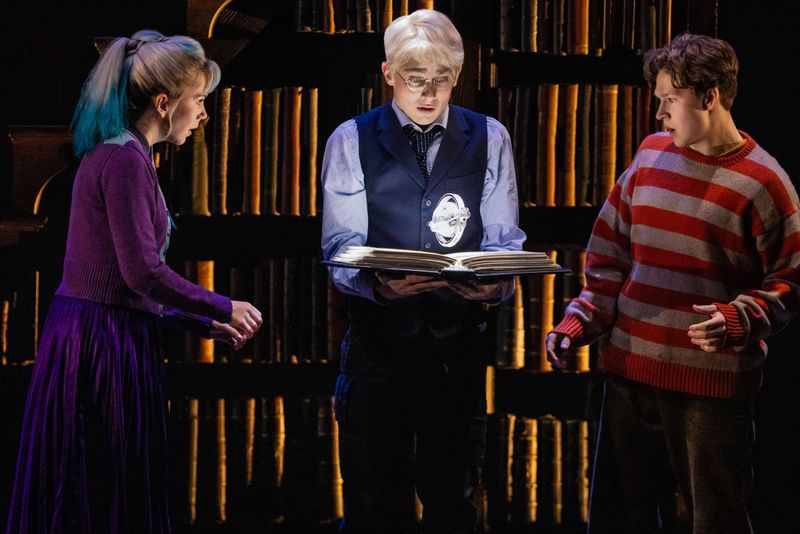
As years pass, the two share a deep bond that, luckily, even got them both sorted into the same Hogwarts house! Proving the adage that "misery loves company," they endure constant bullying together, finding solace in their shared kinship as outcasts. Later, the best friends task themselves on a dangerous mission involving an illegal Time-Turner they steal from Hermione's office in the hopes of correcting one of history's greatest tragedies, as convinced by their new mysterious friend Delphi Diggory (Julia Nightingale).
Unfortunately, their seemingly noble intentions instead unleash a series of increasingly catastrophic alternate timelines that threaten not only the Wizarding World but all reality itself—forcing parents and children alike to confront the unintended consequences of trying to rewrite fate. As fractured timelines collide and old wounds resurface, the story evolves into both a high-stakes magical adventure and a poignant meditation on family, forgiveness, and the enduring power of love across generations. Along the way, Harry and Albus are also forced to reexamine their fractured father-son relationship.
As a theatrical event, HARRY POTTER AND THE CURSED CHILD is a unique unicorn: a commercially-motivated stage production with an extraordinary command of creative, thoughtful stagecraft. Under the direction of John Tiffany, every design discipline works in near-perfect harmony—from Christine Jones' majestic set designs and Katrina Lindsay's opulent costumes to Neil Austin's mood-enhancing lighting design, Finn Ross and Ash J. Woodward's video designs, and Jamie Harrison's awesome illusions—to create a theatrical presentation brimming with moments that genuinely inspire childlike wonder.
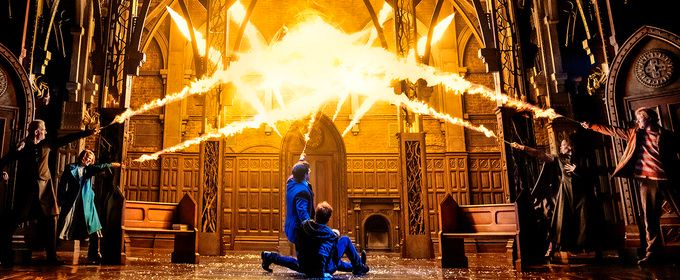
Characters apparate before your eyes! Dementors float ominously overhead! Frocks morph from one style to another! Wands ignite with dazzling bursts of light! The show is meticulously curated to be a captivating live recreation of what made the Harry Potter movies magical.
Here, entire environments transform within seconds through an astonishing combination of impressive scenic engineering, lighting, sound immersion, mesmerizing choreography and transitions (courtesy of movement director Steven Hoggett), and, finally, illusion designs and practical effects that somehow continue to feel handcrafted despite their immense scale. Rather than relying solely on digital spectacle, the production celebrates the uniquely live magic of theater itself, inviting audiences to marvel not at computer-generated imagery, but at the seemingly impossible feats unfolding only feet away, executed live by real human beings.
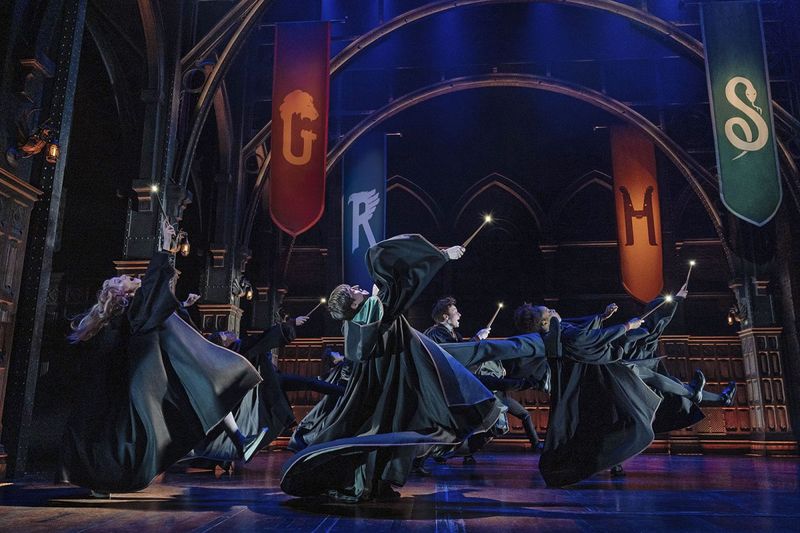
Even the show's musical interludes—composed and arranged by none other than pop soundscape artist Imogen Heap—complete the vibe.
Equally admirable is the play's emotional core. Beneath all the spell-casting and visual wizardry lies a surprisingly intimate examination of generational trauma and the complicated relationship between parents and children.
Harry's lingering emotional scars from his own childhood manifest themselves in ways that make him an imperfect—and at times frustrating—father. His inability to understand Albus mirrors the very emotional distance he once resented from the adults in his own life. There's even a heartbreaking argument between Harry and Albus where Harry utters something no child ever needs to hear, which I won't spoil here.
Meanwhile, darling Scorpius—whom we all grow to care for as the play progresses—emerges as one of the play's greatest triumphs, evolving into an irresistibly charming, deeply compassionate character whose optimism and vulnerability often become the production's emotional anchor. His friendship—or, perhaps, more—with Albus is refreshingly sincere, providing many of the show's warmest, funniest, and most heartfelt moments.
That said, HARRY POTTER AND THE CURSE CHILD is far from a flawless continuation of the Harry Potter canon. Its greatest weakness lies in its meandering script, which often prioritizes spectacle over cohesive storytelling. While the emotional conflicts between parents and children resonate strongly, many of the plot mechanics surrounding time travel quickly become convoluted, stretching the internal logic previously established within the original novels. Longtime fans may find themselves questioning certain character decisions that seem inconsistent with earlier portrayals, while several major revelations rely more on shock value than genuine narrative inevitability. Well, okay, while that Act 1 ending reveal did jolt, having it mirror what happened in Back to the Future II definitely lessened the impact. The result is a script that sometimes feels more like elaborate fan service elevated by Broadway-level production values than a fully organic next chapter in the series.
Though I do appreciate the edits to the play to have narrower focus on Albus and Scorpius' time travel adventure, some supporting characters likewise receive disappointingly limited development. Fan favorites such as Hermione Granger, Ron Weasley, Ginny Potter, Draco Malfoy, and even (SPOILER ALERT) Severus Snape and Albus Dumbledore occasionally function more as merely familiar touchstones than fully realized participants in the story, with only brief moments hinting at the richer emotional journeys they might have explored since the events of the original series. Certain alternate-reality sequences, while visually thrilling, also interrupt the dramatic momentum, introducing fascinating "what if" scenarios that are abandoned almost as quickly as they appear.
Perhaps it may just be me swirling in the frenzy of Heartstopper mania (opening night was days before the final film came out), but I appreciate the play hinting that young students Scorpius and Albus may be low-key infatuated with each other (and not just in a friend way)… or is it mere wishful thinking/projection on my part?
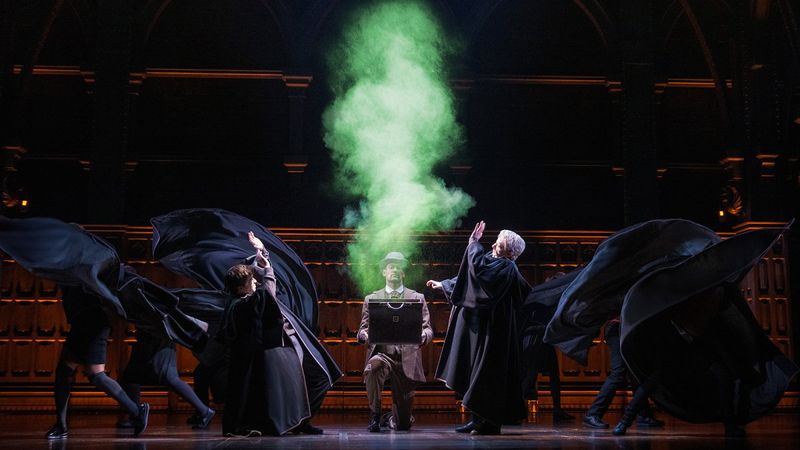
Flaws aside, the assembled acting ensemble is pretty incredible. As Scorpius, Fine successfully essays an endearing character that everyone will adore, a soft-boy contrast to his much more acerbic father who still somewhat finds frenemy Harry a pill. As his BFF Albus, Morrison does a great job portraying a conflicted son saddled with an intimidating legacy. I really, really enjoyed Dillenburg's grown up portrait of Harry Potter, who feels authentic to the character we first met as a boy, still grappling with responsibilities to do the right thing for everyone involved. His touching, reconciliatory talk with his son towards the end of the play had me, admittedly, a little teary-eyed even.
Other standouts include Katherine Leask who notably portrayed distinctive portraits of both Prof. McGonagall in the present and detestable Prof. Umbridge in the past. Scene-stealer Mackenzie Lesser-Roy also makes the most out of her cameo as ghostly Moaning Myrtle. I also enjoyed Harrington's adult Ron Weasley providing some comic relief throughout the play. Overall, the cast is a well-choreographed bunch, navigating a play with more visual transitions than any other non-musical play I have ever experienced, which, that alone, is worth applauding.
Of course, discussing HARRY POTTER AND THE CURSED CHILD in 2026 is impossible without also acknowledging the complicated shadow cast by J.K. Rowling herself. Since the play's original premiere, Rowling's repeated public statements regarding transgender people have sparked widespread criticism from LGBTQ+ advocates, former fans, and even several actors closely associated with the Harry Potter franchise.
For many theatergoers—particularly transgender audiences and their allies, myself included—those heinous views have fundamentally altered their relationship with the Wizarding World, making it difficult, if not impossible, to engage with any new Harry Potter-related project without moral hesitation. That reality, I hate to say it, inevitably colors the experience of seeing CURSED CHILD, raising legitimate questions about whether it is possible to separate an artist from the work they helped create.
What a weird dichotomy: while the production itself champions themes of empathy, acceptance, and the importance of embracing those who feel different—messages that resonate deeply on their own—the ongoing controversy surrounding Rowling introduces an undeniable layer of emotional and ethical complexity that every audience member must ultimately navigate for themselves. For myself, I couldn't help but wonder: why have such anti-transgender views yet sign off on a narrative where the two same-sex main characters are possibly falling in love? Is this a case of a franchise cashing in on a community anyway even though the franchise's owner constantly seeks to undermine that community?
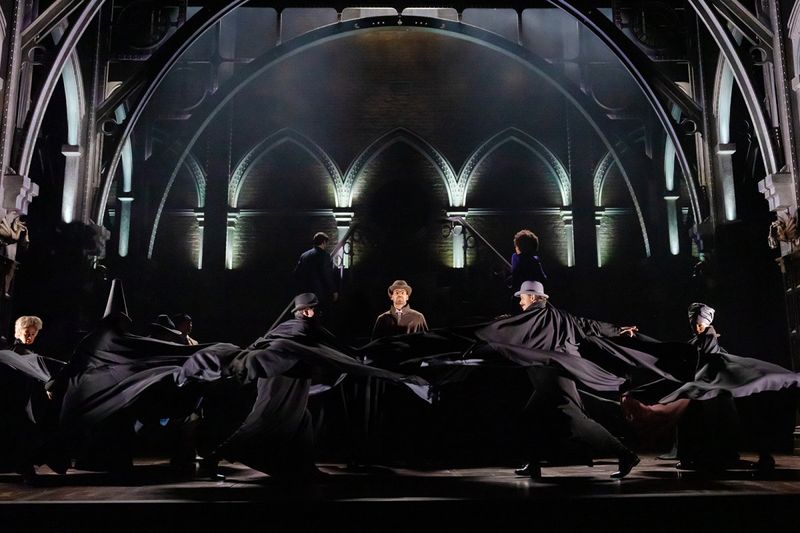
Alas, even with that controversy casting a shadow on it all, it is difficult to deny, objectively, the remarkable achievement that HARRY POTTER AND THE CURSED CHILD represents as a work of live theater. It demonstrates, perhaps more convincingly than any major production in recent memory, that audiences still crave practical stagecraft capable of inspiring genuine astonishment. The production continually reminds viewers, too, that theater possesses its own kind of magic—one that requires no movie screen to feel limitless.
Ultimately, HARRY POTTER AND THE CURSED CHILD succeeds less as a perfect sequel to the beloved series than as an unforgettable theatrical experience. Its narrative occasionally stumbles beneath the weight of its own ambitions, and its mythology may frustrate devoted fans looking for airtight continuity. Yet its emotional sincerity, breathtaking technical artistry, and unwavering belief in showcasing the transformative power of friendship, forgiveness, and family make it a compelling evening in the theater.
Much like the Wizarding World itself, it is imperfect, imaginative, occasionally messy, and undeniably enchanting—proof that even decades after Harry First boarded the Hogwarts Express, there are still new kinds of magic and wonder waiting to be discovered beneath the lights of a stage.
* Follow this reviewer on Bluesky / Instagram / Threads / X: @cre8iveMLQ *
-----
Photos from the National Tour of HARRY POTTER AND THE CURSED CHILD courtesy of Segerstrom Center for the Arts.
Performances of THE SOUND OF MUSIC continue at Segerstrom Center for the Arts in Costa Mesa, CA through June 14, 2026. Tickets can be purchased online at www.SCFTA.org, by phone at 714-556-2787 or in person at the SCFTA box office (open daily at 10 am). Segerstrom Center for the Arts is located at 600 Town Center Drive in Costa Mesa. For tickets or more information, visit SCFTA.org.
Sign up for all the news on the Fall season, discounts & more...
|
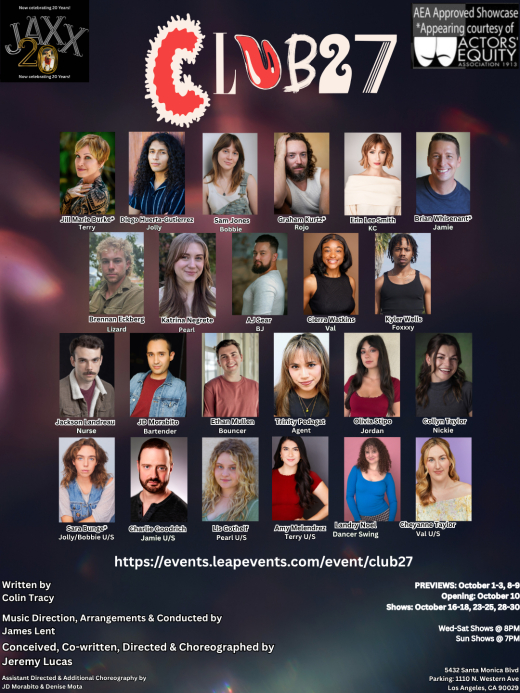
CLUB27 Jaxx Theatre (10/01-10/30) |
|
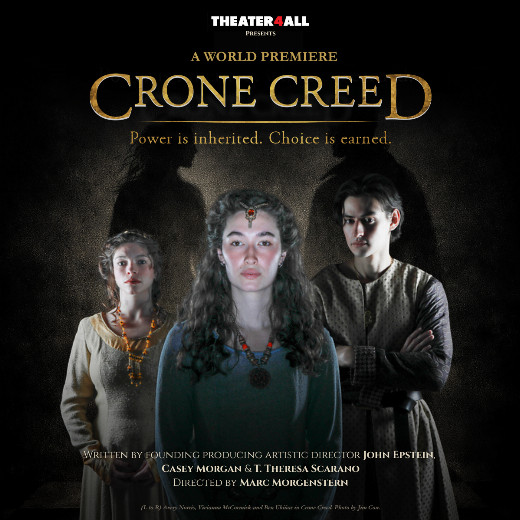
Crone Creed El Portal Theatre (9/30-10/17) |
|
Good Night, Oscar North Coast Repertory (9/16-10/11) |
|
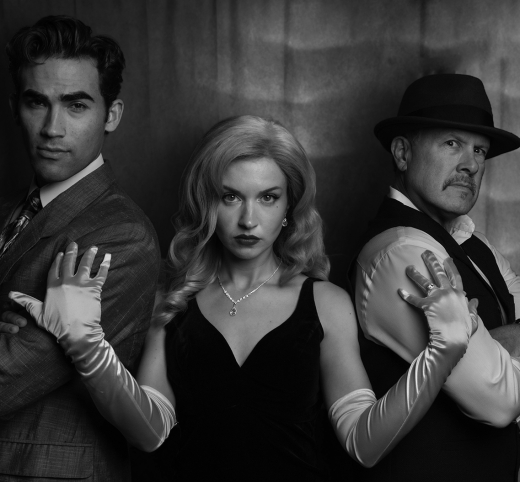
A Killer Night in Studio City Vitello's (9/06-10/31) |
|
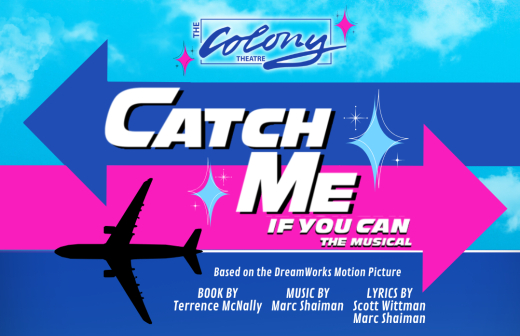
Catch Me If You Can Colony Theatre (9/17-10/18) |

|
Dinner with Friends Santa Monica Playhouse (9/26-9/27) |

|
Gershwin and the Golden Age The Soraya (10/11-10/11) |
|
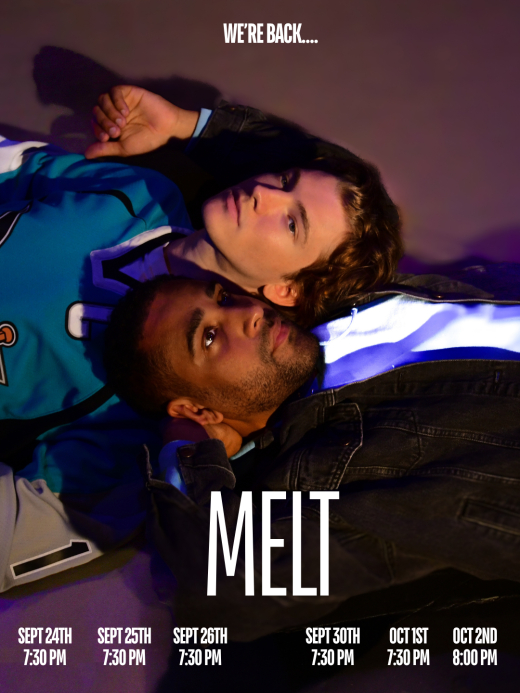
Melt : The Play The Marilyn Theatre at the Lee Strasberg Institute (9/24-10/02) |

|
New Works Festival Shoebox Theatre (9/11-9/26) |
|
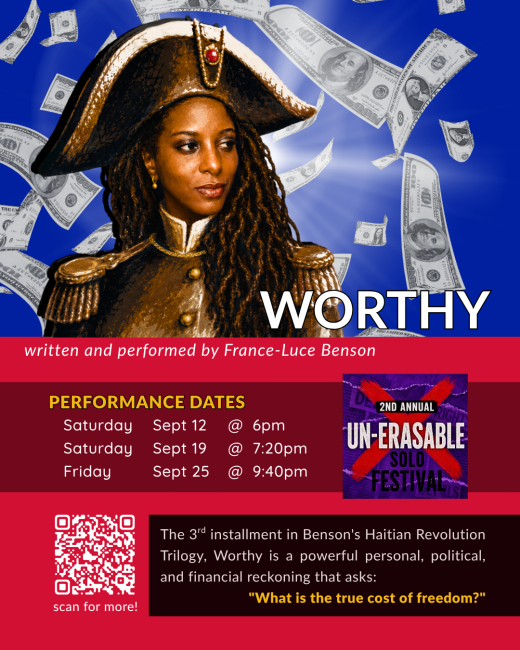
Worthy The Un-Erasable Solo Festival - Willie Agee Playhouse (9/12-9/25) |

Reader Reviews
To post a comment, you must register and login.