

Review: OC's Segerstrom Center Welcomes New Tour of THE SOUND OF MUSIC
The ubiquitous Richard Rodgers and Oscar Hammerstein III musical returns to classic form in a brand new national tour.
You may ask yourself—is seeing yet another touring stage production of the globally and generationally ubiquitous 1959 musical THE SOUND OF MUSIC still worth experiencing live on stage in 2026?
I mean, you can always opt to seeing it as a local production or a community theater presentation, which might be much more friendlier to your wallet in these tough times. Or better yet, you could also just simply launch the show's much beloved 1965 film adaptation on a streaming service or a DVD player conveniently at home without ever leaving the couch. Or you can even wait for a communally fun sing-along version to come back to a theater near you or wait for its next holiday broadcast on network television.
Suffice it to say, this musical is, quite literally, readily available almost anywhere.
But, there's no denying that… live theater just hits different.
In a jolting moment in the second act of its current new touring production—which continues performances at OC's Segerstrom Center for the Arts in Costa Mesa through June 14, 2026—the audience audibly gasps when giant Nazi flags unfurl from behind the proscenium, presenting a very large, very ominous threat to our kindly, adorable central characters of a frightening movement that has now swept through Austria with its evil intentions.
In a moment that, arguably, only a live, Broadway-caliber production can bring, you suddenly realize the living, breathing threats from oncoming fascists, and the very real danger they possess for those in opposition of their ideals. Though these entities portrayed in the musical are from seemingly many lifetimes ago, seeing them portrayed in the flesh reminds us, sadly, that such threats are still very much present in our current times and, in some cases, in our very own neighborhoods, stoked by the sentiments that have risen up in recent election cycles.
As awesome as it is seeing Christopher Plummer rip a Nazi flag to shreds and trade insults with a Nazi on screen, there's just something about experiencing this history-based musical performed live for viewers to really take in as a collective community.
That smack of a visual really reiterates for both first time and well-versed viewers the power of live storytelling presented on the stage medium—and the ways it could inform us of what has been, and what we should probably work hard to avoid happening again.
The idea of spending time seeing—and hearing—joy burst out despite a looming threat as depicted in this otherwise super-saccharine musical is almost a desperate kind of self-care medicine, and with this new production, it's hard not to see it as such, as audiences of all ages walk away from the theater with smiles on their faces and some inescapable tunes stuck in their heads, while also remembering how important it is defeat evil.
Is THE SOUND OF MUSIC too cheesy and old-fashioned? Sure. Is it way too wholesome and not groundbreaking enough for today's savvy audiences? Maybe. But is it kinda, low-key a fun, irresistibly adorable good time? Ah, yep.
While the stage musical in its current touring form certainly doesn't offer anything revolutionary or new to the show's now timeless canon, this latest iteration is, overall, a genuinely enjoyable, earnest, and pleasantly nostalgic revival of a classic, featuring everything that made the show so gosh darn lovable to our parents and their parents before them… and for the younger generations now experiencing it for the first or second time.
Directed by Jack O'Brien and featuring choreography by Danny Mefford, the show unabashedly sticks to the familiar, resulting in a comfortably cozy revival that will satisfy those expecting more of the same.
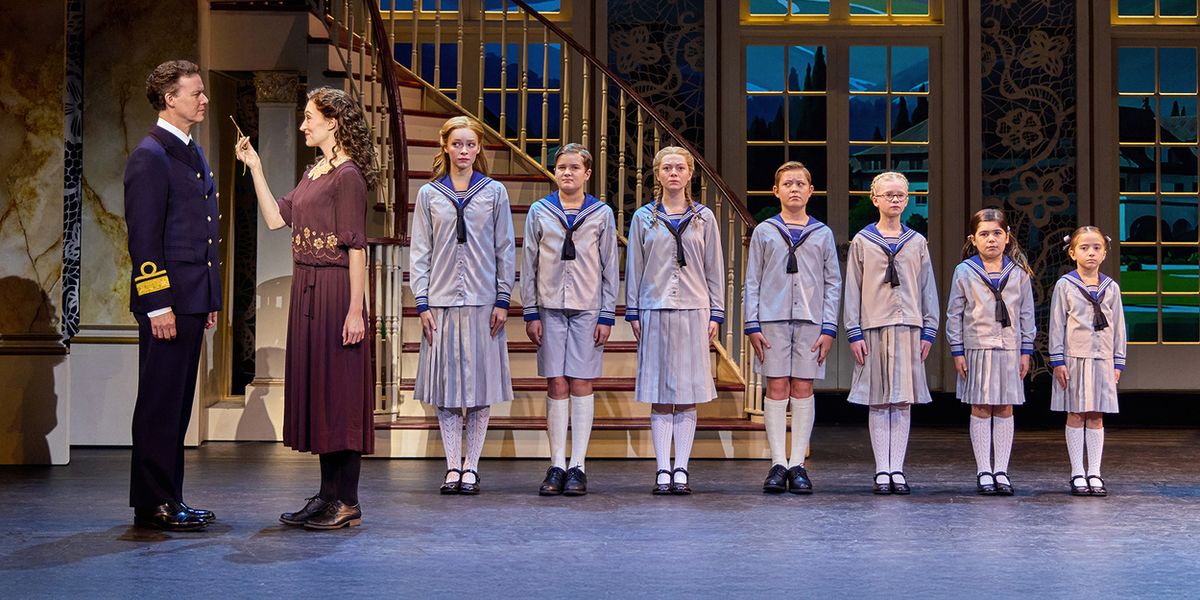
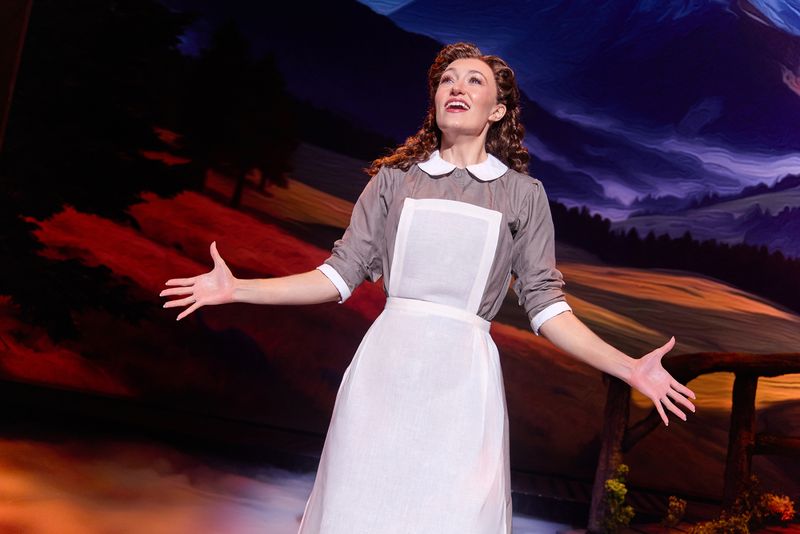
Once again, the kids here are expectedly precocious and adorable. Captain Von Trapp is his usual ornery self, blowing on that silly whistle. Liesl still wants telegrams delivered by boys in shorts. Marta still wants that pink parasol. And Maria still loves singing in the hills out loud.
What's new, of course, is pretty admirable—from the stunning vocals of its leading lady and the stage vet playing the Reverend Mother, to the visually pleasing new set designs from Douglas W. Schmidt that uses woven fabric as a running motif (Maria is a great seamstress after all so we wouldn't put it past her to also sew up some wallpaper along with the children's "play clothes"). I loved Costume Designer Jane Greenwood's stained glass-inspired curtain outfits for the kids and the Baroness' opulent wardrobe choices. And Robert Russell Bennett's orchestrations sound freshly vibrant yet still reverent to Rodgers' and Hammerstein's timeless works.
And speaking of the music… what is also worth celebrating is the improved sound mix inside Segerstrom Center during this production. Sound has repeatedly been a problem with touring musicals that come to the Center for many seasons (cast vocals are often pushed down to an incoherent volume while the orchestra sounds muzzled), but this show sounded incredible throughout, offering a nice balance between voices and accompaniment. The cast is sounding audibly crisp and clear, even when backed by the rousing orchestral music under the baton of musical director Jonathan Marro. I hope this technical miracle continues for all the shows here at the center moving forward.
And of course, what makes THE SOUND OF MUSIC still a worthwhile experience live is just the overall feeling it seems to still produce in its audiences, even as we collectively become more jaded, cynical, and critical in these modern times. But it's hard to argue that only a select few other musicals have embedded themselves into the collective consciousness quite like this show has, a true classic that continues to enchant audiences across decades, cultures, and, yes, generations.
Its message is simple, and simply given: Music and singing = Good. Nazis = Very, very bad. Unexpectedly falling in love with your kids' stubborn Governess = Good. Openly and vocally repudiating German invaders = Quite dangerous, but just proceed with caution and maybe have an escape plan.
Based on the memoir of Maria Trapp, the musical follows the journey of ex-nun-to-be Maria Rainer (here played by the lovely-voiced Cayleigh Capaldi), an exuberant young postulant whose free-spirited nature—and constant singing—often clashes with the rigid expectations of life in a convent in Salzburg, Austria circa 1938.
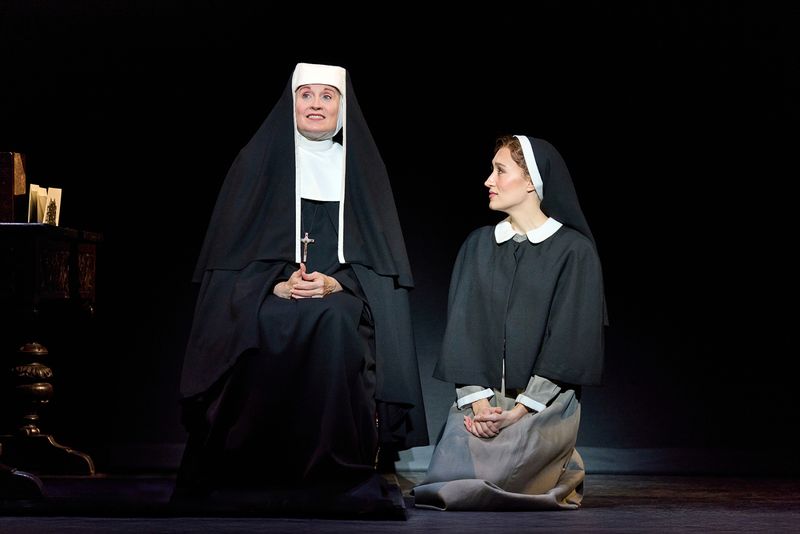
Her spiritual mentor and sometimes chief defender, the Reverend Mother Abbess (played here by the glorious Christiane Noll !) seeing that, perhaps, Maria is meant for more decides to send her away from Nonnberg Abbey to serve as governess to the seven children of the widowed Captain Georg von Trapp (Kevin Earley). Once there, Maria gradually transforms the stern, gloomy household through the healing power of music, kindness, and genuine human connection, winning over not only the Captain's naughty, over-disciplined, and attention-starved kids but the very stoic Captain, too.
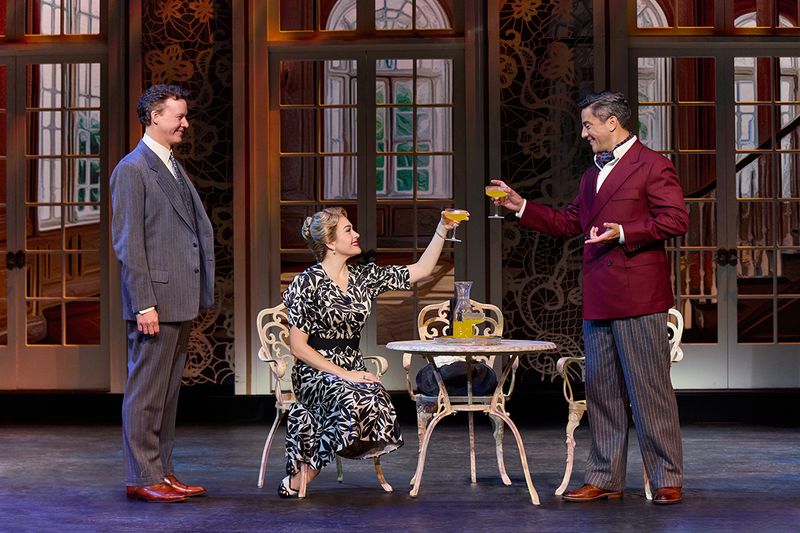
As the Captain's emotionally guarded demeanor softens and his children rediscover joy, Maria unexpectedly finds herself falling in love with the family—and, yes, even romantically with the Captain himself. This is problematic, however, since the Captain is already involved in a relationship with the posh Elsa Schraeder (the divalicious Kate Loprest), a wealthy heiress seeing Georg as a conquest to be had.
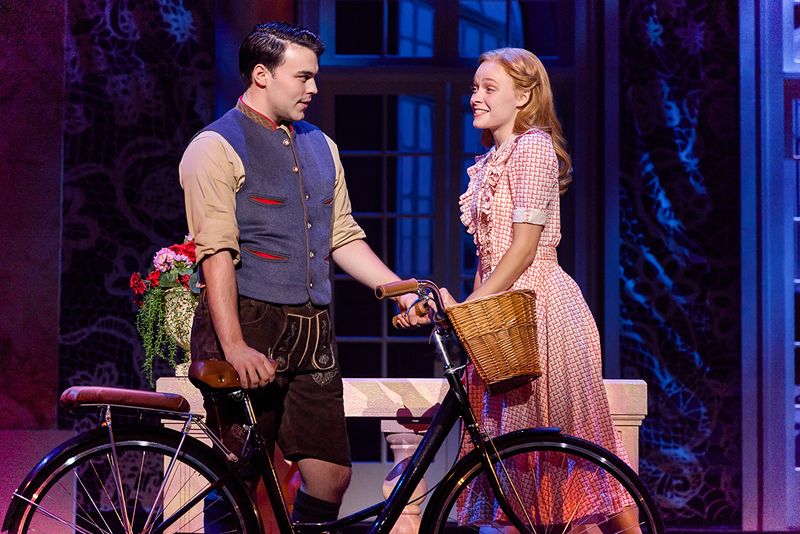
And while all of this drama is happening, the show is also set against the ominous rise of Nazi influence on the eve of the Anschluss and, of course, World War II, which we see depicted in the gradual transformation of young Rolf Gruber (Ian Coursey) from lovestruck telegram delivery dude to full on Nazi youth.
Caught in the middle is the Captain's seven impressionable children, Liesl (the spirited Ariana Perch), awkward teen Friedrich (Torben Mularski), troublemaker Louisa (Skylar Matthews), smart-alecky Kurt (scene-stealing Reece Boyle), observant Brigitta (Haddie Mac), cutesy Marta (Berkeley Waluk), and, lastly, young little Gretl (Everly Beeson) and her Princess Leia buns.
The kids, after learning overnight how to sing in perfect harmonies, turn out to be a talented bunch, too, which convinces their visiting (G)uncle Max Detweiler (the dryly witty Nicholas Rodriguez)—a talent scout and frequent moocher to the rich and powerful—that the Von Trapp Family is his next money-making musical act. Can he convince the kids' stubborn Dad to let them sing at the next Salzburg Festival?
Filled with one unforgettable song after another—including "My Favorite Things," "Do-Re-Mi," "Edelweiss," "Sixteen Going on Seventeen," and the soaring title anthem—THE SOUND OF MUSIC remains a shining example of Rodgers and Hammerstein's unparalleled gift for marrying character development with musical storytelling. While its longstanding reputation as wholesome family entertainment sometimes overshadows the deeper thematic layers enacted by Rodgers, Hammerstein and book writers Howard Lindsay and Russel Crouse, the musical's enduring appeal lies in its genuine, emotional sincerity. Beneath its picturesque Alpine setting, cutesy numbers, and charming romance is a compelling examination of personal conviction, the importance of standing against oppression, and the transformative strength of love despite obstacles from multiple fronts.
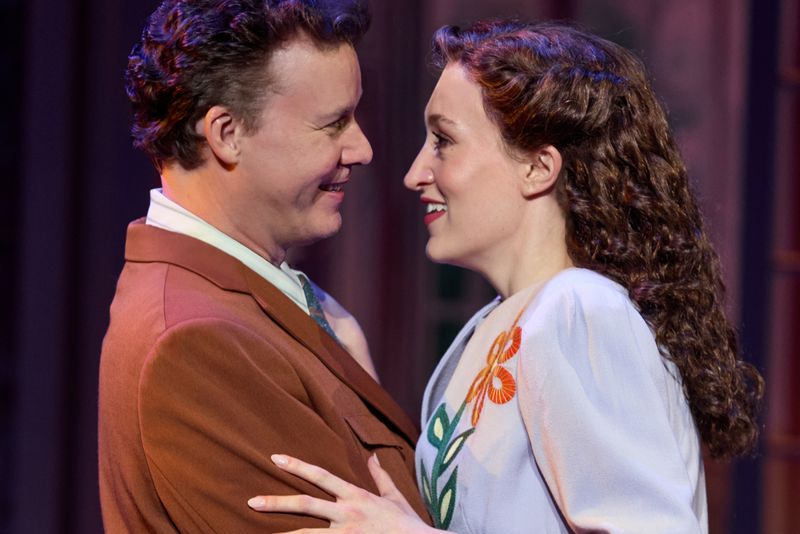
As it has since its inception, what makes THE SOUND OF MUSIC particularly remarkable is the way it balances intimate human drama with larger historical stakes, while also being entertaining. Maria's journey is one of self-discovery, as she learns that her true calling may not be confined within the convent walls but found instead through service, compassion, and family—and her ability to be able to express herself out loud through song. Likewise, Captain von Trapp's evolution from emotionally distant patriarch to devoted father and moral leader provides the musical with much of its emotional resonance. The Captain and Maria's relationship, on the surface, may be a product of happenstance, but it still unfolds with a sense of logical authenticity, built not on grand theatrical gestures but on mutual respect and shared devotion to the children who bring them together and allow their better selves to come to the surface.
While I didn't see much overt chemistry developing between Capaldi's Maria and Earley's Captain in this production, the legacy of their infamous courtship through decades of musical theater lore hovers with their mere proximity to one another, and thus their eventual tender moment of declarative love seen through "Something Good" (a song originally written for the film that has since made its way into the stage productions) still becomes quite a romantic touchpoint in the show that many will swoon over.
The dated material can sometimes lead to a bit of old-fashioned, too-affected acting performances as well, but at this point, it's almost a forgivable offense to over-act scenes just from a reverential perspective alone. Coursey's Rolf, for example, gives a bit of ick in his romantic duet with Leisl, with a delivery that feels like a throwback to black-and-white gumshoe cadence, but it does help as an early red flag to the dick the character truly becomes in the second act. Elsa is written with less depth and nuance than her cinematic counterpart, so her existence here doesn't seem that much of hindrance to the narrative.
From a theatrical perspective, the musical represents a great frequent example of Rodgers and Hammerstein's combined storytelling powers. The score functions not merely as a collection of popular songs but as essential extensions of characters and the narrative, while lyrically, they are just cleverly crafted and poetically resonant. Each musical number emerges organically from the emotional landscape of the story, whether expressing youthful innocence, romantic longing, patriotic pride, or spiritual reflection. Noll's exquisite rendering of "Climb Ev'ry Mountain" is one of the show's most emotional highlights, and sums up the ultimate lessons to take from the musical.
The show's seamless integration of music and drama continues to influence musical theatre writers decades after its premiere. Though I still consider the show's film adaptation far superior in its overall execution and narrative structure (audiences not familiar with the original stage version will discover songs not used in the film—for good reason—and songs in a completely different order and a totally different setting/context), the musical remains a benchmark for the genre, even if modern musicals today ache to purposefully discontinue its familiar though effective pattern.
Though, yes, some contemporary viewers may regard its earnest sentimentality too treacly to sit through and take seriously, THE SOUND OF MUSIC continues to be universally beloved and successful precisely because it embraces emotional honesty without cynicism. Its infectious optimism never feels naïve but, rather, it serves as a deliberate counterpoint to the darkness encroaching upon the von Trapp family and their homeland—and the values they know to be right. As a result, the musical continually offers both comfort and inspiration for anyone willing to let it wash over them, reminding audiences that hope, integrity, and love can endure even in uncertain times—much like ours today.
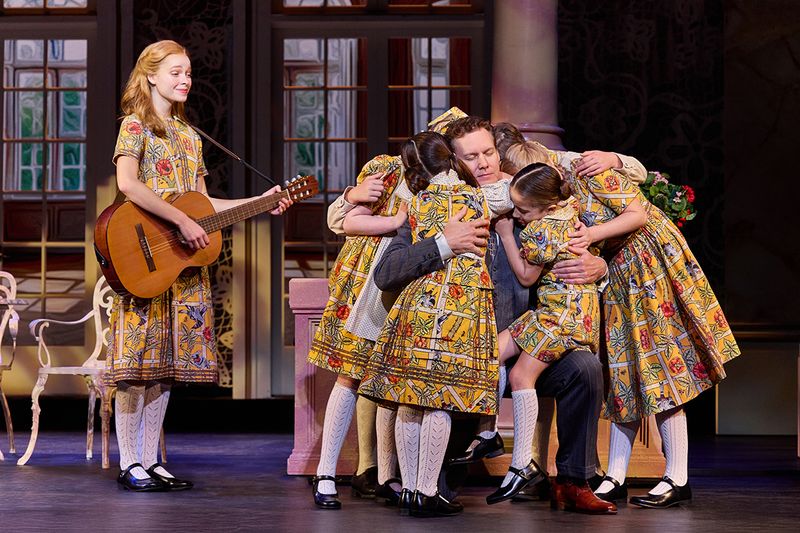
More than sixty years after its Broadway debut, THE SOUND OF MUSIC will likely remain as one of musical theatre's most cherished and enduring works. Its combination of memorable melodies, expressively open characters, and timeless themes continue to captivate audiences of all ages. Whether this tour is experienced for the first time or revisited as a beloved classic, the show stands as a testament to the enduring power of engaging storytelling that speaks directly to the heart, taking a simple but focused tender love story and infusing it with a stirring tale of courage, faith, and familial unity, all while never losing sight of the world beyond it.
So, again, I ask… is the show worth seeing again on stage in 2026? For simply nostalgic and escapist reasons, the answer is still a resounding yes.
* Follow this reviewer on Bluesky / Instagram / Threads / X: @cre8iveMLQ *
-----
Photos from the National Tour of THE SOUND OF MUSIC by © Jeremy Daniel, courtesy of Segerstrom Center for the Arts.
Performances of THE SOUND OF MUSIC continue at Segerstrom Center for the Arts in Costa Mesa, CA through June 14, 2026. Tickets can be purchased online at www.SCFTA.org, by phone at 714-556-2787 or in person at the SCFTA box office (open daily at 10 am). Segerstrom Center for the Arts is located at 600 Town Center Drive in Costa Mesa. For tickets or more information, visit SCFTA.org.
Photo Credit: Jeremy Daniel
Prefer BroadwayWorld in Google Search?
Add us as a preferred source so our stories show up more often in Top Stories and Google’s AI answers — for you.
Sign up for all the news on the Fall season, discounts & more...
|
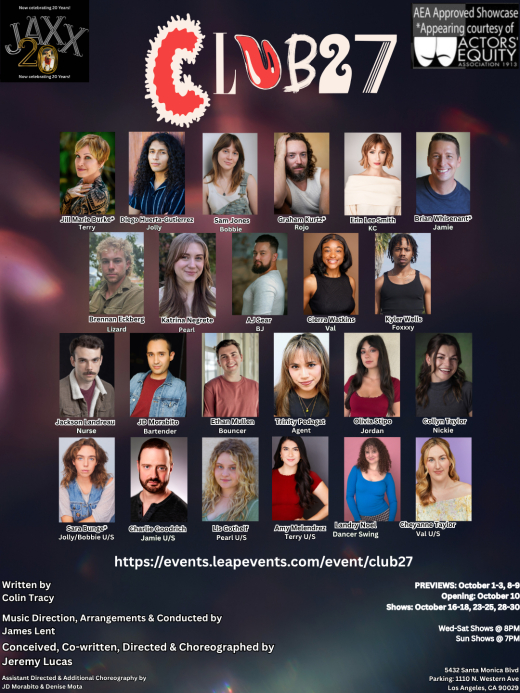
CLUB27 Jaxx Theatre (10/01-10/30) |
|
Crone Creed El Portal Theatre (9/30-10/17) |
|
Good Night, Oscar North Coast Repertory (9/16-10/11) |
|
A Killer Night in Studio City Vitello's (9/06-10/31) |
|
CHAÏR The Elysian Theater (10/17-10/17) |
|
Catch Me If You Can Colony Theatre (9/17-10/18) |

|
Dinner with Friends Santa Monica Playhouse (9/26-9/27) |

|
Gershwin and the Golden Age The Soraya (10/11-10/11) |

|
Jane Austen UnScripted Kings Road Park (9/12-9/27) |
|
Melt : The Play The Marilyn Theatre at the Lee Strasberg Institute (9/24-10/02) |

Reader Reviews
To post a comment, you must register and login.