


Interview: Director Luke Harlan of THE ARSONISTS at Skylight Theatre
for limited run September 3-20, 2026

Written by Max Frisch in the aftermath of World War II and echoing into our present, The Arsonists is an absurdly funny and quietly chilling modern parable about what happens when our desire to be good prevents us from doing good. Taking place in a time when arsonists have begun setting fires in neighboring towns and no one will speak up about the situation, this exhilarating satire of self-deception examines the remarkable human capacity to ignore the obvious. Promising a compelling blend of theatrical virtuosity and wit, this headline-relevant commentary shines with our “in the moment” nightmares on contemporary denial and political apathy.
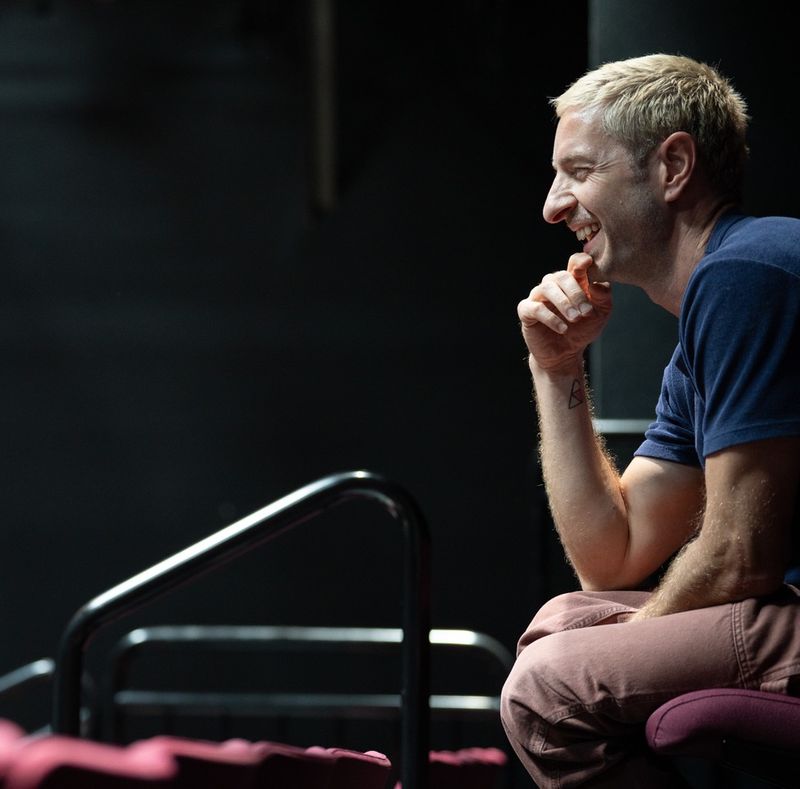
I spoke with the play’s director Luke Harlan (pictured) an award-winning director and Emmy-nominated producer whose work spans theater, television, and feature films, about his vision for the production about ordinary people who allow something dangerous to enter their lives, setting a pattern that can carry through generations when apathy impedes good judgment. Here's what he had to say!
As a director with an MFA from Yale School of Drama and an Emmy-nominated career in television and film, what does working on a play like this allow you to explore that you might not be able to explore in those other mediums?
The audience. That's the biggest difference. In television and film you can create something incredibly intimate, but the audience isn't in the room with you. In theater, they are part of the event. Their laughter changes the actors. Their silence changes the actors. They become a community for ninety minutes, whether they intended to or not. And this particular play is constantly aware of that. It looks at the audience. It speaks to them. It asks them questions. There is no pretending that we aren't all sitting in the same room watching this happen together. That feels incredibly exciting to me right now. Theater can actually make us aware of one another in a way very few things in our lives do anymore.
What was it about the story that made you want to direct it now?
Frisch called The Arsonists a ‘morality play without a moral.’ That idea feels increasingly rare to me today since we live in a moment where we're constantly told what to think, who the heroes and villains are, and where we belong in the story. This play isn't interested in any of that. It just asks us to watch, to pay attention, to think. But what struck me most when I first read the play was just how funny it is. It's my favorite kind of humor: ha ha ... ouch. We don't need another play that tells us what to think. We need plays that remind us how to think—and, perhaps more importantly, how to think together. This feels exactly like that kind of play.
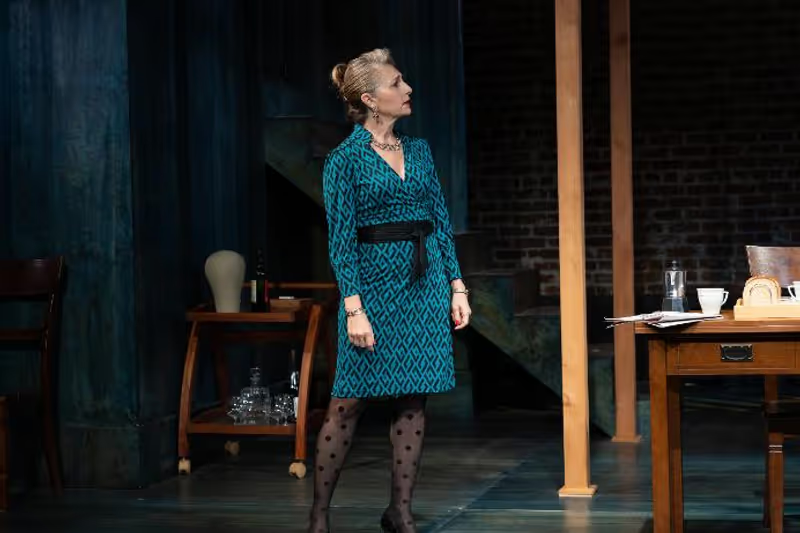
Tessa Auberjonois
All photos credit: David Esquivel
What makes this the right play for Los Angeles right now?
Los Angeles is a city full of people making things, imagining things, reinventing themselves - but it can also be an incredibly isolating place. We spend so much time in our cars, in our houses, on our phones, inside our own little worlds. And at the same time we're living through a moment of enormous political and social anxiety, where it can feel like everybody has retreated into their own corner and decided everyone outside it is the enemy. So gathering a group of strangers in a room to laugh together and wrestle with a play that refuses to tell them what to think feels radical to me. That's part of why I wanted to make theater here again. We need places where we can actually be together.
The fascinating question at the heart of the play is why do people recognize a threat and still choose to accommodate it? What have you discovered about that question through rehearsals with the actors?
I think the thing we've discovered is that nobody thinks they are choosing disaster. They are making a series of tiny, completely understandable decisions. They want to be polite. They don't want to seem cruel. They don't want to overreact. They don't want to embarrass themselves. They want to believe the best of people. And each decision makes the next one a little easier. That's what is so brilliant and so terrifying about the play. If the central character were simply stupid, we could sit in the audience and feel superior to him. But he isn't. His reasoning is often completely recognizable. The danger is not that he can't see what is happening. He can. The danger is how incredibly good human beings are at explaining away what they see.
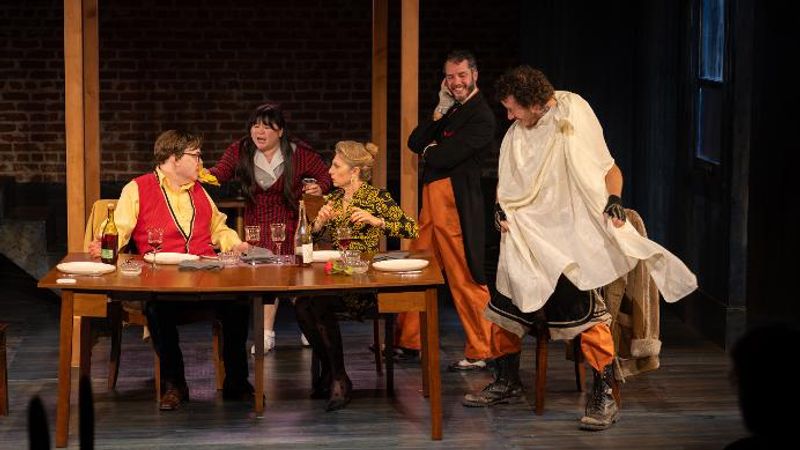
Brian Wallace, Jazelle Villanueva, Tessa Auberjonois, Liam Rhodes, Trevor Jonathan Lown
How did you and the actors approach making the characters recognizable and human rather than simply foolish or culpable?
That was probably the most important thing for us. Nobody can know they are in a satire. Nobody can play the message of the play. Every character has to believe that what they are doing makes complete sense. We spent a lot of time asking what each person actually wants in every moment, and usually the answer is very ordinary. They want to be liked. They want to feel safe. They want dinner to go well. They want somebody to sit down. They want to avoid an uncomfortable conversation. And once you get down to that level, they stop being symbols and become people. That's also where the comedy gets much better. The more seriously they take their circumstances, the funnier and more painful the play becomes.
What do you hope audiences will be talking about on the way home after seeing The Arsonists?
I hope they're laughing first. I really do. I want people to have a great time. And then maybe on the drive home, something they laughed at starts to bother them a little bit. I don't particularly want everybody to leave agreeing about what the play "means." In fact, I'd be suspicious if they did. Frisch called it a "morality play without a moral," and I think that's essential. I hope people argue about it. I hope they recognize different things in it depending on their own lives and beliefs. Mostly I hope they keep talking. Theater doesn't have to give us the answer. Sometimes its most useful function is simply to get a group of people asking the same difficult question together.
If potential audience members are apathetic about attending a performance, how would you entice them to see it?
I'd say come expecting a comedy. A strange, fast, wildly theatrical comedy. A lot of people behaving very badly while insisting that everything is perfectly fine. You absolutely do not need to know the play or Max Frisch or anything about post-war European theater. It's ninety minutes, it's very funny, and then hopefully somewhere along the way you start to realize the joke might be on all of us.
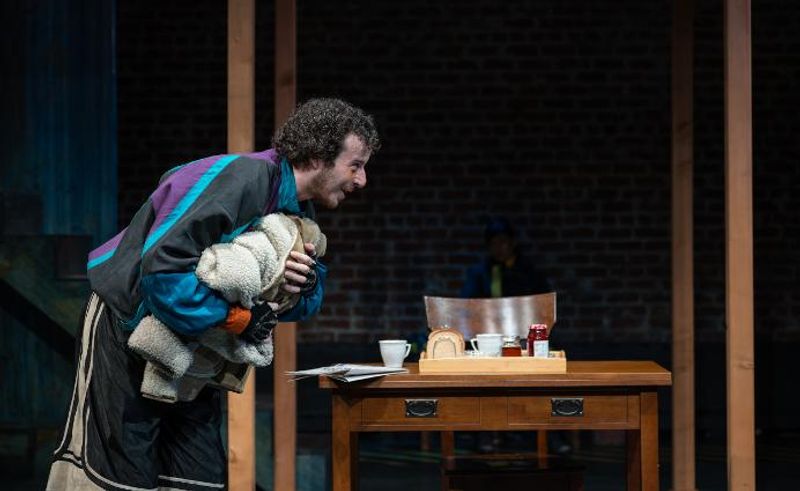
Trevor Jonathan Lown
Featured in the cast are Tessa Auberjonois (as Babette), Flor de Maria Chahua (Chorus/Mrs Knechtling), Molly Kirschenbaum (Chorus/Dr. of Philosophy), Trevor Jonathan Lown (as Schmitz), Seamus Mulcahy (Chorus Leader), Liam Rhodes (as Eisenring), Jazelle Villanueva (as Anna), Brian Wallace (as Biedermann), Moneer Yaqubi (Chorus/Police), Michael Lorz (Eisenring/Schmitz Understudy). Please tell me how the characters relate to each other during the course of the story.
At the center of the play is the Biedermann household - a very respectable, comfortable home that becomes increasingly less comfortable as two strangers begin to insinuate themselves into it. What I love is that the relationships are constantly shifting. People who should have power give it away. People who arrive with none gradually take control. Everyone is watching everyone else, trying to figure out what they know, what they believe, and what they're willing to say out loud.
And then surrounding all of that is the chorus, who are watching the story unfold just like the audience is. They can see what's happening. They can ask questions. They can warn us. But ultimately they can't make the choices for anybody. So there's this constant tension between seeing something and actually doing something about it.
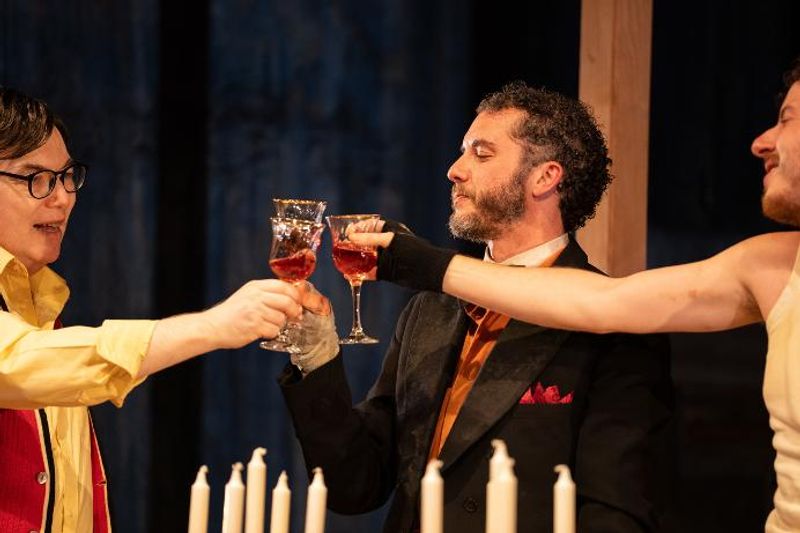
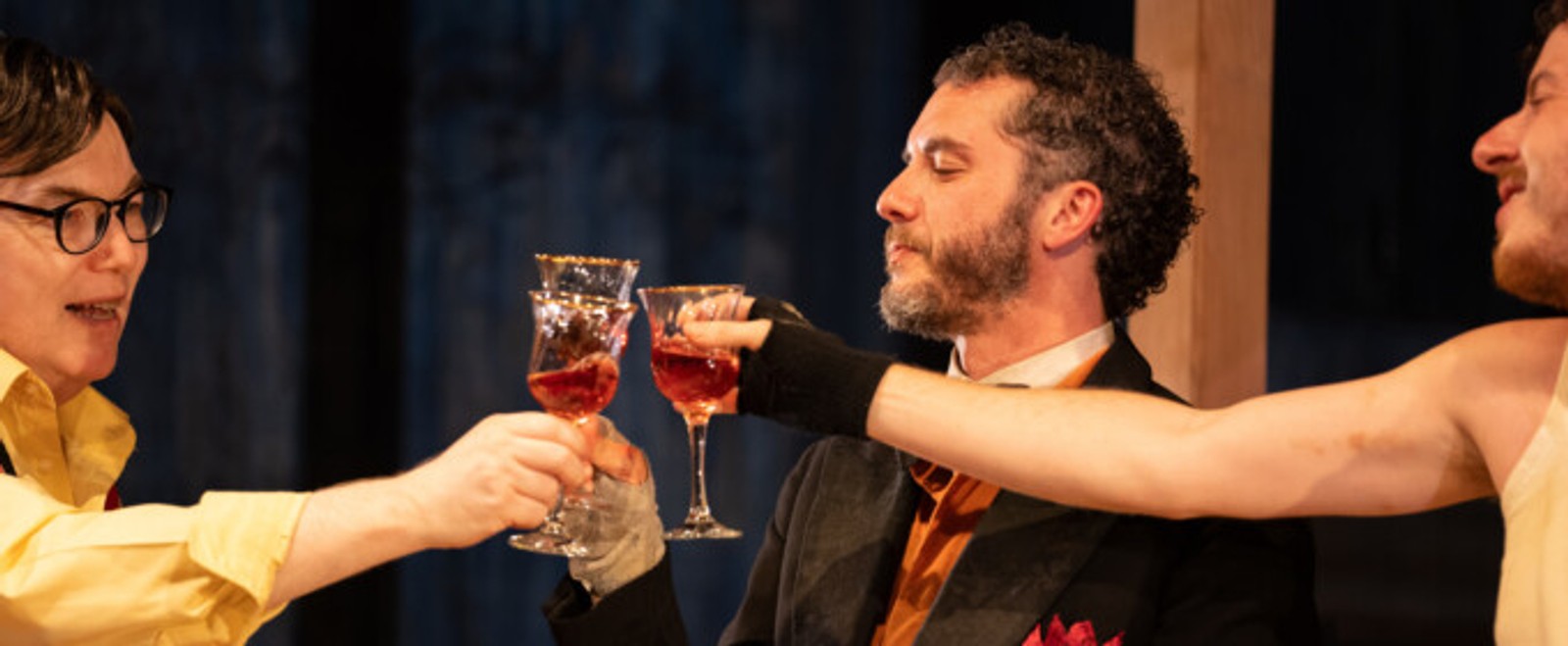
Brian Wallace, Liam Rhodes, Trevor Jonathan Lown
How is your creative team, which includes Stephen Gifford (Scenic Design), Jared Sayeg (Lighting Design), Drew Sensue-Weinstein (Sound Design), Joshua Quinn (Costume Design), Nicole Bernardini (Props Designer), and Henry Russell Bergstein (Casting), working with you to create Frisch’s absurdist off-kilter view of society?
We talked from the beginning about creating a world that feels completely recognizable but just slightly off. I didn't want to start in some expressionistic nightmare where the audience already knows they're in danger. The house should feel safe. The people should look like people we know. And then, little by little, things start accumulating. Objects appear that shouldn't be there. Clothes change. The soundscape changes. The room itself starts to feel different.
Stephen, Jared, Drew, and Josh have all been incredibly dramaturgical in the way they've approached those shifts - nothing is just decoration, everything is helping tell the story. And Henry assembled this wonderful group of actors who can move between absolute sincerity and absurdity without ever announcing the joke. That's really essential to the world Frisch creates.
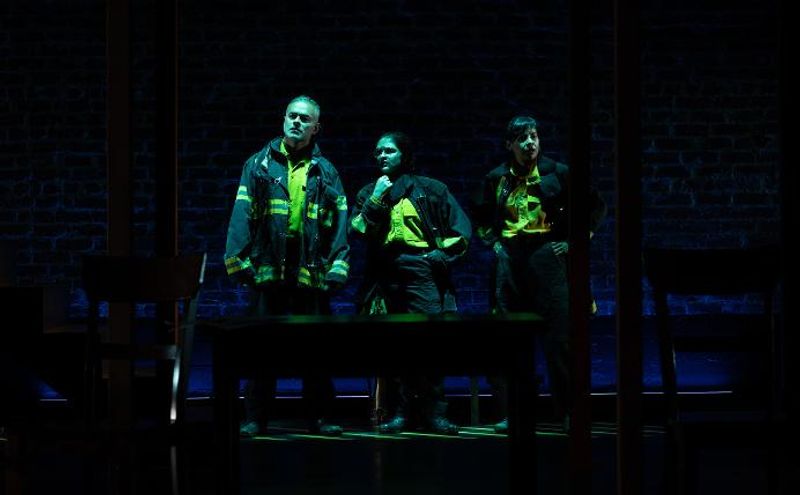
Moneer Yaqubi, Molly Kirschenbaum, Flor de Maria Chaua
What do you think will surprise audiences the most about the characters’ actions?
Probably how understandable they are. It's very easy to describe the play and think, "Well, obviously I would never do that." But that isn't very interesting to me, and I don't think it's what Frisch is doing. Nobody wakes up and decides to make the worst possible choice. They make one small, reasonable choice, and then another one, and another. They don't want to be rude. They don't want to overreact. They don't want to seem suspicious or cruel. They want to believe they're good people. And suddenly they've traveled an enormous distance without really noticing it. I think what's surprising - and uncomfortable - is how often you can understand exactly why they do what they do.
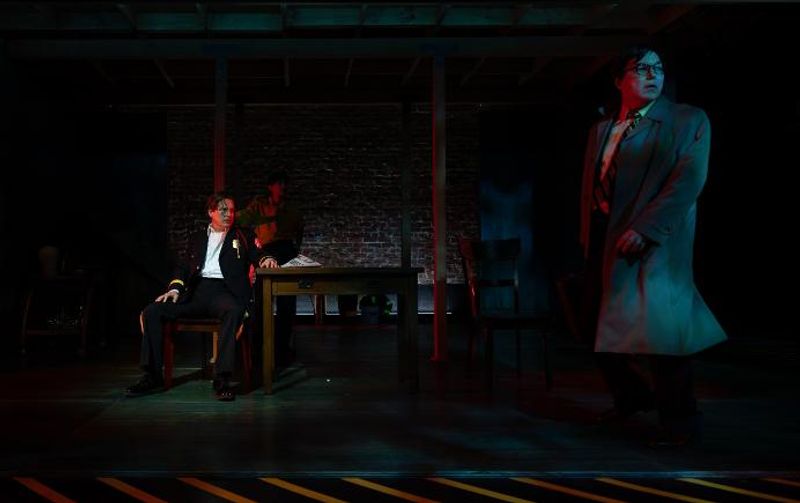
Seamus Mulcahy, Brian Wallace
Anything else you would like to add about yourself or the production?
Mostly that I'm just incredibly grateful that we're getting to make it. I spent many years making theater in New York and then stepped away from it for a while to work in television and film, and coming back into a rehearsal room has reminded me how much I missed this kind of collaboration. There's something about a group of people gathering in a room, building something together, and then inviting another group of people in to experience it that feels very necessary to me right now.
And this play feels like the perfect one to come back with because it doesn't tell anybody what to think. It asks us to watch, to pay attention, to laugh, and then maybe to sit with some of the questions afterward. That's the kind of theater I'm interested in making.
Thanks so much!
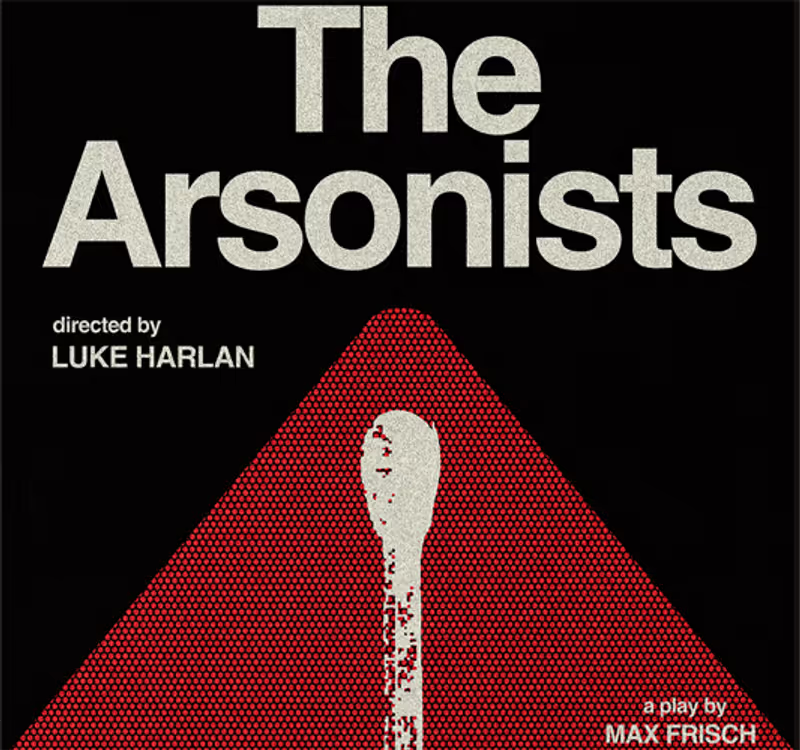
The Arsonists opens at 8pm on Thursday, September 3, and runs at 8pm Thurs – Sat; 5pm Sat; 2pm Sun through Sept 20, 2026 at Skylight Theatre,1816 ½ North Vermont, LA, 90027. Street parking or local pay lots. Run time is approximately 90 minutes, no intermission. Tickets are $45; $25 for Seniors and Students, available online at https://www.skylighttheatre.org/the-arsonists with available seats sold at the onsite box office prior to each performance.
Sign up for all the news on the Fall season, discounts & more...

|
CLUB27 Jaxx Theatre (10/01-10/30) |
|
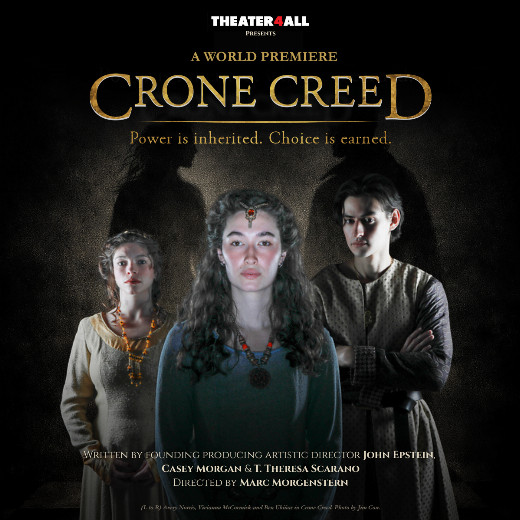
Crone Creed El Portal Theatre (9/30-10/17) |
|
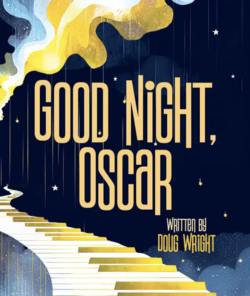
Good Night, Oscar North Coast Repertory (9/16-10/11) |
|
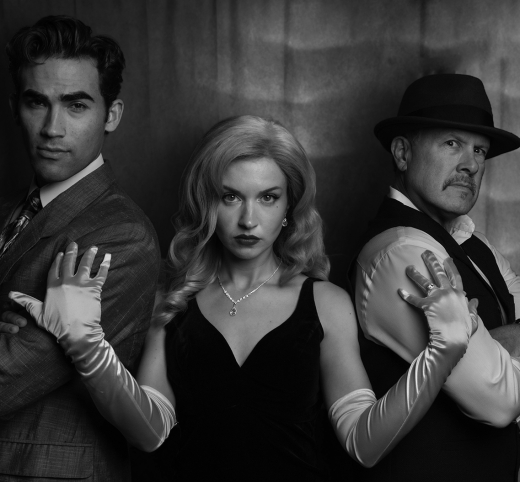
A Killer Night in Studio City Vitello's (9/06-10/31) |
|
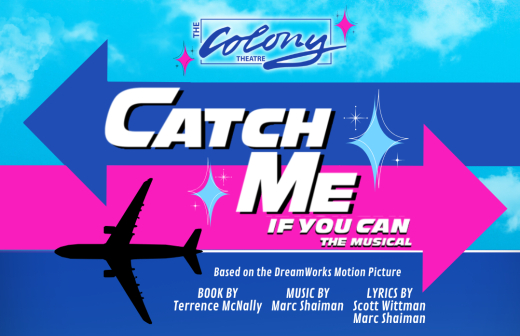
Catch Me If You Can Colony Theatre (9/17-10/18) |
|
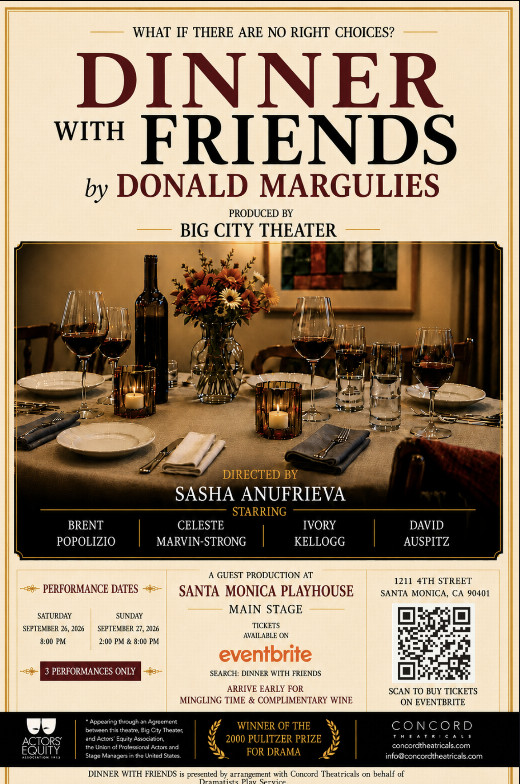
Dinner with Friends Santa Monica Playhouse (9/26-9/27) |
|
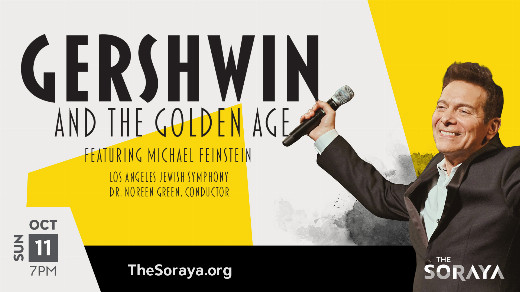
Gershwin and the Golden Age The Soraya (10/11-10/11) |
|
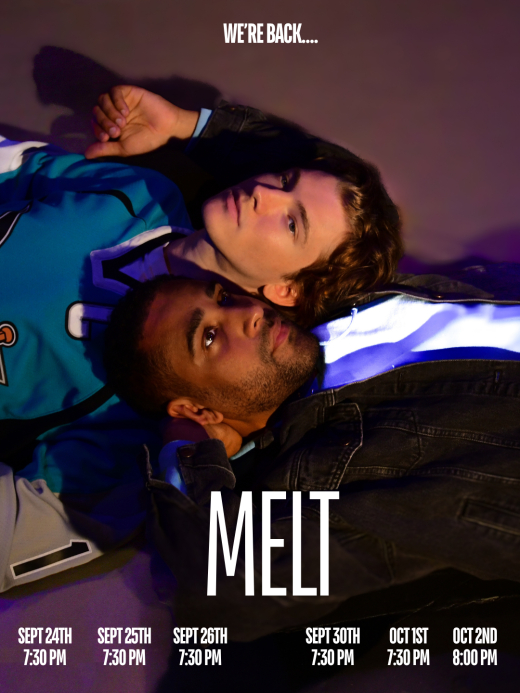
Melt : The Play The Marilyn Theatre at the Lee Strasberg Institute (9/24-10/02) |

|
New Works Festival Shoebox Theatre (9/11-9/26) |
|
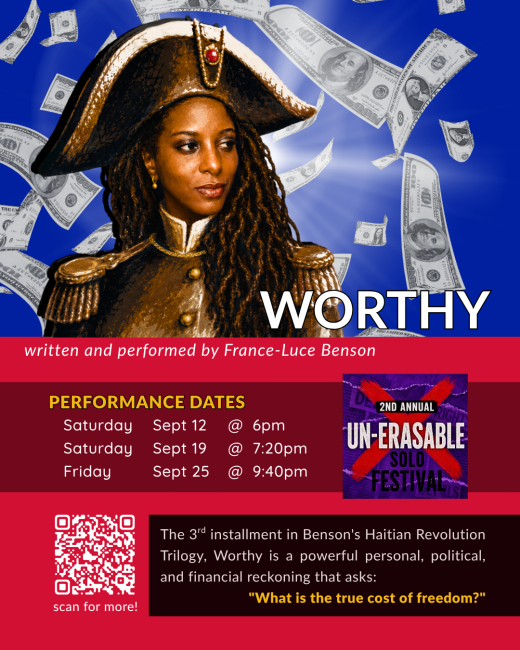
Worthy The Un-Erasable Solo Festival - Willie Agee Playhouse (9/12-9/25) |
